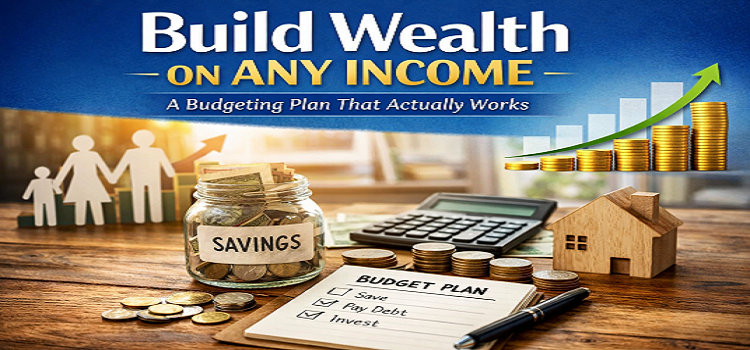
Building wealth on any income budgeting plan is possible, even if your income is low or unstable. Many families struggle because costs keep rising, and you don’t need a high income to start. Without a clear plan, saving feels hard and progress feels slow.
But the truth is simple: wealth is built through small, consistent actions, not big paychecks. With the right budgeting plan, you can take control of your money, reduce stress, and start building long-term financial security. Here, you’ll learn practical strategies, real examples, and simple steps you can start using today.
Who This Budgeting Plan Is For
This build wealth on any income budgeting plan is designed for real-life situations, not perfect ones. It works even if your income is low or unstable and you’re trying to regain control of your finances.
This guide is for you if:
- You’re living paycheck to paycheck
- Your income changes month to month
- You struggle to save consistently
- You want a simple, realistic system
What Is a Build Wealth on Any Income Budgeting Plan?
Build wealth on any income budgeting plan is a simple system that helps you control spending, save consistently, and grow your money over time, no matter how much you earn. It focuses on giving every dollar a purpose, covering essentials first, and turning small savings into long-term financial progress. This works even if your income is low or unstable.
Key Elements of This Plan
- Income tracking
Know exactly how much money is coming in each month, including side income. - Expense control
Separate needs from wants so you can cut waste without hurting your lifestyle. - Consistent saving
Save a fixed amount regularly, even if it’s small. - Debt reduction
Focus on paying off high-interest debt that slows down wealth building. - Long-term investing
Grow your savings over time through simple, steady investing habits.
Quick Summary (For Fast Readers)
If you just want the basics, here’s the plan:
- Track every dollar
- Cut non-essential spending
- Save a small fixed amount
- Pay off high-interest debt
- Repeat monthly
Why Most People Fail to Build Wealth (And How This Plan Fixes It)
Most people fail to build wealth because they rely on earning more instead of managing what they already have. Without a clear system, money gets spent without direction. A strong budgeting plan fixes this by creating structure, controlling spending, and building consistent habits even on a low or unstable income.
This is why many families living paycheck to paycheck struggle to build wealth.
Common Reasons People Stay Broke
- No clear budget to follow
- Spending without tracking money
- Relying too much on credit cards
- No emergency savings
- Increasing lifestyle as income grows
How This Plan Fixes It
- Gives every dollar a clear purpose
- Builds automatic saving habits
- Reduces unnecessary spending
- Helps pay off debt faster
- Creates steady, long-term financial progress
How to Build Wealth If You’re Broke Right Now
If you have almost no money left after bills, you can still follow a build wealth on any income budgeting plan by focusing on survival first, then stability. The goal is to stop financial bleeding, create a small buffer, and slowly build control over your money.
What to Do First
- Cover essentials only
Focus on rent, food, utilities, and transport. - Pause non-essential spending
Cut subscriptions, eating out, and impulse buying. - Avoid new debt
Stop using credit unless it’s an emergency. - Save a small buffer ($100–$500)
This prevents falling back into debt.
What to Delay (Temporarily)
- Investing large amounts
- Lifestyle upgrades
- Big purchases
11 Proven Budgeting Plan Strategies to Build Wealth on Any Income
These budgeting strategies help you take control of your money, even if your income is limited or unpredictable. They focus on simple actions you can repeat every month to reduce waste, grow savings, and build long-term wealth without needing a high salary.
Best Strategies
- Use zero-based budgeting
Assign every dollar a job so nothing is wasted or untracked. - Pay yourself first
Move money to savings as soon as you get paid, not at the end of the month. - Build a starter emergency fund
Start with a small goal like $500, then grow it over time. - Cut non-essential expenses
Remove spending that doesn’t add real value to your life. - Use a cash or envelope system
Limit spending by using physical or digital categories. - Automate your savings
Set up automatic transfers so saving becomes effortless. - Focus on high-impact expenses
Reduce big costs like rent, food, or transport where possible. - Increase income slowly
Add small side income streams instead of relying only on your main job. - Avoid lifestyle inflation
Don’t increase spending just because your income goes up. - Track your money weekly
A quick weekly check keeps your budget on track. - Invest consistently over time
Even small investments grow when given enough time.
These strategies work even if you’re living paycheck to paycheck.
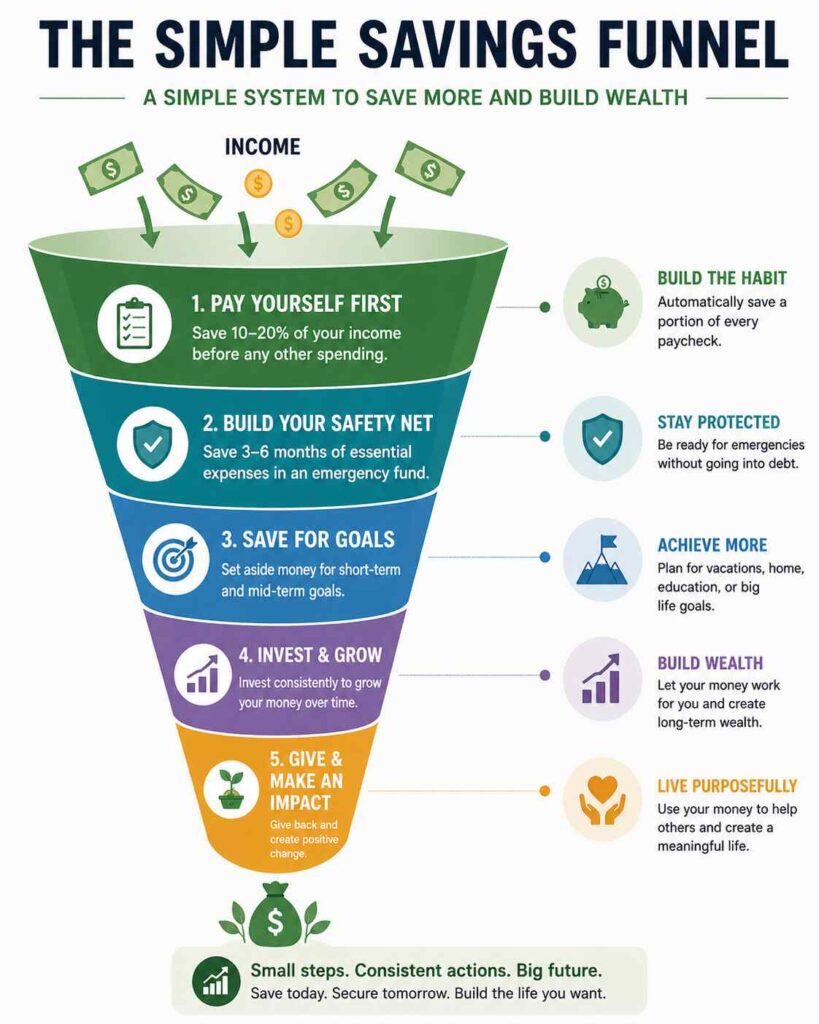
How These Strategies Work Together
A build wealth on any income budgeting plan works because these strategies are connected. Budgeting controls your money, saving builds security, and investing grows it over time. When used together, even small actions create long-term financial stability.
Budgeting Plans by Income Type (Real-Life Scenarios)
Different income situations need different budgeting approaches. A flexible budgeting plan helps you stay in control whether your income is low, stable, or unpredictable. The goal is the same: cover essentials, save consistently, and avoid financial stress.
This works for families living paycheck to paycheck or managing unstable income.
Low Income Budget Plan
- Focus only on essentials first (housing, food, utilities)
- Keep spending simple and controlled
- Save small amounts regularly, even if it feels slow
- Avoid unnecessary debt
Irregular Income Budget Plan
- Use your average monthly income, not your best month
- Pay essentials first as soon as money comes in
- Build a buffer fund during high-income months
- Keep expenses flexible where possible
Family Budget Plan
- Set shared financial goals (savings, debt, future plans)
- Plan fixed household expenses clearly
- Prepare for unexpected costs like medical or school needs
- Involve all family members in basic money habits
These simple adjustments make budgeting realistic and sustainable, no matter your situation.
Minimum Viable Budget (If Money Is Extremely Tight)
If your income barely covers expenses, focus on the minimum version of this plan:
- Cover essentials only
- Save even a very small amount
- Avoid new debt
- Track spending weekly
👉 This works for families living paycheck to paycheck and prevents financial setbacks.
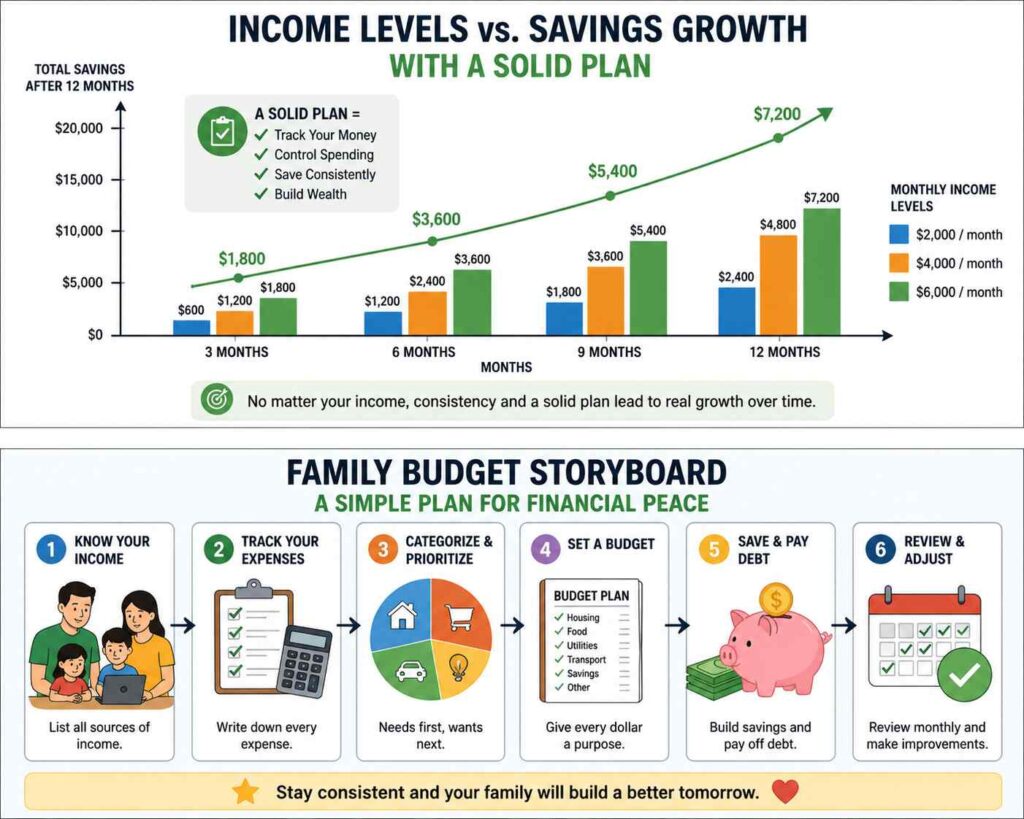
Real Example: How to Build Wealth on $2,000/Month
A real example makes this plan easier to follow. You don’t need a high income to start building wealth. Even with a $2,000 monthly income, you can cover essentials, save money, and start building wealth by giving every dollar a clear purpose and staying consistent.
Example Budget Breakdown
- Needs: $1,200 (60%)
Rent, utilities, groceries, transport, basic bills - Savings: $300 (15%)
Emergency fund and future goals - Debt: $300 (15%)
Credit cards or loan payments - Flexible Spending: $200 (10%)
Personal spending, small extras
12-Month Outcome of This Plan
- Emergency fund: $3,600
- Debt reduced significantly
- Strong saving habit built
- Financial stress reduced
What This Achieves
- Builds an emergency fund over time
- Reduces high-interest debt faster
- Creates a steady saving habit
- Keeps spending controlled without feeling restricted
This shows you don’t need a high income to start building wealth. You just need a clear plan and consistent action.
What Happens After 1 Year
If you follow this budgeting plan consistently:
- Emergency savings increase steadily
- Debt reduces significantly
- Spending becomes controlled
- Financial stress decreases
- Long-term wealth building begins
How to Start a Budgeting Plan (Step-by-Step for Beginners)
Starting a build wealth on any income budgeting plan is simple when you follow clear steps. You don’t need perfect numbers or a high income. You just need a starting point and consistency. These steps help you take control of your money, even if your income is low or unstable, and begin building wealth right away.
Step-by-Step Plan
- Calculate your total income
Add all income sources. If income changes, use a safe monthly average. - List all your expenses
Write down fixed and variable costs so nothing is missed. - Choose a budgeting method
Pick zero-based, 50/30/20, or pay-yourself-first—keep it simple. - Assign every dollar a job
Plan where your money goes before you spend it. - Start saving immediately
Even a small amount builds momentum and discipline. - Track spending weekly
A quick check helps you stay on track and fix issues early. - Adjust your budget monthly
Improve your plan based on what actually happened.
These steps turn budgeting into a repeatable system that works on any income.
Simple Tools You Can Use
You don’t need complex tools to follow a budgeting plan:
- Notebook or paper budget
- Basic spreadsheet
- Free budgeting apps
👉 You don’t need a high income to start. Simple systems work best.
Your First 30 Days Budgeting Plan (Simple Execution Timeline)
A build wealth on any income budgeting plan works best when you follow a clear timeline. These first 30 days help you take control quickly without feeling overwhelmed.
Week-by-Week Plan
Week 1: Track Everything
- Write down all income and expenses
- Identify spending leaks
Week 2: Cut and Simplify
- Remove non-essential expenses
- Set basic spending limits
Week 3: Start Saving
- Save a small fixed amount
- Open a separate savings account
Week 4: Optimize and Adjust
- Review what worked
- Fix overspending areas
- Strengthen your plan
Smart Money-Saving Tips That Accelerate Wealth Building
Saving more money creates faster progress. A build wealth on any income budgeting plan works better when you reduce unnecessary spending and free up extra cash. These simple tips help you save without making your life harder.
Practical Tips
- Cut unused subscriptions
Cancel services you don’t use regularly. - Cook more meals at home
Eating out less can save a large amount each month. - Buy in bulk when it makes sense
Lower cost per item helps reduce long-term spending. - Delay impulse purchases
Wait 24 hours before buying non-essential items. - Use cash or spending limits
Set clear limits for categories like food or shopping. - Compare prices before buying
Small savings add up over time. - Reduce utility usage
Lower electricity and water use where possible. - Negotiate bills when possible
Ask for better rates on internet, phone, or services.
These habits free up money that can go directly into savings and investments.
High-Impact Expenses to Focus On First
Not all expenses matter equally. Focus on the biggest ones first:
- Housing
- Food
- Transport
- Utilities
👉 Cutting small costs helps, but optimizing big expenses creates faster results.
Budgeting Mistakes That Keep You Stuck (And How to Fix Them)
Many people follow a budgeting plan but still don’t build wealth because of repeated mistakes. Fixing these can speed up your progress.
Common Mistakes
- Not tracking small expenses
Small leaks add up fast. - Saving only what’s left
This often leads to saving nothing. - Quitting after one bad month
Budgeting requires adjustment, not perfection. - Ignoring irregular expenses
Annual costs break your budget if unplanned. - Relying only on income growth
Wealth comes from managing money, not just earning more.
Simple Fixes
- Track weekly
- Save first, not last
- Plan for irregular costs
- Stay consistent
The Long-Term Benefits of a Budgeting Plan
Building wealth on any income budgeting plan creates long-term financial stability by turning small, consistent actions into real progress. It helps families stay in control of their money, avoid unnecessary stress, and steadily grow savings over time. The longer you follow it, the stronger your financial position becomes.
Key Benefits
- Financial control
You always know where your money is going. - Reduced stress
Clear plans remove uncertainty about bills and expenses. - Faster debt payoff
Extra money can be directed toward high-interest debt. - Consistent savings growth
Even small amounts build over time. - Long-term wealth building
Savings and investments grow steadily with discipline.
Real-Life Impact
- More control over daily spending
- Less stress about bills
- Better long-term security
- More confidence in financial decisions
What Happens If You Don’t Budget
- Money disappears without control
- Debt increases over time
- No emergency protection
- Financial stress keeps growing
Why This Works
- Compounding effect
Money grows faster the longer it stays invested. - Habit formation
Repeating good financial decisions makes them automatic. - Risk reduction
Emergency savings protect against unexpected events. - Predictable progress
A structured plan removes guesswork and builds confidence.
Over time, this system turns simple budgeting into lasting wealth.
Signs Your Budget Is Working
- You’re saving every month
- You’re not relying on credit
- You know where your money goes
- You feel less financial stress
What is the best way to build wealth on any income?
The best way to build wealth on any income is to follow a structured budgeting plan, save consistently, and invest over time. Focus on controlling expenses, avoiding high-interest debt, and automating savings. Small, repeatable actions create long-term financial growth, even if your income is limited.
How do you start building wealth with no money?
Start by tracking your expenses and cutting non-essential spending. Create a simple budgeting plan and begin saving small amounts regularly. Focus on building an emergency fund first, then reduce debt. Consistency matters more than starting amount when building wealth on any income.
Can budgeting alone help you build wealth?
Budgeting alone creates the foundation for wealth by controlling spending and freeing up money to save and invest. Without a budgeting plan, it’s hard to grow wealth consistently. When combined with saving and investing, budgeting becomes a powerful system for long-term financial success.
How much money do you need to start building wealth?
You don’t need a large amount to start building wealth. Even small savings can grow over time with consistency and discipline. The key is to start early, follow a budgeting plan, and increase contributions gradually as your financial situation improves.
What budgeting method works best for low income?
Zero-based budgeting works best for low income because it assigns every dollar a purpose. It helps prioritize essential expenses, control spending, and ensure nothing is wasted. This method gives full control over limited income and supports consistent saving and debt reduction.
How can families build wealth on a tight budget?
Families can build wealth on a tight budget by focusing on essential spending, reducing waste, and saving consistently. Setting shared financial goals, tracking expenses, and avoiding lifestyle inflation helps create stability. Even small, steady progress leads to long-term financial growth.
Is it better to save or invest when building wealth?
Start with saving to build an emergency fund, then move to investing for long-term growth. Saving provides safety, while investing grows your money over time. A balanced approach using both is key to building wealth on any income effectively.
What to Do Next
- Start tracking your money today
- Pick a simple budgeting method
- Save a small amount this week
- Review your progress after 30 days
Conclusion: Start Building Wealth With the Budget You Have
A build wealth on any income budgeting plan works because it focuses on what you can control. You don’t need a high income to start. This works even if you’re living paycheck to paycheck, with consistent actions and patience. Small steps taken every month turn into real progress over time.
Start simple. Track your money. Cut what you don’t need. Save what you can.
The sooner you begin, the sooner your money starts working for you.