What bills to cut first in a crisis is one of the most important decisions you’ll make when money gets tight. One wrong move—like skipping rent or ignoring insurance—can create bigger problems fast. Many guides tell you to “cut expenses,” but they don’t tell you which bills to pay first when broke or how to survive financially during a crisis.
This guide gives you a clear system. You’ll learn which bills to cut safely, which ones to protect, and how to free up cash without damaging your future. If you’re feeling overwhelmed, this will help you take control step by step.
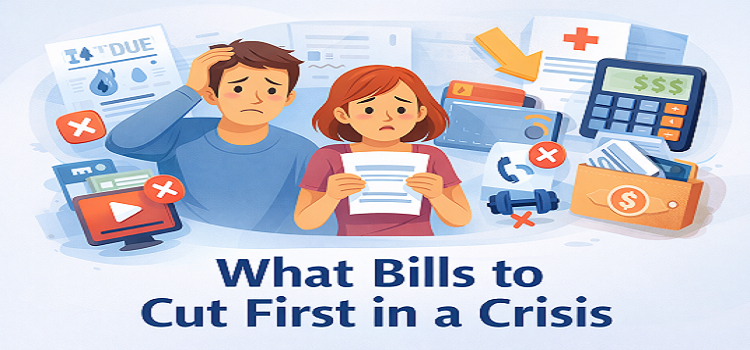
What Bills to Cut First in a Crisis?
The best bills to cut first in a crisis are non-essential expenses like subscriptions, streaming services, and premium plans that don’t affect your basic needs or income.
How to prioritize bills when money is tight.
The 3-Tier Bill Priority System (What to Cut vs Keep)
The 3-tier bill priority system helps you decide what to cut, reduce, or protect during a financial crisis. It ranks expenses by risk level, so you avoid costly mistakes. This system ensures you keep essentials covered while targeting low-risk bills first to create immediate savings.
Tier 1 – Never Cut (Survival Bills)
These are critical for basic living and safety bills you should never skip. Missing these can lead to serious consequences.
- Rent or mortgage
- Electricity, water, gas
- Basic food and groceries
- Health insurance
- Transportation needed for work
Tier 2 – Adjust or Negotiate
These bills are important but flexible. You can reduce costs without fully cutting them.
- Phone plans (switch to cheaper plans)
- Internet services (downgrade speed)
- Insurance premiums (shop or renegotiate)
- Minimum debt payments (request hardship options)
Tier 3 – Cut Immediately
These are the safest bills to remove right away. They don’t affect survival or income.
- Streaming services
- Gym memberships
- Subscription apps
- Cable TV
- Luxury or lifestyle services
11 Bills You Should Cut First in a Crisis (Ranked by Impact)
The best bills to cut first in a crisis are those that free up money instantly without long-term damage. Start with these to create quick financial relief while keeping your essentials protected.
Financial experts agree that prioritizing essential bills first—like housing, utilities, and insurance—reduces long-term financial damage. Most households see immediate relief by cutting non-essential subscriptions and negotiating flexible bills early.
Best Bills to Cut First
- Streaming services (Netflix, etc.)
- Gym memberships
- Premium phone plans
- Unused subscriptions
- Cable TV
- Food delivery apps
- Gaming subscriptions
- Beauty or luxury services
- Subscription boxes
- Paid mobile apps
- Extra cloud storage plans
Smart Cuts vs Dumb Cuts (Avoid Costly Mistakes)
Smart cuts reduce expenses without hurting your future. Dumb cuts may seem helpful now but can cost you more later through fees, penalties, or lost services.
Smart Cuts
- Cancel unused subscriptions
- Downgrade expensive plans
- Cut entertainment and luxury spending
- Pause non-essential memberships
Dumb Cuts
- Skipping rent or mortgage
- Canceling essential insurance
- Ignoring loan payments
- Letting utility bills go unpaid
What Happens If You Cut the Wrong Bill?
Cutting the wrong bill can lead to late fees, credit damage, service shutoffs, or long-term financial problems that cost more than you save. That’s why understanding the consequences is critical before making any decision.
Real Consequences
- Late fees that increase your total debt
- Credit score drops from missed payments
- Utility shutoffs (electricity, water, gas)
- Debt sent to collections
How to Decide What to Cut First (Step-by-Step Plan)
To decide what bills to cut first or how to prioritize bills when money is tight, list all expenses, rank them by risk, and remove low-impact costs before touching essentials like housing or utilities. That’s how to survive financially during a crisis.
Steps to Follow
- List all your monthly bills
- Mark essentials vs non-essentials
- Rank each bill by risk level
- Cut lowest-risk bills first
- Negotiate before canceling
- Track how much you save
How to Lower Bills Without Cutting Them
Lowering bills without canceling them means reducing your monthly costs while keeping essential services active. This approach helps you save money without losing access to things you still need. In many cases, simple changes or quick calls can cut your bills significantly without any long-term downside.
Best Ways to Reduce Bills
- Call your provider and ask for a lower rate
- Switch to a cheaper or basic plan
- Bundle services for discounts
- Ask about hardship or relief programs
- Compare competitors and request price matching
How Much Money You Can Save (Real Examples)
Knowing what bills to cut first in a crisis becomes easier when you see real savings. Small changes across multiple bills can quickly add up and create breathing room in your budget.
Example Savings
- Cancel streaming services → save $30–$80/month
- Downgrade phone plan → save $20–$50/month
- Cut food delivery apps → save $100+/month
- Cancel gym membership → save $25–$60/month
- Remove unused subscriptions → save $20–$100/month
Emergency Budget Plan (When You Have Almost No Money Left)
An emergency budget plan focuses only on survival. When money is extremely tight, your goal is to protect essentials and stretch every dollar as far as possible.
Survival Budget Strategy
- Pay for shelter (rent or mortgage) first
- Cover basic food and groceries
- Keep utilities running (electric, water, gas)
- Contact lenders and ask for payment relief
- Pause or cut all non-essential spending
Money-Saving Tips That Work Immediately
Quick money-saving tips help you free up cash fast without overthinking your budget. These small actions can make a big difference within days.
Fast Tips
- Cancel free trials before they renew
- Turn off auto-renew for subscriptions
- Use only one streaming service at a time
- Share family plans where possible
- Review your bills every week
Why Cutting the Right Bills Matters
Cutting the right bills protects your financial stability during a crisis. It helps you avoid deeper problems while giving you control over your money.
- Protects your credit score
- Prevents long-term debt
- Keeps essential services running
- Reduces stress and financial pressure
- Helps you recover faster
What Bills Can You Skip Without Serious Damage?
You can skip or delay certain bills in a crisis without immediate risk if handled correctly. The key is knowing which ones won’t cause long-term damage.
- Subscriptions and memberships → safe to cancel immediately
- Credit cards → call for hardship options instead of skipping
- Medical bills → often negotiable or delayable
- Phone/internet → downgrade instead of cancel
What bills should I cut first in a crisis to save money fast?
The best bills to cut first in a crisis are non-essential expenses like streaming services, subscriptions, gym memberships, and premium plans. These costs can be removed quickly without affecting your basic needs, helping you free up cash immediately while protecting essentials like housing, food, and utilities.
What bills should I always pay first when money is tight?
When money is tight, always pay priority bills first—rent or mortgage, utilities, food, and insurance. These are survival expenses that keep you safe and stable. Missing them can lead to eviction, service shutoffs, or serious financial damage, making your situation much harder to recover from.
Which bills can I delay or negotiate during a financial crisis?
You can often delay or negotiate bills like credit cards, medical bills, phone plans, and internet services. Many providers offer hardship programs, reduced payments, or extensions. Contact them early to avoid penalties and protect your credit while managing your finances more effectively during a crisis.
Is it better to cut expenses or increase income during a crisis?
Cutting expenses is the fastest way to stabilize your finances in a crisis because it gives immediate relief. Increasing income helps long-term, but it takes time. The best approach is to cut non-essential bills first while working on ways to bring in extra income when possible.
How do I prioritize bills when I can’t pay everything?
Start by ranking bills based on survival and consequences. Pay housing, food, and utilities first, then work-related costs, and finally debts or non-essentials. This method ensures you protect your basic needs while reducing the risk of long-term financial damage or service loss.
What happens if I stop paying certain bills in a crisis?
If you stop paying bills, you may face late fees, higher interest, credit score drops, or service disconnection. Some debts may go to collections over time. That’s why it’s important to cut the right bills first and contact providers to negotiate instead of ignoring payments completely.
Conclusion
Knowing what bills to cut first in a crisis can make the difference between staying in control and falling deeper into financial stress. Focus on cutting non-essential expenses, protect your essentials, and use simple strategies to reduce costs quickly.
👉 Action Step:
Pick one bill in the next 10 minutes and either cancel it or lower it. Even saving $20 today puts you back in control.
👉 Now comment below:
What bill did you cut—and how much did you save?