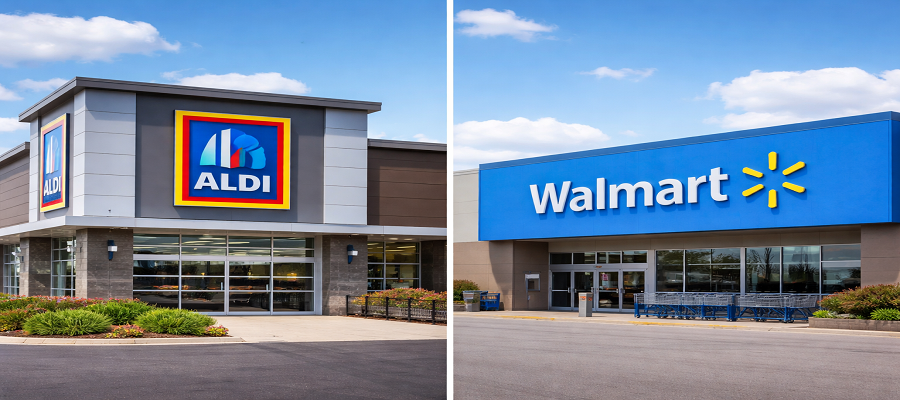
Aldi vs Walmart price comparison is one of the most searched questions among families trying to lower grocery bills. Both stores promise low prices, but the real savings depend on what you buy and how you shop. Aldi focuses on private-label products and simple stores, while Walmart offers more brands and a wider selection.
In many grocery comparisons, Aldi often costs slightly less for everyday staples like milk, eggs, bread, and cheese. Walmart can sometimes win on national brands, bulk items, and household products.
Here’s a breakdown of the real Aldi vs Walmart price comparison, including grocery basket examples, category price differences, and smart shopping strategies that help families spend less on groceries.
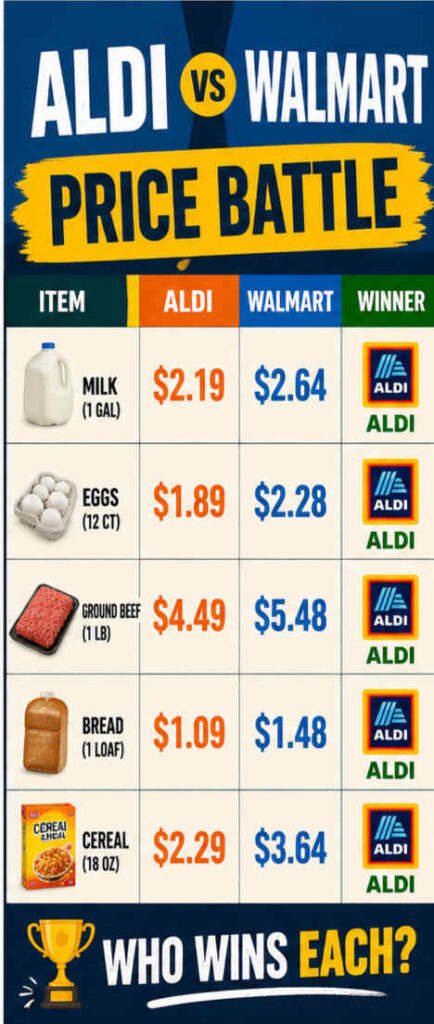
Understanding store pricing is a key part of smart ways to save money on groceries
Aldi vs Walmart Price Comparison: Quick Answer
Aldi vs Walmart price comparison usually shows that Aldi is slightly cheaper for everyday groceries. Aldi keeps prices low by selling mostly private-label products, stocking fewer items, and running smaller stores with lower costs. Walmart offers more brands and product variety, but that convenience can make the total grocery bill slightly higher.
Key Takeaways
- Aldi often wins on staple groceries like milk, eggs, bread, and cheese.
- Walmart offers more national brands and product choices.
- Aldi stores are smaller and cheaper to operate, which helps keep prices low.
- Walmart may match prices on some items, especially during promotions.
- Total grocery carts are often cheaper at Aldi, even if a few individual items cost the same.
For families focused on lowering grocery spending, the Aldi vs Walmart price comparison often shows Aldi as the cheaper option for most weekly shopping trips.
Many shoppers find Aldi is about 5% to 15% cheaper than Walmart for basic groceries.
Aldi vs Walmart: Final Verdict
Aldi vs Walmart price comparison shows a clear pattern. Aldi is usually cheaper for staple groceries, while Walmart offers more variety and convenience.
- Choose Aldi if you want the lowest total grocery bill
- Choose Walmart if you need brands and one-stop shopping
- Best strategy: use both stores together
How Aldi Keeps Grocery Prices Lower Than Walmart
Aldi vs Walmart price comparison often favors Aldi because of how the company runs its stores. Aldi focuses on efficiency and private-label groceries, which lowers operating costs. These savings allow Aldi to keep everyday food prices lower than many large supermarkets, including Walmart.
Limited Product Selection
Aldi stores carry far fewer products than traditional grocery stores.
- Aldi stores usually stock around 1,400 items.
- Walmart stores can carry tens of thousands of products.
- Fewer products mean lower storage, shipping, and stocking costs.
This simple approach helps Aldi keep grocery prices low across many staple foods.
Private-Label Products
Most Aldi products are store brands.
- Around 90% of Aldi items are private label.
- Store brands remove marketing and advertising costs.
- Many private-label foods cost 20–30% less than national brands.
Because Aldi focuses on its own brands, the Aldi vs Walmart price comparison often shows cheaper prices on staple groceries.
Smaller Stores and Faster Operations
Aldi stores are designed to run efficiently.
- Smaller store size reduces rent and energy costs.
- Fewer employees are needed to run the store.
- Faster checkout systems reduce labor expenses.
These operational savings help Aldi offer lower grocery prices compared with many larger retailers.
How Walmart Competes on Grocery Prices
Aldi vs Walmart price comparison does not always mean Aldi wins every item. Walmart competes aggressively on grocery prices using its massive buying power and wide distribution network. Because Walmart is one of the largest retailers in the world, it can negotiate lower prices from suppliers and pass some of those savings to shoppers.
Everyday Low Price Strategy
Walmart focuses on a consistent pricing approach.
- Prices stay relatively stable across many products.
- Walmart often runs rollback discounts on popular items.
- Large supplier contracts help Walmart maintain competitive pricing.
This strategy helps Walmart stay close to Aldi on many staple grocery items.
Walmart Private Brands
Walmart also sells its own store brands to compete with discount retailers.
Examples include:
- Great Value – budget grocery products
- Marketside – fresh foods and deli items
- Sam’s Choice – premium private-label products
These brands help Walmart keep prices lower when compared with national brands.
Wider Product Selection
One major difference in the Aldi vs Walmart price comparison is product variety.
Walmart offers:
- Thousands of grocery items
- Many national brand products
- Organic and specialty foods
- Larger package sizes
This variety gives shoppers more options, but it can sometimes increase the total grocery bill compared with Aldi’s simpler store model.
Grocery Basket Price Comparison: Aldi vs Walmart
Aldi vs Walmart price comparison becomes clearer when looking at a full grocery basket instead of a few items. A typical weekly shopping trip includes staples like milk, eggs, bread, meat, produce, and pantry foods. When these items are added together, Aldi often produces a slightly lower total grocery bill.
Example Weekly Grocery Basket
| Grocery Item | Aldi | Walmart |
|---|---|---|
| Milk (1 gallon) | lower | slightly higher |
| Eggs (dozen) | lower | slightly higher |
| Bread (loaf) | lower | slightly higher |
| Chicken breast | lower | similar |
| Ground beef | similar | similar |
| Cheese | lower | slightly higher |
| Cereal | slightly lower | slightly higher |
| Apples | lower | similar |
| Frozen vegetables | lower | similar |
| Rice | lower | slightly higher |
Grocery Basket Total Example
When a shopper buys all these staples together:
- Aldi total: $93 – $97
- Walmart total: $99 – $105
- Average savings: $6 – $10 per trip
Over a month, this can save $25–$40, and over a year, $300+.
Why Basket Comparisons Matter
Looking at a full shopping list gives a more realistic view of grocery spending.
Small price differences across many products can lead to noticeable savings over time. For many families doing weekly shopping, the Aldi vs Walmart price comparison often shows Aldi producing the lower total grocery bill for everyday staples.
Real Example of Unit Price
- Walmart cereal (large box): $4.50 → $0.28 per ounce
- Aldi cereal (smaller box): $2.30 → $0.22 per ounce
👉 Even when Walmart looks cheaper, Aldi can still win per unit.

To maximize savings, compare this with the cheapest grocery stores ranked to see where your money goes further.
Category Price Comparison: Where Each Store Is Cheaper
Aldi vs Walmart price comparison changes depending on the grocery category. Some foods are consistently cheaper at Aldi because of private-label pricing, while Walmart can sometimes win in categories that include national brands or bulk packages. Looking at category differences helps shoppers reduce their overall grocery spending.
Dairy and pantry staples show the most consistent price gap in the Aldi vs Walmart price comparison.
Categories Usually Cheaper at Aldi
Aldi often offers lower prices in categories where store brands dominate.
Common examples include:
- Dairy products like milk, butter, and cheese
- Eggs and basic breakfast items
- Bread and baked goods
- Frozen vegetables and frozen meals
- Pantry staples such as pasta, rice, and canned foods
- Store-brand snacks
Because most of these items are private-label, the Aldi vs Walmart price comparison often shows Aldi with lower prices in these categories.
Categories Sometimes Cheaper at Walmart
Walmart may offer better deals in categories where brand variety or larger packages matter.
Examples include:
- National brand cereals and snacks
- Bulk groceries and large packages
- Household cleaning products
- Paper goods and toiletries
- Name-brand beverages
Walmart’s supplier relationships allow it to compete strongly in these categories, especially during promotions.
What This Means for Shoppers
Understanding category differences helps shoppers make smarter decisions. Many families reduce grocery costs by buying staple foods at Aldi and purchasing brand-name or bulk products at Walmart.
Monthly Grocery Savings: Aldi vs Walmart
Aldi vs Walmart price comparison may show only small differences per item, but those differences grow over time. Families who shop for groceries every week can see noticeable savings depending on which store they choose for everyday staples.
Weekly Grocery Spending Example
A typical family shopping for basic groceries each week may spend:
- Aldi weekly grocery bill: lower overall
- Walmart weekly grocery bill: slightly higher depending on brands
Even a small difference on staple items like milk, eggs, bread, and cheese can affect the total cart price.
Monthly Grocery Cost Difference
Over a month, the savings can become more noticeable.
Example scenario:
- Weekly savings at Aldi: small difference
- Monthly savings: adds up over multiple trips
For families with larger grocery lists, the Aldi vs Walmart price comparison can lead to meaningful monthly savings.
Yearly Grocery Savings Potential
Small weekly savings can turn into larger yearly savings.
Families that consistently buy staples at lower prices may reduce their total grocery spending across the year. Because Aldi focuses heavily on low-cost private-label foods, many shoppers find their overall grocery budget easier to manage when using Aldi as their main store for staple items.
Hidden Costs That Affect Aldi vs Walmart Prices
Aldi vs Walmart price comparison is not only about the sticker price on the shelf. Shopping habits, packaging sizes, and store layouts can change how much shoppers actually spend. Understanding these hidden factors helps families see which store truly saves more money over time.
Unit Price Differences
Many shoppers compare only the product price, but the unit price often tells the real story.
Always check:
- Price per ounce
- Price per pound
- Price per item
Sometimes a larger package at Walmart may look cheaper but actually costs more per unit than a smaller Aldi package.
Impulse Buying
Store size can influence spending.
- Aldi stores are smaller, which limits extra purchases.
- Walmart stores are much larger, exposing shoppers to thousands of products.
Larger stores can lead to more impulse buying, which increases the final grocery bill.
Store Brands vs National Brands
Another important factor in the Aldi vs Walmart price comparison is brand selection.
- Aldi focuses heavily on private-label products.
- Walmart carries many national brands alongside store brands.
National brands usually cost more, which can raise the total cost of a grocery cart when shopping at Walmart.
Aldi vs Walmart Price Comparison: Popular Grocery Items
Aldi vs Walmart price comparison becomes easier to understand when looking at common grocery items shoppers buy every week. While both stores offer competitive prices, Aldi often comes out slightly cheaper on basic staples because most products are private-label. Walmart can sometimes match prices or offer similar deals on certain items.
Milk
Milk is one of the most common grocery purchases.
- Aldi milk prices are often slightly lower.
- Walmart milk prices are usually close but may vary by location.
Eggs
Egg prices change frequently, but Aldi often keeps prices competitive.
- Aldi eggs are typically lower priced.
- Walmart eggs may cost slightly more depending on supply.
Bread
Bread is another staple where Aldi often wins.
- Aldi store-brand bread usually costs less.
- Walmart offers both store brands and national brands.
Cheese
Cheese is commonly considered one of Aldi’s strong value items.
- Aldi cheese prices are often lower.
- Walmart cheese prices vary depending on brand selection.
Chicken
Chicken prices can be competitive at both stores.
- Aldi chicken is often slightly cheaper.
- Walmart sometimes matches prices during promotions.
Cereal
Cereal prices depend heavily on brand choice.
- Aldi cereal tends to be cheaper due to store brands.
- Walmart cereal prices vary widely depending on national brands.
What This Means for Shoppers
Small differences on individual grocery items may not seem significant, but they add up across a full shopping cart. When buying multiple staples during a weekly grocery trip, many shoppers find that the Aldi vs Walmart price comparison often results in a lower total bill at Aldi.
Shopping Experience: Aldi vs Walmart
Aldi vs Walmart price comparison is not only about food prices. The overall shopping experience can also influence where people choose to buy groceries. Store size, product selection, and checkout speed can affect both time and spending during a shopping trip.
Aldi Shopping Experience
Aldi stores are designed to keep shopping simple and efficient.
Key characteristics include:
- Smaller store layouts
- Fewer product choices
- Faster checkout lines
- Quick shopping trips
Because the store is smaller and carries fewer items, many shoppers finish their grocery trips quickly and focus mainly on essentials.
Walmart Shopping Experience
Walmart offers a very different shopping environment.
Typical features include:
- Large store layouts
- Thousands of products
- National brand selection
- One-stop shopping for many household needs
Walmart stores allow shoppers to buy groceries, household items, clothing, and electronics in one trip.
What This Means for Shoppers
Some shoppers prefer Aldi because it makes grocery trips faster and more focused. Others prefer Walmart because it offers a wider selection and the convenience of buying many types of products in a single store.
You can also combine this with best cashback apps for groceries to stack your savings.
Best Strategy to Save Money: Shop Aldi and Walmart Together
Aldi vs Walmart price comparison shows that both stores offer strong value, but each one has different strengths. Instead of choosing only one store, many budget-conscious shoppers use both stores strategically to lower their total grocery bill.
Buy Staples at Aldi
Aldi is often the better option for everyday groceries.
Common staples cheaper at Aldi include:
- Milk
- Eggs
- Bread
- Cheese
- Frozen vegetables
- Pasta and rice
- Store-brand snacks
Because these products are mostly private-label, Aldi can offer lower prices.
Buy Brand Items at Walmart
Walmart may be a better option for products that rely on national brands.
Examples include:
- Brand-name cereals
- Name-brand snacks
- Beverages
- Household products
- Bulk grocery items
Walmart’s large supplier network helps it stay competitive in these categories.
Simple Hybrid Shopping Strategy
A practical strategy many families follow:
- Start grocery shopping at Aldi for staples.
- Visit Walmart for brand-name items or bulk purchases.
- Compare unit prices before buying larger packages.
- check weekly deals at both stores.
Using both stores allows shoppers to take advantage of the lowest prices available. For many households, this combined approach delivers the best results in the Aldi vs Walmart price comparison.
Aldi vs Walmart: Pros and Cons
Aldi vs Walmart price comparison shows that both stores have advantages depending on what shoppers value most. Aldi focuses on lower grocery prices and efficiency, while Walmart offers more variety and convenience. Understanding the strengths of each store can help families decide where to shop.
Aldi Pros
- Lower prices on many everyday groceries
- Strong value on private-label products
- Smaller stores that allow faster shopping
- Simple store layout that reduces impulse buying
Aldi Cons
- Limited product variety
- Fewer national brands available
- Smaller selection of specialty foods
Walmart Pros
- Large selection of groceries and household items
- Many national brands available
- Convenient one-stop shopping
- Competitive pricing on bulk items
Walmart Cons
- Some staple groceries may cost slightly more
- Larger stores can make shopping trips longer
- More product exposure can lead to impulse purchases
Quick Verdict
For shoppers focused mainly on lowering their grocery bill, Aldi often provides the better value for staple foods. For shoppers who want more product choices and convenience, Walmart may be the better option.
Is Aldi cheaper than Walmart?
In most grocery comparisons, Aldi vs Walmart price comparison shows Aldi slightly cheaper for everyday staples. Aldi keeps prices lower by selling mostly private-label products and operating smaller, more efficient stores.
Why are Aldi prices often lower than Walmart?
Aldi keeps prices low by limiting product selection, focusing on store brands, and running smaller stores with fewer employees. These efficiencies reduce operating costs and allow Aldi to offer lower grocery prices.
Is Walmart ever cheaper than Aldi?
Yes. Walmart can sometimes be cheaper for national brands, bulk groceries, and household products. Promotions and rollback deals may also temporarily make certain items cheaper than Aldi.
Which store is better for a weekly grocery trip?
For many families, Aldi is better for buying staple foods like dairy, bread, eggs, and pantry items. Walmart may be better for brand-name products or specialty items.
Can you save money by shopping at both stores?
Yes. Many budget shoppers use a hybrid strategy. They buy staples at Aldi and purchase brand items or bulk products at Walmart. This approach often produces the lowest overall grocery bill.
Conclusion
Aldi vs Walmart price comparison shows that both stores offer strong value for grocery shoppers, but their strengths are different. Aldi usually wins on everyday staples because of its private-label products and efficient store model. Walmart competes closely on many items and offers a much wider product selection.
For shoppers focused on the lowest grocery bill, Aldi often comes out slightly cheaper overall. However, Walmart may still be the better option for national brands, bulk purchases, and one-stop shopping.
Many families get the best results by combining both stores—buying staple groceries at Aldi and filling in the rest at Walmart. With a simple price comparison and smart shopping habits, it becomes easier to lower grocery spending while still getting the foods your household needs.
Overall, Aldi wins on price, Walmart wins on selection.










3 thoughts on “11 Aldi vs Walmart Price Comparison Results That Show Which Store Really Saves More”
Thank you for sharing your info. I really appreciate your efforts and
I will be waiting for your further post thanks once again.
Hello, just wanted to tell you, I loved this blog
post. It was helpful. Keep on posting!
Spot on with tһis write-up, I seriously feel this amazing site needѕ ɑ lot morе attention. I’ll probably be bacк again to read
more, tһanks for thе information!