Save money on meat every week by changing how you buy, cook, and plan your meals. Meat is often the most expensive item in a family grocery cart, and prices keep rising. The good news is you don’t need to stop eating meat to lower your food bill. Small changes in shopping habits and meal planning can cut costs quickly. This guide shares practical ways families stretch meat, choose cheaper cuts, shop smarter, and waste less food. These simple strategies help you feed your family well while keeping your grocery budget under control.
What Does “Save Money on Meat” Really Mean?
Saving money on meat means lowering the cost of meat in your grocery budget without reducing nutrition or meal quality. Families do this by choosing cheaper cuts, shopping sales, stretching meat across multiple meals, and reducing waste. The goal is simple: spend less on meat while still feeding your family satisfying meals.
Best Ways Families Save Money on Meat
- Buy cheaper cuts instead of premium cuts
Cuts like chuck roast, pork shoulder, and chicken thighs usually cost less than steaks or chicken breasts. - Shop meat sales and weekly deals
Grocery stores rotate discounts. Buying meat during sales can reduce the price per pound. - Buy larger packs and freeze portions
Family packs often cost less per pound. Divide them into smaller portions and freeze. - Use meat as part of the meal, not the whole meal
Mix meat with beans, vegetables, pasta, or rice to stretch servings. - Turn one meat purchase into multiple meals
A whole chicken or large roast can provide several dinners for a family. - Reduce waste by storing meat properly
Freezing meat before it expires and using leftovers quickly prevents money from being thrown away.
Meat is one of the biggest expenses, so mastering this is key to saving money on groceries.
Why Meat Is So Expensive for Families
Meat is expensive because it requires more resources to produce than most foods. Farmers must raise animals, buy feed, manage land, and transport products to stores. These costs raise prices at the grocery store. For many families, meat becomes the largest part of the weekly food budget.
Common Reasons Meat Prices Keep Rising
- Animal feed costs increase
Corn and grain prices affect the cost of raising livestock. - Fuel and transportation costs
Meat must be refrigerated and transported long distances. - Processing and packaging costs
Cutting, packaging, and storing meat adds labor expenses. - Higher demand for meat products
When demand rises, prices often increase. - Premium cuts cost more
Popular cuts like steaks and boneless chicken breasts are priced higher because people buy them more often.
What This Means for Family Grocery Budgets
- Meat can take a large portion of the grocery bill.
- Buying premium cuts regularly increases weekly spending.
- Smart shopping choices help families reduce meat costs without giving up good meals.
Best Cheap Cuts of Meat That Save the Most Money
Cheap cuts of meat are budget-friendly options that cost less per pound because they require slower cooking or more preparation. These cuts are often overlooked, but they can produce flavorful meals when cooked properly. Choosing these cuts is one of the easiest ways families save money on meat every week.
Best Budget Beef Cuts
- Chuck Roast
A tough cut that becomes tender when slow cooked. Great for pot roast, shredded beef, and stews. - Beef Shank
Usually inexpensive and perfect for soups or braised dishes. - Round Steak
Lean and affordable. Works well in slow cooker meals or sliced thin for stir fry. - Stew Meat
Pre-cut beef pieces often sold cheaper than steaks and ideal for soups and stews.
Best Budget Chicken Options
- Whole Chicken
One of the best values at the grocery store because you get multiple meals from one purchase. - Chicken Thighs
Cheaper than chicken breasts and full of flavor. - Chicken Drumsticks
One of the lowest-cost chicken options and easy to cook for family meals.
Best Budget Pork Cuts
- Pork Shoulder
Excellent for slow cooking, pulled pork, and family dinners. - Pork Loin
Large cuts can be sliced into multiple meals at home. - Country Style Ribs
Often cheaper than traditional ribs but just as flavorful when cooked slowly.
Why These Cuts Save Families Money
- They cost less per pound than premium cuts.
- They work well in slow cooker meals that feed many people.
- Large cuts can be used for multiple dinners.
Smart Ways to Buy Meat for Less at the Grocery Store
Buying meat for less means using simple shopping strategies that lower the price per pound. Many families overspend because they grab convenient cuts or shop without checking prices. Learning how stores price meat helps you find better deals and reduce your grocery bill.
Best Meat Shopping Strategies
- Check the price per pound first
The price per pound shows the real cost of meat. Larger packages often cost less per pound than smaller ones. - Buy family packs when prices are low
Family packs usually offer better value. Divide the meat into meal-sized portions and freeze what you don’t use right away. - Choose store brands instead of name brands
Store-brand meat is often the same quality but costs less. - Watch weekly grocery ads for meat sales
Grocery stores rotate sales on beef, chicken, and pork. Buying during these sales can save money each week. - Look for markdown meat deals
Some stores discount meat close to the sell-by date. Cook or freeze it immediately to avoid waste. - Compare prices at different stores
Prices vary between grocery chains, warehouse clubs, and local markets. Checking more than one store can reveal better deals.
Quick Tips for Finding the Best Meat Deals
- Shop earlier in the day when stores restock meat discounts.
- Avoid pre-cut or pre-seasoned meat, which usually costs more.
- Always compare similar cuts before choosing one.
Ways to Stretch Meat So It Lasts Longer
Stretching meat means using smaller amounts while still making meals filling. Families do this by combining meat with other affordable foods. This approach lowers the cost per serving and helps a single package of meat feed more people.
You can reduce costs by learning how to freeze meals for the month
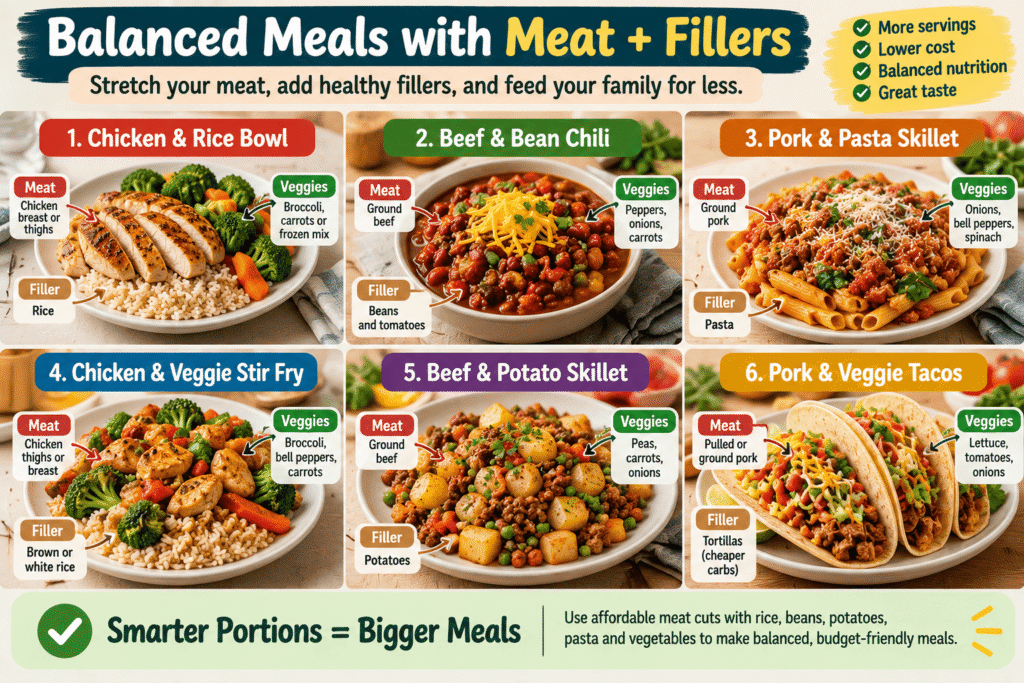
Best Ways to Stretch Meat in Family Meals
- Mix meat with beans or lentils
Beans and lentils add protein and bulk to meals like chili, tacos, and soups. - Add more vegetables to meat dishes
Vegetables such as peppers, carrots, and mushrooms make meals larger without increasing cost. - Use meat in casseroles and pasta dishes
Pasta, rice, and casseroles allow a small amount of meat to serve many people. - Make soups and stews
Soups stretch meat further because broth, vegetables, and grains add volume. - Serve meat in mixed dishes instead of large portions
Stir fry, tacos, and fried rice use small amounts of meat while still providing flavor.
Examples of Meals That Stretch Meat
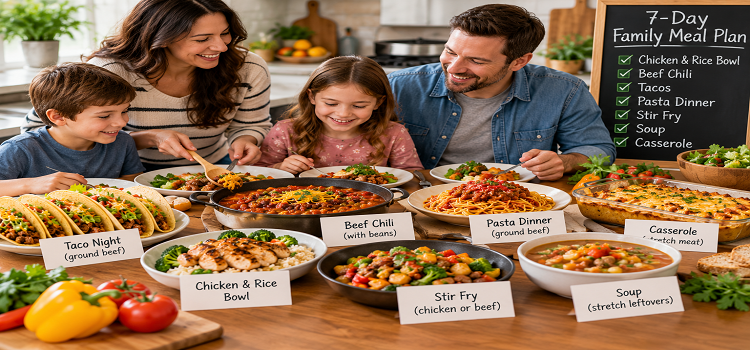
- Chili with beans and ground meat
- Chicken and vegetable stir fry with rice
- Pasta with meat sauce and vegetables
- Taco filling made with meat and beans
Tips for Stretching Meat Even Further
- Cut meat into smaller pieces so it spreads evenly in dishes.
- Use strong seasonings to keep flavor even when meat portions are smaller.
- Combine meat with grains like rice or pasta to make meals more filling.
How to Start Saving Money on Meat (Step-by-Step)
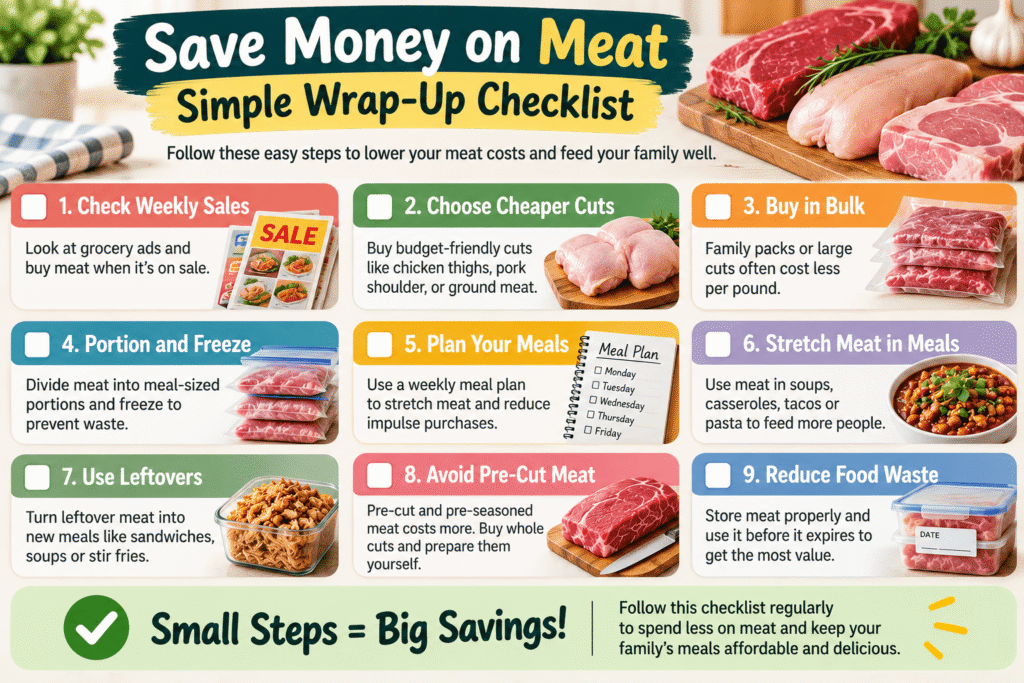
Saving money on meat starts with a simple routine. Families who plan meals, shop with a strategy, and store meat properly spend less each week. These steps help you control meat costs without making meals complicated.
Steps to Lower Your Weekly Meat Spending
- Check your weekly grocery ad first
Look for sales on chicken, pork, or beef before planning meals. - Plan meals around the cheapest meat that week
Build your menu using the meat that is currently on sale. - Buy larger cuts when prices drop
Whole chickens, pork shoulder, and large roasts often cost less per pound. - Divide meat into meal-sized portions
Split bulk packs into smaller portions before freezing. - Freeze extra meat immediately
Freezing prevents spoilage and lets you use sale prices later. - Use meat across multiple meals
One large cut can become several different dinners.
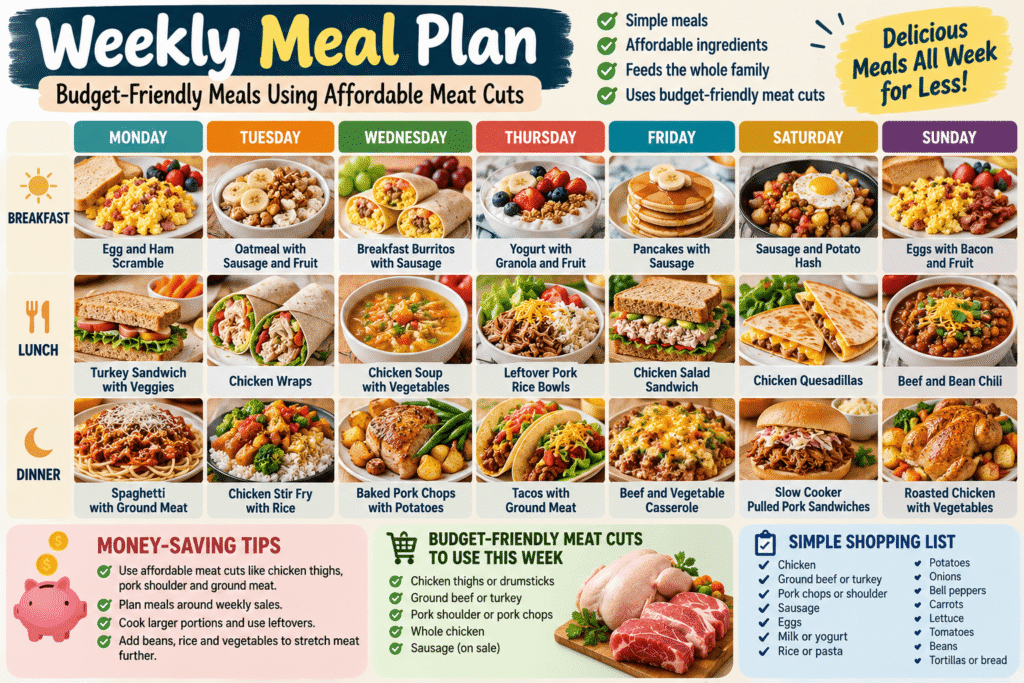
Simple Weekly Routine That Works
- Check grocery sales.
- Plan 4–5 meals around those deals.
- Buy meat in bulk when prices are low.
- Freeze what you don’t need immediately.
Following this routine helps families lower grocery costs without changing the meals they enjoy.
Extra Money-Saving Tips for Buying and Cooking Meat
Saving money on meat often comes down to small habits. Families who follow a few simple rules when shopping and cooking usually spend less without changing their favorite meals. These tips help reduce costs while still keeping meals satisfying.
Practical Tips That Lower Meat Costs
- Avoid pre-cut and pre-seasoned meat
These options cost more because stores charge for extra preparation. - Cook meat at home instead of buying prepared meals
Pre-cooked or deli meat meals are much more expensive than cooking from scratch. - Use leftovers for another meal
Cooked meat can be used the next day in sandwiches, soups, or pasta dishes. - Freeze meat before it expires
Freezing prevents waste and keeps meat usable for future meals. - Choose bone-in cuts when possible
Bone-in meat is usually cheaper and often has better flavor. - Cut larger pieces of meat at home
Buying a larger roast and slicing it yourself saves money compared to buying smaller cuts.
Small Habits That Add Up
- Cook larger meals and store leftovers.
- Use meat in mixed dishes instead of large portions.
- Rotate between chicken, pork, and beef depending on sales.
Over time, these small changes can significantly reduce a family’s grocery bill.
It also helps to build meals around pantry staples that save money
Why Saving Money on Meat Matters for Family Budgets
Saving money on meat helps families control one of the biggest parts of their grocery spending. Meat prices are often higher than other foods, so even small changes in how you buy and use meat can make a noticeable difference in the monthly food budget.
Benefits of Lower Meat Spending
- Reduces the weekly grocery bill
Spending less on meat lowers the total cost of groceries each week. - Allows families to buy other healthy foods
Savings from meat purchases can go toward fruits, vegetables, and pantry staples. - Encourages smarter meal planning
Planning meals around affordable ingredients helps prevent overspending. - Reduces food waste
Using meat carefully across multiple meals keeps food from being thrown away. - Creates long-term grocery savings
Small weekly savings add up to large yearly savings for families.
Why These Strategies Work
- Cheaper cuts often provide the same nutrition as expensive ones.
- Planning meals reduces impulse purchases at the store.
- Freezing meat during sales locks in lower prices.
Families who consistently follow these strategies often notice their grocery budget becoming easier to manage.
What is the cheapest meat to buy for families?
The cheapest meat is usually chicken, especially whole chicken, chicken thighs, and drumsticks. Pork shoulder and ground turkey are also affordable options. These cuts cost less per pound and can be used in many family meals.
Does buying meat in bulk save money?
Yes, buying meat in bulk often lowers the price per pound. Family packs or large cuts usually cost less than small packages. Dividing the meat into portions and freezing it helps families take advantage of these savings.
Is frozen meat cheaper than fresh meat?
Frozen meat is sometimes cheaper because it lasts longer and goes on sale more often. Buying frozen meat can help families stock up when prices are low and reduce food waste.
How long can meat stay frozen?
Most meat can stay frozen for several months without losing quality if stored properly. Large cuts of beef or pork can last longer, while ground meat should usually be used sooner.
How can families stretch meat for larger meals?
Families can stretch meat by mixing it with beans, lentils, vegetables, rice, or pasta. Using meat in soups, casseroles, or stir fries allows smaller portions to feed more people.
What is the best way to find meat sales?
Checking weekly grocery ads is one of the easiest ways to find meat deals. Many stores rotate sales on chicken, beef, and pork, so watching these ads helps families buy meat when prices are lower.
Conclusion
Saving money on meat is possible with a few simple habits. Buying cheaper cuts, watching grocery sales, freezing extra meat, and stretching meat across several meals can lower your weekly grocery bill. These strategies help families keep good meals on the table without overspending.
Start with one or two changes this week. Try buying meat when it’s on sale, choose budget-friendly cuts, and plan meals that stretch meat further. Over time, these small steps can make a big difference in your family’s grocery budget.