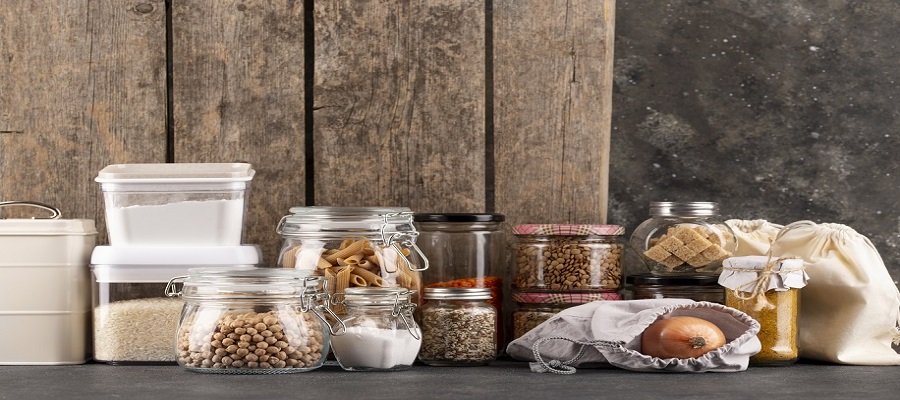
Pantry staples that save money are one of the simplest ways families can lower their grocery bills without sacrificing good meals. When your kitchen is stocked with the right shelf-stable foods, you can cook affordable dinners, stretch ingredients further, and avoid expensive last-minute grocery trips. Many budget-friendly meals start with basic pantry ingredients like rice, beans, pasta, and canned goods. These foods last a long time and work in dozens of recipes. In this guide, you’ll learn the best pantry staples that save money, how to build a smart budget pantry, and simple ways families use these ingredients to cook cheap, filling meals every week.
What Are Pantry Staples That Save Money?
Pantry staples that save money are basic shelf-stable foods used often in everyday cooking. These ingredients last a long time, cost little per serving, and work in many meals. Keeping these foods stocked helps families cook affordable dishes at home, reduce food waste, and avoid expensive last-minute grocery purchases.
Examples of Pantry Staples That Save Money
- Rice – inexpensive and works as the base for many meals.
- Dry beans – one of the cheapest protein sources available.
- Lentils – cook quickly and are great for soups and bowls.
- Pasta – quick meals with simple sauces.
- Oats – affordable breakfast and baking ingredient.
- Flour – useful for bread, pancakes, and baking.
- Canned tomatoes – base for soups, sauces, and casseroles.
- Cooking oil – essential for everyday cooking.
- Canned vegetables – long shelf life and easy to add to meals.
- Basic spices – turn simple ingredients into flavorful meals.
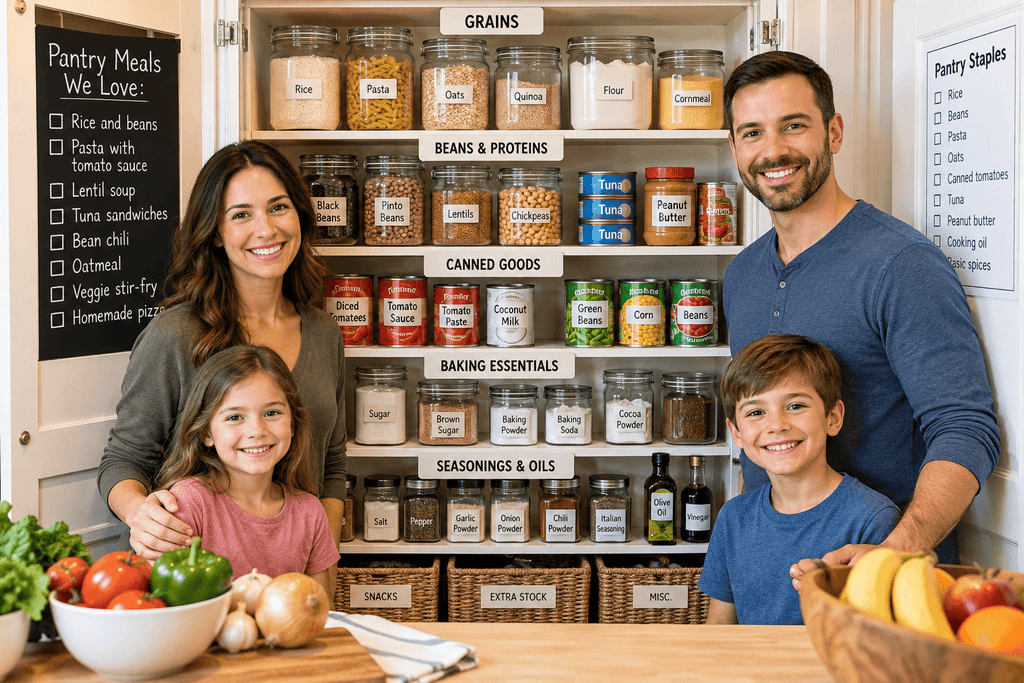
Stocking smart is a core part of how to save money on groceries
Why Pantry Staples That Save Money Lower Grocery Bills
Pantry staples that save money help families reduce grocery spending because they are inexpensive, long-lasting, and flexible in many meals. When your pantry is stocked with basic foods like rice, beans, and pasta, you can cook quick meals without buying expensive convenience foods or ordering takeout.
How Pantry Staples Reduce Food Costs
- They lower the cost per meal
Basic ingredients like rice, oats, and beans cost very little per serving compared with prepared foods. - They reduce last-minute grocery trips
When your pantry has essentials, you can cook meals without running to the store. - They help stretch expensive ingredients
Small amounts of meat or vegetables can feed more people when combined with rice, pasta, or beans. - They reduce food waste
Shelf-stable foods last longer than fresh ingredients and are less likely to spoil. - They replace expensive convenience foods
Homemade meals built from pantry staples are usually much cheaper than packaged meals or takeout.
Cheapest Pantry Staples Compared by Cost Per Serving
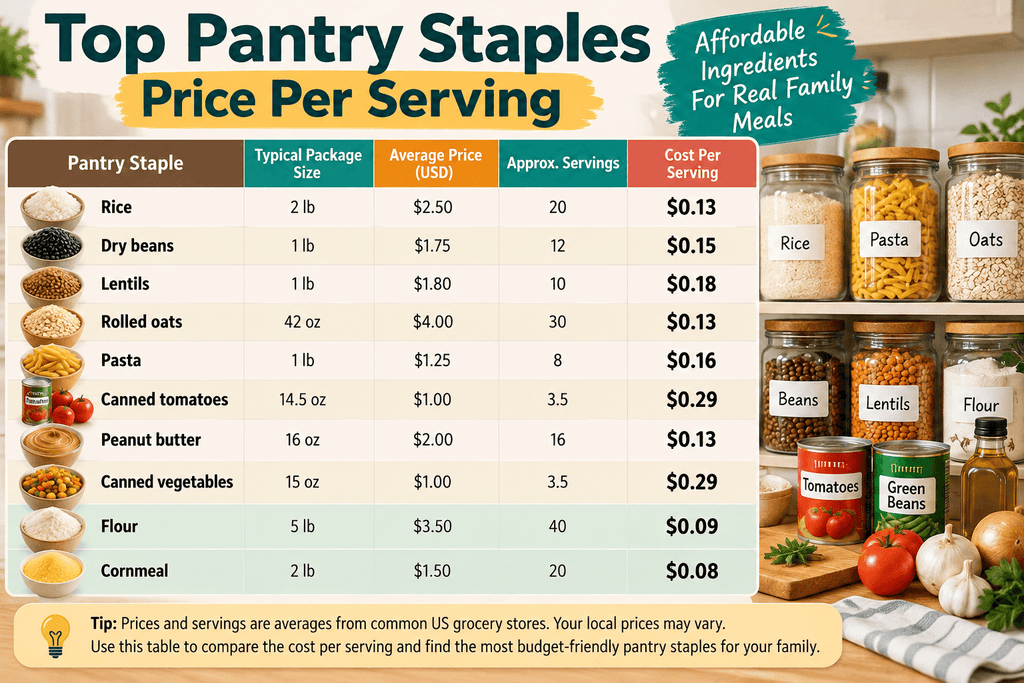
The cheapest pantry staples are foods that provide several servings for a low total cost. Rice, dry beans, lentils, oats, and pasta are often among the most affordable choices for families. Comparing the price per cooked serving helps shoppers find real savings instead of relying on package prices alone.
Which Pantry Staples Give Families the Best Value?
The table below shows illustrative US grocery prices, not verified current store prices. Use it to explain how cost-per-serving comparisons work. Replace the example prices with dated local retailer prices before publishing.
| Pantry staple | Example package price | Approx. servings | Cost per serving |
|---|---|---|---|
| White rice, 2 lb | $2.50 | 20 | $0.13 |
| Dry beans, 1 lb | $1.75 | 12 | $0.15 |
| Lentils, 1 lb | $1.80 | 10 | $0.18 |
| Rolled oats, 42 oz | $4.00 | 30 | $0.13 |
| Dry pasta, 1 lb | $1.25 | 8 | $0.16 |
| Canned tomatoes, 14.5 oz | $1.00 | 3.5 | $0.29 |
Costs are rounded. Serving sizes are based on approximate cooked yields or common label portions, which are not nutritionally equivalent. Prices and yields vary.
How to Calculate the Cost Per Serving
Use this simple formula:
\[ \text{Cost per serving}=\frac{\text{Package price}}{\text{Number of servings}} \]
For example, a $2.50 bag of rice that makes 20 servings costs about $0.13 per serving.
But price alone does not tell the whole story. Rice is an affordable meal base, while beans and lentils add protein and fiber. Combining these ingredients with vegetables creates a more balanced family meal.
Money-saving tip: Compare unit prices on grocery shelf labels, then calculate the cost of the portion your family actually eats.
21 Pantry Staples That Save Money Every Week
Pantry staples that save money are inexpensive foods with a long shelf life that can be used in many meals. These ingredients form the base of budget cooking because they are versatile, easy to store, and affordable per serving. Keeping these staples stocked helps families cook cheap meals without constant grocery shopping.
Best Pantry Staples That Save Money
- Rice – a cheap, filling base for bowls, stir-fries, and casseroles.
- Dry beans – one of the most affordable sources of protein.
- Lentils – cook quickly and work well in soups and stews.
- Oats – inexpensive breakfasts and useful in baking.
- Pasta – easy dinners that feed a whole family.
- Flour – used for bread, pancakes, and homemade baking.
- Sugar or honey – basic sweeteners for baking and cooking.
- Canned tomatoes – perfect for sauces, soups, and pasta dishes.
- Tomato paste – adds flavor to many budget meals.
- Cooking oil – needed for everyday cooking and frying.
- Vinegar – used for dressings, marinades, and cooking.
- Canned beans – quick and convenient protein option.
- Canned vegetables – long shelf life and easy to add to meals.
- Canned tuna – affordable shelf-stable protein.
- Peanut butter – filling and great for snacks or sandwiches.
- Potatoes – inexpensive and very versatile.
- Onions – add flavor to many dishes and last a long time.
- Garlic – small ingredient that adds big flavor.
- Broth or bouillon – base for soups, rice, and sauces.
- Basic spices – simple seasonings that improve cheap meals.
- Salt and pepper – essential for everyday cooking.
Pantry Staples That Replace Expensive Groceries
Pantry staples that save money can often replace more expensive grocery items. Simple ingredients like beans, rice, oats, and pasta create filling meals at a fraction of the cost of meat-heavy dishes or packaged foods. Using these staples regularly helps families lower grocery bills without sacrificing satisfying meals.
Cheap Pantry Swaps That Save Money
- Beans Instead of Expensive Meat
Beans provide protein at a much lower cost than beef or chicken. They work well in chili, tacos, soups, and rice bowls. - Lentils Instead of Ground Meat
Lentils absorb flavor easily and can replace ground meat in dishes like pasta sauce, soups, and casseroles. - Oats Instead of Packaged Breakfast Foods
Oats cost much less than boxed cereal or frozen breakfast items and can be used for oatmeal, overnight oats, and baking. - Rice Instead of Takeout Side Dishes
Cooking rice at home costs very little and pairs well with vegetables, beans, or small portions of meat. - Pasta Instead of Prepared Meals
Pasta with simple ingredients like canned tomatoes or garlic and oil can replace expensive ready-made dinners.
You can turn these into meals using budget meal planning strategies.
$25 Budget Pantry Shopping List for Families
A $25 budget pantry shopping list focuses on inexpensive ingredients that can support several family meals. Instead of purchasing every pantry essential at once, start with versatile foods such as rice, beans, pasta, oats, and canned tomatoes. Add basic seasonings and proteins as your budget allows.
Example $25 Starter Pantry
Starter pantry budgetIllustrative US prices — not a live shopping quote
$25.00
Rice, 2 lb
$2.50
Dry beans, 2 lb
$3.50
Rolled oats, 42 oz
$4.00
Pasta, 2 lb
$2.50
Canned tomatoes, 2 cans
$2.00
Lentils, 1 lb
$1.80
Peanut butter, 16 oz
$2.00
Canned vegetables, 2 cans
$2.00
Cooking oil, small bottle
$2.50
Basic seasoning
$1.20
Estimated total $24.00
Remaining budget
$1.00
This starter list can support oatmeal breakfasts, peanut butter sandwiches (with bread purchased or made separately), rice and beans, lentil soup, and simple pasta dinners.
It is not a complete weekly food budget for four people. Fresh produce, additional protein, dairy or fortified alternatives, and other foods may be needed for balanced nutrition.
How to Stretch a Small Pantry Budget
- Check your kitchen first. Remove anything you already own from the shopping list.
- Buy store brands. Compare the actual unit prices rather than assuming every store brand is cheaper.
- Choose ingredients for multiple meals. Rice, beans, and tomatoes can work together in several dishes.
- Skip unnecessary extras. Buy ingredients for planned meals before adding snacks or specialty foods.
- Use the remaining budget carefully. Save it for a missing ingredient or put it toward fresh vegetables.
Family savings example: If you avoid buying two $8 convenience meals by making two $3 pantry-based alternatives, the difference is $10. This is an illustration, not a guaranteed weekly saving.
How to Build a Budget Pantry Step by Step
Building a pantry with staples that save money does not require spending a lot at once. The best approach is to add a few key items each grocery trip. Over time, these affordable ingredients create a reliable pantry that makes cheap meals easy to cook.
Simple Steps to Start a Budget Pantry
- Start With Five Core Staples
Begin with versatile foods that work in many meals:- rice
- beans
- pasta
- oats
- canned tomatoes
- Add Basic Flavor Ingredients
These simple seasonings help turn basic ingredients into full meals:- garlic powder
- onion powder
- chili powder
- salt and pepper
- Include Shelf-Stable Proteins
Add a few items that provide quick protein for meals:- canned tuna
- canned beans
- lentils
- Expand Your Pantry Gradually
Each grocery trip, add one or two pantry staples. Over time you’ll build a pantry that supports many budget meals. - Focus on Foods Your Family Actually Eats
Choose staples that fit your normal meals so food does not sit unused.
7-Day Budget Pantry Meal Plan for a Family of Four
A seven-day pantry meal plan helps families turn inexpensive ingredients into practical breakfasts, lunches, and dinners. Using foods such as rice, beans, oats, pasta, and canned tomatoes makes weekly planning easier. Adding affordable fresh or frozen foods provides variety and helps create balanced meals without relying on expensive convenience products.
Sample Weekly Pantry Meal Plan
| Day | Breakfast | Lunch | Dinner |
|---|---|---|---|
| Monday | Oatmeal with bananas | Peanut butter sandwiches, carrots | Rice and black bean bowls with vegetables |
| Tuesday | Overnight oats with fruit | Leftover rice bowls | Lentil and tomato soup with bread |
| Wednesday | Peanut butter toast, fruit | Leftover lentil soup | Pasta with tomato sauce and vegetables |
| Thursday | Oatmeal with cinnamon | Bean and rice burritos | Baked potatoes with beans and vegetables |
| Friday | Eggs and toast | Tuna sandwiches with vegetables | Vegetable fried rice with eggs |
| Saturday | Homemade pancakes, fruit | Leftover fried rice | Bean chili with rice |
| Sunday | Oatmeal with peanut butter | Leftover chili | Pasta with lentils and tomato sauce |
This plan assumes access to additional groceries, including fruit, vegetables, eggs, bread, and tortillas. The $25 starter pantry is not enough by itself to cover all these meals.
How to Make the Meal Plan Work
- Cook rice in batches. Refrigerate it promptly and use within 3–4 days, or freeze portions for later.
- Prepare beans and lentils ahead of time. Freeze extra portions so they are ready for quick dinners.
- Plan leftovers carefully. Turn dinner ingredients into lunch the following day.
- Use frozen vegetables. They can be economical and reduce spoilage.
- Repeat affordable breakfasts. Oatmeal, toast, and eggs keep mornings simple.
The USDA also recommends planning meals around foods already in the refrigerator, freezer, and pantry, then building a shopping list around what is missing.
Money-Saving Tips When Buying Pantry Staples
Pantry staples that save money become even more effective when they are purchased the right way. Smart shopping habits help families get lower prices, stretch ingredients further, and avoid wasting food. A few simple strategies can make a big difference in your grocery budget.
Smart Ways to Save More on Pantry Foods
- Buy store brands whenever possible
Store brands usually cost less than name brands but offer similar quality. - Buy larger packages of foods you use often
Items like rice, oats, pasta, and beans usually cost less per serving in bigger bags. - Stock up when prices drop
When staple foods go on sale, buy a few extra to keep in your pantry. - Avoid specialty ingredients
Trendy or niche ingredients often cost more and may not get used often. - Keep a pantry list
Knowing what you already have prevents buying duplicates. - Plan meals around pantry foods
Build meals from what you already own before buying new ingredients.
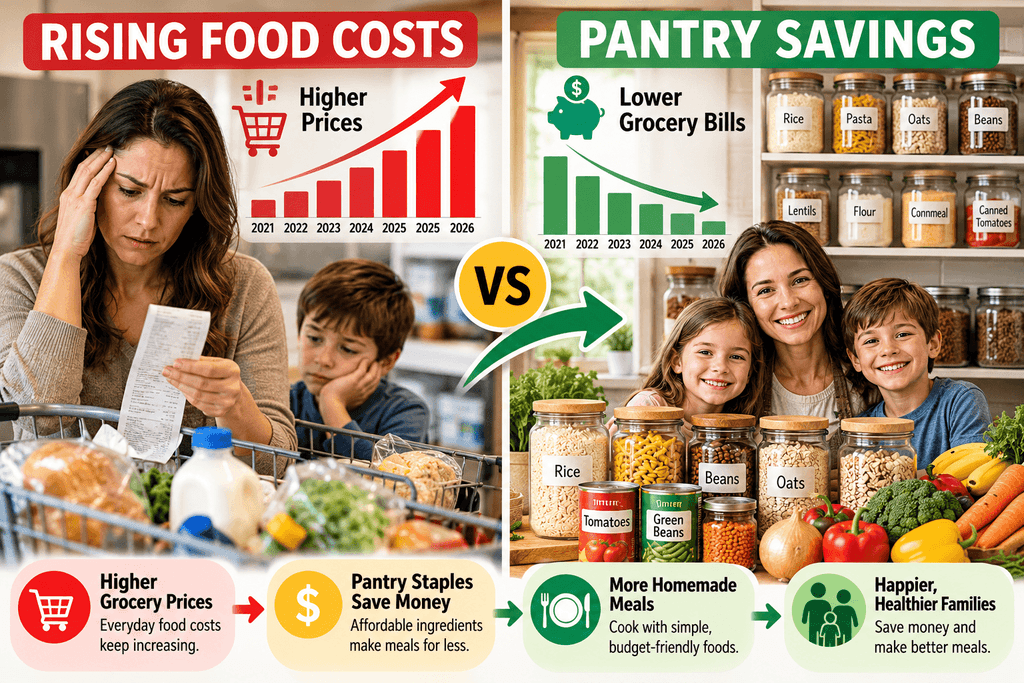
For better planning, combine this with meal prep groceries under $100
How Long Do Pantry Staples Last?
Many pantry staples remain usable for months or years when stored correctly. Dry foods such as rice and pasta generally last longer than fresh produce, while unopened canned goods can have extended shelf lives. Storage temperature, moisture, packaging, and whether a product has been opened all affect its quality and safety.
Pantry Shelf-Life Guide
| Pantry food | General storage guidance |
|---|---|
| Dry white rice | About 2 years in ordinary pantry storage |
| Dry pasta | About 2 years |
| Dried beans | Often around 1–2 years for best quality; older beans may take longer to cook |
| Rolled oats | Check the package and FoodKeeper guidance |
| Canned tomatoes | About 12–18 months unopened |
| Low-acid canned vegetables | About 2–5 years unopened |
| Cooking oil | Follow the manufacturer’s date and storage instructions |
| Potatoes and onions | Store according to their individual needs; check regularly for spoilage |
These are general guidelines, not automatic discard dates. Product labels and storage conditions matter. USDA guidance distinguishes high-acid canned foods, such as tomatoes, from low-acid canned foods, which generally have longer recommended pantry storage periods.
Food Safety and Inspection Service
Five Pantry Storage Rules That Prevent Waste
- Keep foods cool and dry. Avoid storing canned goods beside a hot stove or in a damp garage.
- Use airtight containers. Protect opened packages of flour, rice, oats, and pasta from moisture and pests.
- Rotate older foods forward. Use the first-in, first-out method.
- Inspect canned foods. Discard bulging, leaking, severely rusted, or deeply dented cans.
- Check food dates and storage instructions. A best-by date usually relates to quality, but safety depends on the food, packaging, and handling.
For item-specific guidance, readers can use the USDA FoodKeeper tool
Why Pantry Staples That Save Money Are Essential for Families
Pantry staples that save money help families keep meals affordable, reliable, and easy to prepare. Because these foods last a long time and work in many recipes, they make it easier to cook at home instead of relying on takeout or expensive convenience foods. A well-stocked pantry creates flexibility and helps families stay within their grocery budget.
Benefits of Keeping Budget Pantry Staples
- Lower grocery spending
Basic ingredients like rice, beans, and oats cost much less than packaged meals. - More meal flexibility
A stocked pantry makes it easy to cook many different meals with a few ingredients. - Less food waste
Shelf-stable foods last longer than fresh foods and are less likely to spoil. - Fewer emergency grocery trips
When pantry essentials are available, families can cook meals without running to the store. - Better control of meal planning
Pantry foods provide a reliable base for weekly meal planning.
Common Pantry Shopping Mistakes That Cost Families Money
Pantry shopping mistakes happen when families buy more food than they can use, overlook unit prices, or store ingredients incorrectly. Even inexpensive foods become costly when they spoil or sit unused. A practical pantry should contain ingredients your family enjoys, uses regularly, and can store safely.
Seven Mistakes to Avoid
- Buying bulk foods without checking unit prices. Larger packages are not automatically better deals.
- Stocking foods nobody likes. Even discounted food wastes money if your family refuses to eat it.
- Buying too many duplicates. Check your pantry before each grocery trip.
- Ignoring the cost of extra ingredients. Cheap pasta is less economical when the recipe requires several expensive additions.
- Storing everything the same way. Rice, oil, potatoes, and canned foods have different storage needs.
- Following every grocery sale. Stock up only on ingredients you regularly use and can store.
- Forgetting to plan meals. A stocked pantry saves more money when ingredients become actual meals.
Quick tip: Before buying a pantry staple, ask yourself three questions: Will my family eat it? Can I use it in at least two meals? Can I store it safely until we need it?
How Much Can Pantry Cooking Save a Family Each Month?
Pantry cooking can reduce grocery spending when families replace more expensive meals with lower-cost homemade options. Actual savings depend on ingredient prices, serving sizes, shopping habits, and how often pantry meals replace takeout or prepared foods. Comparing complete meal costs gives a more realistic estimate than comparing individual ingredients alone.
Example Monthly Savings Calculation
Suppose a family replaces a $20 prepared dinner with a $9 homemade pantry-based dinner twice each week.
Illustrative savings scenario, not measured household data
Savings per dinner
$11
Savings per week
$22
Savings over 4 weeks
$88
Savings over 52 weeks
$1,144
This example assumes comparable portions, complete ingredient costs, and no extra food waste. Families can calculate their own savings by recording actual meal costs.
Simple Pantry Savings Formula
\[ \text{Savings}=(\text{Old meal cost}-\text{New meal cost})\times\text{Meals replaced} \]
Tracking just two or three meals each week can help families identify which pantry recipes provide the best value.
Budget Pantry Checklist for Families
A budget pantry checklist helps families organize inexpensive ingredients, avoid duplicate purchases, and plan meals around foods they already own. Instead of stocking every possible ingredient, choose a small collection of foods used in your household’s favorite recipes. Check quantities before shopping and restock gradually.
Essential Pantry Checklist
Your pantry checklist: Check the items you already have at home.
Grains and baking: Rice, Pasta, Rolled oats, Flour, Baking powder
Protein and canned foodsDry beansLentilsCanned beansCanned tunaPeanut butter
Cooking essentials: Canned tomatoes, Tomato paste, Cooking oil, Vinegar, Broth or bouillon
Flavor basics: Salt and pepper, Garlic powder, Chili powder, Italian seasoning, Onions and garlic
What are the cheapest pantry foods to buy when you’re broke?
Some of the cheapest pantry foods include rice, dried beans, lentils, oats, and pasta. These ingredients provide multiple servings and work in many budget meals. Start with foods you already know how to cook, compare unit prices, and add affordable vegetables or other protein sources when possible.
How much should a family spend on pantry staples?
There is no fixed amount every family should spend on pantry staples. The right budget depends on household size, existing food supplies, dietary needs, and local prices. Start with a small amount from your regular grocery budget, such as $10–$25, and prioritize ingredients you use every week.
What pantry staples can make the most meals?
Rice, beans, lentils, pasta, oats, and canned tomatoes are among the most flexible pantry ingredients. Rice works in bowls, soups, and stir-fries. Beans can become chili, tacos, or salads. Canned tomatoes work in sauces and stews. Combining these foods with vegetables and seasonings creates more meal options.
Is it cheaper to make pantry staples at home?
Some pantry staples, such as cooked beans, bread, and certain sauces, may cost less when prepared from basic ingredients. However, homemade versions also require time, energy, and sometimes equipment. Compare the total ingredient cost with the store-bought alternative before deciding which option provides better value.
What pantry staples save the most money?
The pantry staples that save the most money are foods with a low cost per serving and a long shelf life. Examples include rice, dry beans, lentils, oats, pasta, canned tomatoes, and flour. These ingredients are inexpensive and can be used in many meals.
What are the best pantry staples for families?
The best pantry staples for families are versatile foods that work in many recipes. Common examples include rice, beans, pasta, oats, canned vegetables, peanut butter, flour, and basic spices. These ingredients help families cook filling meals without spending much money.
How long do pantry staples usually last?
Most pantry staples last several months or even longer when stored properly. Foods like rice, pasta, dry beans, and oats can stay fresh for a long time when kept in airtight containers in a cool, dry place.
Is it cheaper to buy pantry staples in bulk?
Buying pantry staples in bulk is often cheaper because the cost per serving is lower. This works best for foods you use regularly, such as rice, oats, pasta, and beans.
How can I start a pantry on a tight budget?
Start with a few inexpensive staples like rice, beans, oats, pasta, and canned tomatoes. Add one or two items each grocery trip. Over time, these basics build a strong pantry that supports cheap meals.
What meals can I make using pantry staples?
Many simple meals can be made from pantry staples, such as rice and beans, lentil soup, pasta with tomato sauce, oatmeal breakfasts, and vegetable soup. These meals are filling and inexpensive to prepare.
Conclusion
Pantry staples that save money make it easier for families to cook affordable meals while keeping grocery spending under control. Simple ingredients like rice, beans, oats, pasta, and canned tomatoes form the base of many budget-friendly dishes and last a long time in storage. By building a pantry slowly, shopping smart, and planning meals around these staples, families can stretch their food budget and reduce waste. Start by adding a few core staples to your pantry this week, and you’ll quickly see how these basic ingredients help create cheap, filling meals at home.