
Meal planning mistakes to avoid can quietly waste your time, money, and groceries every single week. Meal planning is supposed to make life easier, but many families struggle because their plan doesn’t match real life. Busy schedules, picky eaters, and rising grocery prices make planning meals harder than it used to be.
The truth is simple. A few small mistakes can turn a good plan into stress, food waste, and expensive last-minute takeout. The good news is these mistakes are easy to fix. Here, you’ll learn the most common meal planning mistakes families make and simple ways to avoid them so your weekly plan actually works.

Avoiding mistakes is key to improving your budget meal planning results.
Meal Planning Mistakes to Avoid (Quick Checklist)
Meal planning mistakes to avoid are simple errors that make weekly plans fail. Fixing these helps save time, reduce food waste, and lower grocery costs for families.
- Not checking your weekly schedule
- Planning meals that take too long
- Ignoring pantry and fridge inventory
- Trying too many new recipes at once
- Skipping meal prep time
- Forgetting to plan for leftovers
- Not having backup meals
- Buying ingredients for one recipe
- Ignoring grocery budget and sales
What Are Meal Planning Mistakes?
Meal planning mistakes are small planning errors that make weekly meal plans harder to follow. These mistakes often lead to wasted groceries, higher food costs, and stressful dinners during busy weekdays. Many families plan meals with good intentions but overlook simple steps that keep the system working smoothly.
Common problems include planning unrealistic meals, ignoring schedules, or forgetting ingredients already in the kitchen. Once you recognize these mistakes, it becomes much easier to create a weekly meal plan that actually saves time and money.
Simple Meal Planning System That Actually Works
A simple meal planning system helps families stay consistent, save money, and reduce stress. Instead of guessing each week, this system creates a repeatable routine that makes planning faster and easier.
5-Step Meal Planning System
- Check your weekly schedule first
- Review your fridge and pantry
- Choose 4–5 simple meals
- Build a clear grocery list
- Prep ingredients ahead of time
How Meal Planning Mistakes Waste Time and Money
Meal planning mistakes don’t just create stress—they quietly increase grocery bills and food waste. Small planning errors each week can lead to significant losses over time.
Common Hidden Costs
- Food waste from unused ingredients
- Extra grocery trips during the week
- Last-minute takeout meals
- Buying duplicate items
Simple Breakdown
- Wasted groceries → money lost
- Takeout → 2–3x higher cost per meal
- Poor planning → more time spent cooking
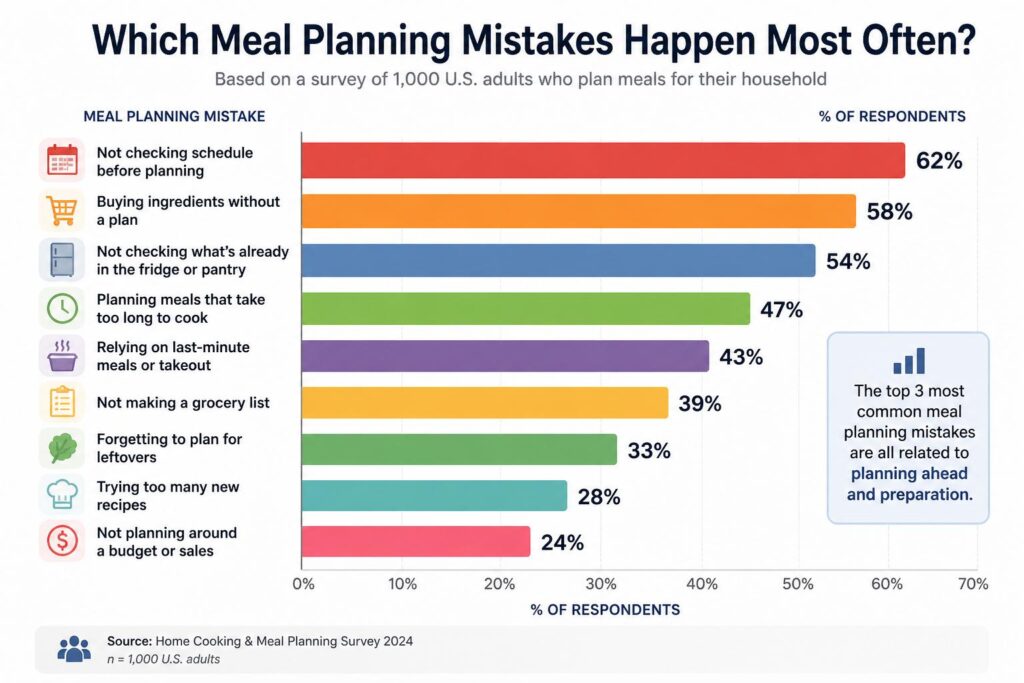
It also helps to avoid issues like impulse buying at grocery stores
Common Meal Planning Mistakes Families Make
- Ignoring your weekly schedule
- Planning meals that take too long to cook
- Trying too many new recipes at once
- Forgetting to check the pantry and fridge
- Ignoring family food preferences
- Not planning for leftovers
- Skipping meal prep time
- Buying ingredients for only one recipe
- Overcomplicating the grocery list
- Forgetting quick backup meals
- Planning meals that use expensive ingredients
- Cooking large meals without a storage plan
- Repeating the same meals every week
- Not using seasonal or sale items
- Forgetting to plan lunches and snacks
- Waiting until the last minute to cook
- Not reviewing what worked last week
Let’s break down these mistakes so you can avoid them and build a meal plan that actually works for your family.
1. Ignoring Your Weekly Schedule
Ignoring your weekly schedule is one of the most common meal planning mistakes families make. A meal plan that doesn’t match real life quickly falls apart. Busy evenings, school activities, and work shifts can make long recipes unrealistic, which often leads to takeout or skipped meals.
Why This Happens
Many people create a meal plan without checking their calendar first.
Common problems include:
- Planning slow recipes on busy nights
- Forgetting sports practices or late work hours
- Assuming everyone will be home for dinner
When the schedule gets hectic, complicated meals are usually the first thing to fail.
How to Fix This Mistake
- Check your weekly calendar before planning meals.
- Schedule quick meals for busy nights.
- Save longer recipes for weekends or slower evenings.
- Keep one or two backup meals for unexpected changes.
Matching meals to your schedule makes meal planning much easier to follow.
2. Planning Meals That Are Too Complicated
Planning complicated recipes is another mistake that can ruin a weekly meal plan. Recipes with long cooking times, many ingredients, or difficult steps often get skipped when life gets busy. Simple meals are much easier to cook consistently during the week.
Why This Happens
Many meal plans fail because people try too many new or complex recipes at once.
Common issues include:
- Recipes with too many ingredients
- Meals that take more than an hour to cook
- Techniques that require extra preparation
This quickly makes dinner feel overwhelming.
How to Fix This Mistake
- Choose simple recipes with fewer ingredients.
- Limit new recipes to two or three per week.
- Repeat meals your family already enjoys.
- Save complicated recipes for weekends.
Simple meals make meal planning sustainable and much easier to maintain.
3. Not Checking Your Pantry and Fridge First
Not checking your pantry and fridge before planning meals is a common meal planning mistake that leads to wasted food and higher grocery bills. Many families plan meals and shop for ingredients without realizing they already have items at home. This causes duplicates, forgotten ingredients, and spoiled food.
Why This Happens
People often plan meals quickly and go straight to the grocery store.
Common problems include:
- Buying ingredients you already have
- Letting vegetables spoil in the fridge
- Forgetting pantry staples like pasta, rice, or beans
Over time, these small mistakes add up and increase food waste.
How to Fix This Mistake
- Check the fridge before writing your meal plan.
- Look through pantry shelves for unused ingredients.
- Plan meals that use what you already have.
- Use older ingredients first before buying new ones.
This simple habit helps reduce food waste and keeps grocery spending under control.
4. Ignoring Family Preferences
Ignoring family preferences can quickly cause a meal plan to fail. If meals don’t match what your family actually enjoys eating, the food often goes untouched. This leads to wasted groceries and frustration during dinner time.
Why This Happens
Sometimes, meal plans focus too much on new recipes or personal choices.
Common issues include:
- Cooking meals children refuse to eat
- Forgetting dietary needs or restrictions
- Planning meals that only one person likes
When meals don’t fit family tastes, sticking to the plan becomes difficult.
How to Fix This Mistake
- Ask family members for meal ideas.
- Rotate favorite meals each week.
- Introduce new recipes slowly.
- Keep simple backup options available.
Including everyone in the meal planning process makes it much easier to follow the plan.
5. Forgetting to Plan for Leftovers
Forgetting to plan for leftovers is a meal planning mistake that leads to wasted food and extra cooking. Many families cook large meals but never schedule when those leftovers will be eaten. As a result, food sits in the fridge and eventually gets thrown away.
Why This Happens
Most meal plans focus only on new meals instead of using what is already cooked.
Common problems include:
- Cooking large portions without a leftover plan
- Forgetting about food stored in containers
- Cooking again instead of using what’s already available
This wastes both groceries and time.
How to Fix This Mistake
- Schedule leftover nights during the week.
- Turn leftovers into new meals like wraps, soups, or casseroles.
- Store leftovers in clear containers so they are easy to see.
- Freeze extra portions for future meals.
Planning for leftovers helps stretch groceries and reduces food waste.
6. Skipping Meal Prep Time
Skipping meal prep is another reason many meal plans fail. When ingredients aren’t prepared ahead of time, cooking becomes harder during busy evenings. Without some preparation, even simple meals can feel stressful after a long day.
Why This Happens
Many families underestimate how helpful small prep steps can be.
Common issues include:
- Vegetables not washed or chopped
- Ingredients not measured or organized
- Proteins not thawed in advance
These small delays make dinner preparation slower and more frustrating.
How to Fix This Mistake
- Set aside one hour each week for meal prep.
- Wash and chop vegetables in advance.
- Cook basic ingredients like rice or pasta ahead of time.
- Portion meats and freeze them for future meals.
A little preparation makes weeknight cooking much faster and easier.
7. Buying Ingredients for Only One Recipe
Buying ingredients for only one recipe is a meal planning mistake that quietly increases grocery spending. When a meal requires special ingredients that aren’t used again, the remaining portions often sit unused in the fridge or pantry. Over time, this leads to wasted food and unnecessary grocery costs.
Why This Happens
Many recipes call for unique ingredients that don’t fit into other meals.
Common problems include:
- Buying specialty sauces or spices for one meal
- Purchasing large ingredient packages for a single recipe
- Forgetting to use the remaining portions later
These leftovers often expire before they are used again.
How to Fix This Mistake
- Choose recipes that share similar ingredients.
- Plan multiple meals using the same items.
- Replace specialty ingredients with common alternatives.
- Freeze extra ingredients for future meals.
Using overlapping ingredients makes meal planning more efficient and reduces waste.
8. Overcomplicating the Grocery List
Overcomplicating the grocery list makes shopping slower and increases the chance of forgetting important items. When a meal plan includes too many ingredients or scattered items, grocery trips become stressful and disorganized.
Why This Happens
Some meal plans rely on too many different ingredients.
Common issues include:
- Recipes that require many small items
- Writing unorganized shopping lists
- Forgetting pantry staples during shopping
This often leads to multiple grocery trips during the week.
How to Fix This Mistake
- Group grocery items by store section.
- Keep a running list throughout the week.
- Focus on simple meals with fewer ingredients.
- Check your pantry before finalizing the list.
A simple and organized grocery list makes meal planning much easier to follow.
9. Forgetting Backup Meals
Forgetting backup meals is a common meal planning mistake that causes families to abandon their plan during busy days. Even the best meal plan can fail when unexpected events happen. Without quick meal options available, many families end up ordering takeout or skipping the planned dinner.
Why This Happens
Most meal plans only include full recipes and overlook quick alternatives.
Common problems include:
- No fast meals for unexpected busy nights
- Ingredients missing for planned meals
- Sudden schedule changes during the week
When this happens, dinner plans quickly fall apart.
How to Fix This Mistake
- Keep two or three emergency meals in your plan.
- Store easy options like frozen vegetables, pasta, or canned beans.
- Choose meals that can be cooked in under 20 minutes.
- Use leftovers as quick dinner options when plans change.
Backup meals keep your weekly plan flexible and prevent last-minute takeout.
10. Planning Meals That Are Too Expensive
Planning meals without considering cost is another mistake that increases grocery bills. Some recipes rely on expensive ingredients or large amounts of meat, which can quickly stretch a family’s food budget.
Why This Happens
Many meal plans focus on recipes instead of grocery prices.
Common issues include:
- Choosing meals with expensive ingredients
- Ignoring store sales and discounts
- Buying premium items when cheaper options exist
These choices can make weekly grocery spending much higher.
How to Fix This Mistake
- Plan meals around grocery store sales.
- Use affordable staples like rice, beans, and pasta.
- Replace expensive ingredients with budget alternatives.
- Include one or two low-cost meals each week.
Budget-friendly meal planning keeps grocery costs predictable and manageable.
You can stay on track with how to meal plan for a month
11. Cooking Too Much Food Without a Plan
Cooking too much food without a plan is a meal planning mistake that leads to wasted groceries. Large portions can be helpful, but only if you know how the extra food will be used. When leftovers are forgotten or stored poorly, they often end up in the trash.
Why This Happens
Many families cook large meals but don’t decide how leftovers will be used.
Common problems include:
- Making more food than the family can eat
- Storing leftovers without labeling them
- Forgetting leftovers in the back of the fridge
Over time, this creates unnecessary food waste.
How to Fix This Mistake
- Cook extra food only when you plan to reuse it.
- Label containers with the cooking date.
- Freeze extra portions for future meals.
- Turn leftovers into lunches or quick dinners.
Using leftovers intentionally helps reduce food waste and saves cooking time.
12. Repeating the Same Meals Every Week
Repeating the same meals every week can make meal planning boring and harder to maintain. When families get tired of eating the same dishes, they often abandon the plan and choose takeout or convenience foods instead.
Why This Happens
Many meal plans rely on a small group of familiar recipes.
Common issues include:
- Cooking the same meals every week
- Not trying new ingredients or flavors
- Losing interest in the meal plan
Over time, this reduces motivation to follow the plan.
How to Fix This Mistake
- Rotate new recipes every few weeks.
- Try small variations of favorite meals.
- Add seasonal ingredients for variety.
- Keep a list of meals your family enjoys.
Adding variety keeps meal planning interesting and easier to follow.
13. Ignoring Seasonal and Sale Ingredients
Ignoring seasonal foods and grocery store sales is a meal planning mistake that increases weekly food costs. Many families choose recipes first and shop later, instead of planning meals around what is affordable and available. This often leads to paying full price for ingredients that could be cheaper.
Why This Happens
Meal plans are often built without checking store deals or seasonal produce.
Common problems include:
- Buying fruits and vegetables when they are out of season
- Missing weekly grocery discounts
- Choosing recipes with expensive ingredients
These habits make grocery bills higher than necessary.
How to Fix This Mistake
- Check store flyers before planning meals.
- Choose recipes based on discounted ingredients.
- Use seasonal fruits and vegetables when possible.
- Stock up on sale items you use often.
Planning meals around sales helps stretch the grocery budget.
14. Forgetting to Plan Lunches and Snacks
Many families focus only on dinner when meal planning, but forgetting lunches and snacks creates daily stress. Without a plan, mornings become rushed and families rely on expensive convenience foods or takeout.
Why This Happens
Dinner usually gets the most attention during meal planning.
Common issues include:
- No lunch options prepared in advance
- Snacks running out during the week
- Last-minute grocery trips for quick foods
This disrupts the entire meal plan.
How to Fix This Mistake
- Plan simple lunches during your weekly meal planning session.
- Prepare snack containers ahead of time.
- Use leftovers from dinner for next-day lunches.
- Keep easy snack options ready in the fridge.
Planning lunches and snacks makes daily meals much easier to manage.
15. Waiting Until the Last Minute to Cook
Waiting until the last minute to cook is a meal planning mistake that turns dinner into a stressful rush. Even with a meal plan, starting too late often leads to shortcuts, rushed cooking, or abandoning the plan completely.
Why This Happens
Busy schedules make it easy to delay dinner preparation.
Common problems include:
- Starting dinner too late in the evening
- Ingredients not prepared ahead of time
- Feeling too tired to cook after a long day
This makes cooking feel overwhelming.
How to Fix This Mistake
- Start meal preparation earlier in the evening.
- Use simple recipes for busy nights.
- Prep ingredients in advance whenever possible.
- Set reminders for dinner preparation time.
Starting meals earlier makes dinner preparation calmer and easier.
16. Not Reviewing What Worked Last Week
Not reviewing your meal plan is a mistake that prevents improvement. Without looking back at what worked and what didn’t, families repeat the same problems every week.
Why This Happens
Most people finish the week and immediately start planning the next one.
Common issues include:
- Repeating meals the family didn’t enjoy
- Forgetting which meals caused stress
- Ignoring food waste from the previous week
This keeps the same problems in place.
How to Fix This Mistake
- Review your meal plan at the end of the week.
- Note which meals your family enjoyed most.
- Remove meals that didn’t work well.
- Adjust the plan for the following week.
Small improvements each week make meal planning easier over time.
17. Not Having a Simple Meal Planning System
Not having a simple system is the final and most important meal planning mistake. Without a clear routine, meal planning becomes inconsistent and stressful. A basic system helps families plan meals quickly and repeat the process every week.
Why This Happens
Many people rely on random recipes instead of a structured routine.
Common problems include:
- Planning meals differently every week
- Forgetting important steps like grocery lists
- Spending too much time deciding what to cook
This makes meal planning feel overwhelming.
How to Fix This Mistake
- Set a regular day each week for meal planning.
- Keep a list of family favorite meals.
- Create a simple grocery shopping routine.
- Use a weekly meal planning template.
A clear system keeps meal planning organized and consistent.
Beginner Meal Planning Mistakes to Avoid
Beginner meal planning mistakes happen when people try to do too much too fast. Many families start with complex plans that don’t match their routine. This often leads to frustration, wasted food, and giving up after just one week.
Common Beginner Mistakes
- Planning all 7 days at once
- Choosing complicated recipes
- Not checking what’s already at home
- Trying too many new meals
- Not creating a grocery list
- Ignoring time needed to cook
- Expecting perfect results in the first week
How Beginners Can Fix These Mistakes
- Start with 3–4 meals instead of a full week
- Repeat simple family meals
- Focus on easy recipes with fewer ingredients
- Build a basic grocery list before shopping
- Improve your plan slowly each week
Meal Planning Mistakes vs Simple Fixes
Meal planning mistakes become easier to understand when you see them side by side with simple fixes. This quick comparison helps families spot problems fast and apply solutions immediately.
| Meal Planning Mistake | Simple Fix |
|---|---|
| Ignoring your schedule | Plan meals based on busy vs free days |
| Cooking complex meals | Choose simple, quick recipes |
| Not checking pantry | Use ingredients you already have first |
| No meal prep | Prep ingredients ahead of time |
| Forgetting leftovers | Schedule leftover nights |
| No backup meals | Keep 2–3 quick meal options ready |
| Overspending on groceries | Plan meals around sales and staples |
| Buying single-use ingredients | Choose meals with shared ingredients |
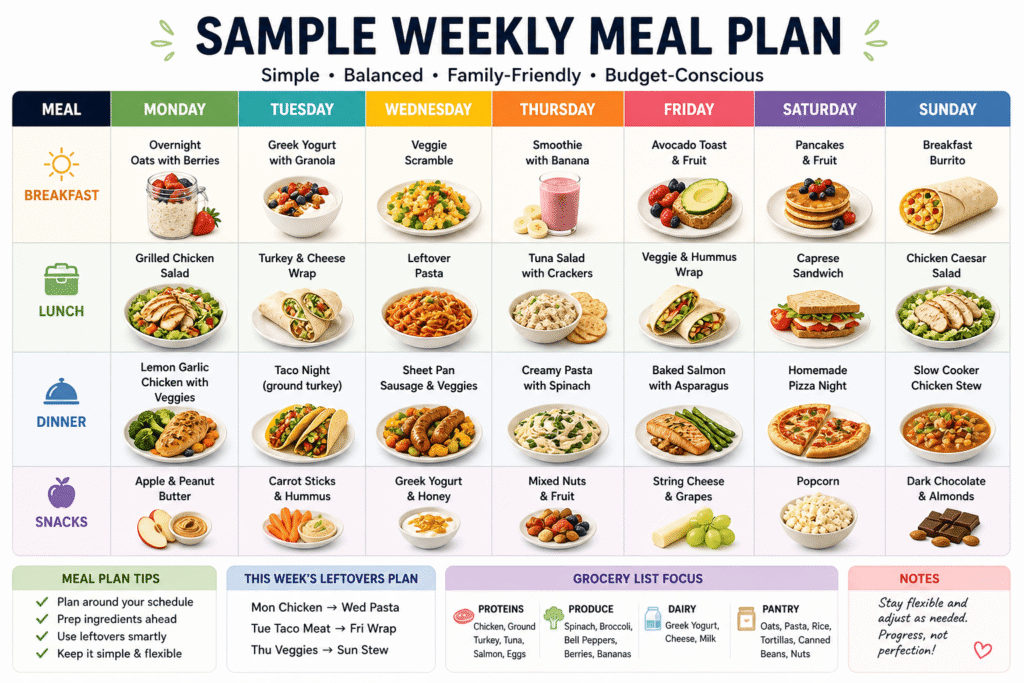
Example of a Simple Weekly Meal Plan
A simple weekly meal plan helps families stay organized and avoid common mistakes. This example shows how to balance easy meals, leftovers, and busy schedules.
Sample Plan
- Monday – Pasta with vegetables
- Tuesday – Tacos (use leftover veggies)
- Wednesday – Slow cooker chicken
- Thursday – Leftovers
- Friday – Quick stir-fry
How to Start Meal Planning the Right Way
Starting meal planning the right way means creating a simple system that fits your family’s schedule, budget, and eating habits. When done correctly, meal planning reduces food waste, lowers grocery bills, and removes the daily stress of deciding what to cook.
Step-by-Step Meal Planning System
- Check your weekly schedule.
Look at work hours, school activities, and busy evenings before choosing meals. - Check your fridge and pantry.
Use ingredients you already have before buying more groceries. - Choose 4–5 main dinners.
Leave room for leftovers, quick meals, or a night out. - Pick simple recipes.
Focus on meals your family already enjoys and limit new recipes. - Create a clear grocery list.
Write down everything you need and group items by store section. - Prep ingredients ahead of time.
Wash vegetables, portion meats, or cook basic staples early. - Schedule leftover nights.
Plan when extra food will be eaten so nothing goes to waste.
A simple weekly routine keeps meal planning fast and consistent.
Money-Saving Meal Planning Tips
Smart meal planning can significantly reduce grocery spending. Families who plan meals carefully waste less food, shop more efficiently, and rely less on expensive last-minute takeout.
Simple Ways to Save Money with Meal Planning
- Plan meals around grocery store sales.
- Use affordable staples like rice, beans, potatoes, and pasta.
- Buy ingredients that can be used in multiple meals.
- Cook larger portions and freeze leftovers.
- Use seasonal fruits and vegetables when possible.
- Keep a list of budget-friendly family meals.
- Avoid shopping when hungry to prevent impulse purchases.
These small habits can lower grocery bills over time while keeping meals simple and consistent.
Why Meal Planning Matters for Families
Meal planning helps families save time, reduce stress, and stay within their grocery budget. Without a plan, many households rely on last-minute meals or takeout, which increases spending and creates daily frustration around dinner time.
Key Benefits of Meal Planning
- Lower grocery costs.
Planning meals prevents impulse buying and reduces food waste. - Less daily stress.
Knowing what’s for dinner removes last-minute decision making. - Healthier family meals.
Planned meals often include better balance and fewer processed foods. - More time together.
Cooking becomes easier when meals are already planned. - Better grocery organization.
Shopping lists become faster and more efficient.
For many families, meal planning turns chaotic evenings into predictable routines.
Why do meal plans fail for many families?
Meal plans fail when they don’t match real schedules or family habits. Busy evenings, complicated recipes, and missing ingredients often cause people to abandon their plan. Keeping meals simple and planning around your weekly schedule makes meal planning much easier to follow.
What is the biggest meal planning mistake?
The biggest meal planning mistake is creating a plan without checking your weekly schedule. When meals take too long to cook on busy nights, families often switch to takeout or convenience foods instead of following the plan.
How many meals should you plan each week?
Most families succeed by planning four to five dinners per week. This leaves space for leftovers, quick meals, or occasional dining out. Planning fewer meals also makes grocery shopping easier and reduces food waste.
How can beginners start meal planning?
Beginners should start small. Plan a few simple dinners, check ingredients already at home, and create a grocery list before shopping. Over time, the process becomes faster and easier.
Can meal planning really save money?
Yes, meal planning helps families reduce food waste, avoid impulse grocery purchases, and cook more meals at home. These habits can significantly lower weekly grocery spending.
How do you handle picky eaters when meal planning?
Including family members in the planning process can help. Rotating favorite meals, offering simple variations, and introducing new foods gradually often makes meal planning easier for families with picky eaters.
What is the easiest meal planning method?
One of the easiest methods is using theme nights during the week. For example, pasta night, taco night, or slow cooker night. This reduces decision fatigue and makes weekly planning faster.
Meal planning mistakes to avoid are often small habits that quietly waste time, groceries, and money. When families ignore schedules, overcomplicate meals, or skip simple planning steps, the entire system can break down.
The good news is that most of these mistakes are easy to fix. With a simple weekly routine, smart grocery planning, and realistic meal choices, meal planning can save time, reduce stress, and keep grocery costs under control.
Start small. Review your schedule, choose a few simple meals, and build your plan from there. Over time, meal planning becomes one of the easiest ways to make family life more organized and affordable.