
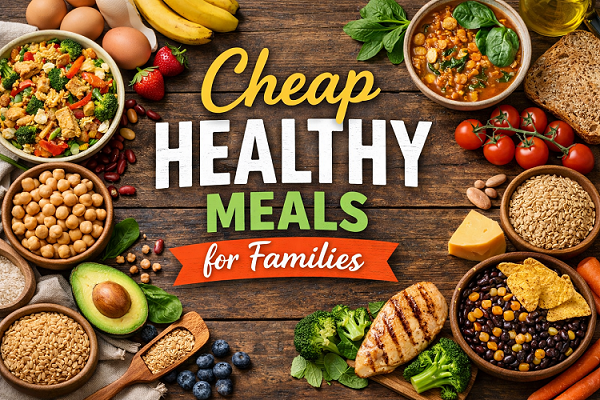
Eating healthy as a family used to feel manageable.
You cooked at home. You bought basics. You made it work.
Now prices change every week.
Groceries cost more. Kids snack more. Time feels shorter.
And families keep asking the same question:
How do we eat healthy on a budget without burning out?
Most advice doesn’t help.
It pushes expensive ingredients, complicated recipes, or unrealistic plans.
That’s not how real families eat.
Cheap healthy meals for families aren’t about hacks or trends.
They’re about habits.
Simple meals. Repeated often. Built around foods that last.
This page is a guide for families who want to eat nutritious meals affordably.
Not perfectly. Just consistently.
Take what works. Leave the rest.
1. Stop trying to cook “healthy” meals
Most families overspend trying to cook what looks healthy online.
Healthy eating on a budget starts with normal food.
Eggs. Rice. Beans. Vegetables. Oats. Potatoes.
Cheap healthy meals don’t look impressive.
They just work.
2. Cheap food is often the most nutritious food
The cheapest healthy foods are also the most basic.
Beans are cheap.
Eggs are cheap.
Frozen vegetables are cheap.
Oats are cheap.
Families eat nutritious meals affordably when they stop chasing labels.
3. Repeating meals is how families save money
Variety costs money.
Repetition saves it.
Families who eat the same cheap healthy dinners each week spend less, waste less, and stress less.
You don’t need new meals every night.
You need reliable ones.
4. Dinner decides the grocery bill
Dinner is where food budgets break.
Breakfast and lunch matter, but cheap healthy family dinners control spending more than anything else.
If dinner is planned, the rest usually falls into place.
5. Build meals that cost under $10
Healthy meals under $10 are possible for most families.
Soups.
Chili.
Rice bowls.
Pasta with vegetables.
Crockpot meals.
Meals that stretch feed more people without raising costs.
6. One-pot meals save more than money
One-pot meals use fewer ingredients and less energy.
Healthy crockpot meals for families work for this reason.
So do soups, stews, casseroles, and skillet meals.
They cook slowly, stretch food, and reduce waste.
7. Stretch meat instead of removing it
Families don’t need to stop eating meat to save money.
They need to use less of it.
Cheap healthy meals often mix small amounts of chicken, beef, or sausage with beans, rice, or vegetables.
The protein stays. The cost drops.
8. Cheap protein matters more than “lean” protein
Families overspend on protein because they’re told it must be lean or special.
The cheapest healthy proteins are simple:
- Eggs
- Beans and lentils
- Canned tuna or sardines
- Yogurt
- Peanut butter
These foods support healthy family meals without raising grocery costs.
9. Breakfast should be predictable
Cheap healthy breakfast ideas work best when they repeat.
Oatmeal.
Eggs and toast.
Yogurt with fruit.
Families who rotate a few healthy breakfasts spend less and skip morning stress.
10. Prep breakfast once, not every day
Make breakfast ahead and stop thinking about it.
Overnight oats.
Baked oatmeal.
Egg muffins.
Healthy cheap breakfasts save time and money when they’re planned.
11. Lunch is not a separate meal category
Cheap healthy lunches usually come from dinner.
Leftovers reduce food waste and lower grocery spending.
Families who plan dinners with lunch in mind eat healthy on a budget more easily.
12. School lunches don’t need variety
Cheap healthy school lunches work best when they follow a pattern.
Protein.
Carb.
Fruit or vegetable.
Snack.
Changing one item keeps kids interested without increasing costs.
13. Snacks are where budgets quietly disappear
Snacks feel small, but they add up fast.
Packaged snacks cost more per serving than almost any other food category.
Healthy snacks under $1 are usually whole foods.
14. Cheap healthy snacks are usually boring
Bananas.
Popcorn.
Hard-boiled eggs.
Toast with peanut butter.
Families save money when they stop expecting snacks to be exciting.
15. After-school snacks prevent overspending later
Hungry kids lead to expensive choices.
Frugal healthy snacks for after school reduce impulse buying and takeout spending.
Simple snacks protect the dinner budget.
16. Meal prep should feel small
Most families quit meal prep because they do too much.
Healthy family meal prep ideas work best when they’re simple.
Wash vegetables. Cook rice. Boil eggs.
That’s enough to eat healthy on a budget.
17. Prep ingredients, not full meals
Cooking full meals ahead of time leads to burnout.
Prepped ingredients give families flexibility and reduce food waste.
Cheap healthy meals come together faster when basics are ready.
18. Your freezer is part of your grocery budget
Frozen food is not lower quality.
Frozen vegetables, frozen fruit, and frozen leftovers help families eat nutritious meals affordably all year.
Freezers reduce waste more than any other habit.
19. Grocery shopping matters more than recipes
Families overspend at the store, not in the kitchen.
A short list and a plan matter more than cooking skills.
Healthy meals on a budget start before food is bought.
20. Aldi-style shopping lowers food costs fast
Stores with fewer options reduce impulse buying.
Healthy cheap meals from Aldi work because families stick to basics.
Store brands, limited choices, and simple ingredients.
21. A $50 grocery haul is built on staples
Cheap healthy meals for families come from staples, not specialty foods.
Rice.
Beans.
Eggs.
Oats.
Frozen vegetables.
Potatoes.
These foods create dozens of meals.
22. Bulk buying only saves money if you use it
Buying in bulk feels smart until food goes bad.
Healthy grocery staples are cheapest when families buy only what they cook regularly.
Waste cancels savings.
23. Seasonal food costs less
Produce is cheaper when it’s in season.
Families who eat what’s available spend less and eat better without trying.
Seasonal eating supports healthy meals on a budget naturally.
24. Organic eating doesn’t need to be all or nothing
Eating organic on a budget works best with balance.
Buy organic for a few key foods.
Buy conventional for the rest.
This keeps grocery bills under control.
25. Frozen organic produce saves money
Frozen organic fruits and vegetables last longer and cost less per serving.
They help families eat organic on a budget without waste.
26. Plant-based meals are cheaper when they’re basic
Plant-based eating saves money when families avoid specialty products.
Cheap plant-based meals for families use beans, lentils, rice, vegetables, and potatoes.
Simple plant-based dinners cost less and feed more people.
27. Vegetarian meals stretch the weekly budget
Frugal vegetarian meal plans lower grocery bills without changing every meal.
One or two meatless dinners per week reduce costs while keeping meals filling.
28. Vegan dinners don’t need substitutes
Frugal vegan dinners work best without expensive replacements.
Skip vegan cheeses and packaged foods.
Stick to whole foods.
That’s how vegan meals stay cheap and healthy.
29. Mediterranean eating is naturally budget-friendly
A budget-friendly Mediterranean diet focuses on plants, grains, and small amounts of protein.
Beans, vegetables, olive oil, and whole grains make balanced meals without high costs.
30. Low-carb meals don’t need premium ingredients
Cheap low-carb family meals avoid specialty items.
Eggs, vegetables, beans, and affordable proteins keep costs down.
31. Inflation rewards flexible families
Food prices change. Meal plans should too.
Families who adjust meals based on sales and seasons eat healthy during inflation without overspending.
32. Meals that stretch the farthest use liquid
Soups, stews, and sauces make food go further.
Healthy meals that stretch help large families eat well on a budget.
33. Grain-based meals keep people full
Rice, pasta, oats, and potatoes increase satisfaction without raising costs.
Cheap healthy dinners rely on grains more than meat.
34. Picky eaters cost families more money
Separate meals double grocery spending.
Healthy dinners for picky eaters work best when families serve familiar foods with small changes.
35. Kids eat better when meals repeat
Repeating cheap healthy kid-approved dinners builds comfort.
Comfort reduces waste. Waste raises costs.
36. The biggest money leaks come from small mistakes
Healthy meal planning mistakes waste money quietly.
Buying too much produce.
Trying new recipes every night.
Shopping without a list.
Stopping these saves more than coupons.
37. Healthy swaps save money over time
Smart swaps reduce costs without changing meals.
Dry beans instead of canned.
Whole chicken instead of parts.
Store brands instead of name brands.
Cheap healthy meals rely on swaps, not sacrifice.
38. Eating out breaks healthy food budgets fast
Even budget takeout costs more than home meals.
Families who plan meals ahead eat healthy on a budget more consistently.
39. Convenience foods charge for time
Pre-cut and pre-cooked foods raise grocery bills.
Use convenience only where it prevents burnout.
Balance saves money.
40. Fast and cheap meals can still be healthy
Families don’t need hours to cook.
Stir-fries, eggs, grain bowls, and crockpot meals make fast healthy dinners cheap and realistic.
41. Large families benefit most from structure
Structure reduces waste.
Meal rhythms, repeated grocery lists, and planned leftovers lower costs for large families.
42. Balanced meals don’t require tracking
Healthy family meals don’t need measuring or counting.
Protein.
Carbs.
Fiber.
Fat.
Keep it simple.
43. Budgeting for healthy eating is about patterns
Track habits, not perfection.
Families who understand spending patterns eat nutritious meals affordably long-term.
44. Breakfast saves more money than dinner
Cheap healthy breakfasts prevent snacking and impulse spending later.
They anchor the day.
45. Clean eating doesn’t need labels
Whole foods are already clean.
Marketing adds cost, not nutrition.
46. Meal prep saves the most when it’s boring
Simple prep lasts.
Overcomplicated systems fail.
47. Stretch meals before adding more food
Add grains, vegetables, or broth before buying more protein.
Healthy meals stretch further this way.
48. Cheap healthy foods are usually pantry foods
Rice, beans, oats, pasta, canned tomatoes, frozen vegetables.
These foods build affordable nutrition.
49. Healthy eating habits grow slowly
Families succeed when changes are small and repeatable.
Not dramatic. Not perfect.
50. Start with one habit this week
One cheap healthy meal.
One repeated breakfast.
One planned grocery trip.
That’s how families eat healthy on a budget without burnout.