Kids get bored fast. Expensive toys lose their charm in days. And parents end up with clutter and wasted money.
DIY toys fix that. They cost less, spark creativity, and kids feel proud playing with something they helped make. Plus, homemade toys often keep children engaged longer than store-bought ones.
This guide shows practical DIY toys kids actually love. These ideas are easy, affordable, and tested by families. You can make most of them with things already at home.
Let’s get started.
Why DIY Toys Work Better Than Many Store Toys
Kids don’t care about price tags. They care about fun and imagination.
Homemade toys work because:
✔ Kids help build them, so they feel connected
✔ Toys match your child’s interests
✔ They encourage creativity and problem-solving
✔ Materials are cheap and easy to replace
✔ Toys evolve as kids invent new ways to play
And parents save money while reducing waste.
What Makes a DIY Toy a Hit With Kids?
Before making anything, know what kids enjoy.
Successful DIY toys usually:
✔ Let kids build, change, or customize
✔ Allow many ways to play
✔ Survive rough use
✔ Match the child’s age and interests
✔ Encourage movement, creativity, or storytelling
Simple beats complicated every time.
DIY Toys for Toddlers (Simple & Safe)
Toddlers love toys they can touch, stack, and explore safely.
1) Sensory Bottles
Fill plastic bottles with rice, beads, glitter, or colored water.
✔ Calms kids
✔ Helps sensory development
✔ Easy to customize
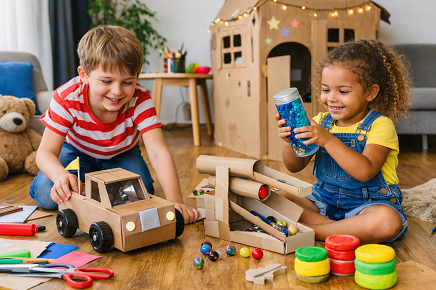
2) Cardboard Box Cars or Houses
Large boxes become play spaces.
✔ Cut windows and doors
✔ Let kids color or paint
✔ Use as cars, kitchens, or forts
Kids often play longer with boxes than toys.
3) DIY Shape Sorters
Cut shapes into boxes and use matching blocks or cardboard pieces.
✔ Builds problem-solving skills
✔ Improves motor control
✔ Very cheap to make
DIY Toys for Preschoolers and Older Kids
Older kids enjoy toys that involve creativity and challenges.
4) Homemade Playdough
Make soft dough using flour, salt, oil, and food coloring.
✔ Cheap and reusable
✔ Great for creativity
✔ Easy clean-up
Store in airtight containers.
5) DIY Puppet Theater
Use a cardboard box or curtain space.
✔ Kids create characters
✔ Encourages storytelling
✔ Great for siblings or friends
Make simple sock or paper puppets.
6) Marble Run From Cardboard Tubes
Tape paper towel tubes to walls or boards.
✔ Teaches physics basics
✔ Kids love experimenting
✔ Easy to rebuild differently each time
7) Build-Your-Own Obstacle Course
Use cushions, ropes, chairs, and boxes.
✔ Burns energy indoors
✔ Improves balance and coordination
✔ Kids can redesign it daily
Perfect for rainy days.
Eco-Friendly DIY Toys From Household Items
Many great toys come from things you normally throw away.
Try using:
✔ Toilet paper rolls
✔ Old clothes for costumes
✔ Plastic containers
✔ Bottle caps for games
✔ Old newspapers or magazines
Kids also learn recycling habits naturally.
Cheap Materials That Work Best
You don’t need craft store supplies.
Most useful items:
✔ Cardboard boxes
✔ Tape and glue
✔ Child-safe scissors
✔ Markers and crayons
✔ Paper cups and plates
✔ Fabric scraps
✔ Recycled containers
Keep a small craft bin ready for quick projects.
Safety Tips Every Parent Should Follow
Fun matters, but safety comes first.
✔ Avoid sharp edges
✔ Use child-safe paint and glue
✔ Secure small parts for toddlers
✔ Supervise cutting or tool use
✔ Check toys regularly for damage
Fix or replace worn parts quickly.
How to Make Kids Love the Toy Even More
Involve kids in making it.
Ask:
✔ What should we build?
✔ What colors should we use?
✔ How should it work?
When kids help design, they play longer.
Let them modify toys later too.
Common DIY Toy Mistakes to Avoid
Many parents quit because early attempts fail.
Avoid these mistakes:
✔ Making toys too complicated
✔ Spending too much time building
✔ Expecting perfection
✔ Not letting kids help
✔ Giving up after one attempt
Simple toys usually win.
How DIY Toys Save Families Money
Buying toys every month gets expensive.
DIY toys:
✔ Reduce toy purchases
✔ Reuse materials at home
✔ Replace broken toys easily
✔ Create bonding time without spending
Families often save hundreds yearly.
Keeping DIY Toys Fresh and Fun
Kids lose interest if toys never change.
Easy upgrades:
✔ Add new decorations
✔ Change game rules
✔ Combine toys for new play
✔ Rotate toys weekly
Small changes bring big excitement.
Final Thoughts: Start Small and Keep Going
DIY toys kids actually love don’t need perfection. They need imagination and participation.
Start with one simple project this week. Use materials you already have. Let kids help. Watch how proud they feel playing with something they helped create.
Try one toy today. Then build another next weekend. Small steps turn into lasting family habits.
And the best part? The memories last longer than any store-bought toy.
What are the best DIY toys kids actually love at home?
The best DIY toys kids actually love include sensory bottles, cardboard forts, homemade playdough, marble runs, and obstacle courses. These toys encourage creativity, movement, and problem-solving. They cost little, reuse household materials, and keep children engaged longer than many store-bought toys.
Are DIY toys really better than store-bought toys for kids?
DIY toys often outperform store toys because kids help create them, which increases attachment and playtime. Homemade toys support creativity, imagination, and hands-on learning while reducing clutter and costs. Many parents find children return to DIY toys repeatedly compared to expensive commercial alternatives.
How can I make cheap DIY toys that kids won’t get bored of?
Focus on toys that allow multiple ways to play, such as cardboard playhouses, obstacle courses, or craft kits. Use recycled materials and let kids customize designs. Toys that change or grow with play keep children interested longer and reduce boredom.
What materials are best for making DIY toys at home?
Cardboard boxes, paper rolls, fabric scraps, plastic containers, tape, markers, and glue work best for DIY toys. These materials are cheap, easy to replace, and safe when used correctly. Keeping a small craft supply box ready makes quick toy projects simple anytime kids need entertainment.
What are safe DIY toys for toddlers?
Safe DIY toys for toddlers include sensory bottles, soft stacking blocks, shape sorters, and fabric play items. Avoid small parts and sharp edges. Use child-safe materials and supervise play. Simple toys that encourage touching, stacking, and exploring work best for young children.
Can DIY toys help child development and learning?
Yes. DIY toys support motor skills, creativity, social play, and problem-solving. Activities like building marble runs or creating puppet shows improve thinking and communication skills. Homemade toys also encourage independent play and imagination, which are essential for early childhood development.
How much money can families save by making DIY toys?
Families can save hundreds yearly by replacing frequent toy purchases with homemade options. DIY toys reuse household materials, cost little to repair, and reduce impulse toy buying. Many parents notice children play longer with homemade toys, cutting the need for constant new purchases.
How do I make DIY toys kids will actually use often?
Involve kids in designing and building the toy. Ask what they want and let them help decorate or modify it. Toys children help create feel personal, so they use them longer. Simple, customizable toys outperform complex projects that limit creativity.
What are quick DIY toys for rainy days or indoor play?
Quick indoor DIY toys include obstacle courses, cardboard tunnels, homemade playdough, craft stations, and sock puppet shows. These projects take under thirty minutes and use items already at home. They help burn energy indoors while keeping kids entertained without screens or extra spending.