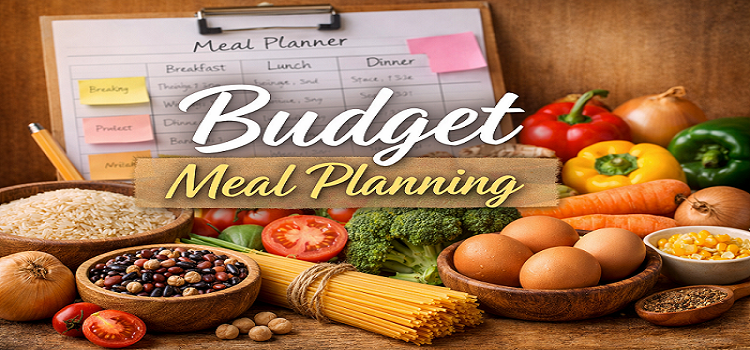
Budget meal planning helps families cut grocery bills 15–30% by planning meals before shopping, using low-cost staples, scheduling leftovers, and shopping once per week. By repeating 10–15 core dinners and reducing food waste, many households save $1,500+ per year while keeping meals simple and predictable.
How Does Budget Meal Planning Work for Families?
Budget meal planning works by deciding meals before shopping, building a strict grocery list, and using ingredient overlap to reduce waste. Families plan 5–6 core dinners per week, schedule leftover nights, and shop once. This structure lowers impulse spending, cuts takeout costs, and reduces grocery bills by 15–30% over time.
What Is the Core Budget Meal Planning Framework?
Budget meal planning is not about recipes first. It is about structure first.
Most families overspend because food decisions happen daily. When dinner is undecided at 5 p.m., spending rises. Planning removes that risk.
A simple family meal planning system follows five steps.
Step 1 — Set a Weekly Grocery Budget
Start with a fixed number.
Example:
- Family of 4
- Target: $150 per week
- Monthly projection: $600
Write the number down before planning meals. The budget controls the plan. The plan does not control the budget.
This is the foundation of budget meal planning for families.
Step 2 — Plan 5 Core Dinners + 2 Leftover Nights
Do not plan 7 new dinners.
Plan:
- 5 primary dinners
- 1 leftover night
- 1 flexible/freezer night
Leftovers are scheduled, not accidental. This is how meal planning on a budget reduces waste.
If each dinner produces 1 extra serving per person, that covers 1 full additional meal for a family of 4.
Step 3 — Build One Master Meal Prep Shopping List
Everything must tie to a meal.
No random items.
No “just in case” purchases.
A strong meal prep shopping list includes:
- Proteins (measured by meals planned)
- Carbohydrates (rice, pasta, potatoes)
- Vegetables (shared across multiple meals)
- Pantry basics
This step alone reduces impulse grocery spending by 10–20%.
Step 4 — Shop Once and Avoid Midweek Trips
Multiple grocery trips increase spending.
Data shows unplanned store visits increase total grocery costs by up to 25%. Small impulse items add up.
One trip per week supports:
- Budget control
- Fewer impulse purchases
- Stronger structure
This is where cheap meal planning becomes consistent.
Step 5 — Use Ingredient Overlap to Reduce Waste
Ingredient overlap is the hidden savings engine.
Example:
- Chicken used for tacos
- Same chicken used for soup
- Extra chicken used for lunch wraps
Vegetables should appear in 2–3 meals.
Grains should appear in 3–4 meals.
Overlap reduces spoilage. This is how families reduce food waste with meal planning without effort.
Why Does Meal Planning Reduce Grocery Costs?
Budget meal planning lowers spending because it reduces three expensive behaviors: impulse buying, food waste, and takeout decisions.
Let’s break it down.
Cutting Impulse Spending
Without a plan:
- Extra snacks
- Unplanned convenience foods
- Marketing-driven purchases
With a plan:
- Every item has a job
- The cart matches the list
- Spending stays predictable
This is why structured meal planning for families works better than reactive shopping.
Lowering Food Waste
The average family wastes 20–30% of groceries purchased.
Meal planning prevents this by:
- Scheduling leftovers
- Using ingredient overlap
- Auditing the fridge weekly
This supports both frugal meal planning and sustainability.
Preventing Takeout Decisions
Unplanned dinners lead to takeout.
If one $35 takeout order happens weekly:
- $35 × 4 = $140/month
- $1,680/year
Budget meal planning eliminates emergency food spending. That alone can cut food costs dramatically.
Weekly vs Monthly Planning Models
Both weekly and monthly systems work. The key is choosing one and staying consistent.
Weekly Meal Plan Structure
Best for beginners.
Process:
- Set weekly budget
- Plan 5 dinners
- Build list
- Shop once
This supports systems like a weekly meal plan for $50 for smaller households or scaled budgets for larger ones.
How to Meal Plan for a Month
Monthly planning reduces decision fatigue even further.
Instead of planning 30 meals, rotate 10–12 core dinners across four weeks.
Example rotation:
- 2 pasta nights
- 2 rice-based meals
- 1 soup night
- 1 slow cooker meal
- 1 leftover night
This model works well for families running a 30-day budget meal challenge.
When to Use a 30-Day Budget Meal Challenge
Use a 30-day reset when:
- Grocery spending feels out of control
- Too much food is wasted
- Takeout frequency is high
Track weekly spending for 4 weeks. Aim for a 10–15% reduction. Most families see results within the first month of structured budget meal planning.
What Is the Cheapest Way to Meal Plan Without Sacrificing Nutrition?
The cheapest way to meal plan is to build meals around low-cost staple ingredients, rotate affordable proteins, and repeat structured dinners weekly. Nutrition stays balanced by combining whole grains, legumes, vegetables, and moderate protein portions. Families reduce grocery costs 15–25% when meals are built from consistent, overlapping ingredients instead of new recipes.
The Low-Cost Ingredient Framework
Cheap does not mean low quality. It means strategic.
The foundation of cheap meal planning is predictable, affordable ingredients used repeatedly.
A strong low-cost framework includes:
- 2–3 carbohydrate bases
- 2–3 protein sources
- 4–6 seasonal vegetables
- Pantry staples for flavor
This supports both nutrition and budget control.
Cheap Protein Rotation Model
Protein is usually the most expensive grocery category.
Instead of building every meal around meat, rotate lower-cost options:
- Beans
- Lentils
- Eggs
- Chicken thighs
- Canned tuna
Use meat as an ingredient, not the centerpiece.
Example:
Instead of 1 pound of chicken per meal, use ½ pound combined with beans or rice.
This keeps meals filling while supporting budget meal planning for families.
High-Volume Carbohydrate Base Strategy
Carbohydrates stretch meals.
Low-cost bases include:
- Rice
- Pasta
- Potatoes
- Oats
- Homemade bread
These provide volume and energy at a fraction of protein cost.
Example cost comparison per serving:
- Rice: ~$0.20
- Pasta: ~$0.30
- Potatoes: ~$0.25
Combined with vegetables and modest protein, this forms complete meals under $1.50 per serving.
This is how cheap dinners that stretch food the farthest are structured.
Seasonal Vegetable Optimization
Vegetables are cheapest when in season or frozen.
Strategies:
- Buy seasonal produce
- Use frozen vegetables for consistency
- Choose hardy vegetables (carrots, cabbage, onions)
Vegetables should appear in multiple meals.
Example:
Roasted vegetables → side dish
Leftovers → soup
Extra → fried rice
This approach supports healthy meal planning on a budget.
Cost-Per-Serving Planning Method
Families overspend because they plan meals emotionally, not mathematically.
Instead, estimate cost per serving.
Target:
- $1.00–$2.00 per serving for dinners
- $0.50–$1.00 per serving for lunches
This keeps weekly food budgets stable.
$5 Dinner Structure
A realistic $5 dinner idea for families follows this formula:
- $2 carbohydrate base
- $2 protein
- $1 vegetables
Feeds 4–5 people depending on portion size.
Example:
- 1 lb pasta
- Lentil-based sauce
- Frozen vegetables
Total: ~$5–$7 depending on region.
Cost Allocation Formula
For a $150 weekly grocery budget:
- 40% staples (rice, pasta, oats, potatoes)
- 30% protein
- 20% vegetables
- 10% dairy, sauces, extras
This prevents protein overspending.
It also keeps meal planning on a budget balanced and structured.
Portion Control Without Restriction
Cost control is not about smaller meals.
It is about balance.
Plate formula:
- ½ vegetables
- ¼ carbohydrate
- ¼ protein
Vegetables and carbs are lower cost. Protein remains moderate.
This supports both budget control and nutrition.
How to Plan Meals Under $50 Per Week
Smaller households can operate effectively under $50–$75 weekly with structure.
A realistic weekly meal plan for $50 includes:
- 2 rice-based meals
- 1 pasta meal
- 1 bean or lentil meal
- 1 egg-based meal
- 2 leftover nights
Repetition lowers waste. Waste increases spending.
Weekly Meal Plan for $50 Template
Example 5-dinner rotation:
- Bean chili with rice
- Pasta with vegetable sauce
- Egg fried rice
- Potato and lentil soup
- Chicken thigh stir-fry
Total grocery cost: controlled by overlap.
Budget Breakdown Model (Example)
$50 weekly grocery split:
- $15 grains & carbs
- $15 protein
- $12 vegetables
- $8 dairy/extras
This keeps frugal meal planning measurable and sustainable.
Emergency Pantry Meal System
Every family should maintain 3 backup meals made entirely from pantry items:
Example:
- Pasta + canned tomatoes
- Rice + beans
- Oats + eggs + frozen vegetables
These prevent emergency takeout.
One avoided $30 takeout order equals nearly half a week’s grocery budget.
This is how the cheapest way to meal plan protects long-term savings.
How Can Families Meal Plan on a Tight Budget?
Families can meal plan on a tight budget by fixing a weekly spending limit, prioritizing staple foods, rotating affordable proteins, and planning meals around what they already own. A pantry-first strategy, ingredient overlap, and strict grocery lists can reduce food costs 20% or more without sacrificing nutrition.
Grocery Budget Allocation Framework
When money is tight, structure matters more than variety.
Instead of guessing, assign percentages to categories. This prevents overspending in high-cost areas like meat and convenience foods.
A controlled allocation keeps budget meal planning for families stable even during price increases.
50/30/20 Food Budget Split
For tight budgets, use this model:
- 50% staples (rice, pasta, oats, potatoes, flour)
- 30% protein (beans, eggs, chicken thighs, canned fish)
- 20% vegetables & fruit
Example for $100/week:
- $50 staples
- $30 protein
- $20 produce
This structure supports meal planning on a budget while maintaining balanced nutrition.
Anchor Protein Method
Instead of buying random proteins, choose one anchor protein per week.
Example:
- Week 1: Chicken thighs
- Week 2: Beans & lentils
- Week 3: Ground turkey
- Week 4: Eggs + canned tuna
Build 2–3 dinners around that anchor.
This reduces waste and simplifies planning. It also supports cheap family meals without constant menu changes.
Pantry-First Planning Strategy
Before writing a grocery list, audit the pantry and freezer.
Ask:
- What protein do we already have?
- What grains need to be used?
- What vegetables are near expiration?
Build meals around existing inventory first.
This is one of the most effective reduce food waste meal planning strategies available.
Meal Planning Without Coupons
Coupons are optional. Structure is not.
Families can save significantly without chasing discounts by focusing on repeatable systems and smart purchasing.
Planning Around Sales (Without Chasing Deals)
Check weekly sales after drafting your meal plan.
If your planned protein is on sale, great.
If not, adjust next week.
Do not rebuild your entire menu around random promotions. That leads to waste.
This keeps meal planning without coupons simple and controlled.
Avoiding Marketing Traps
Tight budgets collapse when marketing influences decisions.
Avoid:
- Pre-cut vegetables
- Single-serve snacks
- Name-brand loyalty
Store brands typically reduce grocery bills 10–20%.
This is practical frugal meal planning in action.
Store Brand Optimization
Test store-brand versions of:
- Rice
- Pasta
- Oats
- Canned beans
- Frozen vegetables
Most families cannot detect quality differences in cooked meals.
Switching fully to store brands can lower monthly food costs by $40–$80 depending on household size.
Tight Budget Family Meal Structure
When money is limited, predictability wins.
Avoid planning seven different dinners. Rotate reliable, overlapping meals.
Cheap Family Meals That Repeat Well
Meals that repeat successfully:
- Chili
- Fried rice
- Pasta bake
- Potato soup
- Bean tacos
Repetition reduces ingredient waste and simplifies grocery lists.
This supports budget dinners for families without mental overload.
Stretching One Dinner Into Two Meals
Cook larger portions intentionally.
Example:
Roast chicken night → chicken wraps next day
Chili → chili over baked potatoes
Rice bowl → rice + eggs next night
This is structured leftover scheduling, not accidental leftovers.
It strengthens budget meal planning for families long-term.
Using Leftover Makeover Recipes
Leftovers need structure.
Common conversions:
- Cooked vegetables → soup base
- Cooked meat → tacos or pasta
- Extra rice → fried rice
These simple leftover makeover recipes prevent 20–30% grocery waste.
One avoided wasted grocery bag per week can equal $500–$800 annually.
Tight Budget Example (Family of 4)
Weekly budget: $120
Projected monthly: $480
Using tight-budget systems:
- Anchor protein
- Pantry-first planning
- One shopping trip
- 2 leftover nights
- 1 vegetarian meal
Possible savings: $80–$150 per month compared to unstructured shopping.
That’s the power of structured meal planning on a budget.
What Budget Meals Feed a Family Cheaply and Efficiently?
Budget meals that feed a family cheaply rely on bulk ingredients, one-pot preparation, and intentional leftovers. The most efficient meals combine a low-cost carbohydrate base, a moderate protein portion, and seasonal vegetables. Structured correctly, these meals cost $1–$2 per serving and produce extra portions for future lunches or dinners.
Cheap Dinners That Stretch Food the Farthest
Meals that stretch well share three traits:
- They use affordable staple ingredients.
- They scale easily for larger families.
- They reheat without losing quality.
These are the backbone of budget dinners for families.
One-Pot Budget Meals
One-pot budget meals reduce cleanup and maximize ingredient efficiency.
Examples:
- Lentil soup with rice
- Chicken and vegetable stew
- Pasta with beans and tomato sauce
- Egg fried rice
One-pot cooking reduces wasted ingredients and simplifies prep. Fewer steps also mean fewer abandoned plans.
Average cost per serving: $1.00–$1.75.
Casseroles and Batch Recipes
Casseroles work because they combine leftovers and pantry staples into one dish.
Examples:
- Baked pasta with vegetables
- Potato and chicken bake
- Rice and bean casserole
These meals are ideal for batch cooking on a budget. Cook once. Eat twice.
A single casserole can produce:
- Dinner for 4
- 4 lunch servings
- Or a second dinner night
That efficiency lowers overall grocery spending.
Rice Bowl and Stir-Fry Systems
Rice bowls are one of the most adaptable cheap family meals.
Structure:
- Base: rice
- Protein: beans, eggs, chicken thighs
- Vegetables: whatever is seasonal or frozen
- Sauce: simple soy, garlic, tomato, or yogurt-based dressing
The same structure supports multiple variations without new ingredients.
This is ingredient overlap in action.
Budget Meal Planning for Large Families
Larger families require scaling systems, not different strategies.
The goal is efficiency, not variety.
Scaling Recipes Efficiently
Instead of doubling every ingredient equally, scale intelligently:
- Increase carbohydrate base fully.
- Increase vegetables fully.
- Increase protein moderately.
Example:
Original recipe calls for 1 lb chicken.
Large family version uses 1 lb chicken + 1 cup beans.
This maintains nutrition while protecting the budget.
Bulk Cooking Efficiency Model
For budget meal planning for large families, cook large portions intentionally.
Cook:
- 2 lbs rice
- 2 trays roasted vegetables
- 1 large protein batch
Use across multiple meals.
Bulk cooking reduces per-serving cost by improving energy efficiency and minimizing waste.
Storage and Reuse Strategy
Efficiency fails without storage discipline.
Use:
- Clear containers
- Label dates
- Schedule leftovers
Without scheduling, leftovers become waste.
With scheduling, leftovers become planned savings.
Vegetarian Meals on a Budget
Vegetarian meals significantly reduce grocery spending when structured properly.
Legumes and grains offer protein at a fraction of meat cost.
Meatless Rotation Strategy
Add 1–3 meatless dinners per week.
Examples:
- Lentil soup
- Black bean tacos
- Chickpea curry
- Egg and vegetable fried rice
This strengthens vegetarian meals on a budget without sacrificing fullness.
Legume-Based Protein Planning
Beans and lentils cost dramatically less than meat.
Example average cost per pound:
- Dry beans: ~$1.50
- Lentils: ~$1.80
- Chicken breast: ~$4–$6
Switching two meat meals per week to legumes can save $40–$80 per month.
This is measurable frugal meal planning.
Budget-Friendly Healthy Meal Prep
Healthy does not require expensive ingredients.
Build meals using:
- Oats
- Rice
- Beans
- Eggs
- Frozen vegetables
- Cabbage
- Carrots
These support healthy meal planning on a budget and work well for batch prep.
Cook once. Portion. Store. Rotate.
Example Weekly Efficient Dinner Structure (Family of 4)
- Monday: Lentil soup + bread
- Tuesday: Chicken and rice
- Wednesday: Leftovers
- Thursday: Vegetable pasta bake
- Friday: Egg fried rice
- Saturday: Slow cooker stew
- Sunday: Leftovers
Each meal uses overlapping ingredients.
Estimated weekly cost: 15–25% lower than unplanned shopping.
Efficient meals are not complicated. They are structured, repeatable, and scalable.
That is how families feed everyone well while protecting their grocery budget.
How Do Families Meal Plan for Busy Weeks Without Burnout?
Families avoid burnout by simplifying meals, reducing decision-making, and building backup systems for chaotic days. Busy-week meal planning focuses on fast dinners, freezer meals, and repeatable themes. When effort decreases during high-stress weeks, consistency increases — and grocery spending stays controlled.
Meal Planning for Busy Families
Busy schedules break complex plans.
The solution is not better discipline. It is simpler structure.
For meal planning for busy families, reduce cooking time and reduce new recipes.
20-Minute Dinner System
Choose 3–4 meals that can be prepared in 20 minutes or less.
Examples:
- Egg fried rice
- Pasta with canned tomato sauce
- Quesadillas with beans
- Stir-fry with frozen vegetables
These meals rely on pantry staples.
They protect the plan when time disappears.
Theme Night Structure
Theme nights eliminate daily decision fatigue.
Example rotation:
- Monday: Pasta night
- Tuesday: Taco night
- Wednesday: Slow cooker night
- Thursday: Leftovers
- Friday: Pizza or simple meal
This system supports simple meal planning without constant creativity.
When families know Tuesday is taco night, planning becomes automatic.
Decision Fatigue Reduction
Each daily food decision consumes energy.
Reduce variables:
- Repeat breakfasts
- Repeat lunches
- Rotate 10–12 core dinners monthly
Repetition lowers stress and supports sustainable budget meal planning for families.
Freezer Cooking for Beginners
Freezer meals are insurance.
You do not need a freezer full of food. You need 2–3 backup meals ready at all times.
3-Meal Backup System
Always keep:
- 1 soup or stew
- 1 pasta-based meal
- 1 protein + rice option
This prevents emergency takeout.
One avoided $35 takeout order per week equals $1,820 annually.
This is the practical power of freezer cooking for beginners.
Freezer Rotation Calendar
Label meals with dates.
Use oldest meals first.
Plan one “freezer clean-out” night per week.
Without rotation, freezer food becomes hidden waste.
With rotation, it becomes planned savings.
Labeling and Storage Efficiency
Use:
- Flat freezer bags for stacking
- Clear containers
- Portion-controlled servings
Efficient storage prevents forgotten meals and supports batch cooking on a budget.
Budget-Friendly Slow Cooker Meals
Slow cookers are ideal during high-stress weeks.
Minimal prep. Minimal monitoring.
Frugal Crockpot Meal Plan (7 Days)
Example 3-meal slow cooker rotation:
- Chicken and vegetable stew
- Bean chili
- Pulled chicken for wraps and bowls
Cook large batches.
Use leftovers intentionally.
This supports a rotating frugal crockpot meal plan without increasing workload.
Cheap Slow Cooker Protein Strategy
Use:
- Chicken thighs
- Pork shoulder
- Dry beans
- Lentils
Slow cooking tenderizes cheaper cuts.
This reduces protein cost per serving significantly.
Batch Cooking on a Budget During Busy Weeks
Busy weeks are ideal for doubling recipes.
Cook once.
Eat twice.
Freeze the rest.
This prevents cooking from becoming a daily burden.
It keeps meal planning on a budget sustainable long term.
Anti-Burnout Planning Rules
- Do not introduce more than one new recipe per week.
- Schedule leftovers.
- Lower effort when schedules tighten.
- Keep 3 emergency pantry meals available.
Burnout happens when expectations exceed capacity.
Structured simplicity keeps families consistent.
Families who simplify busy weeks maintain their system. Families who overcomplicate abandon it.
Consistency wins over intensity.
That is how budget meal planning for families survives real life.
How Do Families Meal Plan with Picky Eaters?
Families meal plan with picky eaters by building meals around familiar ingredients, offering limited choices, and using a base-meal system with small variations. Instead of cooking separate dinners, parents prepare one core meal and adjust toppings or sides. This reduces food waste, lowers stress, and keeps grocery costs predictable.
Cheap Family Meals for Picky Eaters
Picky eating increases waste. Waste increases spending.
The goal is not forcing variety. It is reducing rejection.
Strong cheap family meals for picky eaters share three traits:
- Familiar ingredients
- Simple seasoning
- Repeatable structure
Meals do not need to be exciting. They need to be accepted.
Base Meal + Variation Model
Cook one base meal.
Example:
- Base: rice and grilled chicken
- Variation 1: plain portion
- Variation 2: add sauce
- Variation 3: add vegetables
One meal. Three versions.
This prevents cooking multiple dinners and supports structured budget meal planning for families.
Familiar Ingredient Strategy
Introduce new foods slowly.
Follow the 80/20 rule:
- 80% familiar ingredients
- 20% small change
Example:
Pasta remains the same.
Vegetable changes slightly.
Gradual change reduces rejection and waste.
Meal Prep for Picky Eaters
Consistency builds trust.
Prep:
- Cut vegetables in familiar shapes
- Keep simple snacks ready
- Portion leftovers into lunch containers
Structured meal prep for picky eaters reduces last-minute food battles.
Lunchbox Meal Planning Under $2/Day
Lunch costs add up quickly.
Packing predictable, leftover-based lunches keeps spending low.
Leftover-Based Lunch System
Dinner → next-day lunch.
Examples:
- Pasta → pasta thermos
- Chicken → wrap
- Rice bowl → reheated container
This supports lunchbox meal planning under $2/day without extra cooking.
Bulk Snack Prep Model
Prep once per week:
- Boiled eggs
- Cut carrots
- Apples
- Yogurt portions
Avoid single-serve packaged snacks.
Bulk prep reduces cost per lunch by 30–50%.
This strengthens healthy cheap meal prep.
Healthy Cheap Meal Prep for Kids
Healthy meals do not require specialty ingredients.
Use:
- Oats
- Eggs
- Rice
- Frozen vegetables
- Beans
These support healthy meal planning on a budget while staying familiar enough for picky eaters.
Involving Kids Without Losing Structure
Giving full control increases waste.
Giving limited control increases cooperation.
Limited Choice Framework
Offer two options:
- “Rice bowl or pasta tonight?”
- “Carrots or broccoli?”
Choice within structure reduces resistance.
This supports sustainable meal planning for families.
Rotating Favorite Meals
Create a master list of 10 accepted dinners.
Rotate them monthly.
Repetition builds security.
Security reduces rejection.
Waste Reduction Through Predictability
Predictable meals reduce plate waste.
Less plate waste means:
- Lower grocery spending
- Fewer replacements
- More consistent budgeting
When meals are familiar, families waste less.
That is how picky-eater planning strengthens frugal meal planning.
Families do not need separate menus. They need structured flexibility.
The base-meal system, leftover scheduling, and predictable rotation keep both costs and stress under control.
How Can Families Reduce Food Waste with Meal Planning?
Families reduce food waste by planning ingredient overlap, scheduling leftovers intentionally, auditing the fridge weekly, and buying only what is assigned to a meal. When food has a purpose before it enters the house, waste drops dramatically. Structured planning can cut grocery waste by 20–30% within one month.
Reduce Food Waste Meal Planning Framework
Food waste is rarely accidental. It is unassigned.
Every ingredient must belong to at least two meals. This prevents half-used vegetables and forgotten proteins.
Strong reduce food waste meal planning follows three rules:
- Overlap ingredients
- Schedule leftovers
- Audit weekly
This keeps spending efficient and predictable.
Ingredient Overlap Matrix
Before shopping, map where each ingredient appears.
Example:
- Bell peppers → stir-fry + pasta
- Chicken → tacos + soup
- Rice → bowl + fried rice
If an ingredient appears once, reconsider buying it.
This system supports both budget meal planning for families and waste reduction.
Expiration Timeline Planning
Not all food expires at the same speed.
Use this order:
- Fresh greens and berries first
- Softer vegetables second
- Root vegetables later
- Frozen items last
Plan meals based on expiration priority.
This prevents spoiled produce and supports meal planning on a budget.
Weekly Fridge Audit System
Once per week:
- Check leftovers
- Identify expiring items
- Schedule a “use it” meal
A 5-minute fridge audit prevents forgotten food.
Without audits, waste accumulates quietly.
With audits, grocery bills stabilize.
Leftover Makeover Recipes Strategy
Leftovers need structure, not creativity.
Families overspend when leftovers feel boring or confusing.
Structured transformation solves this.
Transforming Proteins
Cooked protein can be reused easily:
- Chicken → wraps
- Ground meat → pasta sauce
- Beans → tacos
These simple leftover makeover recipes reduce protein waste — the most expensive category.
Grain Reuse System
Grains rarely need to be thrown away.
Reuse:
- Rice → fried rice
- Pasta → pasta bake
- Quinoa → soup
Grains are low cost but add up when wasted weekly.
This supports efficient frugal meal planning.
Soup and Casserole Conversions
Soup and casseroles absorb leftovers well.
Add:
- Extra vegetables
- Small protein portions
- Cooked grains
One “clean-out” soup per week can prevent $15–$30 of waste.
That equals $780–$1,560 annually.
Meal Planning Mistakes That Waste Money
Avoiding common mistakes protects your grocery budget.
Overplanning New Recipes
Too many new recipes increase:
- Specialty ingredient purchases
- Unused leftovers
- Rejection from picky eaters
Limit new meals to one per week.
Consistency reduces waste.
Shopping Without Inventory Check
Buying duplicates wastes money.
Always check:
- Pantry
- Fridge
- Freezer
Pantry-first planning strengthens budget meal planning for families.
Ignoring Portion Reality
Cooking too much without scheduling leftovers creates waste.
Solution:
- Cook intentionally larger portions
- Assign leftover day immediately
Scheduled leftovers are savings. Unscheduled leftovers are waste.
Measurable Waste Reduction Example
Average family grocery bill: $700/month
Estimated waste rate: 20% ($140/month)
Reducing waste by half saves $70/month
Annual savings: $840
This alone justifies structured meal planning on a budget.
Food waste is not a food problem. It is a planning problem.
When ingredients have assigned roles, waste declines naturally.
That is how families protect both their grocery budget and their time.
What Tools Help with Budget Meal Planning?
The best tools for budget meal planning are simple systems that reduce decisions, automate grocery lists, and track spending. Families succeed when they use one consistent planning method — either printable templates or digital apps. The right tool shortens planning time, lowers impulse spending, and increases long-term consistency.
Meal Planner Printable vs Digital Tools
You do not need complex software.
You need repeatable structure.
Both paper and digital systems work if they reduce friction.
Strong meal planning tools do three things:
- Show the week clearly
- Connect meals to a grocery list
- Make repetition easy
Meal Planning Template Setup
A simple meal planning template should include:
- 7 dinner slots
- Breakfast and lunch section
- Leftover night
- Grocery list column
The template must fit on one page.
If it takes more than 5–10 minutes to fill out, it is too complicated.
Weekly Meal Planning Worksheet
A structured meal planning worksheet includes:
- Budget target
- Ingredient overlap check
- Pantry audit section
- Estimated total grocery cost
This creates accountability inside budget meal planning for families.
Monthly Meal Calendar Framework
For families using monthly planning:
- Rotate 10–12 core dinners
- Assign theme nights
- Schedule freezer meals
A visible monthly calendar reduces daily decision fatigue.
This supports long-term meal planning on a budget.
Best Apps for Meal Planning on a Budget
Digital tools are helpful when they save time, not add steps.
The best apps support:
- Grocery list automation
- Recipe storage
- Cost tracking
Consistency matters more than features.
Grocery List Automation
Apps that auto-generate grocery lists reduce forgotten items.
Forgotten items lead to:
- Extra store trips
- Impulse purchases
- Budget creep
Automation supports structured cheap meal planning.
Cost Tracking Integration
Tracking grocery totals weekly helps measure progress.
Example:
Week 1: $165
Week 2: $150
Week 3: $142
Tracking reinforces savings behavior.
This is how families measure 15–30% reductions over time.
Recipe Database Efficiency
Save 10–15 reliable dinners.
Reuse them monthly.
Avoid constant new recipe searching.
Recipe overload leads to:
- Specialty ingredients
- Higher costs
- Planning burnout
Repetition strengthens frugal meal planning.
Creating a Repeatable Family System
Tools only work when they become habit.
Choose one system.
Stick to it for 90 days.
Standardized Weekly Template
Use the same format every week.
- Monday pasta
- Tuesday tacos
- Wednesday leftovers
- Thursday slow cooker
- Friday simple meal
Structure builds speed.
Speed builds consistency.
Monthly Rotation Board
Some families prefer a visible board or whiteboard.
List 12 core dinners.
Rotate monthly.
This reduces planning time to under 10 minutes.
That efficiency supports sustainable budget meal planning for families.
Annual Seasonal Adjustments
Adjust meals seasonally:
- Winter: soups, stews
- Summer: lighter rice bowls, salads
- Fall: casseroles
- Spring: vegetable-focused meals
Seasonal alignment reduces ingredient cost and increases availability.
This strengthens healthy meal planning on a budget.
Tool Selection Rule
The best tool is the one you will use weekly.
Complex systems fail.
Simple systems scale.
Whether printable or digital, the goal is:
- Faster planning
- Lower grocery costs
- Fewer decisions
Tools do not create savings.
Structure does.
Tools simply make structure easier to repeat.
How Do Families Stick to Meal Plans Long-Term?
Families stick to meal plans long-term by simplifying choices, repeating proven meals, tracking grocery spending, and adjusting expectations during busy seasons. Sustainability comes from structure, not motivation. When planning becomes predictable and flexible, families maintain consistency and reduce grocery costs 15–30% over time.
Realistic Meal Planning Principles
Perfection breaks systems. Simplicity protects them.
Strong realistic meal planning follows three rules:
- Repeat meals
- Plan for chaos
- Adjust without quitting
Long-term success depends on reducing mental load.
Repetition Over Variety
Most families rotate 10–15 dinners successfully.
Constant new recipes increase:
- Specialty ingredient purchases
- Food waste
- Planning time
Repetition lowers effort and supports stable budget meal planning for families.
Flexible Planning Rules
Build flexibility into the system:
- 1 leftover night weekly
- 1 freezer backup meal
- 1 flexible meal slot
Rigid plans collapse under real life.
Flexible plans survive.
Anti-Burnout Strategy
When schedules tighten:
- Lower cooking complexity
- Increase slow cooker meals
- Use more pantry-based dinners
Burnout happens when effort exceeds capacity.
Lowering effort preserves long-term meal planning on a budget.
Measuring Grocery Cost Reduction
Tracking reinforces discipline.
Without measurement, improvement stalls.
Tracking Monthly Spend
Write down:
- Weekly grocery totals
- Takeout spending
- Waste estimates
Compare month to month.
Example:
Before planning: $800/month
After structure: $650/month
Savings: $150/month
Annual impact: $1,800
Tracking proves progress.
90-Day Optimization Plan
First 30 days: Build structure
Next 30 days: Refine ingredient overlap
Final 30 days: Reduce waste and takeout
Most families see 15–25% cost reductions within 90 days of consistent frugal meal planning.
15–30% Savings Benchmark
Healthy target range:
- 10% reduction = improvement
- 15–20% = strong optimization
- 25–30% = high-efficiency system
Savings depend on starting habits and family size.
Consistency compounds results.
Sustainable Budget Meal Planning for Families
Long-term success requires adaptability.
Year-Round Rotation System
Rotate meals seasonally:
- Winter soups
- Spring vegetable dishes
- Summer lighter meals
- Fall casseroles
This aligns with produce pricing and availability.
It strengthens healthy meal planning on a budget.
Adapting to Price Increases
If protein prices rise:
- Increase legume-based meals
- Reduce portion sizes slightly
- Use meat as flavor, not volume
Small adjustments protect the budget without sacrificing nutrition.
Simplifying When Life Changes
New baby. Job change. School schedule shifts.
When life changes:
- Reduce menu complexity
- Increase freezer reliance
- Maintain weekly planning structure
Simplification prevents system collapse.
That is how families maintain long-term budget meal planning for families success.
Families who succeed long-term do not rely on willpower.
They rely on structure, repetition, and measurement.
That is the difference between short-term savings and permanent cost control.
What Is the Complete Budget Meal Planning System Families Can Follow?
The complete budget meal planning system is a repeatable 7-step process: set a weekly budget, plan core dinners, build one grocery list, shop once, cook with overlap, schedule leftovers, and review monthly spending. Families who follow this structure reduce food waste, cut takeout, and lower grocery bills by 15–30%.
The 7-Step Family Budget Meal Blueprint
This blueprint combines everything into one working system.
Follow it weekly.
Repeat it monthly.
Refine it quarterly.
Step 1 — Set a Fixed Weekly Grocery Budget
Choose a number based on income and family size.
Example:
- Family of 4 → $150 per week
- Monthly target → $600
Do not plan meals first.
Plan the budget first.
This anchors budget meal planning for families in reality.
Step 2 — Plan 5 Core Dinners + 2 Structured Flex Nights
Structure:
- 5 planned dinners
- 1 leftover night
- 1 freezer or simple meal night
This prevents overscheduling and protects flexibility.
It supports sustainable meal planning on a budget.
Step 3 — Build One Master Grocery List
Every item must connect to a meal.
Include:
- Proteins (planned quantity)
- Carbohydrate bases
- Shared vegetables
- Pantry staples
Avoid:
- Random snacks
- “Maybe” ingredients
- Unassigned purchases
A strict list reduces impulse spending significantly.
Step 4 — Shop Once Per Week
Multiple grocery trips increase costs.
One structured trip:
- Prevents impulse additions
- Reduces fuel costs
- Saves time
This is where cheap meal planning becomes measurable.
Step 5 — Cook with Ingredient Overlap
Each ingredient must appear in at least two meals.
Example:
- Chicken → tacos + soup
- Rice → bowl + fried rice
- Vegetables → side + stir-fry
Overlap reduces spoilage and strengthens reduce food waste meal planning.
Step 6 — Schedule Leftovers Intentionally
Leftovers are planned, not accidental.
Write “Leftovers” on the calendar.
Do not cook again unnecessarily.
Scheduled leftovers can reduce grocery spending by $40–$100 per month.
Step 7 — Review and Adjust Monthly
At month’s end:
- Calculate grocery total
- Calculate takeout total
- Identify waste
Adjust protein rotation or portion sizes as needed.
Measurement drives improvement.
Example 30-Day Family Budget Meal Framework
This shows how the system looks in action.
Week-by-Week Breakdown
Week 1:
- Pasta night
- Chicken and rice
- Lentil soup
- Taco night
- Leftovers
- Slow cooker meal
- Leftovers
Week 2:
- Similar structure, slight ingredient swap
Repeat pattern across 4 weeks.
This supports a structured 30-day budget meal challenge without complexity.
Cost Projection Example
Before structure:
- $800/month groceries
- $150/month takeout
- Total: $950
After structure:
- $650/month groceries
- $50/month takeout
- Total: $700
Monthly savings: $250
Annual impact: $3,000
Even a modest 15% reduction yields meaningful savings.
Grocery Savings Case Study Model
If a family reduces waste by 50%:
- Previous waste: $140/month
- Reduced waste: $70/month
- Annual savings: $840
Combined with takeout reduction, total annual savings can exceed $1,500–$3,000.
This is measurable frugal meal planning.
Final Budget Meal Planning Checklist
Consistency matters more than complexity.
Weekly Checklist
- Set budget
- Plan 5 dinners
- Schedule leftovers
- Build one list
- Shop once
Monthly Checklist
- Review grocery totals
- Review takeout spending
- Identify waste patterns
- Adjust protein rotation
Long-Term Optimization Checklist
- Maintain 10–15 core dinners
- Rotate seasonally
- Keep 3 freezer backup meals
- Audit pantry monthly
The complete system is simple:
Plan before shopping.
Shop with purpose.
Cook with overlap.
Schedule leftovers.
Measure results.
That is how families turn budget meal planning into a permanent savings strategy.
What is budget meal planning?
Budget meal planning is a system where families decide meals in advance, build a strict grocery list, and use ingredient overlap to reduce waste and impulse spending. By planning weekly or monthly meals before shopping, families can cut grocery costs 15–30% while maintaining balanced nutrition.
How do families meal plan on a tight budget?
Families meal plan on a tight budget by fixing a weekly spending limit, rotating affordable proteins like beans and eggs, using pantry staples, and scheduling leftovers intentionally. Planning around low-cost ingredients and avoiding impulse grocery trips significantly lowers total food expenses.
What is the cheapest way to meal plan?
The cheapest way to meal plan is to base meals on inexpensive staples such as rice, pasta, beans, and seasonal vegetables while using moderate portions of protein. Repeating structured dinners and using ingredient overlap reduces waste and keeps cost per serving under $1–$2.
How can I create a weekly meal plan for $50?
To create a weekly meal plan for $50, choose five simple dinners using rice, pasta, beans, eggs, or discounted protein. Schedule one leftover night and one pantry meal. Build a strict grocery list, shop once, and avoid convenience foods or unplanned purchases.
How does meal planning reduce food waste?
Meal planning reduces food waste by assigning every ingredient to at least two meals, scheduling leftovers, and auditing the fridge weekly. When food has a purpose before shopping, spoilage decreases. Many families reduce waste by 20–30% within the first month of structured planning.
How do busy families stick to meal planning?
Busy families stick to meal planning by repeating 10–15 core dinners, using theme nights, keeping freezer backup meals, and lowering effort during stressful weeks. Consistency comes from structure and flexibility, not motivation or constant new recipes.
Is meal planning without coupons effective?
Yes, meal planning without coupons is effective when families focus on staple ingredients, store brands, and structured grocery lists. Planning around what you already own and shopping once per week often saves more money than chasing discounts.
How much money can budget meal planning save?
Budget meal planning can reduce grocery spending 15–30% depending on starting habits. For a family spending $800 per month, that equals $120–$240 in monthly savings. Combined with reduced takeout and lower food waste, annual savings can exceed $1,500–$3,000.
Conclusion: Budget Meal Planning Is a System, Not a Hack
Budget meal planning works because it replaces daily food decisions with structure. Families set a weekly grocery budget, plan five core dinners, schedule leftovers, shop once, and cook with ingredient overlap. That system reduces food waste, lowers takeout spending, and stabilizes monthly grocery costs.
You do not need complicated recipes.
You do not need extreme couponing.
You need consistency.
When families repeat 10–15 reliable dinners, rotate affordable proteins, and measure spending monthly, grocery costs typically drop 15–30%. For many households, that equals $1,500 to $3,000 per year in savings.
The key is repetition.
Plan before shopping.
Shop with purpose.
Cook with overlap.
Schedule leftovers.
Review monthly totals.
Budget meal planning is not restrictive. It is controlled. And control creates savings.