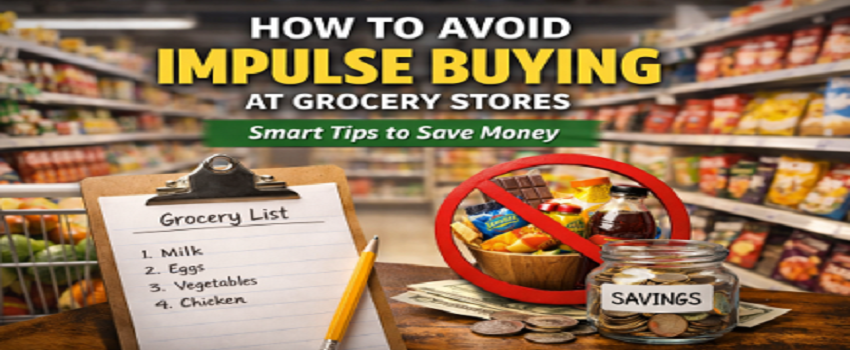
Impulse buying at grocery stores is one of the biggest reasons families overspend on food. You walk in for milk and eggs. You walk out with snacks, drinks, and things you didn’t plan to buy.
Stores are built for this. Layouts change. Deals pop up everywhere. Prices look tempting. And when you’re tired or hungry, it’s even worse.
The good news is this. You can stop impulse buying without extreme rules. You just need better habits.
Here’s how to do it.
Why Grocery Stores Trigger Impulse Buying
Grocery stores are designed to make you buy more. Every aisle has a purpose.
- Essentials like milk and bread are placed far away.
- Snacks and candy sit at eye level.
- Checkout lanes are packed with small, cheap items.
- Bright sale signs create urgency.
Add stress, hunger, or kids into the mix and impulse buying feels automatic. This is why planning matters more than willpower.
Plan Before You Go to the Store
Avoiding impulse buying starts before you leave home.
Make a Real Shopping List
A vague list doesn’t work. Write down exact items.
- List meals for the week.
- Write quantities, not just item names.
- Group items by store sections.
When you know exactly what to buy, distractions lose power.
Set a Grocery Budget
Decide how much you will spend before shopping.
- Break the budget into categories if needed.
- Keep the number in mind while shopping.
- Treat the budget like a rule, not a suggestion.
Check Your Pantry First
Many impulse buys happen because people forget what they already have.
- Check fridge, freezer, and pantry.
- Cross off items you don’t need.
- Avoid buying duplicates.
Smart Habits While Shopping
What you do inside the store matters just as much.
Never Shop Hungry
Hunger makes everything look good.
- Eat a small meal or snack first.
- Drink water before shopping.
- Avoid shopping late when you’re tired.
Stick to the List
This is the hardest part, but also the most important.
- Don’t browse “just to look.”
- Skip aisles that aren’t on your list.
- Ask yourself why you want the extra item.
If it’s not planned, it’s probably an impulse buy.
Avoid End Caps and Checkout Aisles
These areas are built for impulse buying.
- End caps often look like deals but aren’t always cheaper.
- Checkout snacks are emotional buys, not needs.
- Look forward, not around, while waiting in line.
Slow Down Before Adding Items
Pause for five seconds before putting anything extra in your cart.
Ask yourself:
- Did I plan this?
- Do I already have it?
- Will I regret this later?
That pause alone saves money.
Use Simple Tools to Stay Focused
You don’t need complicated systems. Simple tools work best.
Use a Grocery List App
Digital lists help you stay organized.
- Check items off as you go.
- Avoid “maybe” items.
- Stick to what’s written.
Track Your Spending
Knowing where your money goes reduces impulse buying.
- Review receipts weekly.
- Notice patterns like snacks or drinks.
- Set small goals to cut back.
Shop Online When Possible
Online grocery shopping reduces impulse buys.
- You only see what you search for.
- No checkout candy traps.
- Easier to stay within budget.
Teach Kids to Avoid Impulse Buying Too
For families, kids play a big role in grocery spending.
- Set rules before entering the store.
- Let kids help with the list.
- Give them one planned choice if needed.
When expectations are clear, pressure drops.
Build Better Grocery Habits Over Time
Avoiding impulse buying isn’t about being perfect.
Start small:
- Cut one impulse item per trip.
- Reduce snack buys first.
- Celebrate progress, not perfection.
Over time, these habits feel normal.
Final Thoughts
Impulse buying at grocery stores is not a personal failure. It’s a system designed to push spending. But with planning, focus, and simple habits, you can take control.
Make a list. Eat before shopping. Stick to your plan. Track what you spend.
Do this consistently, and you’ll save money without feeling deprived.
Start with your next grocery trip. One change is enough.
How do I stop impulse buying at grocery stores?
Make a shopping list and stick to it. Eat before you shop. Set a budget and avoid browsing aisles you don’t need. Small habits reduce impulse buying fast.
Why do I always buy extra items at the grocery store?
Grocery stores use layouts, sales signs, and checkout displays to trigger impulse purchases. Hunger, stress, and shopping without a plan make it worse.
Does grocery shopping online reduce impulse buying?
Yes. Online shopping limits visual triggers like end caps and checkout snacks. It also makes it easier to compare prices and stay within your budget.
Is shopping with cash better than using a card?
For many people, yes. Paying with cash makes spending feel more real. This helps reduce impulse buys and overspending.
How can families avoid impulse buying with kids?
Set clear rules before entering the store. Involve kids in making the list. Allow one planned item if needed, not random requests.
What time is best to grocery shop to avoid impulse buying?
Shop when you are not hungry or tired. Morning or after meals is best. Late-night shopping often leads to more impulse purchases.
Are sale items always a good deal?
No. Many sale items are placed to encourage impulse buying. Compare unit prices and ask if the item was already on your list.
How long does it take to break impulse buying habits?
Most people see improvement within a few weeks. Consistency matters more than perfection. Focus on progress, not strict rules.
Here is how to avoid impulse buying at grocery stores with simple habits that help families save money, stick to a grocery budget, and stop overspending.