Grocery prices keep changing. One month eggs are cheap. Next month, they jump. Families feel this fast because food is one of the biggest monthly expenses.
But cutting your grocery budget doesn’t mean eating bland food or giving up favorite meals. It means shopping smarter, planning better, and wasting less.
Here are some practical ways to lower grocery costs while still enjoying the foods your family loves.
Why Grocery Bills Keep Getting Higher
Several things push food prices up:
- Supply and fuel costs change.
- Seasonal shortages affect produce.
- More people rely on convenience foods.
- Delivery and ready-to-cook meals cost extra.
- Food waste at home stays high.
The result? Families often spend hundreds more each year without realizing it.
The good news: small changes fix this fast.
Step 1: Know Your Real Grocery Spending
Most families guess their grocery spending. Guessing leads to overspending.
Start here:
- Track grocery spending for 30 days.
- Include supermarket, convenience stores, and food delivery.
- Separate groceries from eating out.
- Divide spending by weeks to see your true weekly cost.
This number becomes your grocery budget starting point.
Once you see the numbers, saving becomes easier.
Step 2: Plan Meals Before You Shop
Meal planning is the biggest money saver.
Without a plan, people buy random items, forget ingredients, and order takeout when dinner feels hard.
Try this:
- Plan meals for 5–7 days.
- Check what you already have at home.
- Build meals around sale items.
- Cook meals that share ingredients.
- Leave space for leftovers nights.
Meal planning reduces impulse buying and food waste.
And it saves time too.
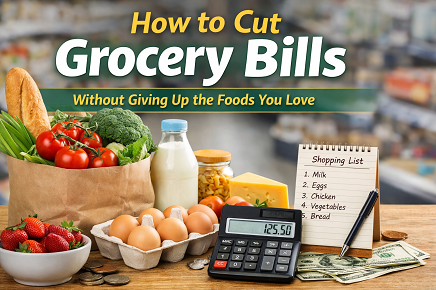
Step 3: Shop With a List — And Stick to It
Shopping without a list costs more every time.
Stores are designed to make you buy extra snacks and convenience foods.
Before shopping:
- Write meals first.
- List only needed ingredients.
- Avoid shopping while hungry.
- Set a spending limit before entering the store.
Impulse buys quietly destroy budgets.
A list keeps spending under control.
Step 4: Buy Favorites Smarter, Not Less
You don’t need to stop buying foods you love. Just buy them wisely.
Try these:
- Buy family favorites when on sale.
- Stock up on items with long shelf life.
- Freeze meats and bread for later use.
- Compare store brands vs name brands.
- Use unit prices to find better deals.
Store brands often taste the same but cost less.
Savings add up quickly.
Step 5: Cut Food Waste at Home
Food waste is hidden grocery spending.
Families often throw away 15–25% of groceries each month.
Reduce waste by:
- Using leftovers for lunches.
- Freezing extra portions.
- Rotating older foods to the front.
- Cooking smaller portions if needed.
- Planning leftover nights.
Less waste equals fewer grocery trips.
Step 6: Use Grocery Apps and Rewards
Technology helps save money now.
Many stores offer:
- Digital coupons
- Reward points
- Cashback programs
- Price alerts
- Weekly deals
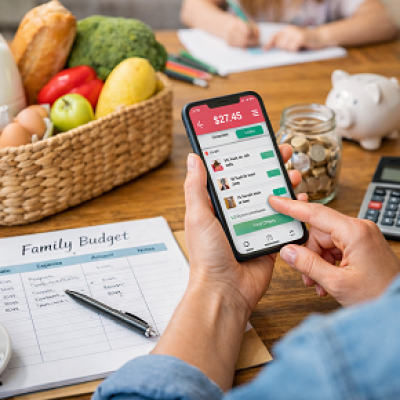
Budgeting apps also show grocery spending automatically.
Just remember: coupons save money only if you buy items you actually use.
Step 7: Choose Cheaper Protein Options Sometimes
Protein usually costs the most in grocery carts.
Balance expensive meats with:
- Beans and lentils
- Eggs
- Canned tuna or salmon
- Chicken thighs instead of breast
- Meatless meal nights
Even replacing meat once or twice weekly cuts grocery bills.
And meals stay satisfying.
Step 8: Cook Once, Eat Twice
Cooking daily is tiring and leads to takeout spending.
Batch cooking solves this.
Try:
- Cooking double portions.
- Freezing meals for busy days.
- Turning leftovers into new meals.
- Using slow cookers or instant pots.
Less cooking stress means fewer delivery orders.
Step 9: Shop Seasonal Produce
Seasonal fruits and vegetables cost less and taste better.
Examples:
- Buy berries in summer.
- Buy root vegetables in winter.
- Use frozen produce when fresh prices rise.
Frozen vegetables are often cheaper and last longer.
Step 10: Review Your Grocery Budget Monthly
Budgets change as families grow and prices shift.
Each month:
- Compare spending to budget.
- Notice price increases.
- Adjust meal plans if needed.
- Set new spending goals.
Small monthly corrections prevent big budget problems.
A Simple Weekly Grocery Savings Plan
Here’s an easy routine:
- Check pantry and fridge.
- Plan meals for the week.
- Build a shopping list.
- Shop once, not multiple times.
- Cook meals that create leftovers.
- Track spending.
Repeat weekly.
Savings grow naturally.
Common Grocery Budget Mistakes
Avoid these traps:
- Shopping without planning meals.
- Buying bulk items you never use.
- Shopping when hungry.
- Ordering takeout too often.
- Ignoring food waste.
Fixing just one of these can save real money.
Final Thoughts: Save Money Without Sacrificing Taste
You don’t need to cut favorite foods to lower grocery bills.
Smart planning, better shopping habits, and reducing waste bring costs down without making meals boring.
Start small this week.
Plan meals. Track spending. Use a grocery list.
One change today can save hundreds over the year.
And your family still eats the meals they love.
How can I cut my grocery bill without changing what I eat?
You can lower grocery spending by meal planning, shopping with a list, buying favorites on sale, and reducing food waste. Budgeting for groceries works best when you keep meals the same but shop smarter, use store brands, and avoid impulse purchases that quietly increase weekly food costs.
What is a realistic grocery budget for a family?
A realistic grocery budget depends on family size, location, and diet, but many families aim for 10–15% of monthly income. Tracking grocery spending for one month helps set an accurate budget and shows where grocery costs can be reduced without sacrificing meal quality.
Does meal planning really save money on groceries?
Yes. Meal planning reduces impulse buying, prevents food waste, and limits takeout spending. Families who plan meals weekly often save 15–30% on grocery bills because they buy only needed ingredients and reuse items across meals instead of buying random or duplicate products.
What are the fastest ways to save money on groceries each week?
The fastest savings come from shopping with a list, comparing unit prices, choosing store brands, and cooking at home more often. Buying sale items, using loyalty rewards, and reducing food waste also lower weekly grocery spending without forcing families to change meals they enjoy.
Are store brands really cheaper and good quality?
Store brands often match name-brand quality but cost 10–30% less. Many products are made by the same manufacturers. Switching to store-brand pantry staples, dairy, and frozen foods is one of the easiest grocery budgeting strategies that cuts spending without changing taste or nutrition.
How do grocery apps help reduce food spending?
Grocery and budgeting apps track spending, offer digital coupons, and highlight weekly deals. Many apps automatically categorize grocery expenses so families see where money goes. Using rewards programs and price alerts helps shoppers time purchases and consistently lower monthly grocery costs.
How much money can families save by cooking at home?
Families cooking most meals at home often save hundreds monthly compared to frequent takeout or delivery. Home cooking lowers cost per meal, stretches ingredients across multiple dishes, and helps control grocery budgets while still allowing favorite foods and family recipes to stay in rotation.
What foods should I buy in bulk to save money?
Buying bulk works best for items with long shelf life or foods your family uses often, like rice, pasta, canned goods, frozen vegetables, and meat you can freeze. Bulk buying reduces price per unit and cuts shopping frequency, which helps control grocery budget spending.
How can families reduce food waste and save on groceries?
Families save money by planning leftover meals, freezing extra portions, storing food properly, and rotating older items first. Reducing food waste means fewer replacement grocery trips and better use of purchased food, which directly lowers monthly grocery bills without changing eating habits.