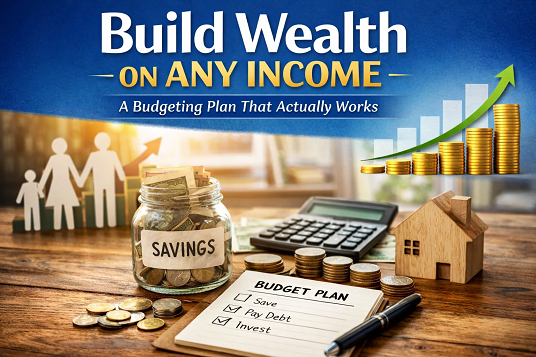
Most people think wealth is only for high earners. That’s wrong.
Wealth is built through habits, not salary size.
Families with modest incomes build long-term wealth every day. They do it with a clear budgeting plan, consistent choices, and patience. Income may change. Expenses may rise. But the right system still works.
Let’s see how to build wealth on any income using a realistic budgeting plan you can stick to.
Why Budgeting Is the Foundation of Wealth
Budgeting is not about restriction. It’s about control.
When you don’t tell your money where to go, it disappears. When you do, progress becomes predictable.
A strong budgeting plan helps you:
- Cover essentials without stress
- Prepare for emergencies
- Pay off debt faster
- Save and invest consistently
- Protect your family’s future
Without a budget, wealth building is guesswork. With one, it becomes a process.
Step 1: Know Your Real Numbers
Before you can build wealth, you need clarity.
Start with what’s actually happening, not what you hope is happening.
Track your income
- Include main income and side income
- Use average monthly numbers if income changes
- Be honest and conservative
Track your expenses
- Fixed costs: rent, utilities, insurance, debt payments
- Variable costs: groceries, fuel, eating out
- Small leaks: subscriptions, impulse spending
This step alone often frees up money people didn’t know they had.
Step 2: Use a Budgeting Plan That Fits Any Income
There is no one perfect budget. The best plan is the one you follow.
Zero-based budgeting
Every dollar has a job.
Income minus expenses equals zero.
This works well for:
- Families living paycheck to paycheck
- Anyone serious about controlling spending
50/30/20 rule (flexible version)
- Needs: about 50%
- Wants: about 30%
- Savings and debt: about 20%
If income is tight, shift more toward needs and savings. The percentages can change.
Pay-yourself-first method
Savings come out first, not last.
Even small amounts matter.
This works well if:
- You struggle to save what’s “left over”
- You want automation
The method matters less than consistency.
Step 3: Build an Emergency Fund First
Before investing or chasing big goals, protect yourself.
An emergency fund stops:
- Credit card debt
- Panic decisions
- Financial setbacks turning into disasters
Start small.
- First goal: one month of expenses
- Next goal: three to six months
Even $500 can change how secure a family feels.
Step 4: Eliminate High-Interest Debt
Debt is one of the biggest barriers to building wealth.
Focus on:
- Credit cards
- Payday loans
- High-interest personal loans
Use one method and stick to it.
- Snowball: smallest balance first
- Avalanche: highest interest first
Freeing up monthly payments gives your budget breathing room.
Step 5: Save and Invest, Even on a Low Income
You don’t need a lot of money to start. You need a habit.
Start with savings
- Automatic transfers
- Separate account
- Treat savings like a bill
Move to investing when ready
- Employer retirement plans
- Low-cost index funds
- Long-term focus
Time matters more than amount. Starting early beats starting big.
Step 6: Adjust Your Budget as Life Changes
Budgets are not set once and forgotten.
Review your budget:
- Monthly for spending
- Quarterly for goals
- After any major life change
Income changes. Kids grow. Costs rise.
Your budget should evolve with your family.
Common Mistakes That Slow Wealth Building
Avoid these traps:
- Guessing instead of tracking
- Saving only when money feels extra
- Ignoring small expenses
- Quitting after one bad month
Progress is not linear. Consistency wins.
How Families Build Wealth on Modest Incomes
Families who succeed financially often:
- Live below their means
- Plan before spending
- Save automatically
- Avoid lifestyle inflation
- Focus on long-term security, not quick wins
None of this requires a high salary. It requires discipline.
Final Thoughts: Wealth Is a System, Not a Salary
You don’t need to earn more to start building wealth.
You need a plan that works with what you have.
A clear budgeting plan gives you control. Control creates stability. Stability allows growth.
Start simple. Stay consistent. Adjust when needed.
If you begin today, future you will be grateful you did.
Can you build wealth on a low income?
Yes, you can. Wealth is built by managing what you keep, not just what you earn. Many families with modest incomes build wealth by budgeting carefully, avoiding high-interest debt, and saving consistently. Even small amounts, saved regularly, grow over time. The key is having a clear plan and sticking to it long enough for results to compound.
What is the best budgeting plan for any income?
The best budgeting plan is one you can follow month after month. Zero-based budgeting works well if you want full control. The 50/30/20 rule is easier for beginners. Pay-yourself-first budgeting helps people who struggle to save. Income level matters less than consistency and honesty when tracking spending.
How much should i save if my income is low?
Start with any amount that doesn’t break your budget. Even saving a small percentage of your income builds the habit. Focus first on a basic emergency fund, then increase savings as expenses are controlled or income grows. Progress matters more than perfection.
Is budgeting really necessary to build wealth?
Yes. Budgeting is the foundation of wealth building. Without it, money decisions are reactive instead of intentional. A budget helps you plan for savings, manage debt, and avoid lifestyle inflation. Every long-term wealth plan starts with knowing where your money goes.
How do families budget with irregular income?
Families with irregular income should base their budget on average monthly earnings, not best months. Essentials come first. Extra income during good months can be saved to cover slower periods. Flexible budgeting works better than rigid rules when income changes.
Should i save money or pay off debt first?
Do both, but in the right order. Start with a small emergency fund to avoid new debt. Then focus on paying off high-interest debt while continuing to save modestly. Once expensive debt is gone, more money can go toward long-term wealth building.
How long does it take to build wealth through budgeting?
Wealth building takes time. Most people notice better cash flow within a few months of budgeting. Real wealth growth often takes years of consistent saving, investing, and debt control. Budgeting is not a quick fix, but it creates steady progress.
Can budgeting reduce financial stress for families?
Yes. Budgeting reduces stress by removing uncertainty. When families know what bills are covered and what money is available, decision-making becomes easier. An emergency fund and clear spending limits create peace of mind, even on a tight income.
Do i need a budgeting app to build wealth?
No. Budgeting apps are helpful but not required. A spreadsheet, notebook, or simple list works just as well. Apps make tracking easier and faster, but the habit of budgeting matters more than the tool used.
What is the biggest budgeting mistake people make?
The biggest mistake is quitting too early. Many people stop budgeting after one bad month. Budgets need adjustment, not abandonment. Spending mistakes are part of learning. Long-term success comes from reviewing, adjusting, and continuing.