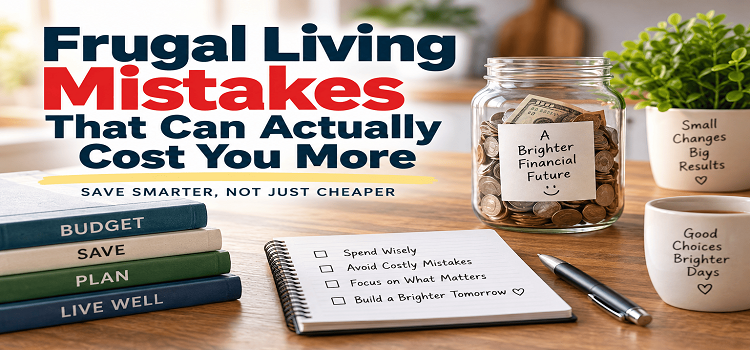
Frugal living mistakes that can actually cost you more often happen when saving money becomes the only goal. A cheaper choice can look smart today but create bigger expenses later through repairs, replacements, wasted food, missed opportunities, or poor-quality purchases. For families, these small mistakes can quietly add hundreds or even thousands of dollars to yearly spending. The key is knowing when being frugal truly saves money and when it becomes false economy. This guide explains the most common frugal living mistakes, why they backfire, and how to make smarter money decisions without giving up the benefits of living below your means.
What Are Frugal Living Mistakes That Can Actually Cost You More?
Frugal living mistakes that can actually cost you more are money-saving choices that reduce spending in the short term but lead to higher costs later. They often involve buying poor-quality items, skipping maintenance, ignoring value, wasting time, or cutting important expenses too aggressively. Smart frugal living focuses on total cost, not just the lowest price.
Common Signs a Frugal Choice May Be Costing You More
- You keep replacing the same cheap item. A low price stops being a bargain when you buy the product several times.
- You delay repairs to avoid spending money. Small home, car, or appliance problems can become expensive emergencies.
- You buy in bulk but throw food away. Bigger packages only save money when your family actually uses everything.
- You choose price over quality every time. The cheapest shoes, cookware, furniture, or household products may wear out faster.
- You drive far to save a few dollars. Fuel, vehicle wear, and your time can erase the savings.
- You avoid spending on preventive care. Skipping routine maintenance or other necessary preventive expenses may create much larger bills later.
- You spend hours chasing tiny savings. Saving $3 is rarely worth losing several hours that could be used for family, work, or higher-value tasks.
- You buy things only because they are on sale. A discount does not save money if you would not have bought the item otherwise.
The best frugal decisions balance price, quality, durability, usefulness, and long-term cost. That is the difference between saving money wisely and simply spending less today.
1. Always Buying the Cheapest Option
Buying the cheapest option can cost more when low-quality products wear out, break, or need frequent replacement. The better frugal choice is usually the product with the lowest cost over its useful life, not necessarily the lowest price tag. Paying slightly more upfront can sometimes save a family much more over time.
Where Cheap Purchases Often Backfire
- Shoes and clothing
A $20 pair of shoes that lasts four months costs more over time than a $60 pair that lasts two years. This matters even more for frequently used items such as work shoes, coats, backpacks, and school supplies.
- Furniture
Very cheap tables, chairs, mattresses, and storage units may loosen, sag, or break quickly. Replacing the same item every year can easily wipe out the original savings.
- Kitchen tools
Low-quality pans, knives, food containers, and small appliances can wear out faster. Durable products that your family uses every day may offer better long-term value.
- Home improvement materials
Choosing the cheapest paint, sealant, fixtures, or repair materials can mean doing the job twice. Labor, wasted materials, and future repairs can turn a small saving into a much larger expense.
- Electronics and chargers
Extremely cheap accessories may fail quickly or perform poorly. Replacing several low-cost versions can cost more than buying one reliable product.
Use Cost Per Use Instead of Price Alone
A simple way to compare purchases is:
Purchase price ÷ number of expected uses = cost per use
For example:
- $25 shoes worn 100 times = $0.25 per wear
- $70 shoes worn 500 times = $0.14 per wear
The $70 option costs more at checkout but is cheaper over its useful life.
This does not mean families should always buy expensive products. It means buy for value instead of automatically buying the cheapest option.
[✔] Spend more on items you use frequently.
[✔] Check warranties and expected lifespan.
[✔] Read reviews for durability, not just initial satisfaction.
[✔] Buy used when it gives you higher quality for a lower price.
[✔] Avoid paying extra for features your family will never use.
A good frugal purchase should save money after months or years of use, not simply make today’s receipt smaller.
2. Skipping Maintenance to Save Money
Skipping maintenance can look frugal because it avoids a bill today, but it often creates a much larger expense later. Cars, appliances, heating systems, plumbing, roofs, and other household essentials usually cost less to maintain than to repair after something fails. Preventive maintenance is often one of the smartest forms of frugal living.
Maintenance Mistakes That Can Become Expensive
- Delaying car maintenance
Ignoring oil changes, worn tires, low fluids, unusual noises, or warning lights can turn a manageable repair into a major one. It can also reduce fuel efficiency and shorten the life of the vehicle.
- Ignoring small plumbing problems
A slow leak may not seem urgent, but water damage can affect cabinets, flooring, drywall, and even create mold problems. Fixing the leak early is usually far cheaper.
- Skipping HVAC servicing
Dirty filters and neglected heating or cooling systems can work harder, use more energy, and fail sooner. A small maintenance cost may help prevent a large replacement bill.
- Putting off roof or gutter repairs
A loose shingle, blocked gutter, or small leak can eventually damage insulation, ceilings, walls, and wood framing.
- Not maintaining appliances
Cleaning refrigerator coils, dryer vents, dishwasher filters, and other components can improve efficiency and help appliances last longer.
Think in Terms of Repair Cost vs. Prevention Cost
A useful frugal question is:
What could this problem cost if I wait six months?
For example, spending $50 to fix a small issue today may prevent a $500 repair later. The exact numbers vary, but the principle is the same: delaying necessary maintenance can create false savings.
[✔] Follow basic maintenance schedules.
[✔] Fix small problems before they spread.
[✔] Keep a home and car maintenance fund.
[✔] Learn simple DIY maintenance when it is safe to do so.
[✔] Hire a professional when a mistake could cause expensive damage.
Frugal living is not about avoiding every expense. Sometimes spending a little now is exactly what protects your budget later.
3. Buying in Bulk Without a Real Plan
Buying in bulk can save money, but only when your family uses everything before it expires or goes bad. Large packages often create the illusion of savings while increasing food waste, storage problems, and impulse spending. The real goal is a lower cost per item without buying more than your household actually needs.
When Bulk Buying Stops Being Frugal
- You buy perishables your family cannot finish
Fresh produce, dairy, bread, and meat can become expensive waste if you buy more than your household can use or freeze.
- You choose a larger package just because the unit price is lower
A lower cost per ounce does not matter if part of the product ends up in the trash.
- You stock up on foods your family does not really like
A pantry full of discounted food is not savings if nobody wants to eat it.
- You buy too much because of warehouse-store deals
Bulk stores can encourage families to spend more than planned. A few “good deals” can quickly turn into a much larger grocery bill.
- You forget what you already have
Overstocked pantries and freezers make it easier to buy duplicates and let older food expire.
Compare Unit Price and Actual Use
Before buying in bulk, ask two questions:
Is the unit price really cheaper?
And:
Will my family use all of it?
For example, a $12 bulk pack may appear cheaper than a $7 smaller pack. But if one-third of the bulk package goes unused, the smaller option may have been the better deal.
[✔] Bulk buy shelf-stable foods your family eats often.
[✔] Freeze meat, bread, and other suitable foods in smaller portions.
[✔] Check your pantry and freezer before shopping.
[✔] Compare unit prices instead of package prices.
[✔] Avoid bulk purchases just because an item is discounted.
Smart grocery savings come from buying the right amount at the right price, not simply buying the biggest package available.
4. Spending Too Much Time Chasing Tiny Savings
Spending too much time chasing small discounts can become another costly frugal living mistake. Coupons, cashback apps, price comparisons, and deal hunting can help, but not when saving a few dollars takes hours. Smart frugal living values both money and time because your time also has real value.
Small Savings That May Not Be Worth the Effort
- Driving across town for a slightly cheaper price
Saving $4 on groceries may not help if you spend extra money on gas and add unnecessary miles to your car.
- Searching for coupons for too long
A coupon that saves $2 is useful when it takes a minute to find. It becomes less valuable when you spend 30 minutes searching for it.
- Visiting too many stores every week
Shopping at five stores to get every lowest price can increase fuel costs, impulse purchases, and the amount of time your family spends shopping.
- Tracking every tiny expense manually
Detailed budgeting can help, but tracking every cent may become exhausting. If the system is too complicated, families are more likely to quit budgeting completely.
- Doing every repair yourself
DIY can save money, but some jobs require tools, experience, or many hours. A failed repair can end up costing more than hiring someone qualified from the beginning.
Calculate the Real Value of Your Time
Before spending an hour to save a small amount, ask:
How much am I actually saving per hour?
If you spend two hours searching for deals and save $8, your effective savings are only $4 per hour.
That does not automatically make the effort wrong. Some families enjoy couponing or DIY projects. But it helps to know the trade-off.
[✔] Focus first on your biggest monthly expenses.
[✔] Automate bills, savings, and routine budgeting where possible.
[✔] Use a short list of stores instead of chasing every sale.
[✔] Set a time limit for coupon and deal searches.
[✔] Prioritize savings that repeat every month.
Cutting a $50 recurring expense is usually more powerful than spending hours trying to save $1 or $2 at a time. The best frugal strategies protect both your household budget and your time.
5. Stockpiling Sale Items You Do Not Need
Stockpiling sale items can waste money when discounts encourage you to buy more than your family will actually use. A sale only saves money if the purchase replaces something you already planned to buy. Otherwise, extra inventory can tie up cash, create clutter, and lead to expired or forgotten products.
How Sale Shopping Turns Into Overspending
- Buying because the discount looks too good to miss
A 50% discount still means spending 50% of the original price. If you did not need the item, the purchase was not a saving.
- Stocking up without checking what you already own
Duplicate cleaning supplies, pantry items, toiletries, and household goods can sit unused for months.
- Buying too much of a product your family rarely uses
A cheap item is not useful if it takes years to finish.
- Using coupons as a reason to buy extra
Coupons can lower prices, but they can also push families toward products they would normally skip.
- Letting stockpiled items expire
Food, medicine, beauty products, and some household products have limited shelf lives. Expired items turn a supposed deal into wasted money.
Use a Simple Stockpiling Rule
Only stock up when all three conditions are true:
- Your family already uses the item regularly.
- The price is meaningfully lower than normal.
- You can use everything before it expires or loses quality.
This keeps stockpiling practical instead of emotional.
[✔] Keep a short inventory of pantry and household staples.
[✔] Set a maximum quantity for common products.
[✔] Avoid buying just to “complete” a coupon deal.
[✔] Compare the sale price with the normal unit price.
[✔] Use older products first before opening new ones.
The goal of frugal shopping is not to own the most discounted products. It is to spend less on the things your family already needs.
6. Cutting Insurance or Emergency Savings Too Aggressively
Cutting insurance coverage or emergency savings can reduce monthly expenses, but it can leave a family exposed to much larger financial losses. Frugal living should lower unnecessary spending without removing basic financial protection. One major repair, medical bill, accident, or job loss can erase years of small savings.
Where Over-Cutting Can Backfire
- Choosing the lowest insurance coverage without checking the risk
A cheaper policy may come with higher deductibles, lower limits, or weaker protection. That can leave you paying much more out of pocket after a claim.
- Dropping useful coverage only to save a small monthly amount
Some coverage may no longer be necessary, but canceling protection without understanding the downside can create a large financial gap.
- Keeping no emergency fund
Without cash set aside, an unexpected expense may end up on a credit card. Interest charges can turn a $1,000 emergency into a much larger cost.
- Using emergency savings for routine spending
An emergency fund works best when it is reserved for true unexpected costs such as urgent repairs, essential travel, or a temporary loss of income.
- Focusing only on today’s monthly payment
A lower premium or smaller savings contribution can look good now, but the better question is how your family would handle a serious expense tomorrow.
Build Protection Into Your Frugal Budget
A frugal budget should still include room for financial safety.
[✔] Compare insurance based on coverage, deductibles, and total risk, not price alone.
[✔] Keep at least a small emergency cushion while working toward a larger fund.
[✔] Review insurance annually instead of automatically cutting it.
[✔] Use sinking funds for predictable costs such as car repairs and home maintenance.
[✔] Avoid using high-interest debt as your emergency plan.
Saving money is useful, but protecting the savings you already have matters just as much. Good frugal living reduces waste without making your family financially fragile.
7. Ignoring Health and Preventive Care to Save Money
Ignoring routine health and preventive care can create much higher costs later. Delaying checkups, dental care, prescriptions, or recommended screenings may allow small problems to become more serious. Frugal living should reduce waste, not encourage families to avoid necessary care that protects both health and long-term finances.
Health-Related Frugal Mistakes That Can Backfire
- Skipping dental care
A small cavity is usually easier and cheaper to treat than advanced decay, infection, or a damaged tooth.
- Avoiding routine checkups
Preventive visits can help catch problems earlier, when treatment may be simpler and less expensive.
- Not taking prescribed medicine as directed
Trying to stretch medication without medical guidance can create health risks and may lead to more expensive care later.
- Ignoring vision or hearing problems
Delaying needed care can affect school, work, driving, and daily life.
- Choosing the cheapest care without comparing quality
Price matters, but families should also consider credentials, coverage, treatment options, and long-term value.
Save Money Without Skipping Necessary Care
[✔] Use preventive services included in your health plan when available.
[✔] Ask providers about lower-cost treatment options.
[✔] Compare prices for non-emergency services when practical.
[✔] Use generic medications when appropriate and approved.
[✔] Budget for predictable medical, dental, and vision expenses.
[✔] Do not delay urgent symptoms just to avoid a bill.
The goal is not to spend more on healthcare than necessary. It is to avoid false savings that may create larger financial and health problems later. A smart frugal plan protects your family’s finances without sacrificing essential care.
8. Buying Too Much Just Because Something Is on Sale
Buying something only because it is on sale is one of the easiest ways to confuse spending with saving. A discount lowers the price, but it does not make an unnecessary purchase valuable. Families save more when they buy what they already planned to buy instead of letting sales create new spending.
How Sales Can Increase Your Spending
- Buying things that were never on your list
A $40 item marked down to $25 still costs you $25. If you did not need it, you did not save $15.
- Adding extra items to reach free shipping
Spending another $20 to avoid a $7 shipping fee usually costs more overall.
- Falling for “buy more, save more” offers
Deals such as buy two, get one free can work for products you already use. But they can also push you to spend more than planned.
- Shopping clearance sections without a purpose
Clearance racks can make low prices feel urgent. That urgency often leads to impulse purchases.
- Buying seasonal items too early
Holiday, back-to-school, and seasonal sales can be useful, but only when the item fits a real future need.
Use the 24-Hour Rule for Unplanned Purchases
When a sale tempts you to buy something that was not planned, wait 24 hours before purchasing.
Ask yourself:
- Do we actually need this?
- Would I buy it at the regular price?
- Do we already own something that does the same job?
- Is this purchase taking money away from a more important goal?
If the answer still makes sense the next day, the purchase may be worthwhile.
[✔] Shop with a written list.
[✔] Set a spending limit before browsing sales.
[✔] Unsubscribe from promotional emails that trigger unnecessary shopping.
[✔] Compare the sale price with the item’s normal price.
[✔] Treat money not spent as the real saving.
The best bargain is often the product you decide not to buy. Frugal living works when discounts support your budget instead of controlling it.
9. Ignoring Energy Efficiency Because the Upfront Cost Is Higher
Ignoring energy efficiency can cost families more over time when a cheaper appliance, light bulb, window treatment, or home upgrade uses more electricity or fuel. The better frugal choice is to compare the purchase price with expected operating costs, especially for products your family will use for years.
Where Energy Costs Can Quietly Add Up
- Buying inefficient appliances
A cheaper refrigerator, washer, dryer, or air conditioner may cost less at checkout but use more energy every month.
- Keeping old bulbs throughout the house
Replacing frequently used bulbs with efficient alternatives can reduce electricity use over time.
- Ignoring drafts and poor insulation
Small air leaks around doors and windows can make heating and cooling systems work harder.
- Running appliances inefficiently
Half-empty dishwashers, frequent dryer loads, and unnecessary standby power can increase utility costs.
- Choosing a low purchase price without checking long-term operating costs
An appliance that costs $100 less but uses $40 more electricity each year may become the more expensive choice after only a few years.
Compare Total Ownership Cost
Before buying an appliance or making a home upgrade, consider:
Purchase price + estimated energy costs + maintenance + expected lifespan
For example, Product A may cost $500 while Product B costs $650. If Product B saves $60 a year in energy and lasts the same amount of time, the higher upfront cost could be recovered in about two and a half years.
[✔] Compare energy-use information before buying major appliances.
[✔] Focus efficiency upgrades on areas with high heating, cooling, or electricity use.
[✔] Turn off or unplug devices that consume unnecessary standby power.
[✔] Maintain heating and cooling equipment so it runs efficiently.
[✔] Calculate the payback period before making an expensive upgrade.
Not every energy-saving product is worth buying. But ignoring operating costs completely is another form of false economy. Smart frugal living looks at what something will cost your family over its entire life, not just on the day you buy it.
10. Choosing DIY for Jobs That Need a Professional
Doing everything yourself can save money, but DIY becomes expensive when a mistake causes damage, creates a safety problem, or forces you to pay someone to redo the work. Frugal families should know which jobs are worth learning and which ones are better handled by a qualified professional.
DIY Projects That Can Cost More When They Go Wrong
- Electrical work
Simple tasks may be manageable, but complicated wiring mistakes can damage equipment, create fire risks, or require expensive repairs.
- Major plumbing repairs
A small leak is one thing. Incorrect pipe work can lead to water damage, mold, damaged flooring, and repair bills far larger than the original job.
- Roof repairs
Working on a roof can be dangerous, and poor repairs may allow water to enter the home.
- Structural home projects
Removing walls, changing supports, or altering major parts of a house without proper knowledge can create serious problems.
- Complex car repairs
DIY maintenance such as replacing filters may save money. But mistakes involving brakes, steering, or other critical systems can create safety risks and larger repair costs.
Use the DIY Break-Even Test
Before starting a project, compare:
Tools + materials + your time + risk of mistakes
against:
The cost of hiring a professional
A $300 professional repair may seem expensive. But if DIY requires $150 in tools, $100 in materials, several hours of work, and carries a real risk of causing more damage, the savings may be very small.
[✔] DIY simple, low-risk jobs first.
[✔] Watch for projects that require permits or specialist knowledge.
[✔] Get several quotes before assuming professional work is too expensive.
[✔] Include tool costs when calculating DIY savings.
[✔] Stop if the job becomes more complicated than expected.
Knowing when not to DIY is part of smart frugal living. The goal is to save money without creating a bigger bill later.
11. Cutting Back So Hard That Frugal Living Becomes Unsustainable
Cutting spending too aggressively can backfire when your budget becomes so restrictive that your family cannot stick with it. Extreme frugality often leads to burnout, rebound spending, and frustration. Sustainable frugal living works better because it protects important goals while still leaving room for small comforts and normal family life.
How Extreme Frugality Can Cost You More
- Creating a budget with no flexibility
A budget that leaves no room for birthdays, school costs, small treats, or unexpected needs can break quickly.
- Banning every nonessential purchase
Total restriction may work for a short no-spend challenge, but it is much harder to maintain for months or years.
- Using cheap substitutes your family hates
If nobody eats the cheaper groceries you bought, the savings disappear through food waste and replacement purchases.
- Skipping all family entertainment
Free activities are great, but removing every paid activity can make a frugal lifestyle feel like punishment.
- Rebounding after being too restrictive
Extreme cutbacks can lead to impulse shopping, expensive takeout, or “I deserve it” spending once willpower runs out.
Build a Frugal Lifestyle You Can Keep
[✔] Cut expenses that add little value first.
[✔] Keep a small amount of guilt-free spending in the budget.
[✔] Choose affordable family activities instead of eliminating fun completely.
[✔] Set realistic savings goals instead of trying to change everything at once.
[✔] Review your budget when it feels too difficult to maintain.
The best frugal lifestyle is not the one that cuts spending the hardest. It is the one your family can follow consistently while still saving money, meeting important needs, and enjoying everyday life.
How to Avoid Frugal Living Mistakes and Start Saving Smarter
Avoiding frugal living mistakes starts with looking beyond the cheapest price. Families should compare long-term cost, usefulness, durability, risk, and how often something will be used. A simple decision process can help you save money without falling into false economy, overspending, or extreme frugality that becomes hard to maintain.
Steps to Make Better Frugal Decisions
- Pause before buying
Ask whether the purchase is necessary or simply cheap.
- Compare total cost, not just price
Look at maintenance, replacement, energy use, travel costs, and expected lifespan.
- Check how often you will use it
Higher-quality items often make more sense when they are used frequently.
- Consider the risk of waiting
Delaying maintenance, repairs, or essential care can create a bigger bill later.
- Calculate cost per use
Divide the price by the number of times you expect to use the product.
- Protect your emergency savings
Do not sacrifice financial stability just to make your monthly budget look smaller.
- Set limits on deal hunting
Coupons and comparison shopping should save money without consuming hours of your week.
- Review what actually worked
At the end of each month, look at which frugal habits reduced spending and which ones created waste, stress, or extra costs.
Use This Quick Frugal Decision Test
Before trying to save money, ask:
- Will this actually lower our total cost?
- Could choosing the cheapest option create another expense later?
- Are we buying more than we need?
- Is the saving worth our time?
- Are we taking on unnecessary financial or safety risks?
- Can our family maintain this habit long term?
If a money-saving decision passes these checks, it is much more likely to be genuinely frugal instead of simply cheap.
Smart frugal living is about spending intentionally, not avoiding spending at all costs.
Money-Saving Tips That Prevent False Economy
The best money-saving tips reduce waste without creating bigger costs later. Families save more when they focus on long-term value, planned spending, preventive care, and repeatable habits instead of chasing the lowest price. These simple rules can help you avoid costly frugal living mistakes while still keeping monthly expenses under control.
Practical Ways to Save Without Backfiring
[✔] Use a 24-hour rule for unplanned purchases. This reduces impulse spending and sale-driven buying.
[✔] Compare unit price and cost per use. A lower sticker price does not always mean better value.
[✔] Keep sinking funds for predictable costs. Set aside money for car repairs, home maintenance, school expenses, and annual bills.
[✔] Buy quality where durability matters. Spend more carefully on items your family uses every day.
[✔] Use store brands when quality is similar. Many basic foods and household products do not need a premium label.
[✔] Meal plan before grocery shopping. This helps reduce duplicate purchases, food waste, and expensive last-minute meals.
[✔] Track your biggest expenses first. Housing, transportation, groceries, insurance, and debt usually matter more than tiny daily savings.
[✔] Review subscriptions and recurring charges. Cutting one unused $20 monthly service saves $240 a year without affecting daily life.
[✔] Maintain what you already own. Cars, appliances, clothes, furniture, and home systems usually last longer with basic care.
[✔] Set a stock-up limit. Only buy extra when the price is good, storage is available, and your family will use the product.
[✔] Avoid replacing working items just to save money. Buying a new “efficient” product may take years to recover its upfront cost.
[✔] Know when convenience is worth paying for. A service that saves several hours or prevents costly mistakes may provide better value than doing everything yourself.
Focus on the Savings That Matter Most
A family that cuts a recurring $75 monthly expense saves $900 a year.
That can have a much bigger impact than spending hours every week trying to save a few cents on individual purchases.
The most effective frugal habits are usually simple:
- buy less
- waste less
- maintain what you own
- avoid unnecessary debt
- plan major purchases
- protect yourself from expensive emergencies
Good frugal living should make your finances stronger over time. If a money-saving habit repeatedly causes waste, stress, replacements, or bigger bills, it may be time to stop doing it.
Why Smart Frugal Living Works Better Than Extreme Cost Cutting
Smart frugal living works because it focuses on long-term value instead of short-term sacrifice. Families build stronger finances when they reduce waste, avoid costly mistakes, protect emergency savings, and spend more intentionally. The goal is not to spend as little as possible. It is to make each dollar do more.
Benefits of a Smarter Frugal Approach
- You reduce repeat purchases
Buying durable products when quality matters can lower replacement costs over time.
- You avoid expensive emergencies
Regular maintenance, preventive care, and emergency savings can help stop small problems from becoming major bills.
- You waste less money
Meal planning, realistic stockpiling, and planned shopping reduce food waste and unnecessary purchases.
- You make better buying decisions
Looking at cost per use, total ownership cost, and expected lifespan helps families choose better value.
- You protect your time
Focusing on high-impact savings prevents hours of work for tiny discounts.
- You lower financial stress
A realistic budget is easier to maintain than one built around constant restriction.
- You create habits that last
Sustainable frugal living can continue for years because it still allows room for family needs, occasional fun, and changing priorities.
Frugal Living Should Improve Your Financial Position
The strongest test is simple:
Does this habit leave your family better off six months or one year from now?
If a habit saves money today but causes more debt, replacements, waste, stress, or repair costs later, it is not working.
Good frugal living helps families spend less without sacrificing value, safety, stability, or quality where it matters most.
Is Being Too Frugal Bad?
Yes, being too frugal can become a problem when saving money starts hurting your health, safety, time, relationships, or long-term finances. Extreme frugality may also lead to burnout and rebound spending. The goal should be intentional spending, not avoiding every expense.
What Is the Biggest Mistake People Make With Frugal Living?
One of the biggest frugal living mistakes is choosing the cheapest option without considering quality, durability, or future costs. A low price can become expensive when an item breaks quickly, needs frequent repairs, or has to be replaced several times.
Can Buying Cheap Things Cost More in the Long Run?
Yes. Cheap products can cost more when they wear out faster or perform poorly. Comparing cost per use can help. A more expensive item may offer better value when it lasts much longer and is used frequently.
Is Buying in Bulk Always Cheaper?
No. Buying in bulk only saves money when the unit price is lower and your family uses everything. If food expires, products go unused, or you spend more than planned, bulk buying can actually increase household costs.
How Can Frugal Living Backfire?
Frugal living can backfire through delayed repairs, food waste, unnecessary sale purchases, poor-quality products, excessive DIY, skipped preventive care, or extreme budgeting. These choices may create larger bills than the amount originally saved.
What Is the Difference Between Being Frugal and Being Cheap?
Being frugal means looking for the best value while considering quality, usefulness, and long-term cost. Being cheap focuses mainly on paying the lowest possible price. Frugal decisions usually protect both your money and the things that matter to your family.
Is It Worth Paying More for Quality?
Sometimes. Paying more makes sense when an item is used often, lasts significantly longer, or prevents future costs. But higher price does not always mean better quality, so compare durability, reviews, warranties, and expected use before buying.
How Do I Know if a Money-Saving Habit Is Actually Worth It?
Ask whether the habit lowers your total cost, saves enough money to justify your time, and can be maintained long term. If it regularly causes waste, replacements, stress, or larger expenses later, it is probably not helping your budget.
Conclusion: Save Smarter, Not Just Cheaper
Frugal living mistakes that can actually cost you more usually come from focusing on short-term savings instead of long-term value. The better approach is simple: buy what you need, maintain what you own, avoid false economy, protect your emergency fund, and spend more where quality truly matters.
Pick one costly frugal habit from this list and fix it this week. Small changes can protect your budget far more than chasing every possible discount.