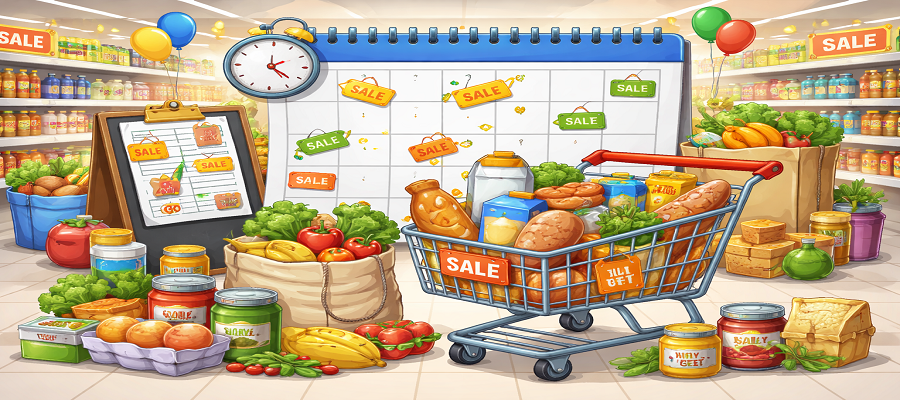
Grocery sales cycles are the repeating patterns stores use to discount food and household items throughout the year. Many groceries follow predictable price drops every few weeks or during certain seasons. Families who understand grocery sales cycles rarely pay full price for everyday items. Instead of buying groceries whenever they run out, smart shoppers wait for the right sale window. This approach makes it easier to stock up on staples, plan meals around deals, and keep grocery spending under control. Once you learn how grocery sales cycles work, saving money at the store becomes much easier.
What Are Grocery Sales Cycles?
Grocery sales cycles are the predictable schedule supermarkets follow when putting products on sale. Most grocery stores rotate discounts across categories every few weeks. This means the same item usually returns to a sale price after a certain period. When shoppers recognize these repeating patterns, they can buy items at the lowest price instead of paying full price.
Key Things to Know About Grocery Sales Cycles
- Sales follow a rotation.
Grocery stores rarely discount the same category every week. Promotions move from one product group to another. - Many items repeat every 6–8 weeks.
Pantry staples like pasta, cereal, and canned goods often return to sale during this time frame. - Seasonal demand affects sales.
Some foods drop in price during certain seasons when supply is high or demand increases. - Weekly ads reveal the pattern.
Store flyers usually highlight which items are part of the current promotion cycle.
Once shoppers notice these patterns, they can start planning purchases around the lowest price periods.
Why Grocery Stores Use Sales Cycles
Grocery stores use sales cycles to attract shoppers, move inventory, and increase overall sales. By rotating discounts across different product categories, stores encourage customers to visit frequently while keeping shelves stocked with fresh inventory. These promotions are carefully planned and often repeat in predictable patterns.
How Sales Cycles Work in Grocery Stores
- Loss leaders bring customers into the store.
Stores often discount popular items like milk, eggs, or bread to draw shoppers inside. - Manufacturers help fund promotions.
Many sales happen because food brands offer discounts to retailers to boost product visibility. - Inventory needs to move quickly.
Grocery stores must sell items before expiration dates or before new shipments arrive. - Sales encourage larger shopping trips.
Even if a shopper comes for a discounted item, they usually buy other products at regular price. - Seasonal demand drives promotions.
Stores discount products when demand increases, such as grilling foods in summer or baking ingredients during the holidays.
Understanding why stores run these promotions helps shoppers recognize when discounts are part of a repeating cycle rather than a one-time deal.
The Typical Grocery Sales Cycle Timeline
The typical grocery sales cycle timeline shows how often products return to sale prices. Many grocery items drop in price every few weeks as stores rotate promotions across departments. Learning these timelines helps shoppers know when to wait for a deal and when it’s the right time to stock up.
Common Grocery Sales Cycle Examples
- Dairy products
Milk, yogurt, butter, and cheese often rotate through sales every 3–4 weeks. - Meat and poultry
Chicken, ground beef, and pork frequently go on promotion every 4–6 weeks, especially around holidays or grilling season. - Pantry staples
Items like pasta, cereal, canned goods, and rice usually return to sale every 6–8 weeks. - Frozen foods
Frozen meals, vegetables, and pizzas often follow a 6–8 week promotion cycle. - Snack foods
Chips, crackers, and snack packs typically go on sale every 4–6 weeks.
These timelines aren’t exact for every store, but most supermarkets follow similar patterns. Once you start watching weekly ads, you’ll notice the same items returning to sale again and again.
How to Identify a True Stock-Up Price
A true stock-up price is the lowest price an item reaches during its grocery sales cycle. Not every sale is a great deal. Some promotions only drop the price slightly, while others offer the lowest price you’ll see for several weeks. Learning to spot these deeper discounts helps families know when it’s the right time to buy extra.
Signs an Item Is at a Stock-Up Price
- The discount is much bigger than usual.
If the price is noticeably lower than recent sales, it may be the lowest point in the cycle. - The item hasn’t been on sale for several weeks.
Products often return to their best price after a full sales cycle. - The promotion is heavily featured in the weekly ad.
Stores often highlight their strongest deals on the front page. - The unit price is significantly lower.
Checking price per ounce or pound helps confirm whether it’s truly a good deal. - Coupons or store rewards are available.
When discounts combine with coupons or loyalty rewards, prices often reach their lowest point.
Recognizing these signals helps shoppers buy at the best time and build a pantry without overspending.
How to Track Grocery Sales Cycles
Tracking grocery sales cycles means paying attention to how often items return to sale prices at your local stores. Most supermarkets follow predictable patterns, and once you observe them for a few weeks, it becomes much easier to anticipate the next discount. This simple habit helps families plan purchases and avoid paying full price.
Steps to Track Grocery Sales Cycles
- Check weekly store ads.
Look at grocery flyers each week to see which items are discounted. - Watch for repeating products.
Notice which foods return to sale every few weeks. - Write down common prices.
Keep a small note of the normal price and the sale price for items your family buys often. - Compare sales across stores.
Different stores may run similar promotions at different times. - Look for patterns over time.
After several weeks, you’ll start seeing the same items rotating through sales again.
Tracking these patterns helps you learn when the best deals usually appear. Once you know the timing, planning your grocery shopping becomes much easier.
17 Grocery Sales Cycles Every Smart Shopper Should Know
Many grocery items follow predictable sales cycles throughout the year. Stores rotate discounts across different food categories to attract shoppers and move inventory. When you know these patterns, you can wait for the right moment to buy and avoid paying full price for everyday groceries.
Common Grocery Sales Cycles
- Cereal and breakfast foods
These often go on sale every 6–8 weeks, especially when brands run promotions. - Pasta and pasta sauce
Pantry staples like pasta frequently return to sale every 6–8 weeks. - Canned vegetables and canned beans
These items usually appear in promotions several times a year and during major holiday seasons. - Rice and grains
Large bags of rice or grains often drop in price every 2–3 months. - Peanut butter and spreads
These products commonly follow a 6–8 week promotion cycle. - Frozen pizza and frozen meals
Frozen foods rotate through sales regularly every 6–8 weeks. - Snack foods like chips and crackers
These items typically go on sale every 4–6 weeks. - Dairy products like cheese and yogurt
Many dairy items return to sale about every 3–4 weeks. - Butter and baking ingredients
Prices often drop during major baking seasons such as holidays. - Chicken and poultry
Poultry frequently goes on promotion every 4–6 weeks. - Ground beef and red meat
These cuts are often discounted around grilling holidays. - Hot dogs and grilling meats
Prices usually fall during summer barbecue season. - Fresh produce in peak season
Fruits and vegetables become cheaper when they are in season locally. - Frozen vegetables
These often appear in sale rotations every few weeks. - Soup and comfort foods
Prices typically drop during colder months. - Lunchbox items and snacks
These products are often discounted during back-to-school season. - Holiday baking supplies
Sugar, flour, and baking mixes often drop in price before major holidays.
Once you start noticing these repeating cycles, it becomes easier to plan grocery trips around the lowest prices instead of buying items randomly.
How to Start Using Grocery Sales Cycles
Using grocery sales cycles means planning purchases around predictable price drops instead of buying everything at once. Families who follow this method slowly build a pantry and freezer stocked with items purchased at their lowest prices. Over time, this approach can significantly reduce the monthly grocery bill.
Steps to Start Using Grocery Sales Cycles
- Choose a few regular grocery items.
Start with foods your family buys often, such as cereal, pasta, or chicken. - Watch weekly grocery ads.
Notice when these items appear on sale and how often the discounts repeat. - Buy a little extra during strong sales.
When prices drop significantly, purchase enough to last until the next cycle. - Plan meals around sale items.
Build weekly menus based on foods that are currently discounted. - Store items properly.
Use pantry storage and freezer space to keep foods fresh until you need them.
Following these steps helps families shift from reactive shopping to a more strategic approach that takes advantage of repeating sales patterns.
Money-Saving Tips for Grocery Sales Cycles
Small habits can make grocery sales cycles even more effective. Combining smart shopping with good planning helps families get the maximum benefit from each promotion.
Simple Tips to Save More
- Check unit prices.
The lowest shelf price isn’t always the best deal. - Avoid buying items you won’t use.
A sale only saves money if the product gets used. - Keep a running grocery list.
This prevents impulse purchases and wasted food. - Use freezer storage wisely.
Freezing meats, bread, or prepared meals helps extend the value of sale purchases. - Rotate older pantry items forward.
This keeps food from expiring before it’s used.
Using these habits alongside grocery sales cycles helps families stretch their grocery budgets without sacrificing the foods they enjoy.
Why Understanding Grocery Sales Cycles Saves Families Money
Understanding grocery sales cycles helps families avoid paying full price for everyday food. When shoppers learn how stores rotate promotions, they can plan purchases around the lowest price periods. Over time, this strategy reduces grocery spending while keeping the pantry and freezer stocked with the items families already use.
Benefits of Following Grocery Sales Cycles
- Lower grocery bills over time
Buying items during their lowest price cycles reduces the total amount spent each month. - Better meal planning
Families can plan meals around foods that are currently on sale. - Less impulse shopping
When you know sales patterns, it’s easier to stick to a plan. - A well-stocked pantry
Purchasing staples during major sales helps build a reliable pantry supply. - Fewer last-minute grocery trips
Having extra food on hand prevents emergency shopping, which often leads to higher spending.
Families who follow grocery sales cycles usually notice that their grocery budget stretches much further without needing complicated budgeting systems.
What are grocery sales cycles?
Grocery sales cycles are the repeating schedule supermarkets follow when putting products on sale. Many items return to discounted prices every few weeks or during certain seasons.
How often do groceries go on sale?
Many grocery items go on sale every 6–8 weeks, although some categories like dairy or snacks may rotate more frequently.
When should you stock up on groceries?
The best time to stock up is when a product reaches its lowest price during the sales cycle. These deeper discounts usually appear after several weeks without a promotion.
Do all grocery stores follow the same sales cycles?
Most stores follow similar patterns, but the timing may vary. Watching the weekly ads from your local store helps identify its specific sales rotation.
What foods follow the most predictable sales cycles?
Pantry staples like cereal, pasta, canned goods, frozen foods, snacks, and dairy products usually follow the most consistent promotion patterns.
Conclusion
Grocery sales cycles make grocery prices far more predictable than most shoppers realize. Stores repeat promotions on many items every few weeks, which means families who watch these patterns can buy food at the lowest prices. By checking weekly ads, noticing repeating discounts, and stocking up when prices drop, grocery shopping becomes much more efficient. Start paying attention to sales cycles during your next few shopping trips. Once you recognize the patterns, saving money on groceries becomes much easier.