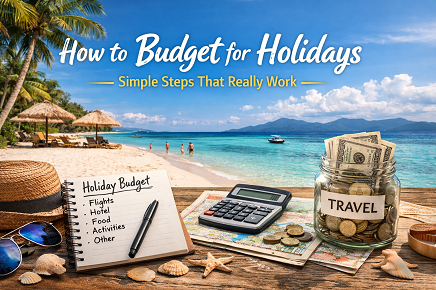
Holidays should feel exciting, not stressful. But many families return home with credit card bills, savings drained, and money worries that last for months. Travel costs, food, gifts, and activities keep getting more expensive every year, and planning without a clear holiday budget often leads to overspending.
A good holiday budget helps families enjoy their trip without financial stress. It gives you control over spending, helps you save in advance, and keeps surprises from ruining your plans. And the truth is simple: families who plan their holiday spending ahead enjoy their vacations more.
Here’s a simple step-by-step guide on how to budget for holidays in a way that actually works.
Why Holiday Budgeting Matters for Families
A holiday budget isn’t about cutting fun. It’s about making sure fun doesn’t turn into financial stress later.
When families plan holiday expenses properly:
- Travel costs stay under control.
- Savings goals are protected.
- Debt is avoided.
- Everyone enjoys the trip without guilt.
- There is money left for regular bills after the trip.
A holiday should create memories, not money problems.
Step 1: Decide Your Total Holiday Budget
Start with the total amount your family can safely spend.
Ask:
- How much can we spend without using credit?
- Can we save monthly before the trip?
- Will this affect rent, school fees, or bills?
A good rule: holidays should come from savings, not loans.
Example:
If you can save $200 per month for six months, your holiday budget becomes $1,200.
This becomes your spending limit.
Step 2: List All Holiday Expenses
Most families underestimate holiday costs. Flights and hotels are only part of the expense.
Create a holiday expenses list that includes:
- Flights or travel tickets
- Hotel or accommodation
- Food and restaurants
- Local transportation
- Activities and tours
- Gifts and souvenirs
- Travel insurance
- Shopping
- Emergency money
- Extra baggage fees
- Visa or travel documents
When everything is listed, surprises are reduced.
Step 3: Break Your Budget into Categories
Now divide the total holiday budget into spending categories.
Example:
- Transport: 30–40%
- Accommodation: 25–30%
- Food: 15–20%
- Activities: 10–15%
- Shopping and gifts: 5–10%
- Emergency buffer: 5%
This makes spending easier to control during the trip.
Step 4: Start a Holiday Savings Plan Early
The earlier you start saving, the easier budgeting becomes.
Simple saving methods:
- Save a fixed amount monthly.
- Put bonuses or extra income into holiday savings.
- Use a separate savings account.
- Cut small monthly expenses temporarily.
Small savings done early remove last-minute pressure.
Step 5: Use Tools to Track Spending
Tracking expenses prevents overspending.
Helpful tools include:
- Travel budget calculators
- Expense tracking apps
- Simple spreadsheets
- Notes apps on your phone
- Bank spending alerts
Log spending daily during the trip. This keeps your holiday spending tracker accurate.
Step 6: Cut Costs Without Killing the Fun
Saving money doesn’t mean ruining the trip. Small choices make a big difference.
Ways to reduce holiday costs:
- Travel during off-peak seasons.
- Book flights early or watch deals.
- Choose apartments over hotels for families.
- Cook some meals instead of eating out daily.
- Use public transport.
- Look for free local attractions.
- Use reward points or discounts.
Fun experiences don’t always cost money.
Step 7: Set Daily Spending Limits
Divide your budget by the number of travel days.
Example:
$1,200 trip for 6 days = $200 daily spending.
This helps control expenses naturally. If you spend less one day, you gain extra freedom later.
Daily limits keep spending balanced.
Step 8: Track Spending During the Trip
Many families stop tracking expenses once vacation begins. That’s where budgets break.
Good habits:
- Record expenses every evening.
- Keep receipts.
- Check remaining balance daily.
- Adjust spending if needed.
Small adjustments prevent large problems.
Step 9: Avoid Common Holiday Budget Mistakes
Most holiday overspending happens due to predictable mistakes.
Avoid:
- Forgetting hidden costs
- No emergency money
- Overspending on shopping
- Not tracking daily expenses
- Last-minute expensive bookings
- Using credit without a repayment plan
Planning removes most budget problems.
Step 10: Review After Returning Home
After the trip, review your holiday spending.
Ask:
- Did we stay within budget?
- Which expenses surprised us?
- Where could we save next time?
Each trip makes the next budget better.
Simple Holiday Budget Example for Families
Family of four, 5-day trip:
- Flights: $600
- Hotel: $500
- Food: $300
- Activities: $200
- Transport: $100
- Shopping: $150
- Emergency buffer: $150
Total holiday budget: $2,000
When costs are clear, decisions become easier.
Final Thoughts: Plan Smart, Travel Stress-Free
A holiday budget doesn’t limit fun. It protects it.
Families who budget properly:
- Travel without guilt.
- Avoid post-holiday debt.
- Save consistently.
- Enjoy experiences more.
The goal is simple: create memories, not money problems.
Start Your Holiday Budget Today
Don’t wait until tickets are booked. Start now.
- List expected holiday expenses.
- Set a savings plan.
- Track spending.
- Adjust early.
A little planning now gives you a relaxed holiday later.
And that’s the real goal — enjoy the trip, come home happy, and keep your finances healthy.
How much should I budget for a family holiday?
A typical family holiday budget ranges from 5–10% of annual household income, depending on destination and travel style. Include flights, accommodation, food, activities, and emergency funds. Setting a realistic holiday budget early prevents debt and helps families enjoy travel without financial pressure afterward.
What is the best way to start a holiday savings plan?
Start by setting a travel goal and dividing total holiday costs into monthly savings targets. Use a separate savings account or automatic transfers to build funds consistently. A clear holiday savings plan reduces last-minute borrowing and makes budgeting for holidays simple and stress-free.
How can families reduce holiday travel expenses?
Families can lower holiday costs by booking flights early, traveling off-peak, using budget accommodations, cooking some meals, and finding free attractions. Comparing travel deals and using reward points also reduces expenses. Smart choices help stretch a holiday budget while keeping the experience enjoyable.
What expenses are often forgotten in holiday budgets?
Commonly forgotten holiday expenses include baggage fees, local transportation, travel insurance, visa costs, airport transfers, tips, and emergency spending. Missing these costs often breaks a travel budget. Listing every possible expense before booking keeps holiday spending accurate and controlled.
Should I use credit cards to pay for holidays?
Using credit cards for holidays is risky unless you can repay the balance immediately. Interest charges quickly increase travel costs. A better approach is saving in advance and sticking to a holiday budget, ensuring vacations remain enjoyable without long-term financial stress.
How do I track spending during a holiday trip?
Track holiday expenses daily using expense tracking apps, spreadsheets, or simple notes on your phone. Recording spending keeps you within your travel budget and helps adjust plans if needed. Monitoring daily expenses prevents overspending and protects your overall holiday savings plan.
What is a good daily spending limit while on holiday?
Divide your total holiday budget by travel days to set a daily spending limit. This method balances spending and prevents running out of money before the trip ends. Daily limits give families flexibility while keeping holiday expenses under control.
When is the best time to book holidays to save money?
Booking holidays three to six months in advance often gives the best prices for flights and accommodation. Monitoring travel deals and flexible travel dates also reduces costs. Early planning helps families secure affordable options and stick to their holiday budget more easily.
How can I budget for holidays without cutting family fun?
Budgeting doesn’t remove fun; it protects it. Choose affordable activities, mix paid and free experiences, and prioritize meaningful moments over expensive options. A smart holiday budget allows families to enjoy trips fully while avoiding money stress once the vacation ends.










1 thought on “How to Budget for Holidays (Simple Steps That Really Work)”
May I just say what a comfort to discover somebody
that actually understands what they are talking
about on the web. You definitely realize how to bring an issue
to light and make it important. More and more people really need
to read this and understand this side of the story. I was surprised you’re not more popular since you definitely have the gift.