Last Updated on March 5, 2026 by Gil
Modern frugal living hacks in 2026 help families reduce everyday expenses, avoid waste, and keep more of their income without sacrificing comfort. Prices for groceries, housing, and utilities continue rising, and many households feel like their money disappears faster than ever.
But frugal living today is different from the past. It is not about extreme penny-pinching. Modern frugal living focuses on smart systems, intentional spending, and simple habits that prevent money leaks before they grow. Families who adopt these strategies often save hundreds or even thousands each year.
This guide explains the most effective frugal living strategies that actually work in 2026.
What Modern Frugal Living Hacks in 2026 Really Mean
Modern frugal living hacks in 2026 are practical strategies that help families reduce spending, avoid waste, and make smarter financial decisions using modern tools and habits. Instead of extreme penny-pinching, modern frugal living focuses on intentional spending, reducing recurring expenses, and creating systems that make saving money easier every month.
Families who practice modern frugal living focus on controlling the biggest spending categories while keeping a comfortable lifestyle.
Key Principles of Modern Frugal Living
- Spend intentionally instead of impulsively.
- Reduce recurring monthly expenses.
- Use simple budgeting systems to control spending.
- Buy fewer but better-quality items that last longer.
- Focus on long-term value instead of short-term convenience.
Examples of Modern Frugal Living in Daily Life
- planning weekly meals to reduce grocery spending
- canceling unused subscriptions regularly
- buying second-hand items before buying new
- using cashback and rewards programs
- automating savings on payday
These simple habits help families keep more of their income while still enjoying everyday life.
Why Frugal Living Is More Important Than Ever in 2026
Frugal living in 2026 is becoming essential because everyday expenses are rising faster than many household incomes. Groceries, housing, transportation, and subscription services continue to increase, making it harder for families to stay within budget. Modern frugal living helps households control spending, reduce financial stress, and build long-term stability even during uncertain economic times.
Families who adopt frugal habits often gain more control over their finances and avoid living paycheck to paycheck.
Major Reasons Families Are Turning to Frugal Living
- Rising grocery prices increase monthly food costs.
- Housing and rent continue to climb in many areas.
- Digital subscriptions quietly drain household budgets.
- Energy and utility costs remain unpredictable.
- Families want stronger savings and emergency funds.
Benefits Families Experience From Frugal Living
- lower monthly household expenses
- more money available for savings
- reduced financial stress
- better long-term financial security
- improved spending habits for children
When families build simple money systems, they often discover that small daily changes can create large savings over time.
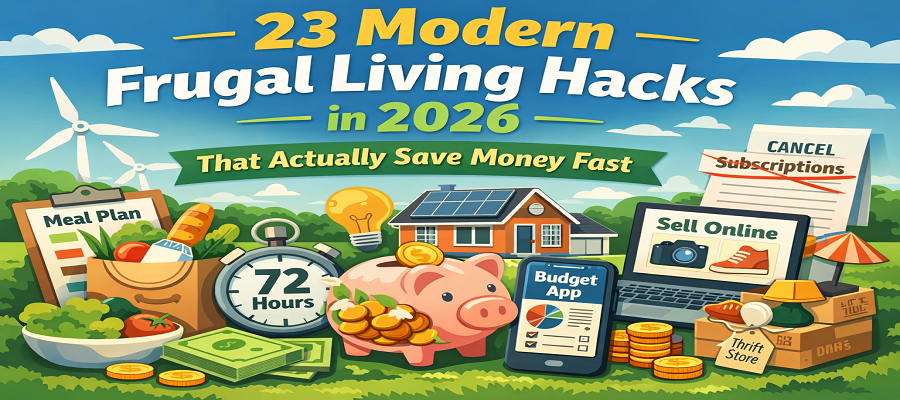
23 Modern Frugal Living Hacks That Actually Save Money Fast
Modern frugal living hacks in 2026 focus on the everyday spending areas where families lose the most money. Groceries, subscriptions, impulse purchases, and energy bills often drain household budgets without people realizing it. Using simple money systems and smart habits can reduce these costs quickly and consistently.
The following strategies are practical, realistic, and easy for families to apply.
Best Modern Frugal Living Hacks to Save Money
- Use the 72-Hour Rule Before Buying Anything
Wait three days before buying non-essential items. Most impulse purchases disappear after the waiting period. - Audit Subscriptions Every 90 Days
Review your bank statement and cancel unused services like streaming platforms, apps, and memberships. - Switch to a Digital Envelope Budget
Divide your income into spending categories like groceries, bills, and entertainment so you never overspend. - Create a Weekly Meal Plan
Planning meals in advance prevents expensive takeout and reduces grocery waste. - Cook Larger Meals and Freeze Portions
Batch cooking saves time and reduces the temptation to order food. - Buy Second-Hand Before Buying New
Furniture, kids clothes, and electronics are often available at a fraction of the price. - Use Cashback and Rewards Programs
Stacking cashback, store promotions, and rewards points can reduce purchase costs significantly. - Replace Old Bulbs With LED Lighting
LED lights use less electricity and last much longer than traditional bulbs. - Keep Your Phone Longer
Upgrading phones every year is expensive. Keeping a phone for several years saves hundreds of dollars. - Cancel Cable and Simplify Streaming
Limit entertainment subscriptions to one or two services instead of multiple platforms. - Use Library Resources Instead of Buying Books
Libraries offer books, audiobooks, movies, and even online learning resources for free. - Automate Savings on Payday
Automatically transfer money into savings before it can be spent. - Create a Family Spending Plan
When everyone understands the budget, it becomes easier to avoid unnecessary spending. - Track Weekly Spending
A short weekly review helps catch spending problems early. - Join Local Buy-Nothing Groups
Community sharing groups allow families to receive items others no longer need. - Sell Unused Items Around Your Home
Many households have hundreds of dollars in unused belongings. - Use Public Transportation or Carpool
Reducing driving lowers fuel, maintenance, and insurance costs. - Make Coffee at Home Instead of Buying Daily
Small daily purchases add up quickly over time. - Follow a Minimalist Shopping Rule
Focus on buying fewer items that serve multiple purposes. - Start a Monthly No-Spend Challenge
Pick a weekend or week each month where you avoid non-essential spending. - Delay Lifestyle Upgrades
When income increases, save the extra money instead of increasing spending. - Compare Prices Before Large Purchases
Taking a few minutes to compare options can prevent overpaying. - Focus on Value Instead of Price Alone
Choosing durable, long-lasting items often saves more money over time.
Quick Tips to Make These Hacks Work Faster
- start with two or three strategies instead of trying everything at once
- track savings each month to stay motivated
- involve the entire family in money decisions
- celebrate small wins to build strong habits
These modern frugal living strategies help families reduce expenses quickly while building long-term financial stability.
How to Start Living Frugally in 2026 (Step-by-Step)
Starting frugal living in 2026 means creating simple money systems that control spending and protect your income. Many families try to save money randomly, but real results come from following a clear process. A few structured steps can quickly reduce unnecessary expenses and build stronger financial habits.
Step-by-Step Plan to Start Frugal Living
- Track Your Current Spending
Review the last 30 days of spending to understand where your money goes. Focus on groceries, subscriptions, dining out, and impulse purchases. - Identify the Biggest Money Leaks
Look for recurring expenses that quietly drain your budget such as unused subscriptions or frequent takeout meals. - Create a Simple Family Budget
Divide your income into essential categories like housing, groceries, transportation, and savings. - Cancel or Reduce Unnecessary Expenses
Remove services or habits that do not add real value to your daily life. - Set a Monthly Savings Goal
Choose a realistic savings target so progress becomes measurable. - Automate Savings Transfers
Automatically move money to savings on payday so it happens without effort. - Review Spending Every Week
Short weekly check-ins keep your spending habits under control and prevent mistakes.
Simple Habits That Make Frugal Living Easier
- plan meals before grocery shopping
- delay non-essential purchases for several days
- repair items instead of replacing them immediately
- choose quality products that last longer
- involve the entire family in saving money
Following these steps helps families build a strong financial routine without feeling overwhelmed.
Smart Money-Saving Tips Families Use Every Day
Smart money-saving tips help families reduce everyday expenses without making life harder. The goal of modern frugal living is not to remove comfort but to eliminate waste and unnecessary spending. Small daily habits often create the biggest long-term savings when practiced consistently.
Many families discover that simple adjustments to daily routines can dramatically lower monthly expenses.
Everyday Frugal Living Tips That Save Money
- Plan grocery shopping before leaving home
Shopping with a list prevents impulse purchases and wasted food. - Cook more meals at home
Home cooking is significantly cheaper than regular takeout or restaurant meals. - Use the freezer to reduce food waste
Freezing leftovers prevents throwing away unused food. - Repair items before replacing them
Fixing small problems often costs far less than buying new products. - Avoid shopping when bored or stressed
Emotional spending leads to many unnecessary purchases. - Keep a small emergency fund
Even a modest savings cushion prevents costly debt when unexpected expenses happen.
Small Habits That Add Up to Big Savings
- Bring lunch to work instead of buying food daily.
- Combine errands to reduce fuel costs.
- Turn off lights and unplug unused electronics.
- Limit streaming subscriptions to one or two services.
- Delay non-essential purchases for a few days.
These simple habits may seem small, but over time they can save families hundreds or even thousands of dollars each year.
Benefits of Modern Frugal Living for Families
Modern frugal living helps families reduce financial stress, build savings faster, and create long-term financial stability. When households control spending and avoid unnecessary expenses, they gain more freedom and flexibility with their money. Frugal habits also teach children strong financial skills that benefit them later in life.
Families who practice frugal living often discover that saving money does not mean sacrificing comfort. Instead, it means focusing spending on what truly matters.
Key Benefits Families Experience
- Lower monthly household expenses
Cutting wasteful spending leaves more room in the family budget. - Stronger emergency savings
Frugal habits make it easier to build a financial safety cushion. - Reduced financial stress
Families feel more secure when they control their spending. - Better long-term financial stability
Consistent savings habits support future goals like education, home ownership, or retirement. - Healthier money habits for children
Kids who see responsible spending often learn the same behavior.
Why Frugal Living Builds Financial Confidence
- families gain control over their finances
- unexpected expenses become easier to manage
- savings grow steadily over time
- financial decisions become more intentional
These benefits explain why more families are adopting modern frugal living strategies in 2026.
What is the easiest way to start living frugally?
The easiest way to start living frugally is to track spending and identify unnecessary expenses. Begin by reviewing your last month of purchases, cancel unused subscriptions, and create a simple budget for groceries, bills, and entertainment.
How much money can frugal living save?
Many families save hundreds or even thousands of dollars each year through frugal living. Small changes like cooking at home, reducing subscriptions, and planning purchases can significantly lower monthly expenses.
Is frugal living the same as being cheap?
Frugal living focuses on value and intentional spending, not just spending less. Being cheap often sacrifices quality, while frugal living aims to buy smarter and avoid unnecessary purchases.
Can families live frugally without sacrificing comfort?
Yes. Many frugal living strategies simply replace expensive habits with smarter alternatives. Activities like home cooking, outdoor family time, and community events can provide enjoyment without high costs.
What are the biggest money leaks in most family budgets?
Common money leaks include unused subscriptions, frequent takeout meals, impulse shopping, and unnecessary upgrades to electronics or services. Identifying these expenses often reveals easy opportunities to save money.
Conclusion
Modern frugal living hacks in 2026 give families practical ways to control spending, reduce financial stress, and build stronger savings. By focusing on intentional spending, simple budgeting systems, and smarter everyday habits, households can dramatically lower their monthly expenses.
The best way to start is simple. Choose two or three strategies from this guide and begin using them this week. Small changes made consistently can lead to significant financial improvements over time.
Start building your frugal lifestyle today and watch your savings grow.