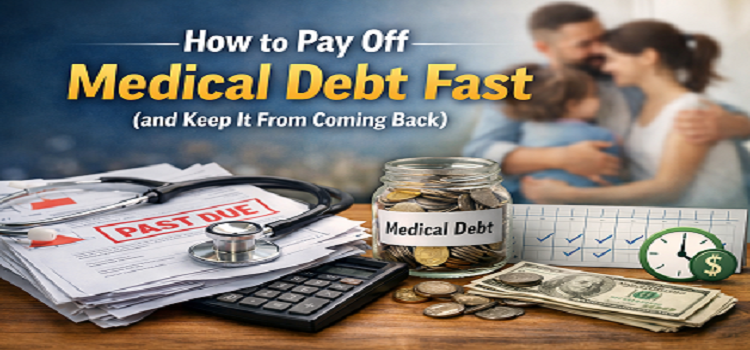
Pay off medical debt fast by reducing what you owe first, then using a focused repayment plan. Medical bills can grow quickly and overwhelm any family budget, especially when costs are unclear or insurance does not cover everything. Most people make one mistake — they start paying without negotiating or checking for errors. That leads to overpaying and staying in debt longer. The smart approach is different. Here, you will learn how to lower your total balance, use proven strategies to pay it off fast, and avoid falling back into medical debt again.
What Is Medical Debt and Why It Builds So Fast?
Medical debt is money you owe for healthcare services that insurance does not fully cover. It builds fast because of high deductibles, surprise billing, and pricing that is often unclear. Even one hospital visit can create large out-of-pocket costs, making it hard for families to keep up.
Common Causes of Medical Debt
- High deductibles and co-pays
Many insurance plans require you to pay thousands before coverage starts. - Out-of-network charges
You may unknowingly receive care from providers not covered by your plan. - Emergency medical care
Emergencies don’t allow cost comparison, leading to higher bills. - Billing errors and duplicate charges
Mistakes happen often and can inflate your total balance. - Lack of upfront pricing
Many providers do not clearly explain costs before treatment.
Why Medical Debt Is Different From Other Debt
- It is often negotiable, unlike credit card debt
- Many bills start as interest-free
- Charges are often unclear or incorrect
- It can still impact your credit if ignored
What This Means for You
Medical debt feels overwhelming, but it gives you an advantage. Since it is flexible and often negotiable, you can reduce what you owe before paying. That is the key to paying off medical debt fast instead of struggling with full balances.
Can You Really Pay Off Medical Debt Fast? (What Actually Works)
Yes, you can pay off medical debt fast by lowering the total balance first, then using a short, focused repayment plan. The biggest wins come from negotiation, charity care, and fixing billing errors. Paying the full amount slowly is the worst strategy.
What “Fast” Actually Means
- 30–90 days (small to medium debt)
If you reduce the balance and stay aggressive, this is realistic. - 3–6 months (larger balances)
Works when you combine negotiation with steady payments. - Immediate reduction
Some bills drop fast through hardship discounts or settlement offers.
What Actually Works (The Real Strategy)
- Reduce the bill first
Never rush to pay the full amount. - Negotiate before paying
Ask for discounts, settlements, or assistance. - Use a short timeline
Long plans keep you stuck. Short plans force action. - Focus extra income
Direct all spare money toward the debt.
Biggest Mistakes That Slow You Down
- Paying without negotiating
- Ignoring bills until collections
- Using high-interest credit cards
- Not checking for billing errors
- Accepting the first amount you’re given
Bottom Line
Paying off medical debt fast is not about earning more money. It’s about lowering what you owe and attacking it with a clear plan. Once the balance drops, the payoff becomes much easier and faster.
7 Proven Ways to Pay Off Medical Debt Fast
The fastest way to pay off medical debt is to reduce the total first, then use focused, short-term payments. These proven strategies work because they lower what you owe and speed up payoff time. Most people skip these steps and end up overpaying.
Best Strategies to Pay Off Medical Debt Fast
- Request an itemized medical bill
Always start here. Itemized bills expose duplicate charges, wrong codes, and services you never received. Even small errors can cut hundreds or thousands from your balance. - Dispute medical bill errors immediately
If something looks off, don’t ignore it. Contact billing and submit a dispute. Fixing errors is one of the fastest ways to reduce medical debt without paying anything extra. - Apply for charity care medical bills assistance
Many hospitals offer financial assistance based on income. You may qualify even if you think you earn too much. Approval can reduce or completely eliminate your bill. - Negotiate medical bills for a lower payoff
Call and ask directly for a discount. Many providers accept less, especially if you offer to pay part of the balance quickly. This step alone can cut your debt significantly. - Ask for a hardship discount
If you’re struggling financially, explain your situation. Hospitals often have hardship programs that reduce balances for patients dealing with financial pressure. - Set up a short-term repayment plan
Once the balance is reduced, create a 30–90 day plan. Focus all extra money on the debt. Short timelines help you stay consistent and finish faster. - Use a lump-sum settlement when possible
If you can gather cash, offer a one-time payment for a lower total. Many providers accept this because they prefer guaranteed money now instead of long-term payments.
Quick Tip
Never pay the full bill without trying at least three of these steps. Most medical debt is flexible, and small actions can lead to big savings.
What Makes These Work
- They reduce your balance first
- They speed up repayment time
- They prevent overpaying
- They give you control over the process
How to Negotiate Medical Bills Step-by-Step (Scripts Included)
Negotiating medical bills is one of the fastest ways to reduce debt. Providers often accept lower payments if you ask the right way. A simple call, done correctly, can cut your bill before you pay anything. Most people skip this step and lose money.
Step-by-Step Negotiation Process
- Call the billing department
Use the number on your bill. Ask to speak with someone who handles billing adjustments. - Request an itemized bill
Say:
“Can you send me a full itemized bill with all charges and codes?”
Review it before agreeing to anything. - Ask for financial assistance options
Say:
“Do you offer financial assistance or hardship programs?”
Many do, but they won’t offer unless you ask. - Request a discount or lower rate
Say:
“Is there a self-pay or prompt-pay discount available?” - Offer a lump-sum settlement
If possible, say:
“If I pay today, what’s the lowest amount you can accept?” - Confirm everything in writing
Before paying, ask:
“Can you send me written confirmation of this agreement?”
Exact Scripts You Can Use
Keep it simple. Be direct.
- “Can you review this bill for any errors or duplicate charges?”
- “Do you have any discounts or programs for financial hardship?”
- “What is the lowest amount you can accept if I pay today?”
- “Can this balance be reduced if I cannot afford the full amount?”
Pro Tips That Increase Success
- Be calm and respectful
- Call more than once if needed
- Ask for a supervisor if you get stuck
- Take notes during every call
- Follow up if you don’t hear back
Common Mistakes to Avoid
- Accepting the first price
- Paying before negotiating
- Not asking about assistance programs
- Failing to get written confirmation
Bottom Line
Negotiation is not optional if you want to pay off medical debt fast. Even a small reduction makes your payoff plan easier and faster. One phone call can save you hundreds or more.
How to Apply for Charity Care and Medical Debt Forgiveness
Charity care and medical debt forgiveness programs can reduce or completely eliminate what you owe based on income and financial hardship. Many hospitals are required to offer assistance, but they rarely promote it. Applying the right way can wipe out a large part of your medical debt fast.
Who Qualifies for Medical Bill Assistance
- Low to middle income families
Many programs cover more than just very low income levels. - High medical expenses compared to income
Even moderate earners can qualify if bills are too high. - Financial hardship situations
Job loss, emergencies, or ongoing medical issues increase approval chances.
How to Apply (Step-by-Step)
- Request the financial assistance application
Call the hospital billing department and ask for it directly. - Gather required documents
Usually includes:- Pay stubs
- Tax return
- Bank statements
- Submit the application quickly
Don’t delay. Some programs have deadlines. - Follow up within 1–2 weeks
Call to confirm they received everything. - Appeal if denied
Ask for a review. Many denials get approved after a second look.
Where to Look for Medical Debt Forgiveness
- Hospital financial assistance programs
- Local nonprofit organizations
- Community health programs
- State or city-based medical debt relief efforts
Search online using: medical debt forgiveness program near me
What You Can Expect
- Partial reduction (common)
- Significant discount (very common)
- Full bill elimination (possible in some cases)
Pro Tips to Increase Approval Chances
- Apply even if you think you won’t qualify
- Be honest and complete in your application
- Include a short hardship explanation if possible
- Follow up until you get a final decision
Bottom Line
Before you commit to paying a large medical bill, check if you qualify for help. Charity care and forgiveness programs can reduce your balance dramatically, making it much easier to pay off medical debt fast.
How to Create a Fast Medical Debt Repayment Plan
A medical debt repayment plan helps you clear the remaining balance quickly after reductions. The key is a short, focused timeline with clear priorities. Long plans keep you stuck. A 30–90 day plan forces action and helps you pay off medical debt fast without dragging it out.
Step-by-Step Medical Debt Repayment Plan
- List all your medical debts
Write down each balance, due date, and status. Know exactly what you owe. - Choose your payoff method
- Snowball: pay smallest balances first for quick wins
- Avalanche: pay highest interest first to save money
- Set a 90-day payoff goal
Break your total into monthly targets. Make it aggressive but realistic. - Cut non-essential spending
Pause things like dining out, subscriptions, and impulse buys. - Increase short-term income
Sell unused items, take extra shifts, or do small side work. - Focus all extra money on the debt
Every extra dollar goes toward your medical debt repayment plan. - Track progress weekly
Adjust if needed, but stay consistent until it’s gone.
Simple Example
- Total debt after reduction: $3,000
- Timeline: 3 months
- Monthly target: $1,000
This makes the goal clear and achievable.
Tips to Stay Consistent
- Automate payments if possible
- Use a simple tracker or notebook
- Celebrate small wins after each payment
- Stay focused on the short timeline
What Makes This Work
- Clear deadline
- Focused effort
- Reduced distractions
- Consistent tracking
Bottom Line
Once your balance is reduced, speed becomes your advantage. A short, aggressive plan helps you stay focused and finish faster. This is how you fully pay off medical debt fast instead of dragging it out for years.
Should You Use Medical Debt Consolidation or Credit Cards?
Medical debt consolidation can simplify payments, but it can also make things worse if used wrong. Some options add high interest and lock you into longer repayment. The goal is to pay off medical debt fast, not turn it into expensive long-term debt.
When Medical Debt Consolidation Makes Sense
- You get a lower interest rate
A personal loan with a lower rate can reduce total cost. - You have a clear payoff timeline
You know exactly when the debt will be gone. - You need one simple monthly payment
This helps with consistency and tracking.
When to Avoid It
- High-interest medical credit cards
Many offer “no interest” but charge huge fees later if not paid in time. - No clear repayment plan
Consolidation without a plan leads to more debt. - Using it to delay action
It should speed things up, not buy time.
Better Alternatives First
Before consolidating, try:
- Negotiating the bill
- Applying for charity care
- Asking for a hardship discount
- Setting a short-term repayment plan
These options reduce your balance instead of adding cost.
Simple Rule
Only use consolidation if it:
- Lowers your interest
- Shortens your payoff time
- Makes payments easier
If it does not meet all three, skip it.
Bottom Line
Medical debt consolidation is not the first step. It’s a backup option. Focus on reducing what you owe first. Then pay it off fast without adding new interest or risk.
How to Avoid Medical Debt in the Future
Avoiding medical debt is easier than paying it off. Most debt comes from surprise costs, unclear pricing, and weak insurance planning. Once you understand how these problems happen, you can stop them before they start.
Key Ways to Prevent Medical Debt
- Ask for a good faith estimate before treatment
Request a written cost estimate for any planned procedure. This helps you avoid surprise bills and gives you time to plan payments. - Confirm in-network providers
Always check if doctors, hospitals, and specialists are in-network. One out-of-network provider can double your bill. - Understand your insurance limits
Know your:- Deductible
- Co-pay
- Out-of-pocket maximum
These numbers decide how much you really pay.
- Build a small medical emergency fund
Even a small savings buffer can prevent debt after unexpected visits or emergencies. - Review all medical bills before paying
Never pay automatically. Always check for errors, duplicates, or incorrect charges.
Simple Habit That Prevents Big Debt
Before any non-emergency treatment, ask:
- What will this cost me out of pocket?
- Is there a cheaper alternative?
- Can I get this in writing?
This one habit prevents most surprise medical debt.
Why Prevention Works Better
- You avoid negotiation stress
- You protect your credit early
- You stop debt before it grows
- You stay in control of spending
Bottom Line
Medical debt is often preventable. A few simple checks before treatment can save thousands later. The goal is not just to pay off medical debt fast, but to make sure it doesn’t come back.
Benefits of Paying Off Medical Debt Fast (Why It Matters)
Paying off medical debt fast reduces stress, protects your credit, and frees up money for daily needs. The faster you clear it, the less risk you face from collections, added fees, or financial pressure. Quick action gives you control and stability again.
Key Benefits of Paying Off Medical Debt Fast
- Less financial stress
Ongoing medical bills create constant pressure. Clearing them quickly brings relief. - Better credit protection
Paying or settling early lowers the risk of collections and credit damage. - More monthly cash flow
Once the debt is gone, you keep more of your income for essentials. - Avoid long-term payments
Short timelines prevent years of small, draining payments. - Stronger financial control
You regain confidence and control over your money decisions.
How It Improves Daily Life
- Fewer financial worries
- More flexibility in your budget
- Ability to save and plan ahead
- Less risk of future debt cycles
What Happens If You Delay
- Higher stress over time
- Possible collections
- Credit score impact
- Longer repayment periods
Bottom Line
The faster you act, the easier it gets. Paying off medical debt fast is not just about money. It’s about reducing pressure and getting your finances back on track.
How can I pay off medical debt fast?
The fastest way to pay off medical debt is to reduce the balance first, then use a short-term repayment plan. Start by negotiating the bill, applying for charity care, and disputing errors. Once reduced, focus all extra income on the debt to clear it quickly.
Can I negotiate medical bills after they go to collections?
Yes, you can negotiate medical bills after they go to collections. Most collectors accept reduced lump-sum payments or payment plans. Ask for a lower settlement amount and get the agreement in writing before paying to protect your credit and avoid future issues.
Do hospitals forgive medical debt?
Yes, hospitals can forgive medical debt through charity care and financial assistance programs. Many nonprofit hospitals offer partial or full debt relief based on income and hardship. You must apply and provide documents, but approval can significantly reduce or eliminate your balance.
What happens if I don’t pay medical bills?
If you don’t pay medical bills, they can be sent to collections, which may affect your credit and lead to ongoing collection efforts. Ignoring the bill also removes your chance to negotiate or reduce the balance through assistance programs or disputes.
Is medical debt interest-free?
Medical debt is often interest-free when billed directly by providers. However, interest may apply if the balance is moved to a credit card or financing plan. Always check terms before agreeing to payments to avoid turning low-cost debt into high-interest debt.
Can medical debt be removed from a credit report?
Medical debt can be removed from a credit report if it is paid, settled, or found to be incorrect. You can also dispute errors with credit bureaus. Some newer scoring models reduce the impact of medical collections, but resolving the debt quickly is still best.
What is the fastest way to reduce medical debt?
The fastest way to reduce medical debt is to request an itemized bill, dispute errors, and apply for charity care or hardship discounts. These steps lower your balance quickly, making it easier to pay off medical debt fast with a short repayment plan.
Should I use a payment plan for medical debt?
A medical debt payment plan can help if it is interest-free and fits your budget. Choose a short-term plan to pay off the balance quickly. Avoid long plans that delay payoff or add fees, as they can increase total cost and keep you in debt longer.
Can I settle medical debt for less than I owe?
Yes, you can settle medical debt for less than you owe by negotiating a lump-sum payment. Many providers and collectors accept reduced amounts if paid quickly. Always confirm the settlement in writing before paying to ensure the remaining balance is cleared.
What is the best way to avoid medical debt in the future?
The best way to avoid medical debt is to plan before care. Ask for cost estimates, confirm in-network providers, and build a small medical emergency fund. Reviewing bills for errors and understanding your insurance coverage also helps prevent unexpected charges.
Pay off medical debt fast by focusing on what works: reduce the balance, choose a short repayment plan, and act quickly. Most people overpay because they don’t negotiate or check for errors first.
Start now. Request your itemized bill, apply for financial assistance, and make one call to negotiate. The sooner you act, the faster you get out of debt and back in control of your money.









1 thought on “7 Proven Ways to Pay Off Medical Debt Fast (and Keep It From Coming Back)”
Great content! Keep up the good work!