Money habits start early. Kids watch how money is spent long before they understand it. If families don’t teach budgeting, kids learn from ads, friends, and impulse buying.
And today, money decisions come faster. Online shopping, gaming purchases, digital wallets, and teen debit cards make spending easy. Teaching kids to budget is no longer optional. It’s basic life training.
The good news? You don’t need complex lessons. Simple routines at home work best. Here are practical steps any family can use to teach budgeting in a way kids understand and actually follow.
Why Teaching Kids to Budget Matters
Kids who learn budgeting early grow into adults who handle money better. They save more, avoid debt, and make smarter choices.
Budgeting teaches:
- Patience and delayed gratification
- Smart spending decisions
- Saving toward goals
- Understanding needs vs wants
- Responsibility with money
And families benefit too. Kids who understand money argue less about purchases and value what they have.
When Should Kids Start Learning About Money?
Start as soon as they can count.
Money lessons change with age:
Ages 3–6
- Recognize coins and bills
- Learn money buys things
- Start saving small amounts
- Understand simple choices
Ages 7–10
- Manage small allowances
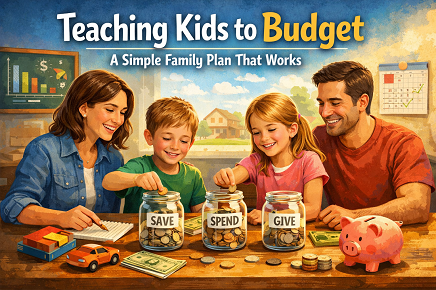
- Use save, spend, give categories
- Learn price comparison
- Set savings goals
Ages 11–14
- Handle larger allowances
- Budget for school or hobbies
- Use prepaid or teen debit cards
- Track spending
Ages 15–18
- Build monthly budgets
- Understand bank accounts
- Learn basics of credit
- Plan for future expenses
Start small. Build slowly.
The Simple Family Budget Plan That Works
Families succeed when money lessons are practical, not lectures.
Here’s a simple system.
Step 1: Give Kids Money to Manage
Kids need real money experience.
Options:
- Weekly allowance
- Payment for extra chores
- Earnings from small jobs
- Birthday or gift money
No money means no learning.
Step 2: Use the Budget Jar System
This works for almost every age.
Split money into categories:
- Spend – fun purchases
- Save – bigger goals
- Give – charity or gifts
- Long-term saving (optional for older kids)
Example:
If a child gets $10:
- $5 spend
- $3 save
- $1 give
- $1 long-term
Adjust amounts based on family values.
Step 3: Help Kids Set Saving Goals
Goals keep kids motivated.
Examples:
- New toy
- Game console
- Bike
- Special trip
- Gift for someone
Show progress visually. Charts or trackers help kids stay excited.
Step 4: Let Them Make Spending Choices
Mistakes teach more than lectures.
If they spend all their money early, don’t rescue them. Let them wait until next allowance.
Small mistakes now prevent big mistakes later.
Step 5: Do Weekly Money Check-Ins
Keep it short. Five minutes is enough.
Ask:
- What did you buy this week?
- How much did you save?
- What is your next goal?
Make it calm, not judgmental.
Budgeting Activities Kids Enjoy
Learning works better when it feels like play.
Try these activities:
- Compare prices while shopping
- Plan a small family purchase together
- Give kids a grocery budget challenge
- Let them help plan a party budget
- Run a pretend store at home
- Use printable kids budget worksheets
Hands-on learning sticks.
Using Apps to Teach Budgeting
Digital tools help older kids and teens track money.
Allowance apps and teen debit cards can:
- Track spending automatically
- Teach saving goals
- Show spending reports
- Allow parental controls
- Help kids learn real banking
Apps should support lessons, not replace parent involvement.
Common Budgeting Mistakes Parents Make
Avoid these traps.
Giving money without guidance
Kids spend freely if no structure exists.
Rescuing kids from bad spending
They must feel consequences.
Making money talks stressful
Keep conversations calm and normal.
Teaching too late
Money habits are hard to change later.
Not leading by example
Kids copy what parents do.
Signs Your Child Is Learning Budgeting Skills
Look for progress, not perfection.
Good signs include:
- Saving for goals without reminders
- Asking price questions
- Comparing options before buying
- Waiting instead of impulse buying
- Tracking their own money
Small wins matter.
A 30-Day Family Budget Challenge
Try this simple plan.
Week 1: Introduce save, spend, give jars.
Week 2: Set a saving goal.
Week 3: Track spending together.
Week 4: Let kids make a full purchase decision.
Repeat monthly with new goals.
Consistency builds habits.
Final Thoughts: Start Small but Start Now
Teaching kids to budget isn’t about money. It’s about choices, patience, and responsibility.
You don’t need complex tools. Start with small allowances, clear categories, and regular conversations.
Kids who learn budgeting early grow into confident adults who control money instead of letting money control them.
Call to Action
Start this week. Give your child money to manage, set a saving goal, and hold a short family money talk. Small steps today create smart money habits for life.
What is the best age to start teaching kids to budget?
The best time to start teaching kids to budget is between ages 3 and 5, when children begin understanding numbers and choices. Simple lessons using jars for saving and spending build early money habits. Starting young helps children develop budgeting skills, saving discipline, and smarter spending decisions later in life.
How do you teach a child budgeting in a simple way?
Teach budgeting by giving kids small amounts of money and dividing it into spend, save, and give categories. Let them manage real choices and set saving goals. Weekly money check-ins and practical shopping lessons help children understand budgeting, spending control, and saving habits through everyday experiences.
Should kids get an allowance to learn budgeting?
Yes, an allowance helps kids practice budgeting with real money. Whether tied to chores or given weekly, consistent allowances teach spending limits, saving goals, and money planning. Managing their own allowance prepares children for real-world financial decisions and strengthens long-term budgeting discipline.
What are the best budgeting activities for kids at home?
Great budgeting activities include price comparisons during shopping, setting savings goals for toys, grocery budget challenges, and running pretend stores at home. Hands-on activities make financial literacy fun and practical, helping kids understand money management, saving strategies, and smart spending through real-life budgeting practice.
How much allowance should kids get for budgeting lessons?
Allowance amounts depend on age and family budget, but enough should be given so kids can practice spending and saving decisions. Many families give $1–$2 per week per year of age. The goal is learning money management, not rewarding spending power or creating entitlement.
Are budgeting apps good for teaching kids money skills?
Budgeting apps and allowance apps help older kids and teens track spending, set savings goals, and learn digital money management. Apps work best when parents stay involved, discussing spending reports and decisions regularly. Technology supports budgeting lessons but should not replace family money conversations.
How do you teach kids the difference between needs and wants?
Teach needs versus wants by discussing purchases during shopping and asking kids to decide what is essential versus optional. Involving children in family budgeting decisions helps them see trade-offs. This practice builds smarter spending habits and strengthens budgeting awareness in everyday financial choices.
What mistakes do parents make when teaching kids budgeting?
Common mistakes include rescuing kids after poor spending choices, giving money without guidance, and delaying money lessons too long. Kids need space to make small mistakes and learn consequences. Consistent budgeting conversations and real decision-making opportunities build stronger financial responsibility over time.
How can teens learn budgeting before leaving home?
Teens should manage a monthly budget covering clothing, entertainment, and personal expenses while tracking spending through apps or simple spreadsheets. Introducing bank accounts, saving plans, and debit card use prepares teens for adult money responsibilities and strengthens practical budgeting skills before independence.