Eating healthy doesn’t have to cost a fortune. A smart $50 healthy grocery haul can cover balanced meals, snacks, and meal prep for days without sacrificing nutrition. With grocery prices rising, more families are searching for realistic ways to eat healthy on a budget while still buying foods that are filling, simple, and affordable.
This guide shows exactly how to build a healthy grocery list under $50, what foods give the best value, and how to turn inexpensive ingredients into easy meals your family will actually eat.
What Can You Buy in a $50 Healthy Grocery Haul?
A $50 healthy grocery haul can include proteins, grains, fruits, vegetables, and pantry staples that support healthy meals for several days. The key is focusing on affordable whole foods that stretch across multiple meals.
Most families overspend because they buy:
- Too many snacks
- Expensive drinks
- Convenience foods
- Individually packaged items
Budget grocery shopping works better when you build meals around simple staples.
Smart shopping supports long-term cheap healthy meals for families
The Exact $50 Healthy Grocery Haul
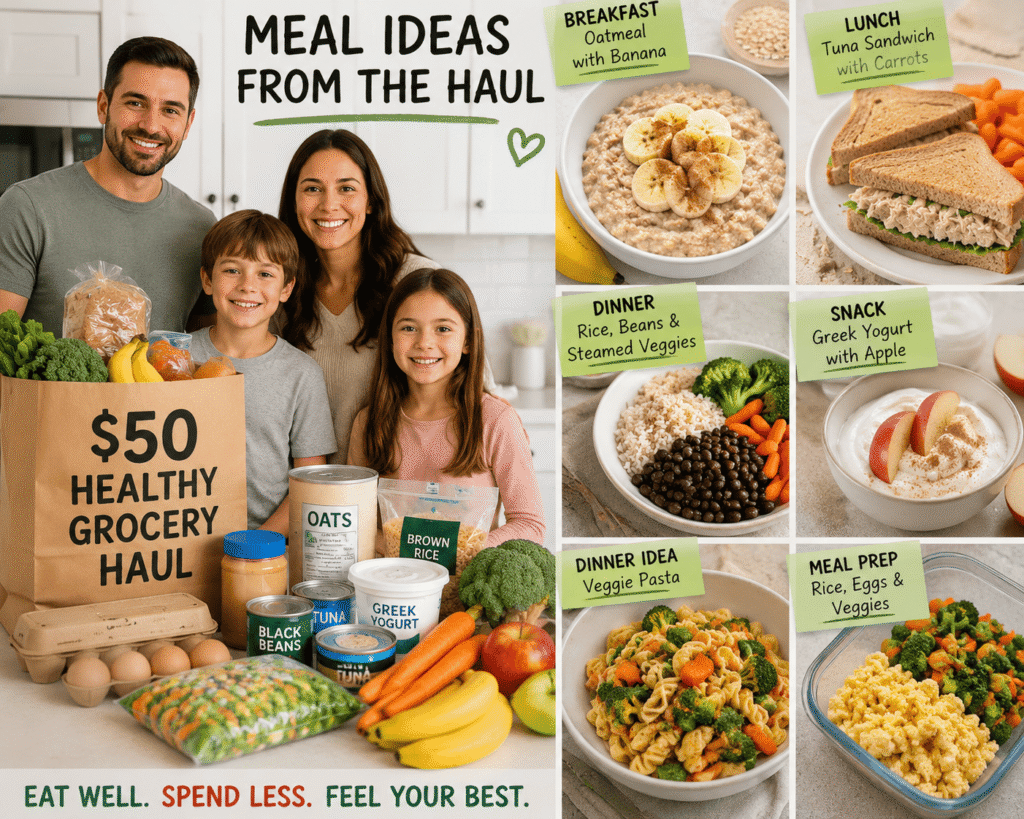
Here’s a realistic grocery list using average discount grocery store prices.
| Grocery Item | Estimated Price | Meals It Covers |
|---|---|---|
| Eggs (1 dozen) | $3 | Breakfasts, sandwiches |
| Brown rice (2 lb) | $4 | Lunches, dinners |
| Rolled oats | $3 | Breakfasts |
| Whole wheat pasta | $2 | Dinners |
| Peanut butter | $3 | Snacks, breakfast |
| Black beans (2 cans) | $2 | Bowls, wraps |
| Canned tuna (3 cans) | $4 | Lunches |
| Frozen mixed vegetables (2 bags) | $5 | Multiple dinners |
| Bananas | $2 | Snacks, breakfast |
| Apples | $4 | Snacks |
| Carrots | $2 | Snacks, soups |
| Broccoli | $3 | Dinners |
| Greek yogurt | $4 | Breakfast, snacks |
| Whole wheat bread | $3 | Toast, sandwiches |
| Olive oil | $6 | Cooking |
Estimated Total: About $50
This grocery haul creates:
- Multiple breakfasts
- Easy lunches
- Filling dinners
- Healthy snacks
- Meal prep options
Why This Grocery Haul Works
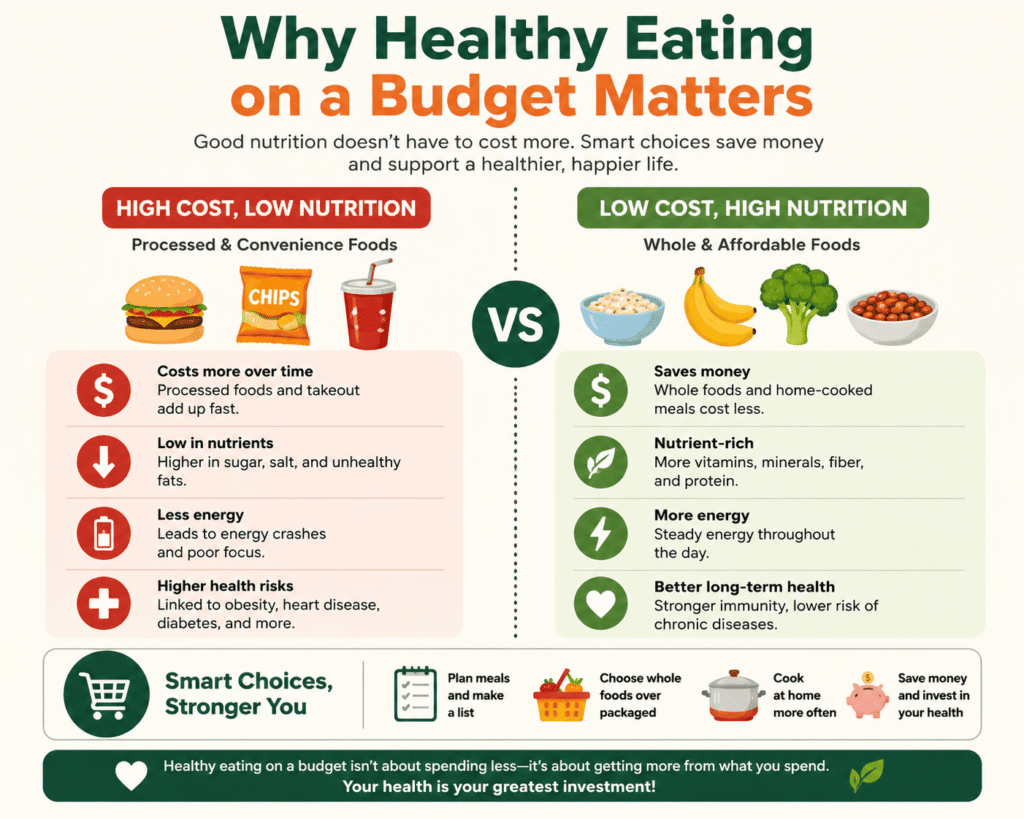
You can stay organized using a weekly $50 grocery list for a family of 4
1. Cheap Proteins Keep You Full
Protein is usually the most expensive part of grocery shopping. That’s why budget-friendly proteins matter.
The best cheap healthy proteins include:
- Eggs
- Beans
- Canned tuna
- Peanut butter
- Greek yogurt
These foods are:
- Filling
- High in nutrients
- Versatile
- Inexpensive
They also work across breakfast, lunch, and dinner.
2. Frozen Vegetables Save More Money
Frozen vegetables are one of the smartest grocery budget tricks.
They:
- Last longer
- Reduce food waste
- Cost less than many fresh vegetables
- Still contain important nutrients
Many families throw away fresh produce before using it. Frozen vegetables solve that problem.
3. Simple Foods Create More Meals
One of the biggest mistakes people make is buying ingredients for only one meal.
Budget grocery shopping works better when foods overlap.
Example:
- Rice works in bowls, stir fry, and meal prep
- Eggs work for breakfast and sandwiches
- Oats work for breakfast and snacks
- Beans work in wraps, soups, and rice bowls
That flexibility stretches every dollar.
Why a $50 Grocery Haul Works for Families
Food costs keep changing, and families need strategies that actually fit a budget. You can still eat fresh, healthy, and filling meals without overspending.
- Affordable proteins like eggs, beans, and canned tuna are versatile and nutritious.
- Seasonal fruits and vegetables provide vitamins without the high price tag.
- Planning meals ahead prevents waste and saves money.
- Frozen and canned produce lasts longer and often costs less than fresh.
A $50 healthy grocery haul isn’t about cutting corners—it’s about being smart with what you buy.
Smart Shopping Strategies
Spending less while eating well is easier when you know how to shop:
- Meal plan first – know what you need before entering the store.
- Check flyers and digital coupons – weekly deals can add up.
- Choose store brands – same quality, lower price.
- Buy in bulk when possible – rice, oats, beans, and frozen veggies are cheaper in larger packs.
- Frozen and canned produce – keeps longer and reduces waste.
These strategies ensure you maximize nutrition without overspending.
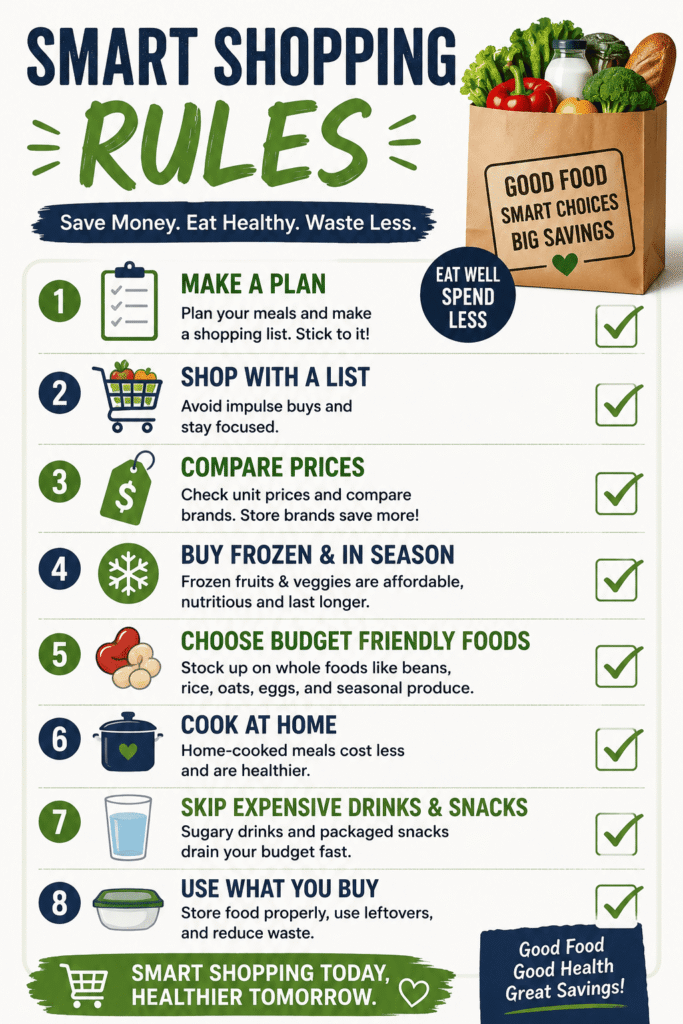
To save more at checkout, use best digital coupons to use in 2026
Build Your $50 Grocery List
Here’s a sample list for a family looking to eat healthy for $50:
Proteins
- Eggs (1 dozen)
- Canned tuna (3 cans)
- Black beans or chickpeas (2 cans)
Grains & Staples
- Brown rice (2 lb bag)
- Rolled oats (1 lb)
- Whole wheat pasta (1 lb)
Produce
- Seasonal fresh fruit (apples, bananas, oranges)
- Frozen mixed vegetables (2 bags)
- Fresh seasonal vegetables (carrots, broccoli, zucchini)
Healthy Fats & Snacks
- Peanut butter
- Olive oil
- Nuts in bulk (almonds, peanuts)
- Yogurt
This list covers all food groups and keeps total cost under $50 while offering enough variety for the week.
Best Stores for a $50 Healthy Grocery Haul
The best grocery stores for budget healthy meals usually include:
- Aldi
- Walmart
- Costco
- Lidl
- Dollar stores for pantry basics
Store brands almost always cost less than name brands while offering similar quality.
Biggest Grocery Budget Mistakes to Avoid
Shopping Without a List
Impulse purchases destroy grocery budgets fast.
Buying Too Many Snacks
Packaged snacks cost far more per serving than simple whole foods.
Ignoring Frozen Foods
Frozen vegetables and fruit often save both money and waste.
Buying Expensive Drinks
Soda, juice, and specialty coffee drinks can quietly destroy a weekly grocery budget.
7-Day Meal Plan From This $50 Grocery Haul
Day 1
Breakfast
Oatmeal with bananas
Lunch
Tuna sandwich with carrots
Dinner
Rice bowl with black beans and broccoli
Day 2
Breakfast
Eggs and toast
Lunch
Greek yogurt with apples
Dinner
Whole wheat pasta with mixed vegetables
Day 3
Breakfast
Peanut butter oatmeal
Lunch
Bean wrap with vegetables
Dinner
Tuna rice bowl
Day 4
Breakfast
Banana yogurt bowl
Lunch
Egg sandwich
Dinner
Vegetable pasta
Day 5
Breakfast
Oats with apples
Lunch
Rice and beans
Dinner
Stir-fried vegetables with rice
Day 6
Breakfast
Scrambled eggs and toast
Lunch
Tuna wrap
Dinner
Broccoli pasta bowl
Day 7
Breakfast
Greek yogurt with bananas
Lunch
Leftover rice bowl
Dinner
Mixed vegetable and egg fried rice
Cost Per Meal Breakdown
One reason this grocery haul works so well is the low cost per serving.
| Meal Type | Estimated Cost |
|---|---|
| Breakfast | $1–$2 |
| Lunch | $2–$3 |
| Dinner | $2–$4 |
| Snacks | Under $1 |
That makes this grocery budget realistic for families trying to reduce food spending without eating processed junk food every day.
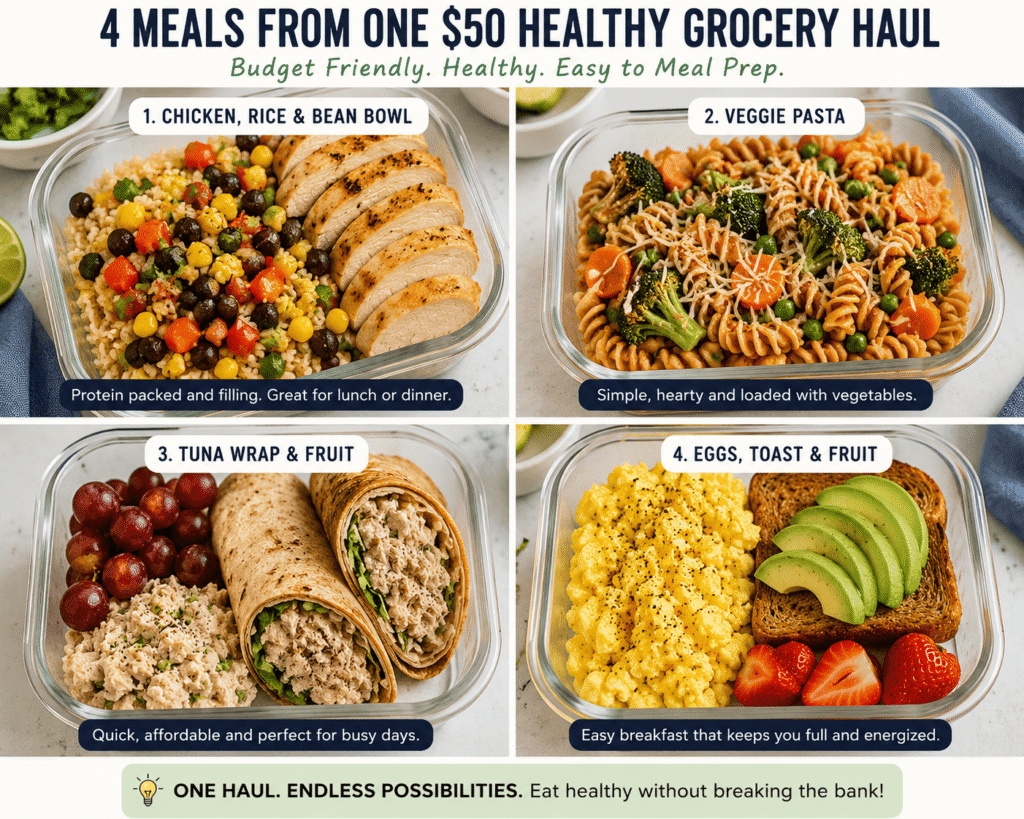
Meal Ideas From Your Haul
With this haul, you can make simple, healthy meals all week:
Breakfast
- Overnight oats with banana and peanut butter
- Scrambled eggs with sautéed veggies
Lunch
- Chickpea salad with olive oil and veggies
- Tuna wrap with carrots and zucchini
Dinner
- Brown rice bowls with beans, veggies, and olive oil
- Pasta with tomato sauce and steamed frozen vegetables
Snacks
- Yogurt with fruit
- Handful of nuts
These meals are easy to prep, filling, and budget-friendly.
Tips for Staying on Track
- Stick to your shopping list to avoid impulse buys.
- Compare unit prices for best deals.
- Prep meals ahead to save time and reduce waste.
- Rotate proteins and vegetables each week to avoid boredom.
Consistency is key. Eating healthy on a budget becomes easier once you make it a habit.
Healthy Grocery Haul Tips That Actually Save Money
Buy Seasonal Produce
Seasonal fruits and vegetables are usually cheaper and fresher.
Use Meal Prep
Meal prepping reduces waste and prevents takeout spending.
Compare Unit Prices
The lowest shelf price is not always the best value.
Stick to Simple Ingredients
Simple meals are usually:
- Cheaper
- Healthier
- Easier to prepare
Can you really eat healthy for $50 a week?
Yes. Careful meal planning and affordable staples make healthy eating possible on a tight grocery budget.
What are the best budget-friendly proteins?
Eggs, canned tuna, beans, chickpeas, and peanut butter are versatile, nutritious, and cost-effective.
How do I save money on fresh produce?
Buy seasonal fruits and vegetables, check weekly store deals, and supplement with frozen or canned options.
Can I make variety with just $50?
Absolutely. Rotate proteins, vegetables, and grains throughout the week to keep meals interesting. Meal prep helps you mix and match.
What’s the easiest way to plan meals for a $50 grocery haul?
Start with a basic meal plan for breakfast, lunch, and dinner. Build your grocery list around that plan and stick to it.
Are frozen and canned vegetables as healthy as fresh?
Yes. Frozen and canned veggies are often picked at peak ripeness and can retain most nutrients. They’re also cheaper and last longer.
How can I avoid overspending at the grocery store?
Stick to your shopping list, compare unit prices, and use digital coupons or store deals whenever possible.
Can families with kids eat well on this budget?
Yes. Focus on simple, kid-friendly meals using affordable proteins, grains, and fruits. Many options can be prepared in bulk.
Is it better to buy organic on a $50 budget?
You can mix conventional and organic. Prioritize organic for “dirty dozen” produce if possible, but don’t skip healthy foods because they’re not organic.
How often should I shop for a $50 grocery haul?
Once a week works well. Plan your meals around perishable items first, then supplement with frozen and pantry staples.
What foods give the most value in a grocery haul?
Rice, oats, eggs, beans, frozen vegetables, peanut butter, and pasta offer some of the best nutrition for the price.
Is frozen produce healthy?
Yes. Frozen fruits and vegetables are nutritious, affordable, and last much longer than fresh produce.
How do families make a $50 grocery budget work?
Families save money by meal planning, buying store brands, cooking at home, and using versatile ingredients across multiple meals.
Final Thoughts
A $50 healthy grocery haul proves that eating healthy does not require a huge budget. Smart shopping, simple ingredients, and meal planning can create filling meals for the entire week while keeping grocery costs under control.
The biggest advantage is consistency. Once you learn how to build meals around affordable staples, grocery shopping becomes easier, cheaper, and less stressful.
Start with a simple list, stick to your budget, and focus on foods that stretch across multiple meals. Small changes add up fast.