Money is changing fast. Kids see digital payments, online shopping, and influencers talking about spending every day. But most schools still don’t teach strong financial literacy for kids. That leaves families to fill the gap.
The good news? You don’t need to be a finance expert. You just need a simple plan. This guide shows you how to teach kids about money at every age — using real-life lessons that stick.
If you start early and stay consistent, you give your child a lifelong edge.
Why Teaching Kids About Money Matters More Than Ever
Kids form money habits young. By the time they’re teens, those habits are hard to change.
When you teach kids about money early, they learn:
- The difference between wants and needs
- How saving works
- How to avoid debt
- How to make smart spending choices
- How to plan for goals
Financial literacy for kids builds confidence. It reduces money stress later. And it helps them avoid common adult mistakes.
The Right Age to Start Teaching Kids About Money
Start earlier than you think.
Ages 3–5: Simple Money Basics
At this stage, keep it basic.
- Teach coins and bills
- Practice “wants vs needs”
- Let them pay at the store
- Use clear jars for saving
You’re not teaching budgeting yet. You’re building awareness.
Ages 6–9: Introduce Saving and Allowance
This is the best time to start an allowance system that teaches budgeting.
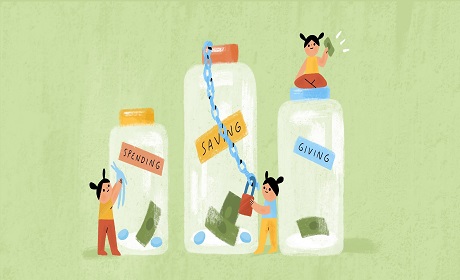
Use the three jars method:
- Spend
- Save
- Give
When they receive money, they divide it between jars. This builds structure.
Allowance ideas for kids:
- Tie some money to chores
- Keep payments predictable
- Don’t rescue them if they overspend
Small mistakes now prevent big ones later.
Ages 10–12: Teach Kids Budgeting
Now you can introduce real planning.
- Help them set a savings goal
- Show how long it takes to reach it
- Compare prices at stores
- Teach delayed gratification
This is where “teach kids budgeting” becomes practical. Use real numbers. Let them feel trade-offs.
Teens: Banking, Debit Cards, and Smart Spending
Teens need hands-on experience.
Open a youth bank account. Review statements together.
Teach:
- How debit cards work
- What overdraft fees are
- How subscriptions drain money
- Basic investing concepts
- Long-term vs short-term goals
If they earn money, teach percentage saving. Even 10% builds habit.
This is where financial literacy for kids turns into real-world skills.
The Best Money Apps for Kids (And When to Use Them)
Technology can help — if you use it wisely.
Many families use allowance apps to track chores and savings. The best money apps for kids allow:
- Parental controls
- Spending notifications
- Savings goals
- Debit card supervision
Apps should support your teaching — not replace it.
Before choosing, check:
- Monthly fees
- Age limits
- Spending limits
- Educational features
Used right, allowance apps reinforce structure and accountability.
How to Teach Kids About Money at Home (Simple Weekly System)
You don’t need complicated plans. Use this weekly routine:
- Set allowance day
- Divide money into spend, save, give
- Review savings goals
- Talk about one money topic
- Let them make one real decision
That’s it.
Consistency matters more than perfection.
Real-Life Ways to Make Money Lessons Stick
Kids learn best through experience.
Try these:
- Give a fixed budget for a birthday gift
- Let them compare grocery prices
- Involve them in vacation budgeting
- Show how you plan monthly expenses
- Let them save for something meaningful
Money games for kids also help. Board games and role-play teach risk, saving, and strategy in a safe way.
Teaching Investing to Kids (Without Overcomplicating It)
For older kids and teens, keep investing simple.
Explain:
- What a stock represents
- How compound growth works
- Why long-term investing wins
- Why get-rich-quick schemes fail
Avoid hype. Focus on patience and consistency.
Even small amounts invested regularly teach powerful lessons.
Common Mistakes Parents Make
Many parents want to protect their kids from money stress. That backfires.
Avoid these mistakes:
- Waiting too long to start
- Paying allowance randomly
- Rescuing overspending
- Not modeling good habits
- Avoiding money conversations
Kids watch more than they listen.
If you say “save money” but spend impulsively, they notice.
Build Money Milestones for Kids
Create clear financial skills milestones for kids by age.
For example:
By age 7:
- Understand wants vs needs
- Save for a short goal
By age 12:
- Manage a small budget
- Track spending
By age 16:
- Use a debit card responsibly
- Understand interest
- Save part of earnings
Track progress. Celebrate growth.
How to Talk to Kids About Money (Without Making It Awkward)
Keep conversations calm and normal.
Don’t:
- Share adult financial stress
- Shame mistakes
- Use money as emotional control
Do:
- Ask questions
- Let them explain choices
- Encourage problem-solving
- Be honest but age-appropriate
The goal is confidence, not fear.
A Simple Checklist to Start This Week
If you want real change, start small.
This week:
- Choose an allowance system
- Set up three jars or accounts
- Schedule weekly money talks
- Pick one savings goal
- Let your child make one decision
That’s enough to begin.
What is the best age to start teaching kids about money?
The best age to start teaching kids about money is between 3 and 5 years old. At this stage, children can learn simple concepts like coins, saving, and the difference between wants and needs. Early financial literacy builds strong money habits that last into adulthood.
How do I teach my child budgeting in a simple way?
To teach kids budgeting, give them a fixed weekly allowance and divide it using the three jars method: spend, save, and give. Let them plan purchases and track progress toward savings goals. Real-life practice builds practical budgeting skills faster than lectures.
Should allowance be tied to chores?
Allowance can be tied to chores, but it should be structured. Many experts recommend a hybrid system: basic household tasks are expected, while extra chores earn money. This teaches responsibility, work value, and money management without turning family duties into transactions.
What are the best money apps for kids?
The best money apps for kids offer parental controls, spending alerts, savings goals, and debit card supervision. Look for low fees and educational tools. Allowance apps work best when paired with weekly money discussions and clear financial rules at home.
How can I teach kids the difference between wants and needs?
Teach wants vs needs by using real shopping examples. At the store, ask your child to label items as essential or optional. Practice this regularly. Over time, children develop stronger spending awareness and make smarter financial decisions independently.
How do I teach teenagers about debit cards and banking?
Open a supervised youth bank account and review transactions weekly. Teach teens how debit cards work, what overdraft fees are, and how subscriptions reduce balances. Hands-on experience with guidance builds responsible banking habits before adulthood.
What is the three jars method for kids?
The three jars method divides money into spend, save, and give categories. When children receive money, they split it into each jar. This simple system teaches budgeting, saving discipline, and generosity in a visual, age-appropriate way.
How do I teach kids about saving for big goals?
Help your child set a specific savings goal with a deadline. Break the total into weekly targets and track progress visibly. Goal-based saving teaches patience, delayed gratification, and planning—core financial literacy skills for long-term success.
What are common mistakes parents make when teaching kids about money?
Common mistakes include starting too late, rescuing children after overspending, avoiding money conversations, and failing to model good financial habits. Consistency, structure, and real-life practice are more effective than occasional lectures about money responsibility.
Final Thoughts
Teaching kids about money is not optional anymore. The world is digital. Spending is easy. Mistakes are expensive.
But the solution is simple.
Start early. Stay consistent. Keep lessons practical. Use tools wisely. Let kids practice.
Financial literacy for kids builds freedom later.
Don’t wait for school to handle it.
Start this week.