Frugal snack ideas for school can help families save money without sending children to school with boring or unhealthy food. Buying individually packaged snacks every week gets expensive, especially when you have multiple children. And spending money on snacks your kids refuse to eat only makes things worse. The good news is that affordable ingredients like oats, bananas, apples, eggs, yogurt, and popcorn can become delicious school snacks. With a little planning, you can prepare a week’s worth of options, reduce food waste, and keep your grocery budget under control.
What Are Frugal Snack Ideas for School?
Frugal snack ideas for school are inexpensive, easy-to-pack foods that provide children with energy and nutrition without stretching the family grocery budget. They include homemade treats, fresh fruits, vegetables, protein-rich foods, and affordable pantry staples that can replace expensive packaged snacks.
A good school snack should be:
- Affordable enough to buy regularly.
- Easy to prepare and pack.
- Appropriate for your child’s age and appetite.
- Nutritious and satisfying.
- Suitable for school allergy policies.
- Easy to store and transport safely.
You don’t need expensive organic snack bars or fancy lunchbox products. Basic grocery ingredients can make excellent snacks when you combine them properly.
35 Cheap School Snacks for Kids That Actually Get Eaten
The best cheap school snacks for kids are familiar, tasty, and easy to prepare. Mixing fruits, vegetables, homemade treats, and protein-rich foods gives children variety while helping parents avoid expensive convenience products. These 35 ideas offer options for different tastes, budgets, and preparation times.
Cheap Fruit Snacks for School
- Apple slices with peanut butter: Slice an apple and pack it with a small portion of peanut butter. Use sunflower seed butter if nuts aren’t allowed.
- Fresh bananas: One of the easiest and most affordable snacks. No preparation or special packaging needed.
- Grapes: Wash and portion grapes into small containers. Cut them lengthwise for younger children to reduce choking risk.
- Orange segments: Peel oranges at home and separate them into lunchbox portions.
- Seasonal fruit cups: Combine affordable seasonal fruits in reusable containers.
- Apple cinnamon slices: Sprinkle apple slices with cinnamon for a naturally sweet snack.
- Fruit and yogurt cups: Mix plain yogurt with chopped fruit for a filling snack.
Budget-Friendly Protein Snacks
- Hard-boiled eggs: Prepare a batch ahead of time. Keep refrigerated until packing and use an insulated lunch bag with an ice pack.
- Cheese cubes and crackers: Buy block cheese and cut it yourself instead of purchasing individually packaged portions.
- Homemade hummus with carrots: Blend chickpeas, lemon juice, and tahini. Serve with carrot sticks.
- Roasted chickpeas: Season cooked chickpeas and bake until crunchy.
- Yogurt with oats: Combine plain yogurt and rolled oats for a simple, filling snack.
- Cottage cheese with fruit: Add inexpensive seasonal fruit to a small serving of cottage cheese.
- Mini peanut butter sandwiches: Use whole-wheat bread and cut sandwiches into small squares. Follow school allergy rules.
Cheap Homemade Sweet Snacks
- Banana oat muffins: Use ripe bananas, oats, eggs, and cinnamon. Freeze extra muffins.
- Homemade granola bars: Combine oats, sunflower seed butter or peanut butter, and honey. Press into a pan and refrigerate.
- No-bake energy bites: Mix oats, nut or seed butter, and a little honey. Roll into small portions.
- Homemade oatmeal cookies: Use oats, mashed bananas, and cinnamon for a simple homemade treat.
- Mini pancakes: Make extra pancakes during breakfast and freeze individual portions.
- Apple cinnamon muffins: Combine chopped apples, flour, oats, and cinnamon.
- Banana bread slices: Turn overripe bananas into homemade banana bread and freeze individual slices.
Savory and Crunchy School Snacks
- Air-popped popcorn: Buy popcorn kernels in bulk and prepare small portions at home. Popcorn is suitable only when age-appropriate; avoid serving it to young children at choking risk.
- Baked potato wedges: Cut potatoes into wedges, season lightly, and bake.
- Whole-grain crackers: Pair crackers with cheese or hummus.
- Roasted corn: Use cooked corn kernels with a little seasoning.
- Homemade pita chips: Cut pita bread into triangles, season, and bake until crisp.
- Baked chickpea snacks: Season chickpeas with paprika or garlic powder before baking.
- Cheese and crackers: A simple combination that provides carbohydrates and protein.
No-Cook Grab-and-Go Snacks
- Banana and cereal: Pack a banana with a small portion of whole-grain cereal.
- Yogurt and granola: Combine yogurt and homemade granola in a sealed container.
- Homemade trail mix: Mix raisins, cereal, seeds, and other permitted ingredients. Avoid whole nuts for younger children.
- Cucumber sticks with hummus: Slice cucumbers and serve with a small hummus portion.
- Rice cakes with seed butter: Spread sunflower seed butter over rice cakes.
- Mini whole-wheat sandwiches: Fill small sandwiches with cheese, egg, or another school-approved filling.
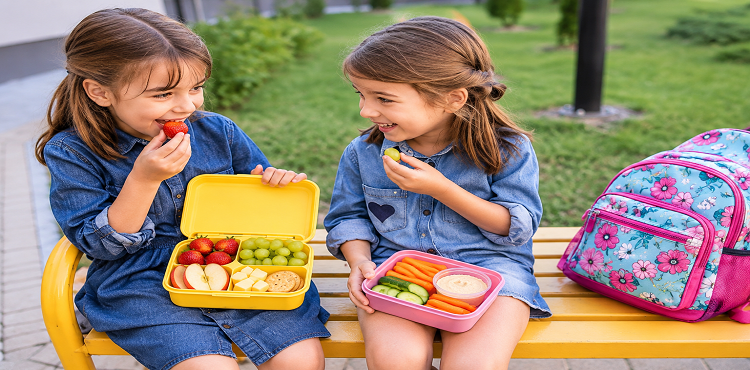
- Homemade snack boxes: Combine fruit, cheese, crackers, and vegetables in divided containers.
What Are the Healthiest Affordable Snacks for School?
The healthiest affordable snacks for school combine protein, fiber, vitamins, and other nutrients without relying on expensive packaged foods. Ingredients such as eggs, yogurt, oats, beans, bananas, apples, and whole grains are practical choices that help children get a variety of nutrients between meals.
Best Snacks by Nutritional Benefit
Protein-rich options:
- Hard-boiled eggs.
- Plain yogurt.
- Cheese cubes.
- Roasted chickpeas.
- Cottage cheese.
Fiber-rich options:
- Apples.
- Pears.
- Oatmeal muffins.
- Popcorn.
- Whole-grain crackers.
Fruit and vegetable options:
- Carrot sticks.
- Cucumber slices.
- Orange segments.
- Bananas.
- Seasonal berries.
How to Build a Balanced School Snack
- Choose a fruit or vegetable.
- Add a protein source when practical.
- Include whole grains for extra fiber.
- Adjust portions to your child’s age and appetite.
- Choose foods your child enjoys and will actually eat.
For example, apple slices with cheese or yogurt with oats can make a more satisfying snack than a small packet of sugary candy.
What Are the Best Nut-Free School Snacks?
Nut-free school snacks are affordable alternatives for families dealing with classroom allergy restrictions. Fresh fruit, cheese, homemade muffins, yogurt, vegetables, and roasted chickpeas offer plenty of variety. Always check the school’s allergy policy and read food labels because ingredients and manufacturing warnings can vary between products.
10 Affordable Nut-Free Snack Ideas
- Banana oat muffins.
- Apple slices.
- Air-popped popcorn, when age-appropriate.
- Cheese cubes.
- Homemade fruit cups.
- Cucumber sticks.
- Roasted chickpeas.
- Mini pancakes.
- Yogurt cups.
- Homemade oatmeal bars.
Tips for Packing Allergy-Aware Snacks
- Check whether the school is nut-free or restricts specific allergens.
- Read ingredient and allergen statements every time you buy a product.
- Avoid cross-contact during food preparation.
- Wash hands and clean food preparation surfaces.
- Use separate, clean containers.
- Check whether seeds, dairy, or other common allergens are also restricted.
What Easy Homemade School Snacks Can You Make Ahead?
Easy homemade school snacks can be prepared in batches using inexpensive ingredients. Making muffins, granola bars, energy bites, and roasted chickpeas ahead of time reduces daily preparation and helps families avoid buying expensive packaged alternatives. Many homemade snacks can also be frozen for later use.
6 Simple Make-Ahead Snack Recipes
1. Banana oat muffins
- Mash two ripe bananas.
- Mix with oats, eggs, and cinnamon.
- Pour into mini muffin cups.
- Bake at 350°F until cooked through.
2. Homemade granola bars
- Mix rolled oats with sunflower seed butter and honey.
- Press firmly into a lined pan.
- Refrigerate until set.
- Cut into individual bars.
3. No-bake energy bites
- Mix oats, seed butter, and a small amount of honey.
- Roll into small balls.
- Refrigerate until firm.
4. Roasted chickpeas
- Drain and dry cooked chickpeas.
- Add a little olive oil and seasoning.
- Bake at 400°F until crisp.
- Cool completely before storing.
5. Banana oatmeal cookies
- Mash ripe bananas.
- Mix with rolled oats and cinnamon.
- Shape into small cookies.
- Bake until set.
6. Mini pancakes
- Prepare a simple pancake batter.
- Cook small pancakes.
- Cool and freeze in portions.
- Thaw safely before packing.
Snacks That Freeze Well
These homemade snacks are useful for busy school weeks:
- Banana muffins.
- Mini pancakes.
- Banana bread slices.
- Homemade granola bars.
- Oatmeal cookies.
Always cool cooked foods before storing them. Follow safe refrigeration and freezing practices, and pack perishable foods with appropriate temperature control.
How to Prepare a Week of School Snacks in 30 Minutes
A weekly snack preparation routine helps families save time and manage grocery spending. Preparing a few ingredients in advance means you don’t have to make every snack from scratch each morning. A simple routine of washing, portioning, baking, and storing can make school mornings much easier.
Follow These 7 Steps
- Check your pantry: Use ingredients you already have before buying more.
- Choose five snacks: Pick one option for each school day.
- Wash fresh produce: Prepare apples, grapes, carrots, and cucumbers.
- Make one homemade recipe: Bake muffins or prepare granola bars.
- Portion dry snacks: Divide popcorn, cereal, or trail mix into containers.
- Store everything properly: Refrigerate perishable foods and freeze extra portions.
- Prepare a snack schedule: Decide what your child will take each morning.
Simple Five-Day School Snack Plan
| Day | Snack | Preparation |
|---|---|---|
| Monday | Apple slices and cheese | 5 minutes |
| Tuesday | Banana oat muffin and yogurt | 2 minutes |
| Wednesday | Popcorn and orange | 3 minutes |
| Thursday | Homemade trail mix and fruit | 2 minutes |
| Friday | Mini sandwich and cucumber | 5 minutes |
This plan uses inexpensive ingredients and gives children a different combination every day.
How to Save Money on School Lunchbox Snacks
Saving money on school lunchbox snacks requires more than finding cheap products. Parents need to compare prices, plan portions, reduce waste, and choose ingredients that can be used in several different snacks. These habits make it easier to keep school snack costs under control throughout the year.
10 Grocery Shopping Strategies
- Buy seasonal produce: Choose fruits and vegetables that are in season.
- Choose store brands: Compare ingredients and nutrition labels instead of automatically buying name brands.
- Compare unit prices: Check the price per ounce or pound.
- Buy pantry staples in bulk: Oats, popcorn kernels, and dried beans are useful budget ingredients.
- Avoid single-serving packaging: Portion snacks at home using reusable containers.
- Use grocery promotions: Buy regularly used ingredients when prices are lower.
- Freeze extra portions: Prevent homemade muffins and other suitable foods from going to waste.
- Repurpose suitable leftovers: Use leftover pancakes or bread for another snack.
- Plan before shopping: Make a snack list based on your weekly menu.
- Avoid unnecessary purchases: Don’t buy large quantities of snacks your children haven’t tried.
Homemade vs. Store-Bought Snack Costs
Here is an illustrative comparison. Actual prices depend on your grocery store, ingredients, and portion sizes.
| Snack | Homemade cost | Packaged cost |
|---|---|---|
| Granola bar | $0.30 | $0.75 |
| Muffin | $0.35 | $0.90 |
| Popcorn | $0.15 | $0.50 |
| Trail mix | $0.40 | $0.85 |
| Fruit portion | $0.35 | $0.70 |
Illustrative estimates per serving, not verified national average prices.
The biggest savings often come from replacing individual packages with larger containers and homemade portions.
How to Make School Snacks Kids Will Actually Eat
The best budget snack is one your child actually eats. Packing unfamiliar foods every day can lead to wasted groceries and frustrated mornings. Start with familiar favorites, introduce new options gradually, and let children help choose snacks. This makes affordable school snack planning easier and reduces food waste.
7 Strategies for Picky Eaters
- Start with foods your child already enjoys.
- Introduce one new snack at a time.
- Offer small portions rather than overwhelming lunchboxes.
- Pair new foods with familiar favorites.
- Experiment with different textures and shapes.
- Let children help prepare their snacks.
- Rotate options every week to prevent boredom.
Affordable Combinations for Different Preferences
- Sweet snack lovers: Banana muffins, apple slices, and yogurt.
- Crunchy snack lovers: Popcorn, crackers, and cucumber sticks.
- Savory snack lovers: Cheese cubes, mini sandwiches, and roasted chickpeas.
- Simple-food lovers: Bananas, plain crackers, and cheese.
Don’t force children to eat unfamiliar foods. Give them time to explore different options.
What Are the Best Containers and Storage Tips for School Snacks?
The right storage containers help families reduce packaging costs and keep school snacks fresh. Reusable snack bags, divided lunchboxes, insulated lunch bags, and small airtight containers make homemade snacks easier to pack. Perishable foods such as eggs, dairy, and cut fruit need appropriate temperature control to remain safe.
Budget-Friendly Storage Solutions
- Reusable snack bags for dry foods.
- Small airtight containers for fruit and vegetables.
- Divided lunchboxes for different snack combinations.
- Insulated lunch bags for temperature-sensitive foods.
- Ice packs for refrigerated snacks.
How to Keep Snacks Fresh
- Keep wet and dry ingredients separate.
- Pack perishable foods with an ice pack.
- Store prepared fruit in appropriate refrigerated containers.
- Avoid leaving dairy and cooked foods at room temperature for extended periods.
- Follow food safety guidance for storage and transport.
For additional guidance, parents can consult the USDA Food Safety and Inspection Service and its food safety resources.
How Much Money Can Frugal School Snacks Save?
Frugal school snacks can reduce grocery expenses by replacing expensive packaged products with homemade or bulk-prepared alternatives. Even small daily savings can add up over a full school year, especially for families with multiple children. The actual amount depends on snack prices, serving sizes, and how often families prepare snacks at home.
Consider this example:
- Daily savings: $0.50 per child.
- Weekly savings: $2.50.
- Monthly savings (four school weeks): $10.
- Annual savings (36 school weeks): $90.
For two children, that becomes $180 over the school year.
The important thing is consistency. Saving a small amount every school day can make a meaningful difference to your grocery budget.
What are the cheapest healthy snacks for school?
The cheapest healthy snacks for school include bananas, apples, popcorn, homemade muffins, hard-boiled eggs, and yogurt from large containers. These affordable foods provide different nutrients and can replace many expensive packaged snacks. Buying seasonal produce and preparing portions at home can reduce costs further.
How can I pack school snacks for less than $1 a day?
Choose inexpensive ingredients such as bananas, apples, oats, popcorn, and homemade muffins. Buy larger packages when the unit price is lower and portion snacks into reusable containers. Planning five snacks before grocery shopping helps prevent unnecessary purchases and keeps daily costs manageable.
What are the best homemade snacks for kids’ lunchboxes?
Some of the best homemade lunchbox snacks include banana oat muffins, granola bars, oatmeal cookies, mini pancakes, energy bites, and roasted chickpeas. These recipes use affordable ingredients and can be prepared ahead of time. Store or freeze them properly to make school mornings easier.
What cheap school snacks keep kids full longer?
Snacks containing protein and fiber can help children feel satisfied between meals. Try hard-boiled eggs, yogurt with oats, cheese with whole-grain crackers, hummus with vegetables, or fruit with seed butter. Choose portions based on your child’s age, appetite, and dietary needs.
What are good nut-free snacks for school?
Good nut-free school snacks include apple slices, bananas, cheese cubes, homemade muffins, yogurt, roasted chickpeas, cucumber sticks, and popcorn when age-appropriate. Always check ingredient labels and your school’s allergy policy because some classrooms restrict additional ingredients beyond peanuts and tree nuts.
How can I make school snacks ahead of time?
Choose five snacks for the week, wash fresh produce, bake a batch of muffins, and portion dry foods into reusable containers. Refrigerate perishable foods and freeze suitable homemade snacks. A short weekly preparation session can reduce daily work and help control grocery spending.
Are homemade school snacks cheaper than store-bought?
Homemade school snacks can be cheaper because families purchase basic ingredients in larger quantities instead of paying for individual packaging and convenience. Muffins, granola bars, popcorn, and trail mix are good examples. Compare the actual cost per serving before deciding which option offers better value.
What are the best no-cook snacks for school?
Easy no-cook school snacks include bananas, apple slices, yogurt, cheese cubes, cucumber sticks, homemade trail mix, and whole-grain crackers. These options require little preparation and can be packed quickly. Choose combinations that follow school allergy policies and appropriate food storage guidelines.
How do I keep school snacks fresh until lunchtime?
Use insulated lunch bags and ice packs for perishable snacks such as yogurt, cheese, eggs, and cut fruit. Store foods in clean, sealed containers and keep wet ingredients separate from dry ones. Follow safe food storage guidance rather than relying on the lunchbox alone.
Final Thoughts
Frugal snack ideas for school don’t have to mean boring food or smaller portions. With affordable ingredients, simple homemade recipes, and a little weekly planning, you can prepare snacks your children enjoy without overspending.
Start with three changes this week. Replace a few packaged snacks, prepare one homemade recipe, and use reusable containers.
Small changes can add up to real grocery savings over an entire school year.
Your family can eat well, spend less, and make school mornings easier.