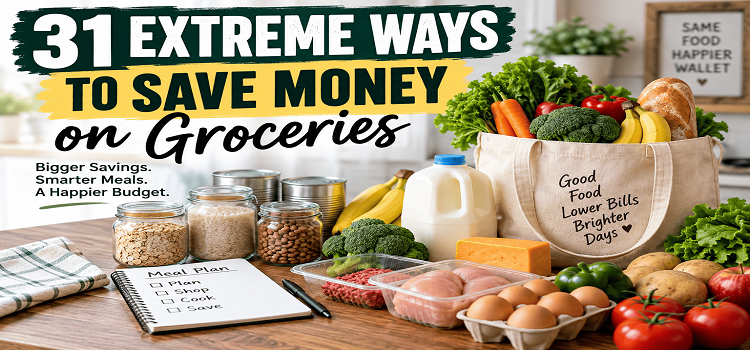
Extreme ways to save money on groceries can make a big difference when your family budget is already stretched thin. And saving more often requires going beyond coupons, weekly sales, and simply buying store brands. The biggest savings come from changing how you plan meals, choose stores, compare prices, use leftovers, stock your pantry, and decide what actually goes into your cart. Some methods may feel extreme at first, but they can help lower your grocery bill without leaving your family hungry. This guide shows practical ways to cut food costs, reduce waste, and make every grocery dollar work harder.
What Does Extreme Grocery Saving Mean?
Extreme grocery saving means using aggressive but practical methods to cut food spending far beyond normal couponing or sale shopping. It focuses on buying only what your family will use, planning meals around low-cost foods, reducing waste, changing shopping habits, and finding cheaper ways to get the same nutrition for less.
What Extreme Grocery Saving Looks Like in Real Life
- Planning meals around what you already own
Check your pantry, freezer, and fridge before buying anything new. Build meals around food that needs to be used first. - Cutting expensive convenience foods
Pre-cut fruit, snack packs, frozen meals, bottled drinks, and prepared foods often cost much more than basic ingredients. - Setting a strict grocery limit
Decide how much you can spend before you enter the store. Treat that amount as a hard ceiling instead of a rough target. - Buying fewer types of food
You do not need dozens of breakfast, snack, and dinner options every week. A simpler grocery list can reduce both spending and waste. - Using cheap staple foods more often
Rice, oats, beans, potatoes, pasta, eggs, lentils, and seasonal vegetables can form the base of many low-cost family meals. - Stretching meat instead of serving it as the main ingredient
Use smaller portions of meat in soups, casseroles, tacos, pasta, and rice dishes. Add beans or vegetables to make meals go further. - Avoiding grocery stores when you do not need anything
Every extra trip creates another chance to make impulse purchases. Fewer shopping trips often mean a lower monthly grocery bill.
[✔] Extreme grocery saving should still provide enough food and nutrition for your family.
[✔] The goal is not to buy the cheapest food possible. It is to get the most value from every dollar you spend.
[✔] Start with the strategies that fit your household and increase the intensity only if your budget requires it.
Extreme Ways to Save Money on Groceries Before You Shop
The cheapest grocery trip often starts before you leave home. Planning around food you already have, setting a strict spending limit, and building meals from low-cost ingredients can prevent impulse buying and unnecessary purchases. These extreme grocery-saving strategies help families reduce the amount they need to buy before entering the store.
Best Ways to Cut Your Grocery List Before Shopping
- Shop Your Pantry First
Before making a grocery list, check every shelf, cabinet, freezer drawer, and refrigerator bin. Write down foods that need to be used soon.
Then plan meals around those ingredients.
A forgotten bag of rice, frozen chicken, canned beans, or pasta can sometimes cover several meals without another purchase.
- Try a Pantry Challenge
Choose three to seven days when your family eats mainly from food already at home.
Only buy essentials such as milk, eggs, or fresh produce if needed.
A pantry challenge can lower one week’s grocery spending while helping clear out foods that might otherwise expire.
- Plan Meals Backward
Instead of deciding what you want to eat and then buying the ingredients, start with what you already own.
For example, if you have:
- Rice
- Black beans
- Frozen corn
- Salsa
You already have the base for rice bowls, burritos, or a simple bean-and-rice dinner.
This approach reduces the number of ingredients you need to buy.
- Set a Hard Weekly Grocery Budget
Choose a maximum amount before shopping and do not treat it as flexible.
If your limit is $100, build your list to stay under that number before entering the store.
Leave a small buffer for price changes.
[✔] Track your total while shopping instead of waiting until checkout.
- Remove One Meal From the Shopping List
Look at your weekly meal plan and find one dinner that can be made entirely from leftovers, pantry food, or freezer ingredients.
Doing this every week means roughly four fewer meals to shop for each month.
- Create a “Use First” Box
Place foods that are close to expiring in one visible area of your refrigerator or pantry.
Your family uses those foods before opening something new.
This simple system can reduce food waste and stop you from paying twice for food you already bought.
- Repeat Cheap Meals
You do not need seven completely different dinners every week.
Repeating affordable meals can lower costs because you buy fewer ingredients and use larger packages more efficiently.
Cheap repeat meals might include:
- Bean tacos
- Pasta with vegetables
- Baked potatoes
- Egg-and-rice bowls
- Lentil soup
- Homemade pizza
- Oatmeal with fruit
- Build Your Week Around the Cheapest Protein
Choose your main protein after checking what is already available at home or what is cheapest that week.
Eggs, beans, lentils, canned tuna, chicken thighs, and peanut butter can sometimes replace more expensive meat.
You can also combine smaller amounts of meat with beans, grains, or vegetables to stretch several meals.
[✔] The more food you use before shopping, the less money you need to spend at the store.
[✔] Make your grocery list from your meal plan, not from cravings or habit.
[✔] Check your freezer every week. Frozen food is easy to forget and expensive to waste.
Extreme Ways to Save Money While Grocery Shopping
Extreme grocery savings at the store come from controlling what goes into your cart. The biggest wins often come from comparing unit prices, skipping convenience foods, buying only true deals, and refusing impulse purchases. These strategies help families spend less without depending on coupons or complicated shopping systems.
Best In-Store Strategies to Cut Your Grocery Bill
- Compare Unit Prices, Not Package Prices
A larger package is not always cheaper.
Check the unit price per ounce, pound, or item before deciding what gives you the best value.
Two products can look similar but have a big price difference once you compare the actual cost per unit.
- Buy Store Brands First
Store-brand groceries are often cheaper than national brands for basic foods such as:
- Flour
- Sugar
- Rice
- Pasta
- Canned vegetables
- Oats
- Frozen produce
- Baking supplies
Try the cheaper version once. If your family likes it, keep buying it.
- Skip the Middle Aisles When Possible
Many expensive snacks, drinks, and convenience foods are found in the center aisles.
Spend more of your grocery budget on basic ingredients such as produce, grains, dairy, eggs, and simple proteins.
This does not mean avoiding every packaged food. It means buying fewer foods that offer little value for the price.
- Use a Calculator While You Shop
Keep a running total on your phone.
If your budget is $80, knowing you are already at $72 can stop several unnecessary items from entering your cart.
[✔] Round prices up while calculating. A $3.49 item becomes $4. This creates a small safety margin.
- Put Impulse Purchases Back
Before checking out, look through your cart and ask:
“Did I come here planning to buy this?”
If the answer is no, consider putting it back.
Removing even three $4 impulse purchases saves $12 from one grocery trip.
Do that four times a month and you keep about $48 in your budget.
- Avoid Pre-Cut and Pre-Portioned Foods
Convenience usually costs more.
Instead of buying:
- Pre-cut melon
- Individual snack bags
- Shredded cheese
- Pre-sliced vegetables
- Single-serve oatmeal
- Prepared salad kits
Compare the price with the basic version.
Cutting, shredding, and portioning food at home can lower your cost per serving.
- Check the Clearance Sections
Many stores discount food that is close to its sell-by date or has damaged packaging.
You may find lower prices on:
- Bread
- Meat
- Produce
- Dairy
- Bakery items
- Pantry foods
Only buy clearance food if you already have a plan to eat, cook, or freeze it.
A discounted item you throw away is not a bargain.
- Shop With a Basket for Small Trips
If you only need five or six items, use a basket instead of a full-size cart.
A large empty cart can make a small purchase feel incomplete.
A basket gives you less room for unplanned extras.
- Look Above and Below Eye Level
Stores often place popular or higher-margin products where shoppers see them first.
Check the top and bottom shelves for cheaper alternatives.
You may find the same type of food at a noticeably lower price.
- Leave the Kids’ Requests Off the Grocery Budget
Give children clear expectations before entering the store.
For example:
“We are buying what is on our list today.”
If you want to include a treat, choose the budget for it before shopping rather than deciding aisle by aisle.
- Do Not Shop Hungry
Hunger can make almost everything look worth buying.
Eat a meal or quick snack before leaving home.
This simple habit makes it easier to stick to your grocery list and avoid expensive convenience foods.
- Use Cash for a Short-Term Grocery Reset
If you consistently overspend, try using a fixed amount of cash for groceries for one or two weeks.
When the money is gone, shopping stops.
This can make your spending limit feel much more real than swiping a card.
[✔] Never buy something only because it is on sale.
[✔] Compare the final cost, not the discount percentage.
[✔] A cheaper grocery trip is usually built by saying “no” to small extras repeatedly.
Extreme Ways to Save Money on Groceries With Meal Planning
Meal planning can cut grocery costs because it gives every ingredient a purpose before you buy it. The most effective approach is to plan meals around cheap staples, leftovers, sales, and food already at home. A simple plan also reduces last-minute takeout, duplicate purchases, and food waste during the week.
Best Meal Planning Strategies for a Tight Grocery Budget
- Plan Meals Around Cheap Staples
Build several meals each week around low-cost foods such as:
- Rice
- Beans
- Lentils
- Potatoes
- Oats
- Pasta
- Eggs
- Frozen vegetables
These foods can create filling meals without using a large part of your grocery budget.
- Use One Ingredient in Several Meals
Choose ingredients that work across multiple dishes.
For example, a bag of potatoes could become:
- Baked potatoes
- Breakfast hash
- Potato soup
- Roasted side dishes
- Mashed potatoes
Using the same ingredient several times reduces waste and makes bulk purchases more useful.
- Plan One Leftover Night Every Week
Do not plan seven completely new dinners.
Set aside one night to eat leftovers from earlier meals.
This helps clear the refrigerator before food spoils and can remove an entire dinner from your weekly shopping list.
- Cook Once and Eat Twice
Make larger portions of meals that reheat well.
Good examples include:
- Chili
- Soups
- Casseroles
- Curry
- Pasta sauce
- Taco filling
- Beans and rice
Serve the meal once, then use the leftovers for lunch or another dinner.
- Turn Leftovers Into New Meals
Leftovers do not have to mean eating the exact same plate again.
Leftover chicken can become:
- Tacos
- Soup
- Sandwiches
- Fried rice
- Pasta
- Quesadillas
Changing the format makes leftovers easier for families to enjoy while keeping food out of the trash.
- Create a Cheap Meal Rotation
Choose 10 to 15 inexpensive meals your family already likes.
Rotate them instead of constantly searching for new recipes.
A simple rotation reduces decision fatigue and makes your grocery list more predictable.
Cheap Family Meals to Keep in Your Rotation
- Bean and cheese burritos
- Lentil soup with bread
- Spaghetti with homemade sauce
- Baked potatoes with toppings
- Vegetable fried rice
- Egg and potato breakfast bowls
- Homemade bean chili
- Pasta with frozen vegetables
- Rice and bean bowls
- Homemade soup using leftovers
- Plan Meatless Meals Each Week
Meat is often one of the more expensive parts of a grocery budget.
Try replacing one or two meat-based dinners with meals built around beans, lentils, eggs, or other affordable proteins.
Even a few meatless dinners each month can reduce spending.
- Use a “Cook What Will Spoil First” Rule
Plan your first meals around fresh foods that have the shortest shelf life.
For example:
- Use leafy greens first.
- Eat fresh berries early.
- Use soft vegetables next.
- Save frozen and canned foods for later.
This simple order can prevent expensive food from going bad.
- Have an Emergency Dinner Ready
Keep at least one very cheap meal available for busy nights.
Good emergency options include:
- Pasta and sauce
- Eggs and toast
- Bean quesadillas
- Frozen homemade soup
- Rice and beans
A $5 emergency dinner is much cheaper than a last-minute takeout order.
- Plan Snacks Instead of Buying Random Snacks
Snacks can quietly take up a large part of a grocery bill.
Choose a few simple options for the week instead of buying many different snack foods.
Try:
- Popcorn
- Bananas
- Homemade muffins
- Peanut butter toast
- Yogurt
- Carrots
- Oatmeal
[✔] Plan meals before writing your grocery list.
[✔] Use expensive ingredients in more than one meal whenever possible.
[✔] Keep at least two cheap backup meals at home.
[✔] Make leftovers part of your meal plan instead of treating them as extra food.
Extreme Ways to Save Money on Groceries With Sales, Coupons, and Store Strategies
Using sales, coupons, and store comparisons can lower grocery costs when you only buy items your family already needs. The key is stacking savings carefully, tracking regular prices, and avoiding fake deals. Extreme savers focus on the final price per unit rather than chasing every promotion they see.
Best Ways to Pay Less for the Same Groceries
- Learn the Regular Price of Foods You Buy Most
A sale is only useful if you know what the item normally costs.
Keep a simple price list for foods your family buys often, such as:
- Milk
- Eggs
- Bread
- Chicken
- Ground meat
- Rice
- Pasta
- Cereal
- Cheese
- Fruit
Once you know your normal price, you can quickly tell whether a promotion is actually worth buying.
- Build Meals Around Weekly Loss Leaders
Stores sometimes heavily discount a few products to attract shoppers.
Check the weekly ad before making your meal plan.
If chicken thighs, potatoes, and broccoli are unusually cheap, build several meals around those foods rather than buying ingredients for a completely different menu.
- Stack Store Sales With Coupons
When allowed by the store, combine a sale price with a manufacturer or digital coupon.
For example:
Regular price: $5.00
Sale price: $3.50
Coupon: $1.00 off
Final cost: $2.50
But only use coupons for foods you were already planning to buy.
- Use Grocery Apps for Cashback
Some grocery and cashback apps offer rebates on selected products.
Check them after making your shopping list, not before.
This keeps the app from convincing you to buy something simply because it offers a reward.
[✔] Treat cashback as a bonus, not permission to spend more.
- Compare Prices Across Stores
One store may be cheapest for meat while another has better prices on produce or pantry foods.
You do not need to visit five stores every week.
Instead, learn which stores usually have the lowest prices for the categories you buy most.
A Simple Store-Splitting Strategy
- Buy pantry staples at the cheapest regular-price store.
- Buy produce where quality and prices are strongest.
- Buy meat only when the price reaches your target.
- Use another store only when the savings justify the extra trip.
Factor in gas and time before driving across town to save a few cents.
- Shop Discount and Salvage Grocery Stores
Discount grocers can offer lower prices on overstocked, discontinued, close-dated, or cosmetically damaged products.
You may find bargains on:
- Cereal
- Snacks
- Canned food
- Baking supplies
- Drinks
- Frozen foods
- Household staples
Check dates and packaging carefully before buying.
- Stock Up Only at Your Lowest Price
Stockpiling can save money, but only when the price is genuinely low and your family will use the food.
If pasta normally costs $1.50 and drops to $0.75, buying several packages may make sense.
Buying ten boxes at $1.40 simply because a sign says “sale” does not.
- Set a Stock-Up Limit
Extreme grocery saving should not turn into extreme grocery buying.
Set a limit such as:
Buy enough to last until the next likely sale, not enough to last forever.
This prevents your grocery budget from disappearing into food that may sit unused for months.
- Check Markdowns at the Right Time
Some stores reduce prices on meat, bakery items, produce, and dairy at predictable times.
Pay attention to when your local store places markdown stickers on products.
If you find discounted meat that you can safely use or freeze, it may significantly lower your cost per meal.
- Use Loyalty Rewards Strategically
Store loyalty programs may offer:
- Digital coupons
- Member-only prices
- Fuel rewards
- Personalized discounts
- Free items
- Points toward future purchases
Use the rewards connected to purchases you already planned.
Do not spend an extra $20 just to earn a $2 reward.
- Check Your Receipt Before Leaving
Pricing mistakes happen.
Look for:
- Missing discounts
- Incorrect quantities
- Coupons that did not apply
- Wrong sale prices
- Double-scanned items
A quick receipt check can catch money you would otherwise lose.
- Calculate the Real Cost of Buy-One-Get-One Deals
BOGO promotions can be useful, but they are not automatically bargains.
Ask:
Would I normally buy two?
Will we use both before they spoil?
Is the unit price lower than another brand?
If the answer is no, skip the deal.
[✔] Buy based on final cost, not the size of the discount.
[✔] Stockpile foods your family consistently eats.
[✔] Never let coupons decide what goes on your grocery list.
[✔] The best grocery deal is one that replaces a purchase you would have made anyway.
Extreme Ways to Save Money on Groceries by Reducing Food Waste
Reducing food waste is one of the fastest ways to lower your grocery bill because every discarded ingredient is money already spent. Extreme grocery savers use food before it spoils, freeze extras, repurpose leftovers, and track what needs attention first. The goal is simple: make sure almost everything you buy gets eaten.
Best Ways to Stop Throwing Grocery Money Away
- Create an “Eat First” Shelf
Choose one shelf or container in your refrigerator for food that needs to be eaten soon.
Place items there such as:
- Leftovers
- Open yogurt
- Cut fruit
- Cooked vegetables
- Half-used ingredients
- Produce that is starting to soften
Check this area before preparing a new meal or snack.
- Freeze Food Before It Goes Bad
Do not wait until food is already spoiled.
Freeze ingredients when you realize your family will not use them in time.
Foods that often freeze well include:
- Bread
- Cooked rice
- Cooked beans
- Shredded cheese
- Meat
- Soup
- Pasta sauce
- Bananas
- Berries
- Chopped vegetables
Label each container with the food and date so it does not disappear into the freezer.
- Have a Leftover Buffet Night
Once a week, place all usable leftovers on the table and let family members choose what they want.
You may have:
- Half a bowl of pasta
- A few tacos
- Soup
- Cooked rice
- Roasted vegetables
- Small portions of chicken
Combining these into one meal can prevent you from cooking another full dinner.
- Turn Soft Produce Into Something Useful
Produce does not always need to look perfect to be useful.
Soft bananas can become oatmeal or muffins.
Overripe berries can go into smoothies.
Wilting vegetables can work in:
- Soup
- Stir-fries
- Omelets
- Pasta sauce
- Fried rice
The key is using food while it is still safe instead of throwing it away because it no longer looks fresh.
- Save Small Portions
A small amount of food may not look worth saving, but several small portions can become another meal.
Save:
- Half a cup of rice
- A small piece of chicken
- A few spoonfuls of beans
- Extra vegetables
- Small amounts of sauce
Combine them later into soup, tacos, bowls, casseroles, or fried rice.
- Use the Freezer as a Grocery Store
Before shopping, check your freezer as if you were walking through a store.
Ask:
What meals can I make from what is already here?
Frozen chicken, vegetables, bread, cooked beans, or leftovers may remove several items from your grocery list.
- Practice First In, First Out
Put newly purchased food behind older food.
Use the older packages first.
This works especially well for:
- Canned foods
- Pasta
- Cereal
- Frozen foods
- Yogurt
- Milk
- Bread
It prevents older groceries from getting forgotten at the back of a shelf.
- Keep a Freezer Inventory
Write down what you freeze.
A simple list might look like:
- 2 portions chili
- 1 loaf bread
- 3 chicken breasts
- 2 cups cooked beans
- 1 container pasta sauce
Cross items off when you use them.
This helps prevent duplicate purchases.
- Plan a “No Waste” Meal Every Week
Choose one meal specifically designed to use small amounts of leftover ingredients.
Good options include:
- Soup
- Fried rice
- Omelets
- Tacos
- Pizza
- Casseroles
- Pasta
- Grain bowls
These flexible meals can absorb ingredients that would otherwise end up in the trash.
- Serve Smaller Portions First
Large portions often lead to food being scraped into the trash.
Serve smaller amounts and allow everyone to take seconds if they are still hungry.
This works especially well with children whose appetites can change from day to day.
- Stop Buying Aspirational Groceries
Do not buy food for the person you hope you will become next week.
If your family repeatedly throws away spinach, specialty vegetables, or complicated ingredients, stop buying them just because they seem healthy or useful.
Buy foods your household will realistically eat.
- Measure Your Food Waste for One Week
For seven days, write down every food item you throw away.
You may notice patterns such as:
- Too much produce
- Forgotten leftovers
- Oversized packages
- Unused lunch foods
- Too many snacks
- Meals your children do not eat
Fix the biggest pattern first.
Even reducing $15 of wasted food each week keeps about $780 a year in your household budget.
[✔] Freeze food while it is still good.
[✔] Check leftovers before cooking something new.
[✔] Buy smaller amounts of foods your family often wastes.
[✔] Treat throwing away usable food the same way you would treat throwing away cash.
Extreme Ways to Save Money on Meat, Dairy, and Produce
Meat, dairy, and fresh produce can take up a large share of a family grocery budget. Extreme grocery saving means buying these foods more strategically, using cheaper cuts, choosing seasonal produce, freezing extras, and replacing expensive ingredients when needed. Small changes in these categories can create some of the biggest monthly savings.
Best Ways to Cut the Cost of Expensive Grocery Categories
- Use Meat as an Ingredient, Not the Main Event
Instead of serving a large piece of meat to each person, use smaller amounts inside meals.
Good options include:
- Tacos
- Chili
- Pasta
- Soups
- Stir-fries
- Casseroles
- Rice bowls
A pound of meat can stretch much further when combined with beans, rice, vegetables, or pasta.
- Replace Part of the Meat With Beans or Lentils
You do not always need to remove meat completely.
Use half the normal amount and add beans or lentils.
For example:
- Add black beans to tacos
- Add lentils to ground beef
- Add chickpeas to chicken dishes
- Add beans to chili
This lowers the cost per serving without changing the entire meal.
- Buy Cheaper Cuts of Meat
Premium cuts are not necessary for everyday meals.
Look for lower-cost options such as:
- Chicken thighs
- Drumsticks
- Whole chicken
- Pork shoulder
- Ground meat on sale
- Bone-in cuts
Slow cooking can make cheaper cuts tender and flavorful.
- Buy Whole Instead of Pre-Portioned
Pre-cut chicken breasts, individually wrapped meat, and prepared portions often cost more.
Compare the price of:
- Whole chicken vs. chicken pieces
- Block cheese vs. sliced cheese
- Whole carrots vs. baby carrots
- Whole fruit vs. pre-cut fruit
Doing the preparation yourself can reduce the cost.
- Freeze Meat Immediately After Shopping
If you buy meat on markdown or in a larger package, divide it into meal-size portions when you get home.
Label each package and freeze what you will not use soon.
This helps prevent waste and makes future meal planning easier.
- Have Two or Three Meatless Dinners Each Week
Meatless meals can reduce grocery spending without making meals feel incomplete.
Try:
- Lentil soup
- Bean burritos
- Egg fried rice
- Baked potatoes
- Pasta with vegetables
- Chickpea curry
- Homemade bean chili
Even replacing a few meat-heavy meals each month can lower your grocery bill.
- Buy Produce in Season
Seasonal fruits and vegetables are often cheaper when supply is high.
Instead of deciding that your family must eat the same produce every week, buy what offers the best value.
If strawberries are expensive, choose bananas, apples, oranges, or another lower-cost option.
- Use Frozen Vegetables More Often
Frozen vegetables can be a smart choice because they last longer and are already prepared.
They work well in:
- Soup
- Pasta
- Stir-fries
- Casseroles
- Fried rice
- Side dishes
You can use only what you need and return the rest to the freezer.
- Compare Fresh, Frozen, and Canned Prices
Do not assume fresh is always the cheapest option.
Compare all three forms.
For some foods, frozen or canned versions may cost less per serving and create less waste.
Choose low-sodium or no-salt-added canned options when that fits your family’s needs.
- Stop Buying Produce Your Family Does Not Finish
Buying healthy food only saves money if someone eats it.
If certain vegetables or fruits regularly end up in the trash, reduce the amount you buy or replace them with foods your family actually uses.
- Choose Flexible Dairy Products
Buy dairy products that can work in several meals.
For example, plain yogurt can be used for:
- Breakfast
- Smoothies
- Sauces
- Dips
- Baking
One flexible ingredient can replace several specialized products.
- Buy Cheese in Blocks When It Costs Less
Pre-sliced and shredded cheese can cost more per ounce.
Compare the unit price before buying.
If the block is cheaper, shred or slice it yourself and freeze part of it if needed.
- Use Less Cheese in Recipes
Cheese can quietly raise the cost of tacos, pizza, pasta, casseroles, and sandwiches.
Try using slightly less.
Your family may not notice much difference, but the package will last longer.
- Use Eggs as a Low-Cost Dinner Protein
Eggs are not only for breakfast.
Use them for:
- Omelets
- Fried rice
- Breakfast burritos
- Egg sandwiches
- Potato skillets
- Frittatas
An egg-based dinner can sometimes replace a more expensive meat meal.
- Check the Price Per Pound Before Buying Family Packs
Large packages can look like a bargain without actually being cheaper.
Always compare the price per pound.
And only buy a large package if you can use or freeze everything.
[✔] Stretch expensive ingredients instead of cutting them completely.
[✔] Compare fresh, frozen, and canned versions before deciding.
[✔] Build meals around the cheapest protein available that week.
[✔] Buy larger packages only when the unit price is lower and nothing will go to waste.
Extreme Ways to Save Money on Groceries by Making More Food at Home
Making basic foods at home can lower grocery costs because you stop paying extra for convenience, packaging, and preparation. Extreme grocery saving does not mean making everything from scratch. It means choosing the homemade options that save the most money without creating too much extra work for your family.
Best Foods to Make at Home for Bigger Savings
- Make Your Own Breakfast Instead of Buying Convenience Packs
Individual breakfast foods often cost more per serving.
Instead of buying:
- Instant oatmeal cups
- Breakfast sandwiches
- Muffin packs
- Frozen pancakes
- Single-serve cereal cups
Make larger batches at home.
Oatmeal, eggs, toast, homemade muffins, or pancakes can provide several breakfasts for much less.
- Pack Lunches Instead of Buying Them
Restaurant lunches, school extras, and convenience-store food can quickly increase food spending.
Use leftovers or simple foods such as:
- Sandwiches
- Wraps
- Pasta
- Soup
- Fruit
- Yogurt
- Homemade snack boxes
Planning lunch at the same time as dinner can make this easier.
- Make Your Own Snack Packs
Small individual packages can be convenient, but you often pay more for the packaging.
Buy larger containers when the unit price is lower and portion them at home.
Try this with:
- Crackers
- Pretzels
- Popcorn
- Raisins
- Cheese
- Nuts
- Cereal
Reusable containers can make homemade portions easy to grab.
- Pop Your Own Popcorn
Microwave snack bags and ready-to-eat popcorn can cost much more per serving than plain popcorn kernels.
Make a larger batch and season it yourself.
Popcorn can be one of the cheapest family snacks when purchased in basic form.
- Bake Simple Bread Products When It Makes Financial Sense
You do not need to bake every loaf of bread.
But simple foods such as:
- Biscuits
- Pizza dough
- Muffins
- Pancakes
- Flatbread
can often be made from inexpensive pantry staples.
Compare the ingredient cost with the store price before deciding whether homemade is worth your time.
- Make Homemade Pizza Instead of Ordering It
Pizza is one of the easiest takeout meals to replace.
A simple homemade version can use:
- Basic dough
- Pasta or pizza sauce
- Cheese
- Leftover vegetables
- Small amounts of leftover meat
Make it your planned weekend dinner instead of ordering delivery.
- Make Soup From Leftovers
Soup is useful because it can turn small amounts of food into another complete meal.
Use leftover:
- Chicken
- Rice
- Beans
- Pasta
- Vegetables
- Potatoes
- Broth
Add inexpensive ingredients until you have enough for the family.
- Cook Dried Beans When the Savings Are Worth It
Canned beans are already inexpensive, but dried beans can cost even less per serving.
Cook a large batch and freeze portions for:
- Tacos
- Chili
- Soups
- Rice bowls
- Burritos
You can still keep canned beans for busy nights when convenience matters more.
- Make Your Own Sauces and Dressings
Some basic sauces require only a few pantry ingredients.
Depending on what you already keep at home, you may be able to make:
- Salad dressing
- Pasta sauce
- Taco seasoning
- Marinades
- Dips
- Simple gravy
Do not buy ten specialty ingredients to save $1 on one bottle. Homemade only saves money when the ingredients are already useful in your kitchen.
- Stop Buying Bottled Water for Everyday Use
If your tap water is safe to drink, reusable bottles can reduce repeated spending on individual water bottles.
For families buying several cases each month, this can become a meaningful yearly saving.
A home filter may also be worth comparing with your current bottled-water spending.
- Make Coffee and Drinks at Home
Coffee-shop drinks, bottled tea, energy drinks, and individual juices can quietly take money away from the grocery budget.
Prepare drinks at home when possible.
Try:
- Homemade coffee
- Iced tea
- Lemon water
- Refillable water bottles
- Diluted juice for children when appropriate
Even replacing a few purchased drinks each week can reduce food spending.
- Create Your Own Convenience Foods
Instead of buying expensive ready-made meals, prepare your own shortcuts.
For example:
- Cook a large batch of rice.
- Freeze it in meal-size portions.
- Cook and freeze beans.
- Portion cooked meat.
- Chop vegetables for several meals.
- Freeze homemade soup.
You still get convenience, but you create it at a lower cost.
- Double Recipes That Freeze Well
When cooking does not require much extra work, make twice as much.
Freeze half for another night.
This works well with:
- Chili
- Soup
- Casseroles
- Pasta sauce
- Burritos
- Curry
- Taco meat
A freezer meal can prevent an expensive last-minute grocery trip or takeout order.
- Calculate Savings Before Making Everything From Scratch
Not every homemade food is cheaper.
Consider:
- Ingredient cost
- Electricity or gas
- Time
- Food waste
- Equipment needed
Focus first on foods that are expensive to buy but simple and cheap to make.
[✔] Start with two or three homemade swaps instead of trying to make everything yourself.
[✔] Batch cooking saves both money and time.
[✔] Homemade food is only a bargain when your family actually eats it.
[✔] Put the biggest effort into replacing expensive convenience foods, takeout, snacks, and drinks.
More Extreme Ways to Cut Your Grocery Bill
When normal grocery-saving methods are not enough, more aggressive strategies can reduce spending further. These approaches focus on temporarily simplifying meals, using every available food source, buying at the lowest possible cost, and eliminating optional purchases. Families can choose only the methods that are realistic, safe, and sustainable for their situation.
Extreme Grocery Saving Strategies for a Very Tight Budget
- Try a No-Buy Grocery Week
If your pantry and freezer are well stocked, challenge your family to go several days without a normal grocery trip.
Use:
- Frozen meat
- Canned foods
- Rice and pasta
- Beans
- Leftovers
- Baking ingredients
- Frozen vegetables
Buy only true essentials if necessary.
This can reset an overspent grocery budget while clearing forgotten food from your kitchen.
- Eat the Cheapest Breakfast Every Day
Breakfast does not need variety every morning.
Choose one or two inexpensive options and repeat them.
Examples include:
- Oatmeal
- Eggs and toast
- Homemade pancakes
- Peanut butter toast
- Bananas with oatmeal
Repeating a cheap breakfast can simplify shopping and reduce expensive cereal, snack bars, and convenience foods.
- Create a $5 Dinner List
Keep a list of meals your family can make for around $5 or another low target that fits local prices.
Possible ideas include:
- Bean burritos
- Lentil soup
- Pasta and sauce
- Vegetable fried rice
- Potato and egg skillet
- Homemade bean chili
Use these meals when your grocery budget is nearly gone.
- Have a “Bare-Bones Menu” for Difficult Months
Create a temporary meal plan built around your cheapest reliable foods.
For example:
Breakfast: oatmeal or eggs
Lunch: leftovers or sandwiches
Dinner: beans, rice, potatoes, pasta, soups, and inexpensive proteins
Snacks: popcorn, bananas, toast, or homemade options
This does not need to become your permanent diet.
It is a short-term system for months when cash is especially tight.
- Stop Buying Drinks
For a short-term grocery reset, eliminate most purchased drinks.
Skip:
- Soda
- Bottled tea
- Sports drinks
- Flavored water
- Individual juices
- Specialty coffee drinks
If safe drinking water is available at home, make it the default drink.
The savings can be surprisingly large for families that regularly buy beverages.
- Use Every Edible Part You Normally Throw Away
Some food scraps can become useful ingredients.
Depending on the food and safe preparation, you may be able to use:
- Vegetable trimmings for stock
- Broccoli stems in stir-fries
- Stale bread for breadcrumbs
- Overripe fruit in smoothies
- Chicken bones for broth
- Herb stems in soups
Do not use spoiled food. The goal is reducing unnecessary waste, not taking food-safety risks.
- Cook From Your Freezer Until It Is Nearly Empty
Many families keep buying groceries while hundreds of dollars of food sit frozen.
Choose several days when meals must include something from the freezer.
You might discover:
- Forgotten meat
- Frozen vegetables
- Bread
- Homemade meals
- Fruit
- Leftovers
Then restock intentionally instead of continuously adding more food.
- Buy Ingredients Instead of Meals
Look at every convenience food and ask whether you can buy the basic ingredients for less.
Instead of buying:
- Frozen burritos, make burritos
- Prepared pasta bowls, cook pasta
- Snack boxes, portion your own
- Pre-made sandwiches, assemble them
- Breakfast cups, prepare oatmeal
You do not need to replace everything. Start with the products that cost your family the most.
- Build Meals Around One Cheap Base Ingredient
Choose one inexpensive staple and use it several ways during the week.
Example: A Potato Week
- Baked potatoes with beans
- Potato and egg breakfast
- Potato soup
- Roasted potatoes with vegetables
- Potato tacos
Example: A Rice Week
- Bean and rice bowls
- Chicken fried rice
- Rice and lentils
- Burrito bowls
- Vegetable rice soup
This reduces the number of ingredients you need to purchase.
- Buy Nothing That Does Not Fit a Meal
For one month, stop buying groceries without a clear purpose.
Before putting something in your cart, ask:
“Which meal or snack is this for?”
If you cannot answer, leave it.
This can eliminate random sauces, snacks, drinks, desserts, and ingredients that often become waste.
- Use a One-In, One-Out Pantry Rule
Do not buy another package of a food until you have used the one already open.
This works especially well for:
- Cereal
- Crackers
- Chips
- Sauces
- Frozen snacks
- Baking supplies
- Condiments
Having fewer open products also makes it easier to see what you actually have.
- Shop Once a Week—or Less
Frequent grocery trips make overspending easier.
Try limiting shopping to once per week.
Some organized households may be able to stretch major shopping trips even further while making small fresh-food runs only when necessary.
The fewer times you enter a store, the fewer opportunities you have to spend unexpectedly.
- Grow a Few High-Use Foods
A large garden is not necessary.
If growing conditions allow, start with foods your household uses frequently and that grow well in your area.
Examples might include:
- Herbs
- Tomatoes
- Lettuce
- Green onions
- Peppers
Avoid spending heavily on gardening equipment just to save a few dollars on produce.
- Accept Free Food You Will Actually Use
Friends, relatives, neighbors, community gardens, or local sharing groups sometimes have extra produce or pantry food.
Accepting usable surplus can reduce waste for them and grocery costs for you.
But take only what your family can reasonably eat, preserve, or freeze.
- Preserve Food When You Get a Genuine Surplus
If you receive or buy a large amount of food cheaply, preserve it before it spoils.
Depending on the food, you might:
- Freeze it
- Dehydrate it
- Pickle it
- Can it using tested food-safety methods
Preserving only saves money when the food was inexpensive and your family will eventually eat it.
- Use a Grocery Spending Freeze After Overspending
If you spend most of your weekly budget early, do not automatically increase the budget.
First check whether your remaining meals can come from:
- Pantry staples
- Freezer food
- Leftovers
- Cheap backup meals
This creates a hard boundary around grocery spending.
[✔] Extreme saving should be temporary when the strategy makes family life unnecessarily difficult.
[✔] Never sacrifice food safety just to avoid throwing something away.
[✔] Keep nutrition in mind when simplifying meals.
[✔] The strongest extreme strategy is often using what you already own before buying more.
How to Start Saving Extreme Amounts on Groceries
The best way to start extreme grocery saving is to lower spending gradually while tracking what actually works for your family. Start with your current grocery bill, remove waste, build cheaper meals, set a firm weekly limit, and improve one habit at a time. This makes aggressive saving easier to maintain.
Steps to Start an Extreme Grocery Budget
- Find Your Current Grocery Spending
Look at the last four weeks of grocery receipts or bank transactions.
Add everything you spent on:
- Groceries
- Drinks
- Snacks
- Convenience foods
- Extra grocery trips
This gives you a realistic starting point.
Do not guess.
- Choose a Grocery Budget You Can Actually Follow
If you currently spend $200 per week, immediately dropping to $75 may be too difficult.
Start with a smaller cut.
For example:
- Current spending: $200
- First target: $170
- Next target: $150
- Long-term target: based on what your family can realistically maintain
Aggressive saving works better when you can repeat it.
- Audit Your Pantry, Freezer, and Fridge
Write down what you already have.
Separate food into three groups:
- Use this week
- Save for later
- Needs to be replaced soon
Build your first low-cost meal plan from the “use this week” group.
- Identify Your Five Biggest Grocery Money Leaks
Look for the categories taking the most money.
Common examples include:
- Meat
- Snacks
- Soda
- Prepared meals
- Takeout replacements
- Individual lunch foods
- Name-brand products
- Food waste
Focus on the largest problem first.
Saving $20 on one category is more useful than chasing twenty 25-cent discounts.
- Create 10 Cheap Family Meals
Choose meals your family already enjoys and that use inexpensive ingredients.
Your list might include:
- Rice and bean bowls
- Lentil soup
- Pasta with vegetables
- Bean tacos
- Homemade pizza
- Potato and egg skillet
- Chili
- Vegetable fried rice
- Baked potatoes
- Soup and homemade bread
Keep this list where you plan meals.
- Choose Two Ultra-Cheap Backup Meals
You need something available when the meal plan fails.
Keep ingredients for two simple dinners at all times.
For example:
Backup meal 1: pasta and sauce
Backup meal 2: rice, beans, and frozen vegetables
This helps prevent emergency takeout and extra store trips.
- Create One Grocery List and Stick to It
Your list should come directly from your meal plan.
Before adding anything, ask:
Do we need this for a planned meal or snack?
If not, leave it off.
- Set Rules Before Entering the Store
Your grocery rules might include:
- No unplanned snacks
- No soda this week
- Store brands first
- Check unit prices
- No buying just because something is on sale
- One treat maximum
- No second grocery trip
Clear rules remove decisions when you are standing in the aisle.
- Track Your Cart Total
Use your phone calculator while shopping.
Subtract every purchase from your weekly budget.
If you are getting close to the limit, remove low-priority items before checkout.
- Review Your Spending After Every Trip
Ask three questions:
- What did I overspend on?
- What did I buy that we did not need?
- What could I do differently next week?
This turns every grocery trip into useful information.
- Reduce Your Budget Slowly
Once you can comfortably stay under your new limit, reduce it slightly again.
Even cutting another $5 to $10 per week can add up.
A $10 weekly reduction equals about $520 over a year if maintained.
- Keep the Strategies That Save the Most
You do not need every method in this guide.
If pantry challenges, store brands, meatless meals, and fewer shopping trips create most of your savings, focus on those.
Extreme grocery saving should become simpler over time, not more complicated.
A Simple 4-Week Grocery Reset
Week 1: Track spending and food waste.
Week 2: Shop your pantry and cut impulse purchases.
Week 3: Add cheap meals, leftovers, and store-brand swaps.
Week 4: Set a lower grocery limit and measure the difference.
Then repeat the strategies that produced the biggest savings.
[✔] Focus on your biggest expenses first.
[✔] Keep your grocery system simple enough to repeat every week.
[✔] Track actual spending instead of relying on estimates.
[✔] Aim for steady savings rather than one unusually cheap grocery trip.
Money-Saving Tips That Make Extreme Grocery Saving Easier
Extreme grocery saving works best when the system is simple enough to repeat every week. Small rules such as shopping less often, keeping cheap meals ready, tracking prices, and using food before buying more can prevent overspending. These habits help families keep grocery costs low without constantly thinking about money.
Simple Tips to Keep Your Grocery Bill Low
- Use a 24-Hour Rule for Unplanned Grocery Purchases
If you suddenly want a food that is not on your list, wait until your next planned shopping trip.
You may realize you do not need it after all.
This rule is especially useful for:
- Snacks
- Drinks
- Desserts
- Specialty ingredients
- Convenience foods
- Keep a Running Grocery Total for the Month
Do not only track each shopping trip.
Track your total monthly grocery spending too.
For example:
Week 1: $120
Week 2: $105
Week 3: $115
Week 4: $110
Monthly total: $450
Seeing the full number can reveal overspending that small weekly trips hide.
- Give Every Grocery Dollar a Job
Before shopping, decide roughly where your money needs to go.
For example:
- Protein
- Produce
- Dairy
- Pantry staples
- Breakfast
- Lunches
- Snacks
If one category becomes too expensive, adjust another before spending more.
- Keep a List of Your Cheapest Foods
Create a short list of low-cost ingredients that regularly work for your family.
Your list may include:
- Oats
- Rice
- Beans
- Lentils
- Potatoes
- Pasta
- Eggs
- Bananas
- Frozen vegetables
- Peanut butter
Use these foods more heavily whenever grocery prices rise or your budget gets tighter.
- Know Your Family’s Cost Per Meal
You do not need complicated calculations.
Estimate how much your common dinners cost.
For example:
A $14 dinner for four people costs about $3.50 per person.
A $6 dinner for four costs about $1.50 per person.
Once you know your cheaper meals, use them more often.
- Keep Expensive Meals for Fewer Nights
You do not have to eliminate favorite meals.
Instead, reduce how often you serve expensive ones.
If a steak dinner costs $30 and a bean-and-rice dinner costs $7, replacing just two expensive dinners each month could keep about $46 in your grocery budget.
- Choose One Treat Category
Instead of buying cookies, chips, soda, ice cream, and bakery treats in the same week, choose one.
Next week, choose something different.
Your family still gets something enjoyable without filling the cart with several optional foods.
- Use Smaller Plates for Leftovers and Snack Foods
Serving huge portions can lead to unfinished food.
Start with smaller portions.
Anyone who is still hungry can have more.
This is especially useful for expensive foods and meals that children sometimes leave unfinished.
- Make Grocery Shopping Boring
A boring grocery routine can be good for your budget.
Use:
- The same main store
- A repeat meal rotation
- A standard grocery list
- Familiar low-cost foods
- A fixed shopping day
Fewer decisions can mean fewer impulse purchases.
- Do Not Chase Every Deal
Driving to several stores to save a few dollars may cost more in fuel and time than you save.
Choose deals that make a meaningful difference.
A good rule is:
The extra trip should save enough money to justify making it.
- Check Your Kitchen Before Every Extra Store Trip
Before running out for one missing ingredient, ask whether you can substitute something already at home.
For example:
- Use rice instead of pasta
- Use frozen vegetables instead of fresh
- Use beans instead of meat
- Use another cheese
- Change the planned meal completely
Avoiding one small grocery trip can prevent several impulse purchases.
- Keep One “Cheap Week” Available
Create a low-cost meal plan you can reuse anytime the monthly grocery budget gets too high.
It might include:
- Oatmeal breakfasts
- Leftover lunches
- Bean-based dinners
- Pasta
- Soup
- Potatoes
- Eggs
- Rice
Instead of panicking when money gets tight, you already know what to cook.
- Measure Savings Monthly, Not Daily
One grocery trip may cost more because you stocked up on something useful.
Look at your monthly average instead of judging every receipt.
Compare:
Before: $700 per month
After: $560 per month
That $140 difference is what matters.
- Move the Money You Save
If possible, transfer part of your grocery savings toward another goal.
You might use it for:
- Emergency savings
- Debt payments
- Utility bills
- Family expenses
- A sinking fund
Seeing where the saved money goes makes grocery budgeting feel more useful.
[✔] Keep rules simple enough for the whole family to understand.
[✔] Focus on lowering your monthly average, not creating one perfect shopping trip.
[✔] Recheck your grocery budget when food prices or family needs change.
[✔] The best grocery-saving habit is the one your family can continue without constantly starting over.
Why Extreme Grocery Saving Works for Families
Extreme grocery saving works because it reduces waste, cuts impulse spending, lowers the cost per meal, and makes food spending more predictable. Families usually save the most when they combine meal planning, cheaper ingredients, fewer store trips, and better use of leftovers instead of relying on one single tactic.
The Biggest Benefits of Cutting Grocery Costs
- You Lower One of Your Most Flexible Household Expenses
Some bills are difficult to change quickly.
Groceries are different.
Families can often adjust:
- Brands
- Ingredients
- Portion sizes
- Shopping frequency
- Meal choices
- Store selection
That makes groceries one of the easiest areas to improve when the budget gets tight.
- You Waste Less Food
A lower grocery budget forces you to notice what is already in your kitchen.
That usually means:
- Using leftovers
- Freezing extras
- Planning around expiring food
- Buying smaller amounts
- Avoiding duplicate purchases
Less food waste means more value from every grocery trip.
- You Reduce Impulse Spending
A strict grocery plan gives you clear limits before you enter the store.
Instead of deciding what to buy aisle by aisle, you already know:
- What meals you are making
- What ingredients you need
- What your spending limit is
- Which extras you will skip
That makes impulse purchases easier to avoid.
- You Build Cheaper Family Meals
Once you start tracking meal costs, you quickly learn which dinners give you the best value.
A few cheap meals can become regular parts of your rotation.
Over time, this can lower your average cost per meal without requiring constant coupon hunting.
- You Become Less Dependent on Convenience Food
Prepared meals, snack packs, takeout replacements, and pre-cut foods can make a grocery bill climb quickly.
Cooking more basic foods at home helps you control:
- Portion size
- Ingredient cost
- Leftovers
- Meal quantity
And homemade meals can often cover more than one meal.
- You Become Better Prepared for Expensive Months
A family that knows how to cook cheap meals and stretch pantry food has more options when money gets tight.
If an unexpected bill appears, you already know how to reduce food spending temporarily without starting from zero.
- You Create More Room in the Family Budget
Even modest weekly savings can add up.
If you cut your grocery bill by:
- $20 per week: about $1,040 per year
- $40 per week: about $2,080 per year
- $60 per week: about $3,120 per year
That money can go toward other financial priorities instead of disappearing into grocery overspending.
- You Gain More Control Over Rising Food Costs
You cannot control grocery prices.
But you can control many of the decisions around them.
You can:
- Switch brands
- Change stores
- Replace expensive ingredients
- Buy seasonal foods
- Reduce waste
- Cook cheaper meals
- Shop less often
That flexibility helps protect your budget when prices change.
- You Learn Which Savings Actually Matter
Extreme grocery saving teaches you to focus on big wins.
Saving $15 by changing one dinner matters more than spending an hour chasing a 50-cent discount.
The strongest grocery budget usually comes from improving the largest spending categories first.
[✔] Measure your total monthly savings instead of obsessing over every individual price.
[✔] Keep strategies that save meaningful money without making family life unnecessarily difficult.
[✔] Review your grocery system every few months as prices, schedules, and family needs change.
[✔] The real goal is not simply spending less. It is getting more value from the money your family already spends.
What is the fastest way to save money on groceries?
The fastest way is to stop unnecessary store trips, plan meals from food you already have, cut convenience foods, and set a strict weekly budget. A pantry challenge can also help because it reduces new purchases while using food that might otherwise be forgotten.
How can I cut my grocery bill in half?
Start by tracking what you spend, then focus on your biggest costs. Reduce meat portions, cook more meals at home, buy store brands, use leftovers, stop buying drinks and snacks, and plan meals around cheap staples. Cutting a grocery bill in half may take several weeks of gradual changes.
What are the cheapest foods to buy when money is tight?
Low-cost foods often include rice, beans, lentils, oats, potatoes, pasta, eggs, bananas, peanut butter, frozen vegetables, and basic baking ingredients. Prices vary by store and location, so compare unit prices and build meals around whichever staples give your family the lowest cost per serving.
How can a family spend less on groceries without using coupons?
Coupons are optional. Families can save by meal planning, buying store brands, reducing food waste, cooking from scratch, shopping less often, comparing unit prices, eating more meatless meals, and using pantry ingredients first. These habits can often produce bigger savings than chasing small coupons.
Is it cheaper to shop once a week or once a month?
Shopping less often can reduce impulse purchases, but the best schedule depends on your family. A weekly trip works well for fresh food, while larger monthly trips can work for pantry staples and freezer items. The key is avoiding frequent unplanned trips that lead to extra spending.
How do I save money on groceries when prices keep rising?
Focus on foods you can substitute. Switch brands, buy cheaper proteins, choose seasonal produce, use frozen vegetables, reduce convenience foods, and plan meals around weekly sales. You cannot control grocery prices, but you can control what you buy, how much you waste, and how often you shop.
Is buying in bulk always cheaper?
No. Bulk buying only saves money when the unit price is lower and your family will use everything before it spoils. Compare the price per ounce or pound first. Avoid large packages of foods your household rarely eats, even when the package looks like a good deal.
What should I stop buying to save money on groceries?
Start with foods that cost a lot but add little value to your meals. Common examples include soda, bottled drinks, individual snack packs, pre-cut produce, prepared meals, bakery treats, premium brands, and specialty ingredients. Cut the items your family can replace easily first.
How do I save money on groceries with picky eaters?
Keep a short rotation of inexpensive meals your family already accepts. Avoid buying large amounts of unfamiliar food that may be wasted. Use flexible ingredients such as pasta, rice, potatoes, eggs, and tortillas, then let family members choose simple toppings or sides.
Can extreme grocery saving be sustainable long term?
Yes, but the most restrictive methods should usually be temporary. Long-term savings work best when families keep practical habits such as meal planning, reducing waste, comparing prices, cooking at home, and buying fewer convenience foods. A system that feels manageable is more useful than one you constantly quit.
Start Using These Extreme Ways to Save Money on Groceries
Extreme ways to save money on groceries work best when you combine several simple strategies instead of chasing one perfect trick. Plan meals, use what you already have, reduce food waste, buy cheaper staples, compare prices, and cut unnecessary store trips. Even small weekly savings can add up to hundreds or thousands of dollars over time.
You do not need to use all 31 ideas at once.
Choose three strategies this week and track how much they save you. Then keep the ones that make the biggest difference for your family.
The goal is not to make grocery shopping miserable. It is to stop wasting money on food you do not need and make every dollar in your grocery budget work harder.
Which grocery-saving strategy will you try first? Share it in the comments.