
Family success stories of frugal living show one simple truth: most families are not broke because they earn too little—they’re stuck because of how money is used.
Rising costs, debt, and daily spending make it feel impossible to get ahead. But many families have already solved this. They didn’t win the lottery. They changed habits.
In this guide, you’ll see real, practical examples of families who cut expenses, paid off debt, and built savings—plus what they did step by step so you can copy it.
What Are Family Success Stories of Frugal Living?
Family success stories of frugal living are real cases where households improved their finances by controlling spending, building better habits, and focusing on long-term stability instead of short-term comfort.
What makes these families succeed
- They track money weekly
- They cut small leaks, not just big expenses
- They plan spending ahead
- They stay consistent for months, not days
- They involve the whole family
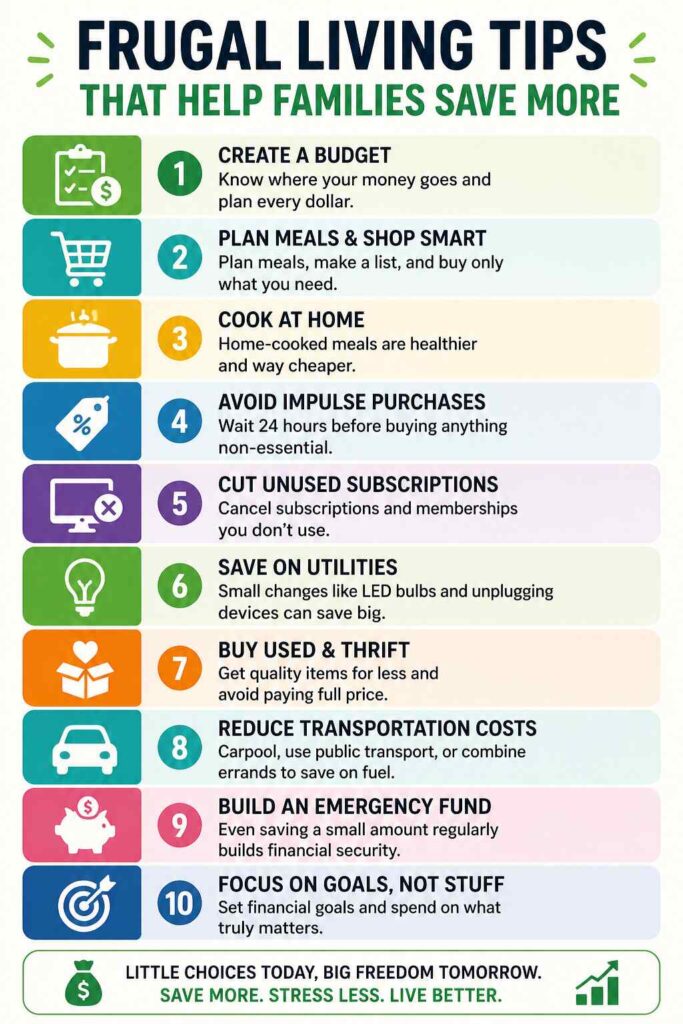
These examples show how simple ways families can live frugally actually work.
Why Frugal Living Works So Well for Families
Frugal living works because most financial problems are caused by daily habits, not big mistakes. Fix the daily habits, and the results follow.
What families usually gain
- $300–$1,500/month in extra savings
- faster debt payoff
- less stress about bills
- more control over decisions
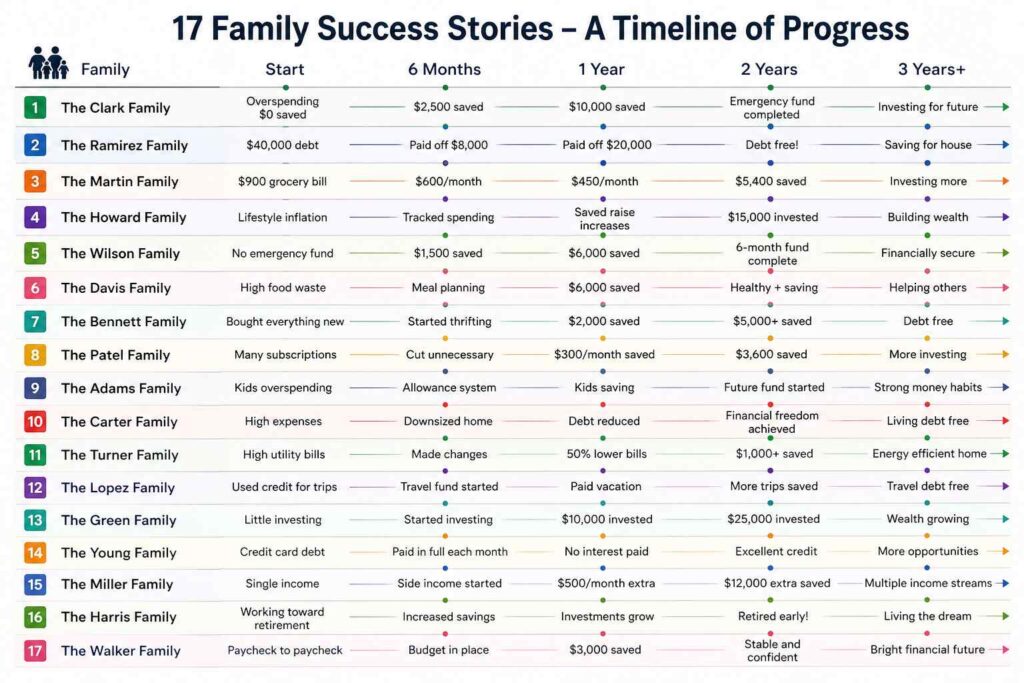
17 Family Success Stories of Frugal Living That Changed Their Finances
Each story follows the same pattern: problem → change → result.
1. Saved $10,000 in One Year by Cutting Small Expenses
Before: Spending $25–$40 daily on takeout and random shopping
Change: Cooked at home + tracked every expense
After: Saved $850/month
Result: $10,200 saved in 12 months
Lesson: Small daily spending is the biggest hidden leak.
2. Paid Off $40,000 Debt in 24 Months
Before: Minimum payments, growing interest
Change: Cut expenses + added side income
After: Paid $1,700/month toward debt
Result: Debt-free in 2 years
Lesson: Aggressive focus beats slow payments.
3. Cut Grocery Bill from $900 to $450
Before: No meal plan, frequent waste
Change: Weekly planning + bulk cooking
After: Grocery bill cut in half
Result: $5,400 saved per year
Lesson: Food spending is one of the easiest wins.
4. Stopped Lifestyle Inflation After Raises
Before: Income increased, savings stayed zero
Change: Saved every raise increase
After: Investing 30% of income
Result: Built long-term wealth
Lesson: More income means nothing without control.
5. Built a 6-Month Emergency Fund
Before: Living paycheck to paycheck
Change: Saved $100–$150 weekly
After: Fully funded emergency savings
Result: No more financial panic
Lesson: Consistency beats large one-time savings.
6. Saved $6,000 a Year with Meal Planning
Before: Eating out 4–5 times a week
Change: Cooked and packed meals
After: Spending dropped sharply
Result: Thousands saved yearly
7. Switched to Secondhand and Saved Thousands
Before: Buying everything new
Change: Used thrift stores and marketplaces
After: Cut major purchase costs
Result: 50–70% savings on items
8. Cut $300/Month by Canceling Subscriptions
Before: Multiple unused services
Change: Cancelled everything not used weekly
After: Lean monthly expenses
Result: $3,600 saved yearly
9. Taught Kids Money Habits Early
Before: Kids spending freely
Change: Allowance + save/spend system
After: Better family discipline
Result: Long-term financial awareness
10. Reached Financial Freedom Through Simple Living
Before: High expenses, high stress
Change: Downsized home + cut lifestyle costs
After: Saved aggressively
Result: Early financial independence
11. Cut Utility Bills by 50%
Before: High electricity and waste
Change: Energy tracking + small fixes
After: Bills dropped significantly
Result: Hundreds saved monthly
12. Paid Cash for Vacations
Before: Travel on credit cards
Change: Monthly travel savings fund
After: Debt-free vacations
Result: No post-trip stress
13. Built Wealth by Living Below Means
Before: Spending matched income
Change: Invested surplus consistently
After: Growing net worth yearly
Result: Long-term financial security
14. Avoided Credit Card Debt Completely
Before: Interest piling up
Change: Only spent what they could pay
After: Zero interest payments
Result: Clean financial record
15. Added Side Income Streams
Before: Single income stress
Change: Freelance + small business
After: Extra $500–$1,000/month
Result: Faster savings growth
16. Retired Years Earlier Than Planned
Before: Average saving habits
Change: High savings rate (40%+)
After: Invested consistently
Result: Early retirement
17. Went from Paycheck to Paycheck to Stable
Before: No savings, constant stress
Change: Budget + cut expenses
After: Built savings gradually
Result: Financial stability
If you feel inspired, consider taking on the 30-day frugal living challenge
What All Successful Frugal Families Have in Common
Most success stories follow the same patterns.
Core habits
- They know exactly where money goes
- They plan spending before the month starts
- They delay purchases
- They avoid lifestyle inflation
- They focus on long-term gains
This is where real change happens.
You can also explore the best frugal living blogs to follow for more ideas.
How One Family Cut Expenses by $1,200 Per Month (Full Breakdown)
This is what a real transformation looks like:
- Groceries: saved $300 (meal planning)
- Eating out: saved $250
- Subscriptions: saved $150
- Utilities: saved $200
- Impulse spending: saved $300
Total saved: $1,200/month
That’s $14,400 per year.
Biggest Mistakes Families Make When Trying to Live Frugally
Most people fail for simple reasons.
Common mistakes
- Trying to change everything at once
- Not tracking spending
- Quitting after a few weeks
- Cutting too hard and burning out
- Ignoring small daily expenses
Fix these, and success becomes easier.
How Families Can Start Their Own Frugal Success Story
Start simple.
Step-by-step
- Track every expense for 30 days
- Cut one major spending category
- Build a small emergency fund
- Plan meals weekly
- Repeat and improve monthly
What is frugal living for families?
Frugal living for families means managing money carefully by reducing unnecessary expenses, planning spending, and focusing on long-term financial stability. Instead of cutting everything, families prioritize value, avoid waste, and build habits that help them save consistently while still maintaining a comfortable lifestyle.
How much money can a family save with frugal living?
Most families can save between $300 and $1,500 per month by reducing food costs, cutting subscriptions, and avoiding impulse spending. The exact amount depends on income and lifestyle, but even small changes in daily habits can lead to thousands of dollars saved each year.
What are the best frugal habits for families to start with?
The most effective frugal habits include tracking every expense, meal planning weekly, reducing eating out, canceling unused subscriptions, and setting a monthly budget. These habits are simple to start and often create immediate savings within the first 30 days.
Can frugal living help families get out of debt?
Yes. Frugal living helps families free up extra cash by reducing unnecessary spending. That extra money can then be used to pay off debt faster, lower interest costs, and shorten repayment timelines significantly.
How do you live frugally with kids?
Families can live frugally with kids by planning meals, choosing low-cost activities, buying secondhand items, and teaching children basic money habits. Involving kids in saving and budgeting also helps build lifelong financial skills.
Is frugal living the same as being cheap?
No. Frugal living focuses on value and smart spending, while being cheap often means sacrificing quality just to spend less. Frugal families spend intentionally and invest in things that truly matter.
How long does it take to see results from frugal living?
Most families start seeing results within 30 to 60 days. Savings increase quickly once spending is tracked and unnecessary expenses are reduced. Long-term results build over months and years with consistent habits.
Final Thoughts on Family Success Stories of Frugal Living
Family success stories of frugal living prove that financial change does not require a high income. It requires control, consistency, and better daily decisions.
The families in this guide didn’t rely on luck. They tracked spending, cut waste, and stayed disciplined. That’s why they saved thousands, paid off debt, and built real financial security.
If you want results, don’t try to change everything at once. Start with one habit—cut food costs, track spending, or cancel unused subscriptions. Then build from there.
The sooner you start, the faster you see results.