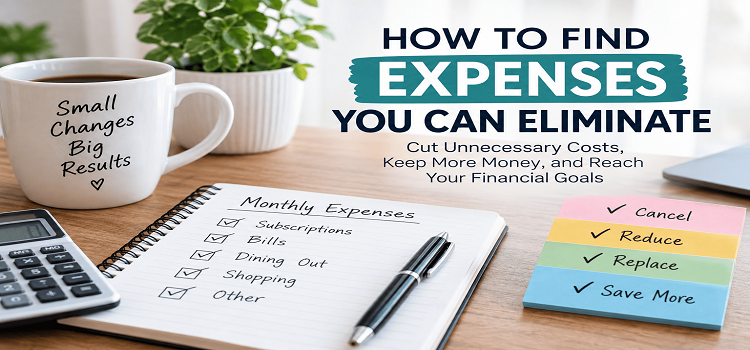
How to find expenses you can eliminate starts with looking closely at where your money goes each month. Many families lose money through unused subscriptions, expensive habits, bank fees, impulse purchases, and services they barely use. These small costs may not seem serious, but together they can take hundreds of dollars from your budget every year. The good news is that you do not need to cut everything you enjoy. You simply need to identify expenses that add little value to your life. In this guide, you will learn how to spot unnecessary spending, reduce monthly expenses, and keep more money for the things your family actually needs.
What Does It Mean to Find Expenses You Can Eliminate?
Finding expenses you can eliminate means identifying purchases, bills, fees, and services that your family no longer needs or could reduce without hurting daily life. The goal is not to stop spending completely. It is to remove low-value expenses so you can lower monthly costs, improve your budget, and save more money.
Common Expenses Families Can Often Eliminate
- Unused subscriptions
Streaming services, apps, memberships, and software can continue charging long after you stop using them. - Bank and account fees
Monthly maintenance fees, ATM charges, overdraft fees, and late-payment fees can quietly drain your budget. - Duplicate services
Families sometimes pay for several services that do nearly the same thing, such as multiple streaming platforms or cloud storage plans. - Impulse purchases
Small unplanned purchases at stores or online can become a large monthly expense when they happen regularly. - Convenience spending
Delivery fees, takeout, coffee runs, and last-minute purchases often cost much more than planning ahead. - Services you rarely use
Gym memberships, premium memberships, subscription boxes, and other recurring expenses may no longer provide enough value. - Paying for more than you need
An oversized phone plan, expensive internet package, extra insurance coverage, or premium service tier may be costing you unnecessarily.
The easiest expenses to cut are usually the ones you barely notice. Start with recurring charges because eliminating even a few can lower your monthly expenses without requiring major lifestyle changes.
17 Ways to Find Expenses You Can Eliminate
The best way to find expenses you can eliminate is to review both recurring bills and everyday spending, then ask whether each expense is necessary, useful, or worth the price. Focus first on costs you can remove with little impact on your family’s quality of life, then work on expenses you can reduce.
Best Expenses to Review and Cut
- Cancel subscriptions you no longer use
Start with streaming services, apps, digital subscriptions, meal plans, and memberships. Check your bank and credit card statements for recurring charges you may have forgotten about.
If your family has not used a subscription in the last month or two, consider canceling it. You can always restart it later if you truly miss it.
- Cut back on multiple streaming services
Paying for several streaming platforms at the same time can quickly increase your monthly expenses.
Keep the services your family watches most and cancel the rest. Another option is to rotate subscriptions. Use one or two services for a few months, cancel them, and switch to others when there is something you want to watch.
- Eliminate unnecessary bank fees
Bank fees are one of the easiest expenses to eliminate because they provide little or no value.
Look for:
- Monthly account maintenance fees
- ATM fees
- Overdraft charges
- Paper statement fees
- Transfer fees
- Late-payment fees
Consider switching to an account with fewer fees, using in-network ATMs, and setting up payment reminders or automatic payments.
- Review your cell phone plan
Many families pay for more mobile data, features, or phone lines than they actually need.
Check your recent usage and compare it with your current plan. You may be able to switch to a cheaper plan, remove unused lines, stop paying for unnecessary add-ons, or choose a lower-cost carrier.
- Lower your internet and cable bill
Internet and cable packages often include speeds, channels, or extras that families rarely use.
Review what you are paying for and ask whether you need every feature. You may save money by lowering your internet speed, removing premium channels, canceling cable, or negotiating a better rate with your provider.
- Stop paying for unused memberships
Gym memberships, warehouse clubs, professional memberships, gaming memberships, and other annual or monthly plans can become unnecessary expenses.
Calculate how often you actually use each membership. If the cost is higher than the value you receive, cancel it before the next renewal.
- Reduce takeout and food delivery
Takeout becomes much more expensive when delivery fees, service charges, tips, and restaurant prices are added together.
You do not have to stop eating out completely. Try reducing the number of takeout meals each month and replacing them with quick meals at home.
Even one fewer delivery order each week can make a noticeable difference in your food budget.
- Cut convenience purchases
Convenience often comes with a higher price.
Bottled drinks, convenience-store snacks, pre-cut produce, single-serving foods, and last-minute purchases may cost much more than buying and preparing similar items yourself.
Look for convenience expenses that happen several times each week. Small changes here can produce steady monthly savings.
- Reduce impulse buying
Impulse purchases can make it difficult to understand where your money is going.
Before buying something that was not planned, give yourself time to think about it. A 24-hour rule works well for smaller purchases, while larger purchases may deserve several days of consideration.
Also remove saved payment information from shopping sites if one-click purchasing makes overspending too easy.
- Unsubscribe from tempting marketing emails
Retail emails and app notifications are designed to encourage you to spend.
Unsubscribe from promotional emails from stores you frequently buy from and turn off shopping app notifications.
A sale does not save you money if it convinces you to buy something your family did not need in the first place.
- Stop buying duplicate household items
Buying something you already own wastes money and creates clutter.
Before grocery or household shopping, check your pantry, freezer, bathroom cabinets, closets, and storage areas.
A simple inventory can prevent you from buying duplicate food, cleaning products, toiletries, school supplies, and household goods.
- Review insurance costs
Insurance is usually necessary, but paying too much for coverage is not.
Review your auto, homeowners, renters, and other insurance policies regularly. Compare quotes, ask about discounts, and make sure you are not paying for optional coverage you no longer need.
Do not remove important protection simply to save money. The goal is to find a better price for appropriate coverage.
- Eliminate avoidable interest charges
Credit card interest can turn ordinary purchases into expensive long-term debt.
If possible, pay credit card balances in full each month. If you already carry balances, avoid adding unnecessary purchases and focus extra money on paying down high-interest debt.
Reducing interest payments means more of your income can go toward savings and family priorities.
- Cut unnecessary grocery spending
Food is essential, but some grocery spending can still be eliminated.
Common money leaks include:
- Buying food without a meal plan
- Shopping while hungry
- Purchasing more perishables than your family can eat
- Choosing expensive name brands when store brands work well
- Letting food spoil
- Buying snacks and drinks individually
Planning meals around food you already have can reduce both grocery bills and food waste.
- Cancel automatic renewals you do not need
Automatic renewals make it easy to keep paying for services you have stopped thinking about.
Search your email for words such as “renewal,” “subscription,” “membership,” and “annual plan.” You may uncover services that only charge once or twice a year and are easy to miss on a monthly budget.
Turn off auto-renewal when you are unsure whether you want to continue.
- Reduce expensive habits
Some habits seem inexpensive because each purchase is small, but repeated spending adds up.
Examples may include:
- Daily coffee shop visits
- Vending machine purchases
- Frequent convenience-store stops
- Buying lunch at work
- Regular food delivery
- Small online purchases
Instead of eliminating every treat, calculate what the habit costs per month. Then decide how often it is worth paying for.
- Remove expenses that no longer match your priorities
Your budget should reflect what matters to your family today, not what mattered several years ago.
Review your spending and ask, “Would I choose to spend money on this again today?”
If the answer is no, that expense may be a good candidate to eliminate. Redirect the money toward an emergency fund, debt repayment, family goals, or other priorities that provide more value.
How to Find Expenses You Can Eliminate Step by Step
To find expenses you can eliminate, review your spending over the last few months, separate needs from wants, identify recurring charges, and compare each expense with the value it provides. A simple spending audit helps families uncover money leaks that are easy to miss in a normal monthly budget.
Steps to Review Your Expenses
- Collect the last three months of statements
Start with your bank accounts, credit cards, payment apps, and bills. Looking at several months gives you a clearer picture than reviewing only one month.
Include:
- Checking account statements
- Credit card statements
- Utility bills
- Subscription payments
- Digital wallet transactions
- Loan payments
Do not rely on memory. Small purchases are often forgotten, and those are exactly the expenses you are trying to find.
- Write down every recurring expense
Look for charges that repeat weekly, monthly, quarterly, or yearly.
Common recurring expenses include streaming services, memberships, software, insurance, phone plans, internet service, storage plans, and subscription boxes.
Annual charges deserve special attention because they can disappear from your monthly budget until renewal day arrives.
- Separate needs from wants
Divide your spending into three simple groups:
- Needs: Housing, basic groceries, utilities, insurance, transportation, and essential healthcare.
- Wants: Entertainment, restaurant meals, shopping, premium services, and optional memberships.
- Unnecessary expenses: Charges you no longer use, duplicate purchases, avoidable fees, and spending that gives your family little value.
Do not assume every “want” must disappear. The goal is to identify spending you would not miss.
- Look for expenses you forgot about
Small automatic payments are easy to overlook.
Scan your statements line by line. Look for unfamiliar company names, old free trials, forgotten apps, subscriptions, and automatic renewals.
If you do not recognize a charge, investigate it before automatically accepting it as part of your budget.
- Calculate the yearly cost
A small monthly charge can look harmless until you multiply it by 12.
For example:
$15 per month × 12 months = $180 per year
Now repeat that calculation for several subscriptions or unnecessary bills. Seeing the annual cost makes it much easier to decide whether an expense is worth keeping.
- Ask whether you would buy it again today
For every optional expense, ask:
“If I were not already paying for this, would I sign up for it today?”
If the answer is no, that is a strong sign the expense should be canceled or reduced.
This question works especially well for memberships, subscriptions, premium plans, and services that have become automatic habits.
- Check how often you actually use it
An expense can sound useful but still be a poor value if your family rarely uses it.
For example, a $50 monthly membership used once a month costs about $50 per visit.
Compare the cost with your actual usage. If you are paying much more than the benefit you receive, look for a cheaper alternative or eliminate it.
- Find duplicate expenses
Families sometimes pay for several products or services that solve the same problem.
You may have multiple streaming services, cloud storage accounts, music subscriptions, delivery memberships, or overlapping insurance benefits.
Keep the option that provides the most value and remove the duplicates.
- Look for spending patterns
Do not only focus on individual purchases. Look for habits.
You may notice that you frequently spend money on:
- Takeout on busy evenings
- Convenience-store stops
- Online shopping late at night
- Weekend entertainment
- Coffee on workdays
- Extra grocery trips
Once you see the pattern, you can fix the reason behind the spending instead of fighting each purchase separately.
- Choose what to cut, reduce, or replace
Every expense does not need the same solution.
Use three categories:
- Eliminate: Remove expenses that provide little or no value.
- Reduce: Spend less on expenses you still want.
- Replace: Find a cheaper way to get the same result.
For example, you might cancel an unused subscription, downgrade your phone plan, and replace restaurant lunches with meals brought from home.
This approach makes cutting expenses easier because you are not trying to remove everything at once.
Which Expenses Should You Eliminate First?
The best expenses to eliminate first are costs that provide little value, repeat automatically, or can disappear without affecting your family’s basic needs. Start with unused subscriptions and avoidable fees, then move to convenience spending and expensive habits. Cutting painless expenses first creates savings without making your budget feel restrictive.
Expenses to Cut in the Right Order
- Unused subscriptions and memberships
These should usually come first because canceling them requires almost no lifestyle change.
Look for streaming services, apps, gym memberships, subscription boxes, premium memberships, and software you rarely use.
A few cancellations can immediately reduce your monthly bills.
- Avoidable fees
Next, look for money you are spending without receiving anything useful in return.
Examples include:
- Bank maintenance fees
- ATM fees
- Late fees
- Overdraft charges
- Delivery fees
- Credit card interest
- Shipping charges you could avoid
These are some of the easiest expenses to target because removing them does not mean giving up something your family enjoys.
- Duplicate services
Check whether you are paying twice for similar benefits.
You might have several streaming platforms, multiple cloud storage plans, overlapping memberships, or services already included with another account.
Choose the one your family uses most and eliminate the rest.
- Premium upgrades you do not need
Many monthly bills become expensive because of optional upgrades.
Review your:
- Cell phone plan
- Internet package
- TV service
- Software subscriptions
- Storage plans
- Membership levels
Downgrading instead of canceling can still produce meaningful savings.
- Convenience spending
After eliminating easy recurring costs, review purchases you make mainly to save time.
Food delivery, convenience-store purchases, prepackaged foods, frequent takeout, and rush shipping can slowly increase monthly spending.
You do not need to remove all convenience. Focus on the expenses that happen often enough to affect your budget.
- Impulse purchases
Unplanned spending is another area where families can often save without cutting necessities.
Look through your recent purchases and identify items bought because of:
- Sales
- Social media
- Store displays
- Shopping apps
- Boredom
- One-click checkout
If these purchases happen regularly, create a waiting period before buying anything that was not already planned.
- Expensive habits
Small purchases repeated several times a week can become large monthly costs.
A $6 purchase made five times each week is about $120 over four weeks.
Instead of automatically eliminating every habit, decide which ones give you enough enjoyment to keep and which ones you barely notice.
- Nonessential shopping
Clothes, home décor, gadgets, toys, beauty products, and household upgrades can become major budget leaks when purchases happen without a clear need.
Try using what you already own before buying something new.
A short no-buy period can also show you which purchases were habits rather than real needs.
- Bills you may be able to negotiate
Some expenses cannot be eliminated, but they may still be reduced.
Review your internet, phone, insurance, and other service bills. Compare competing prices and ask your provider whether a lower-cost plan or discount is available.
Even a small reduction becomes valuable when it continues every month.
- Expenses that conflict with your current goals
Finally, look at the bigger picture.
If your family is trying to build an emergency fund, pay down debt, or save for an important goal, some optional expenses may no longer deserve the same priority.
Cutting an expense becomes easier when you know exactly where the money will go instead.
How to Find Hidden Expenses in Your Monthly Budget
Hidden expenses are small or automatic costs that are easy to overlook because they do not feel like major purchases. Families can find them by checking recurring charges, fees, convenience spending, price increases, and forgotten renewals. Removing several small money leaks can free up meaningful cash every month without cutting essential expenses.
Hidden Expenses to Look For
- Free trials that turned into paid subscriptions
A free trial can become a recurring charge if you forget to cancel before the trial ends.
Review your statements for apps, streaming services, software, learning platforms, and other services you originally signed up for at no cost.
If you are no longer using them, cancel them immediately.
- Subscriptions that increased in price
A service you once considered affordable may have quietly become more expensive.
Compare what you pay now with what you originally expected to pay. Even a small price increase matters when several subscriptions rise at the same time.
Ask whether the service is still worth the new price.
- Annual charges you forgot about
Some memberships and subscriptions charge only once a year, making them easy to miss.
Look for:
- Warehouse memberships
- Software licenses
- Credit card annual fees
- Cloud storage
- Professional memberships
- Entertainment services
Review these before they automatically renew.
- Small bank and payment fees
A few dollars here and there may not seem important, but repeated fees add up.
Check for ATM charges, account fees, transfer fees, foreign transaction fees, overdraft fees, and payment processing charges.
If you regularly pay the same fee, find a way to avoid it instead of treating it as normal.
- Unused app subscriptions
Phone apps can create some of the easiest recurring expenses to forget.
Open your phone’s subscription settings and review everything currently billing you.
Cancel apps you no longer use, especially premium versions of services you could use for free.
- Delivery and service charges
Food delivery and shopping apps can add several extra charges to a single purchase.
The final bill may include:
- Delivery fees
- Service fees
- Small-order fees
- Tips
- Higher menu prices
Compare the delivered price with the cost of pickup or preparing the same meal at home.
- Automatic tips or add-ons
Some checkout screens automatically suggest extras that can increase your total.
Review receipts before paying. Make sure you understand every charge and remove optional extras that do not provide enough value.
- Unused storage space
Families may pay for cloud storage, self-storage units, or upgraded digital storage without using all the space.
Check what you actually need.
Deleting old files, organizing photos, or clearing physical clutter may allow you to downgrade or eliminate the expense.
- Forgotten warranties and protection plans
Extended warranties, device protection, and other add-ons can continue costing money even when the value is limited.
Review what protection you already receive through manufacturers, retailers, insurance, or credit cards before paying for overlapping coverage.
- Price increases on regular bills
Bills can slowly rise while your service stays the same.
Compare your current phone, internet, insurance, and utility bills with older statements.
A noticeable increase is a good reason to call the provider, review your plan, or compare alternatives.
- Extra grocery trips
Unplanned grocery runs often include more than the one or two items you intended to buy.
Track how often your family returns to the store between planned shopping trips.
Keeping a running grocery list and planning meals can reduce these extra purchases.
- Small online purchases
Low-cost online orders can be easy to ignore because each purchase feels harmless.
Add together all your small orders from the last month. You may find that several $10 or $20 purchases have become a much larger spending category.
- Subscriptions hidden inside other services
Some services offer optional channels, premium features, storage upgrades, or add-ons that appear as part of a larger monthly bill.
Review the full bill rather than only checking the final amount.
You may be paying for extras you forgot you activated.
- Late fees caused by missed due dates
Late fees are avoidable expenses that can quietly reduce your available money.
Use calendar reminders or automatic payments for predictable bills. Just make sure enough money is available in the account before the payment is processed.
- Spending that does not appear in your main bank account
Do not forget payment apps, prepaid cards, digital wallets, store accounts, and cash purchases.
If you only review one checking account, you may miss a large part of your actual spending.
A complete spending review should include every place your family regularly uses money.
Money-Saving Tips to Make Cutting Expenses Easier
Cutting expenses works best when your family replaces unnecessary spending with simple habits instead of relying on willpower alone. Set clear limits, automate savings, plan purchases, and review your budget regularly. These small systems make it easier to spend less each month without feeling like your family is constantly giving things up.
Simple Ways to Keep More Money
✔ Set a monthly spending limit
Give flexible categories such as dining out, entertainment, shopping, and personal spending a clear monthly limit.
Once the money is gone, wait until the next month before spending more in that category.
✔ Move savings immediately
When you cancel a $20 subscription or lower a bill by $40, move that same amount into savings.
Otherwise, the money can easily disappear into another spending category.
This turns expense cutting into visible progress.
✔ Use a 24-hour waiting rule
Wait at least 24 hours before making an unplanned purchase.
For more expensive items, wait several days.
The waiting period gives you time to decide whether you actually need the item or simply wanted it in the moment.
✔ Plan meals before grocery shopping
Meal planning can reduce impulse purchases, food waste, and expensive last-minute takeout.
Check your pantry, refrigerator, and freezer first. Then build meals around food you already own before adding more groceries.
✔ Shop with a list
A written grocery or household shopping list keeps you focused on what your family actually needs.
Try not to add items unless they solve a real need or replace something already used up.
✔ Use cash or a separate spending account
If certain categories are difficult to control, give them their own spending limit.
You can use cash or transfer a fixed amount into a separate account for entertainment, dining out, or personal purchases.
When the money is gone, spending stops.
✔ Pause before upgrading
A newer phone, bigger data plan, faster internet package, or premium membership may sound useful, but upgrades often increase recurring expenses.
Ask whether the upgrade solves a real problem before adding another monthly cost.
✔ Create a “use what we have” habit
Before buying something new, check whether your family already owns an alternative.
This works especially well for:
- Pantry ingredients
- Cleaning supplies
- Toiletries
- Clothes
- School supplies
- Home décor
- Toys and games
Using what you already own can delay purchases and reduce waste.
✔ Choose one low-spend day each week
Pick one day when your family avoids optional spending.
Eat food from home, choose free entertainment, and avoid online shopping.
Once that becomes easy, you can add more no-spend days.
✔ Remove shopping temptations
Make unnecessary buying slightly harder.
Delete shopping apps you rarely need, remove saved credit cards, unsubscribe from promotional texts, and stop following accounts that constantly encourage purchases.
Fewer triggers can mean fewer impulse buys.
✔ Check prices before renewing
Do not automatically accept renewal prices for insurance, phone plans, internet, or memberships.
Compare alternatives before the renewal date. You may find a cheaper plan or gain leverage to negotiate your current rate.
✔ Review your budget once a month
Expense cutting should not be a one-time project.
Spend a few minutes each month checking:
- New subscriptions
- Higher bills
- Unusual charges
- Spending increases
- Categories going over budget
- Services your family stopped using
Regular reviews help you catch unnecessary expenses before they become permanent.
Tools That Can Help You Find Expenses to Eliminate
Budgeting tools can make it easier to find unnecessary expenses by organizing transactions, identifying recurring charges, and showing where your money goes each month. You do not need complicated software. A bank app, spreadsheet, budgeting app, or simple expense tracker can help your family spot spending patterns that are difficult to notice manually.
Useful Tools for Reviewing Your Spending
- Your bank’s mobile app
Start with the tools you already have.
Many banking apps automatically organize spending into categories such as groceries, restaurants, shopping, bills, and entertainment.
Review the last few months and look for categories that are consistently higher than expected.
- Credit card spending summaries
Credit card accounts often provide monthly or yearly spending summaries.
These can help you quickly identify:
- Recurring subscriptions
- Large spending categories
- Frequent merchants
- Restaurant spending
- Online shopping
- Fees and interest
Pay particular attention to merchants that appear every month.
- A simple budgeting spreadsheet
You do not need an advanced budgeting system to find expenses you can cut.
Create columns for:
- Expense
- Monthly cost
- Annual cost
- Need or want
- How often you use it
- Keep, reduce, or eliminate
Seeing everything together can make unnecessary spending much easier to identify.
- Budgeting apps
Budgeting apps can help organize transactions and show where your money is going.
Some also alert you to recurring payments or changes in spending.
The important part is not which app you choose. Use a tool that makes your spending easy to understand and that you will actually check regularly.
- Subscription tracking tools
If you have many recurring charges, a subscription tracker can help you see them in one place.
But always review your bank and credit card statements too. A tracker may not catch every payment, especially annual charges or subscriptions paid through different accounts.
- Your phone’s subscription settings
Your smartphone may already show many of the apps and services you pay for.
Check the subscription section connected to your device account and review active plans one by one.
Cancel anything you no longer use or downgrade plans that provide more features than you need.
- Email search
Your inbox can uncover expenses that are easy to miss.
Search for terms such as:
- Subscription
- Renewal
- Membership
- Receipt
- Payment
- Trial
- Auto-renew
This can reveal yearly memberships, software renewals, and forgotten services before another payment is charged.
- A monthly expense checklist
A simple checklist can be just as useful as an app.
Once a month, review your bank accounts, credit cards, subscriptions, bills, and flexible spending.
Mark each expense as:
- Keep
- Reduce
- Cancel
- Compare
The easier your review system is, the more likely you are to keep using it.
- A recurring expense calendar
Add annual and irregular expenses to your calendar before they renew.
This works well for insurance renewals, memberships, software, credit card annual fees, and other charges that do not appear every month.
Set a reminder a few weeks early so you have time to cancel or compare prices.
- Your own spending notes
Technology can show you what you spent, but it cannot always explain why you spent it.
For one or two weeks, make a quick note whenever you make an optional purchase.
Write down what you bought and what triggered the purchase. You may discover that stress, boredom, convenience, or lack of planning is behind certain spending habits.
That information can help you eliminate the cause instead of only cutting the expense.
Why Eliminating Unnecessary Expenses Matters for Families
Eliminating unnecessary expenses gives families more control over their money without requiring a higher income. Even small monthly cuts can improve cash flow, reduce financial stress, build savings, and make it easier to handle emergencies. The biggest benefit is not spending less for its own sake, but directing money toward goals that matter more.
Benefits of Cutting Unnecessary Expenses
- You create more room in your monthly budget
When you remove expenses that no longer provide value, more of your income becomes available for essential bills, savings, debt payments, and family goals.
Even a few small cuts can make a tight budget feel more manageable.
- You can build an emergency fund faster
Unexpected costs are easier to handle when you have cash set aside.
Money saved from canceled subscriptions, lower bills, or reduced convenience spending can go directly into an emergency fund.
Over time, these small amounts can build a useful financial cushion.
- You can pay down debt more quickly
Reducing unnecessary spending gives you extra money that can be applied to credit cards, personal loans, or other debt.
For example, cutting $150 from monthly expenses creates $1,800 a year that could be redirected toward debt.
The key is to send the savings toward debt instead of allowing it to disappear into new spending.
- You reduce financial stress
A budget becomes stressful when every dollar is already committed before the month begins.
Lowering recurring expenses gives your family more breathing room.
You may have more flexibility when grocery prices rise, a utility bill is higher than expected, or another unexpected cost appears.
- You rely less on credit cards
When your monthly expenses are lower, you may be less likely to use credit to cover routine costs.
This can help prevent new balances, interest charges, and the cycle of paying for past purchases with future income.
- You become more intentional with money
Reviewing expenses forces you to think about what your family actually values.
Instead of spending automatically, you begin asking whether each purchase is worth the cost.
That habit can improve financial decisions long after the original expense review is finished.
- Small savings become meaningful over time
A single $10 expense may not seem important.
But $10 saved every month equals $120 per year.
If you eliminate five expenses costing $10 each, that becomes $600 per year.
Cutting several small costs can sometimes have a bigger impact than trying to eliminate one large expense.
- You have more money for family priorities
Saving money becomes easier when you give the savings a purpose.
The money you free up could go toward:
- An emergency fund
- Debt repayment
- A family vacation
- School expenses
- Home repairs
- Retirement
- A future vehicle
- Holiday expenses
Knowing what you are saving for can make unnecessary spending easier to give up.
- Your budget becomes easier to maintain
Budgets are harder to manage when they contain dozens of subscriptions, payment plans, and recurring charges.
Removing expenses you no longer need simplifies your finances.
Fewer bills also means fewer due dates and fewer opportunities for missed payments.
- You become better prepared for rising costs
Families cannot control inflation, unexpected bills, or every change in household income.
But you can control many of your spending decisions.
Keeping unnecessary expenses low gives you more flexibility when essential costs increase and helps protect your budget when money becomes tighter.
What expenses should I eliminate first?
Start with expenses that provide little or no value. Unused subscriptions, duplicate services, bank fees, forgotten memberships, and automatic renewals are usually the easiest places to begin. After that, review takeout, impulse purchases, premium upgrades, and other flexible spending that can be reduced without affecting your family’s basic needs.
How do I identify unnecessary expenses?
Review at least two or three months of bank and credit card statements. Look for recurring charges, spending you do not remember, duplicate services, frequent convenience purchases, and bills that have increased. Ask yourself whether you would willingly pay for each expense again today. If not, it may be unnecessary.
What are examples of expenses you can cut?
Common expenses you may be able to cut include unused streaming services, gym memberships, food delivery, premium phone plans, bank fees, subscription boxes, impulse shopping, unused apps, expensive coffee runs, and duplicate memberships. The right cuts depend on which expenses provide the least value to your own family.
How much can I save by cutting unnecessary expenses?
The amount depends on your current spending. Cutting just $100 a month saves $1,200 over a year. Saving $250 a month adds up to $3,000 annually. Instead of chasing one huge cut, look for several smaller expenses you can eliminate or reduce and redirect those savings toward a specific goal.
How can I cut expenses without feeling deprived?
Keep the spending that matters most to your family and cut expenses you barely notice or no longer value. Reduce rather than eliminate some categories, look for cheaper alternatives, and set aside a small amount for fun. A sustainable budget should help you spend intentionally, not make every purchase feel forbidden.
How often should I review my expenses?
Review your spending at least once a month and complete a deeper expense audit every few months. Also review bills before annual renewals or whenever your income or family situation changes. Regular reviews help you catch new subscriptions, price increases, fees, and spending habits before they become permanent parts of your budget.
What expenses should I not cut?
Avoid cutting essential expenses simply to make your budget look smaller. Housing, basic food, necessary healthcare, essential insurance, utilities, minimum debt payments, and reliable transportation usually need to remain priorities. Instead, look for ways to reduce their cost safely while eliminating optional spending that provides much less value.
Final Thoughts: Start Cutting One Expense Today
Learning how to find expenses you can eliminate is one of the simplest ways to improve your family budget without earning more money. Start with recurring charges, forgotten subscriptions, avoidable fees, and spending that no longer provides value. Then redirect every dollar you save toward a goal that matters more.
You do not need to cut everything at once.
Choose one expense today and remove, reduce, or replace it. Then review another expense next week.
A few small changes can free up hundreds or even thousands of dollars over a year.
Your next step is simple: open your latest bank or credit card statement, find one expense you would not choose again today, and cut it.