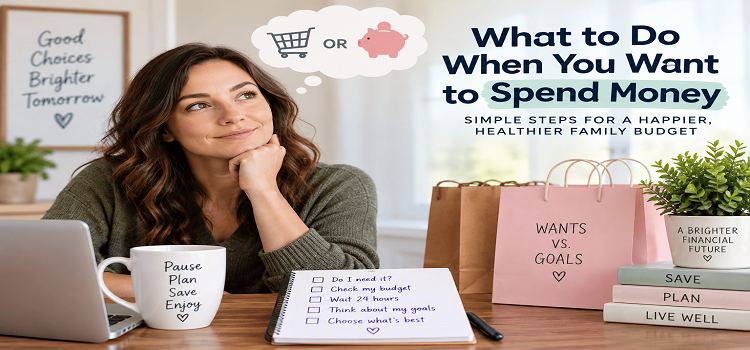
What to do when you want to spend money often comes down to creating a small pause between the urge and the purchase. Spending can feel harmless in the moment, but frequent impulse buys can quietly damage your family budget and make saving harder. The goal is not to stop enjoying your money. It is to make sure each purchase fits your priorities instead of being driven by stress, boredom, sales, or habit. In this guide, you will learn simple ways to control spending urges, avoid unnecessary purchases, make better buying decisions, and still spend money without guilt when something truly matters.
What Does It Mean When You Want to Spend Money?
Wanting to spend money means you feel an urge to buy something, even when the purchase may not be necessary. That urge can come from boredom, stress, excitement, social pressure, advertising, or simply seeing something you like. The important step is learning to separate a real need from a temporary spending impulse.
For many families, the problem is not one large purchase. It is the small, repeated purchases that slowly add up.
You might want to spend money because:
- You had a stressful day and want a reward.
- You saw a sale and fear missing out.
- You are bored and start browsing online stores.
- Someone else bought something you now want.
- You received extra money and feel tempted to use it.
- You want a quick mood boost.
- Buying things has become part of your normal routine.
Wanting something does not automatically mean you should buy it.
The goal is to notice the urge before acting on it. Even a short pause can help you decide whether the purchase will improve your life or simply reduce your bank balance.
What Should You Do When You Want to Spend Money?
When you want to spend money, pause before buying and give yourself time to decide whether the purchase is necessary. Check your budget, think about your financial goals, and identify what triggered the urge. Simple delays and spending rules can prevent impulse purchases without making you feel deprived.
17 Smart Things to Do Before Spending Money
- Wait 24 Hours Before Buying
Give yourself at least one day before buying something that was not already planned.
The excitement around a purchase often fades once you stop looking at it. If you still want the item the next day and it fits your budget, you can reconsider it with a clearer mind.
For more expensive purchases, wait several days or even a week.
- Ask Yourself if You Really Need It
Before buying, ask one simple question:
Do I need this, or do I just want it right now?
Needs usually solve an immediate problem. Wants can often wait.
You do not have to eliminate wants completely. You simply want to make sure they are worth the money you are giving up.
- Check Your Budget First
Look at your budget before reaching for your card.
If buying the item means taking money from groceries, bills, savings, debt payments, or another important goal, the real cost may be much higher than the price tag.
A purchase that fits your budget feels very different from one that creates stress later.
- Leave the Item in Your Cart
Online shopping makes impulse spending easy.
Instead of checking out immediately, put the item in your cart and close the website or app.
Come back later.
You may discover that you no longer care about the item once the initial excitement disappears.
- Calculate How Many Hours You Worked for It
Convert the price into working time.
If you earn $20 per hour and something costs $100, that purchase represents about five hours of work before considering taxes and other expenses.
Thinking in hours rather than dollars can make unnecessary purchases easier to recognize.
- Look at What You Already Own
Before buying another item, check your home.
You may already own something that performs the same job.
This works especially well with:
- Clothing
- Kitchen gadgets
- Toys
- Home decor
- Beauty products
- Electronics
- Hobby supplies
Using what you already have is one of the easiest ways to spend less without feeling restricted.
- Identify Your Spending Trigger
Ask yourself what happened immediately before you wanted to spend money.
Were you:
- Bored?
- Stressed?
- Tired?
- Upset?
- Celebrating?
- Scrolling social media?
- Browsing a sale?
Knowing your triggers makes impulse spending easier to control because you can deal with the reason behind the urge instead of automatically buying something.
- Do Something Free Instead
Sometimes you do not actually want the product. You want entertainment, comfort, or a change of mood.
Try replacing shopping with something free.
Take a walk, watch a movie you already have, make coffee at home, read, organize a room, call someone, or spend time outside with your family.
Give the urge time to pass.
- Move the Money to Savings
When you decide not to buy something, consider moving part or all of that money into savings.
For example, if you almost spent $40 on something unnecessary, transfer $40 to your emergency fund or another savings goal.
Now saying no produces a visible reward.
- Remember Your Bigger Financial Goal
Think about what you are currently saving for.
It might be:
- An emergency fund
- Paying off debt
- A family vacation
- A home
- A car
- Christmas expenses
- Retirement
- A child’s education
Ask yourself which matters more: the purchase in front of you or the goal you have been working toward.
- Unsubscribe From Shopping Emails
Sales emails are designed to make you spend.
A discount can make an unnecessary purchase feel responsible even though you are still spending money you had not planned to spend.
Unsubscribe from promotional emails, turn off shopping notifications, and remove store apps that regularly tempt you.
- Avoid Browsing Stores for Entertainment
If you regularly browse stores or shopping websites when you are bored, spending becomes much harder to control.
Shopping puts hundreds of things you could buy directly in front of you.
Instead, shop with a specific purpose. Know what you need before entering a store or opening a shopping app.
- Use a Spending List
Create a list of things you want instead of buying them immediately.
Write down:
- The item
- The price
- Why you want it
- The date you added it
Review the list once a week or once a month.
Many items will stop feeling important long before you actually buy them.
- Check the Cost Per Use
A higher-priced item can sometimes be worth buying if you will use it often.
Divide the price by the number of times you realistically expect to use it.
A $100 coat worn 100 times costs about $1 per use. A $50 outfit worn once costs $50 per use.
This helps you judge value instead of focusing only on price.
- Remove Saved Payment Information
One-click checkout removes the time you need to reconsider a purchase.
Delete stored credit card details from shopping websites and apps.
Having to find your card and type the information manually creates extra friction. That small inconvenience can be enough to stop an unnecessary impulse purchase.
- Give Yourself Fun Money
Trying to stop all unnecessary spending can backfire.
Instead, include a small amount of guilt-free spending money in your family budget.
Once essentials, bills, savings, and financial goals are covered, you can spend this amount however you want.
A realistic budget should leave some room for enjoyment.
- Ask Whether You Will Still Be Happy You Bought It Next Month
Imagine yourself one month after making the purchase.
Will you still use it?
Will you remember why you wanted it?
Or will it become another item sitting unused in your home?
Thinking about your future self helps separate purchases that provide lasting value from purchases driven by a temporary urge.
How Do You Know If You Should Spend Money or Save It?
You should spend money when the purchase solves a real need, fits your budget, and does not interfere with important financial goals. You should save the money when the purchase is driven mainly by impulse, stress, boredom, or pressure. A simple decision process can make the choice much easier.
Questions to Ask Before You Buy
- Was this purchase already planned?
Planned spending is usually easier to control because the decision was made before the emotional urge appeared.
If the purchase was not in your budget or on your shopping list, slow down before buying it.
- Can I pay for it without using debt?
If you need to carry a credit card balance to afford something that is not essential, waiting is usually the better choice.
Interest can make a small purchase much more expensive over time.
- Will buying this affect an important bill?
Do not sacrifice rent, utilities, groceries, insurance, debt payments, or other essentials for a nonessential purchase.
Your basic expenses should always come first.
- Have I already saved for my main goals this month?
Spending becomes easier to enjoy when you know your priorities have already been funded.
Check whether you have made progress toward your emergency fund, debt payoff, retirement, or other family savings goals.
- Am I buying because the item is useful or because it is on sale?
A sale does not save you money if you would not have bought the item otherwise.
The better question is not, “How much am I saving?”
Ask, “Would I still want this at the regular price?”
- Do I already own something similar?
Check your closet, pantry, garage, storage areas, and drawers before buying another version of something you already have.
Duplicates often happen because families forget what they own.
- Will I use it enough to justify the cost?
Think about how often you will realistically use the item.
Buying something useful 100 times may make sense. Buying something that will be forgotten after one weekend probably does not.
- Would I rather have the item or the money?
Picture both choices.
You can have the product, or you can keep the same amount of money available for savings, emergencies, debt, or another purchase later.
This simple comparison can make your real preference much clearer.
A Simple Spending Rule
Use this quick rule when you are unsure:
Need + budget room + real use = reasonable purchase.
Impulse + no budget room + low use = wait.
You do not need to make every spending decision perfectly. The goal is to make more purchases intentionally instead of automatically.
Why Do You Want to Spend Money Even When You Don’t Need Anything?
You may want to spend money even when you need nothing because shopping can provide excitement, comfort, distraction, or a feeling of control. Stress, boredom, habits, social media, advertising, and easy online checkout can all trigger unnecessary spending. Understanding the cause makes the urge much easier to manage.
Common Reasons You Feel Like Spending Money
- Boredom
Shopping can become entertainment when you have nothing else to do.
You open a shopping app, browse a store, or scroll through deals without planning to buy anything. But once you see something interesting, the urge to purchase begins.
Replace browsing with another activity before it becomes a spending habit.
- Stress
Some people spend money because buying something provides a temporary escape from stress.
A difficult workday, family problem, or financial worry can make a small purchase feel comforting.
But emotional spending rarely solves the original problem. And creating another expense can sometimes add more stress later.
- You Want a Reward
It is normal to want to reward yourself after working hard.
The problem starts when every difficult day becomes a reason to buy something.
Try creating rewards that do not always involve spending money. A quiet evening, favorite meal at home, long walk, or extra free time can provide the same feeling without hurting your budget.
- Social Media Makes You Want More
Social media constantly shows you what other people own.
You may see new clothes, home decor, vacations, gadgets, beauty products, or expensive family activities and start feeling like you need them too.
Remember that you are usually seeing selected moments, not someone else’s complete financial situation.
- You Are Afraid of Missing a Deal
Messages such as “only today,” “almost sold out,” and “limited offer” create urgency.
That pressure can make you buy before thinking.
Missing a sale is usually cheaper than buying something you did not need.
Another discount will eventually appear.
- You Have Made Shopping a Habit
Sometimes spending has little to do with the item itself.
You may automatically browse stores every weekend, order food every Friday, or shop online before bed.
Once you notice the pattern, change the routine.
Breaking the habit can be easier than trying to resist individual purchases repeatedly.
- You Received Extra Money
A bonus, tax refund, gift, side-hustle payment, or unexpected cash can feel like money that is available to spend.
But extra money can also improve your finances.
Before spending it, decide how much will go toward savings, debt, bills, and fun.
- You Want an Immediate Mood Boost
Buying something new can feel exciting.
But that excitement is often temporary.
The item becomes normal quickly, and then you may start looking for the next purchase.
If this happens often, focus on activities that provide satisfaction without requiring you to keep buying things.
- Spending Is Too Easy
Saved cards, one-click checkout, buy-now buttons, and shopping apps allow purchases to happen in seconds.
There is almost no time to reconsider.
Adding friction helps. Remove stored payment details, log out of shopping accounts, and avoid keeping store apps on your phone.
- You Compare Yourself With Other Families
It is easy to feel behind when another family has a newer car, bigger home, expensive vacation, or the latest technology.
But trying to match someone else’s lifestyle can damage your own financial goals.
Build your spending around what your family values and can afford, not what someone else appears to have.
What Can You Do Instead of Spending Money?
Instead of spending money when an urge hits, replace shopping with an activity that gives you the same feeling without adding another expense. Free activities can reduce boredom, stress, and emotional spending while helping you protect your budget. The key is having a few alternatives ready before temptation appears.
Best Things to Do Instead of Shopping
- Take a Walk
A short walk can change your mood and remove you from the situation that triggered the urge to spend.
Leave your phone behind if shopping apps or social media are part of the problem.
- Use Something You Already Own
Before buying something new, choose something you already have and actually use it.
Wear clothes you forgot about, read an unread book, use stored craft supplies, or cook something from your pantry.
You may realize you already have more than enough.
- Make a Meal or Snack at Home
If you feel tempted to order takeout or stop for coffee, make something at home first.
Even a simple sandwich, homemade coffee, or quick snack can satisfy the urge without turning it into another unplanned expense.
- Declutter One Small Area
Clean a drawer, closet, pantry shelf, or toy box.
Seeing how much you already own can quickly reduce the desire to buy more.
You may even find items you forgot you had.
- Add the Item to a Wish List
You do not have to decide immediately.
Save the item to a wish list and review it later.
This gives you the satisfaction of remembering it without spending money today.
- Check Your Savings Progress
Open your savings account or budget and look at the progress you have made.
Seeing your emergency fund, vacation fund, debt balance, or other goal improve can make saving feel more rewarding than spending.
- Plan a Free Family Activity
Replace shopping with something your family can enjoy together.
Try:
- A walk at the park
- A family game night
- A movie at home
- A picnic
- A bike ride
- Baking together
- Visiting the library
- Playing outside
You can create good family memories without buying something every time.
- Call or Message Someone
Sometimes shopping is simply a way to fill empty time.
Call a friend, message a relative, or spend time talking with someone at home.
Connection can provide the mood boost you were trying to get from spending.
- Work on a Financial Goal
Use the moment to do something that improves your finances.
You could review your budget, transfer money to savings, plan meals, check upcoming bills, or make an extra debt payment.
Turning a spending urge into financial progress can build a stronger habit.
- Wait Until Tomorrow
When nothing else works, simply delay the decision.
Tell yourself:
“I can buy it tomorrow if I still want it.”
You are not saying no forever. You are giving yourself time.
Most impulse purchases lose much of their appeal once the immediate urge passes.
How Can You Stop Yourself From Spending Money?
You can stop yourself from spending money by creating simple rules that slow down purchases and reduce temptation. Start by tracking your spending triggers, setting a waiting period, removing easy payment options, and giving every dollar a purpose. The goal is to make intentional spending easier than impulse spending.
Steps to Control the Urge to Spend
- Track Your Spending for One Week
Write down every purchase you make for seven days.
Do not judge yourself. Just notice the patterns.
Look for:
- Times you spend most often
- Stores or apps you use
- Emotional triggers
- Unplanned purchases
- Small expenses that repeat
You cannot change a habit clearly until you can see it.
- Create a Personal Waiting Rule
Choose one waiting period and use it consistently.
A simple rule can be:
- Under $25: wait 24 hours
- $25 to $100: wait 48 hours
- Over $100: wait 7 days
This removes the pressure to decide immediately.
- Set a Weekly Spending Limit
Give yourself a clear amount for nonessential spending.
Once that money is gone, wait until the next week.
A limit works better than telling yourself you cannot spend anything because it creates boundaries without making your budget feel impossible.
- Separate Needs From Wants
Before shopping, write down what you actually need.
Anything that is not on the list should be treated as a want.
This works well for groceries, clothing, household items, and online shopping.
- Make Spending Slightly Harder
Remove anything that makes buying too easy.
You can:
- Delete saved cards
- Turn off one-click checkout
- Remove shopping apps
- Unsubscribe from sale alerts
- Avoid browsing stores without a reason
A few extra steps give you more time to reconsider.
- Give Your Money a Job
Decide where your money should go before you have a chance to spend it.
That may include:
- Bills
- Groceries
- Emergency savings
- Debt payments
- Family goals
- Fun money
Money with a purpose is harder to spend without thinking.
- Build a Small Fun-Money Category
Include some money for things you enjoy.
This helps prevent the feeling that your budget is only about restrictions.
When you know you have money set aside for treats, hobbies, or entertainment, it becomes easier to say no to random purchases.
- Review Your Progress Every Week
At the end of each week, look at what worked.
Ask:
- What did I avoid buying?
- What triggered unnecessary spending?
- How much did I save?
- Which rule was hardest to follow?
- What should I change next week?
Small weekly improvements are easier to maintain than trying to change every spending habit at once.
Money-Saving Tips When You Feel Like Spending
The best way to save money when you feel like spending is to make saving the easier choice. Use automatic transfers, shopping lists, spending limits, and waiting periods to protect your budget. Small barriers between you and an impulse purchase can prevent unnecessary spending while still leaving room for planned enjoyment.
Simple Ways to Keep More of Your Money
- Pay yourself first. Move money into savings as soon as you get paid instead of waiting to see what is left at the end of the month.
- Shop with a list. Decide what you need before entering a store or opening a shopping website. Avoid adding items simply because they look interesting.
- Set a no-spend day. Pick one or two days each week when you buy nothing except true emergencies. This helps break the habit of spending every day.
- Use cash for problem categories. If you regularly overspend on eating out, entertainment, or personal purchases, set aside a fixed amount of cash. When it is gone, stop spending in that category.
- Compare the price with your savings goal. A $60 purchase may feel small until you realize that same $60 could move you closer to an emergency fund, vacation, or debt payoff.
- Avoid shopping when you are emotional. Stress, anger, boredom, and excitement can make purchases feel more important than they are. Wait until your mood has settled before deciding.
- Create a wish-list budget. Put aside a small amount each month for things you want. When enough money has accumulated, you can buy something without touching your regular budget.
- Cancel unnecessary subscriptions. Recurring charges can quietly reduce the amount of money available for goals you care about more.
- Use what you have before replacing it. Finish products, wear existing clothes, use pantry food, and repair items when it makes sense before buying replacements.
- Avoid buying only because something is cheap. A $10 item you never use wastes more money than a $50 item you use regularly.
- Plan meals before grocery shopping. A simple meal plan can reduce takeout, food waste, and unnecessary grocery purchases.
- Keep your financial goals visible. Put your savings target somewhere you will see it often. A visible goal makes it easier to remember what you are choosing instead of the impulse purchase.
Try the “Save What You Almost Spent” Rule
Whenever you successfully avoid an unnecessary purchase, transfer some or all of that amount into savings.
If you decide not to buy a $35 shirt, move $35 into your emergency fund. If you skip a $20 takeout order, save the $20 instead.
This turns resisting an impulse into measurable financial progress. Over time, those small decisions can add up to hundreds or even thousands of dollars.
Why Is Controlling the Urge to Spend Money Important?
Controlling the urge to spend money helps families protect their budget, build savings, reduce debt, and feel more confident about financial decisions. It does not mean avoiding every enjoyable purchase. It means making sure spending supports your priorities instead of constantly pulling money away from goals that matter more.
Benefits of More Intentional Spending
- You Build Savings Faster
Every unnecessary purchase you avoid leaves more money available for savings.
Even small amounts can make a difference when they are saved consistently.
For example, keeping an extra $25 each week adds up to about $1,300 over a year.
- You Reduce Financial Stress
Money problems often feel worse when spending is unpredictable.
When you know where your money is going, it becomes easier to cover bills, prepare for emergencies, and make decisions without constant worry.
- You Avoid More Consumer Debt
Impulse purchases can become expensive when they are placed on credit cards and not paid off quickly.
Reducing unnecessary spending can lower the chance of carrying balances and paying interest on things you may not even value later.
- You Make Better Use of Your Income
Your income can only do so many things at once.
Money spent on one purchase cannot also go toward savings, debt, family goals, or future expenses.
Intentional spending helps your money support what matters most.
- You Become Less Influenced by Sales and Advertising
Once you start questioning purchases, discounts become less powerful.
You learn that a sale is only useful when you already planned to buy the item.
This can make it easier to ignore urgency tactics and unnecessary upgrades.
- You Teach Better Money Habits at Home
Children notice how adults make financial decisions.
When they see you compare prices, wait before buying, save for goals, and say no to unnecessary purchases, they learn that money decisions do not have to be impulsive.
- You Can Spend Without as Much Guilt
Intentional spending is not about never buying things you enjoy.
In fact, planned spending can feel better because you already know the purchase fits your budget.
You can enjoy it without wondering whether you should have used the money somewhere else.
- You Create More Financial Flexibility
Keeping more money available gives your family choices.
You may be better prepared for:
- An unexpected repair
- A medical bill
- A temporary income drop
- A family trip
- A large annual expense
- A new savings opportunity
The less money that disappears through unplanned spending, the more flexibility you keep for future needs.
Intentional Spending Is Better Than Never Spending
The goal is not to become afraid of spending money.
Money is meant to support your life.
The better habit is to spend on things that genuinely improve your family’s life while saying no to purchases that provide little value.
That balance makes a budget easier to follow and much more realistic over the long term.
How Do I Stop the Urge to Spend Money?
To stop the urge to spend money, wait before buying, leave the item in your cart, avoid shopping apps, and do something else for a while. Most spending urges become weaker when you give them time. A 24-hour waiting rule can work well for everyday nonessential purchases.
Why Do I Always Want to Spend Money?
You may always want to spend money because shopping has become connected to boredom, stress, rewards, social media, or habit. Pay attention to when the urge appears. Once you know your main spending triggers, you can replace shopping with another activity and make unplanned purchases less automatic.
What Is the 24-Hour Rule for Spending?
The 24-hour rule means waiting at least one full day before making an unplanned purchase. During that time, you can check your budget, compare options, and decide whether you still want the item. The rule helps separate genuine needs from temporary impulse spending.
What Is the 30-Day Rule for Spending Money?
The 30-day rule means waiting 30 days before buying a larger nonessential item. Write down the item and price instead of purchasing it immediately. If you still want it after 30 days and it fits your budget, you can make a more intentional decision.
How Can I Stop Spending Money When I Am Bored?
Stop boredom spending by removing shopping apps and choosing free activities before you start browsing. Go for a walk, read, exercise, cook, organize your home, visit the library, or spend time with family. The goal is to replace shopping as a source of entertainment.
How Can I Stop Emotional Spending?
Start by identifying the emotion behind the purchase. If you are stressed, sad, angry, or overwhelmed, delay shopping until you feel calmer. Keep a list of free ways to cope with those emotions. If emotional spending regularly causes serious financial problems, consider talking with a qualified financial or mental health professional.
Is It Okay to Spend Money on Things You Want?
Yes. It is okay to spend money on wants when your essential bills, savings priorities, and other financial commitments are covered. A good budget should include some room for enjoyment. Planned fun money can actually make it easier to avoid random impulse purchases.
How Do I Know If a Purchase Is Worth It?
A purchase may be worth it if you can afford it, will use it often, and would still choose it after waiting. Consider the cost per use, whether you already own something similar, and what financial goal you are giving up by spending the money.
What Should I Do With Money I Almost Spent?
Consider moving the money into savings, putting it toward debt, or adding it to a specific family goal. This makes avoiding an unnecessary purchase feel more rewarding. You can see exactly how saying no today improves your financial position later.
Final Thoughts: What to Do When You Want to Spend Money
Knowing what to do when you want to spend money can protect your budget without making life feel restrictive. The best approach is simple: pause, check your budget, understand the reason behind the urge, and decide whether the purchase supports your priorities. Small spending decisions can create meaningful financial progress over time.
You do not need to stop spending completely. You just need to spend with more intention.
Start with one rule this week. Try the 24-hour waiting rule, remove one shopping app, or transfer the money from one skipped purchase into savings.
Small changes are easier to keep, and they can make a real difference in your family budget.
What usually makes you want to spend money when you had not planned to? Share your biggest spending trigger in the comments.