Why This Matters More Than Ever
Credit cards are easy to use. Too easy.
Tap. Swipe. Click. Done.
But that convenience comes at a cost. Interest rates are high. One missed payment can grow into months of stress. And many families feel stuck in a cycle of minimum payments and rising balances.
If you want to stop using credit cards, you’re not alone. More families are choosing cash, debit, and strict budgeting to break free from credit card debt.
This guide shows you exactly how to quit credit cards, pay off what you owe, and build a system that works long term.
No hype. Just steps that work.
Step 1: Understand Why You Keep Using Credit Cards
Before you stop, you need to be honest.
Most people use credit cards because of:
- Convenience
- Rewards points
- Cash flow gaps
- Emergencies
- Online shopping habits
The real problem is not the card. It’s the gap between income and spending.
If your budget depends on credit, that’s the first thing to fix.
And if you’re carrying a balance, high credit card APR makes everything worse. Interest compounds fast. That’s why paying only the minimum keeps you stuck.
Step 2: Make a Clear Decision to Stop
You cannot “kind of” quit credit cards.
Decide one of these:
- Stop using credit cards completely.
- Use one card for true emergencies only.
- Keep one card for travel and pay it in full every month.
Pick one rule and stick to it.
If you’re serious about stopping credit cards, remove them from:
- Your wallet
- Your phone wallet
- Online shopping accounts
- Subscription services
Make it harder to swipe.
Step 3: Build a Zero-Based Budget
If you don’t control your money, you will go back to credit cards.
A zero-based budget means every dollar has a job.
Start with:
- Income
- Fixed bills
- Food
- Gas
- Insurance
- Debt payments
- Savings
If expenses are higher than income, cut something. That’s hard. But it’s real.
A zero based budget for families forces you to live within what you earn.
And that’s how you stop relying on credit cards.
Step 4: Use the Cash Envelope System
If you struggle with overspending, use the cash envelope system.
Here’s how it works:
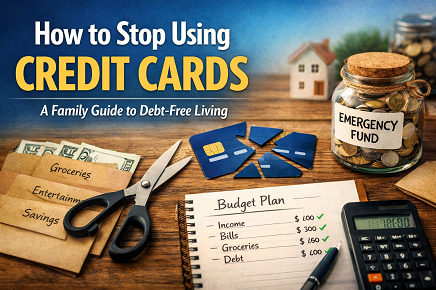
- Choose categories like groceries, eating out, fun money.
- Withdraw cash.
- Put each amount in a labeled envelope.
- When the cash is gone, you stop spending.
No exceptions.
This method works because it creates friction. Swiping a card feels painless. Handing over cash feels real.
Many families stop using credit cards just by switching to cash envelopes for problem areas.
Step 5: Build an Emergency Fund Fast
Most people use credit cards for emergencies.
So replace the card with cash.
Start small:
- First goal: $1,000 emergency fund.
- Long-term goal: 3–6 months of expenses.
Keep it in a separate savings account.
When your car breaks down or a bill pops up, you use your emergency fund. Not your credit card.
This is how you break the cycle.
Step 6: Pay Off Credit Card Debt the Smart Way
If you already have balances, you need a plan.
Two proven methods:
Debt Snowball
- Pay off smallest balance first.
- Gain momentum.
- Move to the next.
Debt Avalanche
- Pay highest interest rate first.
- Save more money long term.
Both work. The best method is the one you stick with.
If you’re asking how to pay off credit card debt fast, the answer is simple:
- Stop adding new charges.
- Pay more than the minimum.
- Add extra income if possible.
- Sell unused items.
- Cut unnecessary subscriptions.
Progress comes from consistency.
Step 7: Replace Credit Cards With Better Systems
You don’t just remove credit cards. You replace them.
Good alternatives to credit cards include:
- Debit cards
- Prepaid cards
- Sinking funds
- Automatic bill pay from checking
- Separate accounts for spending categories
A sinking fund is money saved for specific expenses like:
- Car repairs
- Holidays
- Back-to-school
- Home maintenance
When those expenses come, you already have the money.
No credit needed.
Step 8: Use Budgeting Apps the Right Way
Budgeting apps can help if you use them properly.
Some of the best budgeting apps 2026 focus on:
- Real-time tracking
- Category limits
- Alerts when spending is high
- Goal tracking
But remember: an app doesn’t fix bad habits.
Use it as a tool. Not a crutch.
Check your budget weekly. Adjust when needed.
That’s how you stay off credit cards long term.
Step 9: Stop Reward Point Thinking
Rewards are designed to make you spend more.
Cash back feels good. Travel points feel exciting.
But if you carry a balance, interest wipes out any rewards.
If you truly want to stop using credit cards, stop chasing points.
Debt freedom is worth more than airline miles.
Step 10: Create a Family Accountability System
If you’re married or have kids, involve them.
Have a short weekly money meeting.
Talk about:
- What was spent
- What went over budget
- What went well
- Goals for next week
When everyone knows the plan, it’s easier to stick to it.
If you hide spending, you’ll go back to credit cards.
Transparency keeps you accountable.
Step 11: What About Your Credit Score?
Many people worry about this.
Here’s the truth:
Closing credit cards can lower your score temporarily.
But staying in credit card debt hurts more long term.
If you want to maintain credit without using cards:
- Keep one card open.
- Use it for one small bill.
- Pay it in full every month.
That’s responsible use without dependence.
But if credit cards cause stress or overspending, cutting them completely may be better for you.
Your financial peace matters more than a few points.
Step 12: Handle Online Shopping Without Credit
Online shopping is a big trigger.
Do this instead:
- Remove saved cards from websites.
- Use debit only.
- Wait 24 hours before buying non-essentials.
- Keep a “wish list” instead of checking out immediately.
Impulse spending drops when you slow down.
That’s how you stop relying on credit cards for convenience purchases.
Step 13: Plan for Big Purchases in Advance
Large expenses are where many people relapse.
Instead of financing:
- Break the total into monthly savings goals.
- Save into a sinking fund.
- Buy when you have cash.
It feels slower.
But it builds discipline and long-term stability.
Common Mistakes When Trying to Quit Credit Cards
Avoid these:
- Keeping cards “just in case” without a plan.
- Not building an emergency fund.
- Ignoring small impulse purchases.
- Paying minimums only.
- Using Buy Now Pay Later as a substitute.
BNPL is still debt. It doesn’t solve the root issue.
What Happens When You Stop Using Credit Cards?
Here’s what most families notice:
- Less stress
- Better sleep
- More awareness of spending
- Faster savings growth
- Clearer financial goals
You feel in control.
And that changes everything.
Final Thoughts: Start Today
If you want to stop using credit cards, start simple.
Pick one action today:
- Remove cards from your wallet.
- Create a zero-based budget.
- Start a $1,000 emergency fund.
- Set up cash envelopes.
- Make a debt payoff plan.
You don’t need a perfect system.
You need consistent action.
Credit cards are tools. But for many families, they create more problems than benefits.
Freedom comes from living below your means, planning ahead, and using cash you already have.
Start today.
And don’t look back.
How can I stop using credit cards immediately?
To stop using credit cards immediately, remove them from your wallet, delete saved card details online, and switch to debit or cash. Create a zero-based budget and use the cash envelope system for problem categories. Build a small emergency fund so you don’t rely on credit for unexpected expenses.
What is the best way to stop relying on credit cards for everyday expenses?
The best way to stop relying on credit cards is to fix your cash flow. Track spending, cut non-essentials, and assign every dollar a job using a zero-based budget. Use debit for daily purchases and fund sinking funds for irregular expenses like car repairs and holidays.
Should I close my credit cards to stop spending?
Closing credit cards can reduce temptation, but it may temporarily lower your credit score. If overspending is a serious issue, closing accounts can help you quit credit cards faster. Alternatively, keep one low-limit card for emergencies and pay it in full each month.
How do I pay off credit card debt fast?
To pay off credit card debt fast, stop adding new charges and choose a strategy like the debt snowball or debt avalanche. Pay more than the minimum, reduce expenses, and use extra income toward balances. High credit card APR makes quick repayment critical.
Is using debit better than credit cards?
Using debit is better if you struggle with overspending or carrying balances. Debit limits spending to money you already have, which prevents interest charges and debt buildup. Credit cards only make sense if you pay the full balance monthly and avoid high APR fees.
What are the best alternatives to credit cards?
Strong alternatives to credit cards include debit cards, prepaid cards, sinking funds, and automated savings accounts. Building an emergency fund and planning large purchases in advance removes the need for revolving credit and helps you stop relying on credit cards long term.
Can I rebuild my finances after stopping credit cards?
Yes, you can rebuild your finances after stopping credit cards by creating a consistent budget, paying off debt, and saving regularly. Maintaining one paid-in-full card or using a secured card responsibly can protect your credit score while staying debt-free.
How much emergency savings do I need to avoid credit cards?
Start with a $1,000 emergency fund to cover small unexpected costs. Long term, aim for three to six months of living expenses. A fully funded emergency fund prevents new credit card debt and supports a stable, card-free financial plan.
Why do people struggle to quit credit cards?
People struggle to quit credit cards because of convenience, rewards programs, and cash flow gaps. Swiping feels painless, while cash feels restrictive. Without a clear budget, sinking funds, and spending limits, many return to credit cards despite wanting to stop.