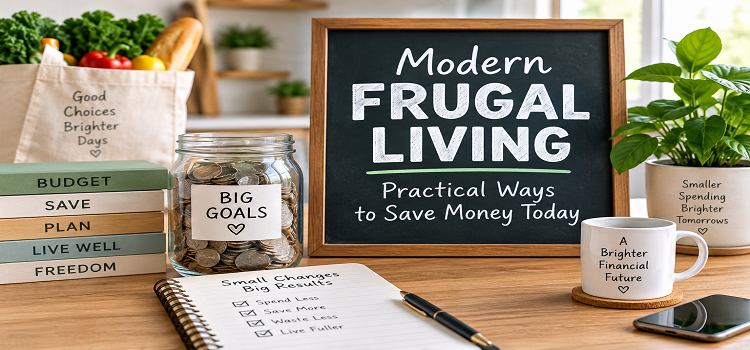
Modern frugal living is about making smarter money choices without making family life feel restrictive. Today, saving money means more than using coupons or skipping coffee. Families now deal with rising grocery costs, subscriptions, online shopping, delivery fees, utility bills, and constant spending temptations. The best approach is to cut waste, control recurring expenses, use helpful tools, and spend more carefully on what truly matters. In this guide, you’ll learn practical ways to save money today, lower household expenses, avoid common money leaks, and build frugal habits that are realistic enough to keep long term.
What Is Modern Frugal Living?
Modern frugal living means using your money, time, and household resources more intentionally so you can lower expenses without lowering your quality of life. It combines traditional frugal habits with modern tools, better spending systems, smarter shopping, and practical ways to reduce waste across groceries, bills, transportation, subscriptions, and everyday family spending.
Frugal living today is not about buying the cheapest option every time. It is about getting better value from the money you already spend.
A family may spend more on a durable pair of shoes because they last longer. They may cancel three unused subscriptions but keep one streaming service everyone enjoys. They may buy store-brand groceries while still paying for convenience when it saves enough time to matter.
The goal is not to remove everything enjoyable from your budget.
The goal is to stop spending money on things that give your family little value.
Modern Frugal Living vs. Being Cheap
The difference comes down to value.
- Frugal families think long term. They consider durability, cost per use, maintenance, and replacement costs.
- Cheap decisions focus only on the lowest price. That can sometimes lead to buying the same item again and again.
- Frugal living protects important priorities. Families can still spend on health, education, experiences, or other things that matter to them.
- Modern frugality uses systems. Budgeting apps, automatic savings, price comparison tools, meal planning, and subscription audits can reduce spending without requiring constant effort.
- Frugal families cut waste before cutting quality of life. Unused memberships, food waste, impulse purchases, late fees, and unnecessary upgrades are usually better places to start.
A simple rule is:
Spend less where it does not matter so you can spend confidently where it does.
That is the foundation of modern frugal living.
What Does Modern Frugal Living Look Like in Everyday Life?
Modern frugal living looks like making practical choices that lower costs without forcing your family to choose the cheapest option every time. It may mean cooking at home more often, buying some things secondhand, keeping fewer subscriptions, automating savings, and paying more when a better-quality purchase saves money over time.
Real-Life Examples of Modern Frugal Living
- Making coffee at home most days but still buying one occasionally
Frugal living does not require eliminating every small pleasure.
The goal is to turn frequent spending into intentional spending.
- Planning five dinners instead of seven perfect meals
Leaving room for leftovers, simple meals, or a busy evening can make meal planning easier to maintain.
A realistic plan often saves more than an ambitious plan that gets abandoned.
- Buying kids’ clothes used but choosing some items new
Secondhand clothing can lower costs significantly, while products such as shoes may sometimes be worth buying new depending on condition, fit, and expected use.
- Keeping one streaming service instead of several
You do not need to cancel every form of entertainment.
Keep the services your family actually uses and rotate others instead of paying for all of them at once.
- Paying more for something that lasts longer
A $70 product that lasts five years may be more frugal than a $25 version that needs replacing every year.
That is why cost per use matters more than price alone.
- Using convenient foods strategically
Frozen vegetables, rotisserie chicken, pre-cooked ingredients, or simple freezer meals may cost slightly more than making everything from scratch.
But they can still save money if they prevent food waste or an expensive takeout order.
- Choosing a low-cost family activity instead of removing fun
A park day, backyard campout, movie night, library trip, or staycation can reduce entertainment costs without making family life feel restricted.
- Automatically saving a small amount every payday
Saving $25 consistently is better than waiting until you can save hundreds.
Modern frugal living works because small systems keep working in the background.
Why Modern Frugal Living Matters More Today
Modern frugal living matters because families face more spending pressure, more recurring costs, and more ways to spend money instantly than in the past. A practical frugal lifestyle helps families control rising household expenses, avoid lifestyle inflation, reduce financial stress, and build savings without depending on extreme cuts.
Today’s budget includes more than rent, food, and utilities.
Families may also pay for streaming services, cloud storage, delivery memberships, apps, online subscriptions, mobile plans, school costs, childcare, and digital entertainment. Small recurring charges can quietly become a large monthly expense.
And one-click shopping makes impulse spending easier than ever.
The Biggest Money Pressures Families Face Today
- Higher grocery costs
Food can take a large share of the family budget, especially when prices rise across staples, meat, dairy, and snacks. - Subscription creep
A few low-cost subscriptions may not feel expensive individually, but together they can cost hundreds of dollars each year. - Convenience spending
Takeout, delivery fees, rush shipping, and last-minute purchases often cost more than planned. - Online impulse buying
Saved cards, shopping apps, limited-time offers, and buy-now-pay-later options can make spending feel painless in the moment. - Lifestyle inflation
When income rises, spending often rises with it. Bigger car payments, upgraded phones, more dining out, and extra subscriptions can quickly absorb a raise. - Household waste
Unused food, forgotten memberships, duplicate purchases, and unnecessary energy use can drain money without improving family life.
What Modern Frugal Families Do Differently
Modern frugal families do not try to cut every expense.
They focus first on the spending that has the biggest impact.
- Cut recurring costs before chasing tiny savings
- Reduce food waste before buying more groceries
- Compare total cost instead of sticker price
- Automate savings before spending the rest
- Plan purchases instead of reacting to sales
- Use technology to track money, not encourage more spending
- Review major expenses regularly
This approach works even if your budget is tight.
You do not need a high income to start. The biggest improvement often comes from simply seeing where your money is going and fixing the leaks that repeat every month.
What Should You Cut First When Trying to Save Money?
When trying to save money, cut large recurring expenses and low-value spending before eliminating small pleasures. Housing, transportation, groceries, insurance, debt interest, dining out, and subscriptions usually offer more savings potential than occasional minor purchases. Fix the expenses that repeat every month first, then work on smaller spending habits.
Best Order to Review Household Expenses
- Housing
Housing is often the biggest household expense.
Major changes are not always possible, but families can still review refinancing options when appropriate, unused space, insurance, property-related costs, or whether future housing choices fit the budget.
- Transportation
Look beyond fuel.
Car payments, insurance, repairs, maintenance, depreciation, parking, and unnecessary trips can make transportation one of the largest areas of family spending.
- High-interest debt
Interest can make past purchases continue costing money month after month.
Reducing expensive debt can free up future cash flow and lower the total amount you pay.
- Groceries
Food is necessary, but grocery spending is also flexible.
Meal planning, reducing waste, switching selected products to store brands, and buying around actual household needs can create recurring savings.
- Insurance
Review auto, home, renters, and other insurance costs periodically.
Compare coverage as well as price so you do not save money by leaving your family underinsured.
- Dining out and food delivery
You do not have to stop eating out completely.
Reducing the frequency of restaurant meals and delivery can create meaningful savings while still leaving room for planned treats.
- Subscriptions and memberships
Cancel anything your household rarely uses.
Even small monthly charges deserve attention because they repeat automatically.
- Utilities
Look for unnecessary energy and water use rather than trying to make the house uncomfortable.
Small efficiency improvements can keep saving money every month.
- Shopping
Reduce unplanned clothing, home, electronics, and online purchases.
A waiting rule can make a large difference here.
- Small discretionary expenses
Coffee, snacks, and other small purchases can matter, but they should not become the entire focus of your budget.
A useful rule is:
Fix a repeating $100 expense before obsessing over an occasional $5 purchase.
15 Practical Modern Frugal Living Strategies That Save Money
The best modern frugal living strategies focus on the biggest areas of family spending first, then use simple systems to prevent money from leaking away. Grocery planning, subscription audits, automatic savings, smarter shopping, lower utility costs, and better spending rules can create meaningful savings without making daily life feel overly restrictive.
Best Modern Frugal Living Ideas to Start With
- Build a budget around your real spending
Start with what your family actually spends, not what you think you should spend.
Review the last 30 days and separate expenses into three groups:
- Fixed costs such as rent, mortgage, insurance, and debt payments
- Flexible costs such as groceries, gas, utilities, and household supplies
- Optional costs such as dining out, subscriptions, entertainment, and impulse purchases
This makes it easier to see where your biggest savings opportunities are.
- Automate savings on payday
Move money to savings before it gets absorbed into everyday spending.
Set up an automatic transfer for:
- Emergency savings
- Sinking funds
- Vacation savings
- Car repairs
- School expenses
- Annual bills
Even a small automatic amount can build consistency over time.
- Audit every recurring expense
Review subscriptions and memberships at least every three months.
Look for:
- Streaming services
- Apps
- Cloud storage
- Delivery memberships
- Gym memberships
- Software subscriptions
- Kids’ programs
- Banking fees
If your family has not used something recently, cancel it.
A $15 monthly subscription costs $180 per year. Canceling three similar services could keep more than $500 in your budget.
- Use the 24-hour purchase rule
Wait before buying anything that is not essential.
For smaller purchases, wait at least 24 hours.
For larger purchases, wait several days or even 30 days.
Ask yourself:
- Do we already own something that works?
- Can we borrow it?
- Can we buy it used?
- Will we still want it tomorrow?
- Is this solving a real problem?
This simple rule can stop many impulse purchases before they happen.
- Plan meals around food you already have
Before making a grocery list, check your pantry, refrigerator, and freezer.
Build several meals around ingredients already at home.
This helps reduce:
- Duplicate purchases
- Food waste
- Last-minute takeout
- Unplanned grocery trips
A pantry-first meal plan is one of the easiest practical ways to save money every week.
- Track the prices of your most-used groceries
You do not need to memorize every price in the store.
Instead, track the regular price of 15 to 20 items your family buys often.
That might include:
- Milk
- Eggs
- Bread
- Chicken
- Rice
- Pasta
- Cereal
- Yogurt
- Fruit
- Household basics
Once you know the normal price, it becomes easier to spot a real sale.
- Use cost per use instead of sticker price
The cheapest product is not always the most frugal choice.
For example:
A $100 item used 200 times costs $0.50 per use.
A $30 item used only 10 times costs $3 per use.
Use cost per use when comparing:
- Shoes
- Clothing
- Furniture
- Appliances
- Kitchen tools
- Electronics
- Kids’ equipment
Modern frugal living is about value, not simply paying less upfront.
- Buy used when depreciation works in your favor
Many household items lose value quickly even when they still work perfectly.
Good secondhand options may include:
- Furniture
- Books
- Toys
- Kids’ clothing
- Sports equipment
- Tools
- Exercise equipment
- Some electronics
But safety-sensitive products should be handled carefully. Some items are worth buying new when condition, hygiene, or safety history cannot be verified.
- Reduce convenience spending
Convenience can be useful, but frequent convenience purchases can quietly become expensive.
Watch spending on:
- Food delivery
- Takeout
- Convenience-store purchases
- Rush shipping
- Pre-cut foods
- Last-minute grocery runs
You do not need to eliminate convenience completely.
Instead, decide where it is worth paying for and where planning ahead can save money.
- Lower utility waste
Small household changes can reduce recurring bills over time.
Try:
- Using LED bulbs
- Washing clothes in cold water when appropriate
- Fixing water leaks
- Adjusting the thermostat
- Turning off unused lights
- Running full dishwasher and laundry loads
- Sealing drafts
- Maintaining heating and cooling systems
The goal is not discomfort. It is reducing energy and water you are paying for but not benefiting from.
- Remove digital shopping triggers
Modern shopping is designed to make buying easy.
Add friction back into the process.
- Delete saved card details
- Turn off shopping notifications
- Unsubscribe from promotional emails
- Remove unused shopping apps
- Avoid browsing sales without a specific need
- Disable one-click ordering where possible
The harder an impulse purchase is to complete, the more time you have to reconsider it.
- Combine errands to reduce transportation costs
Transportation spending includes more than fuel.
Extra trips also create wear, maintenance, and time costs.
Plan errands by location and combine several tasks into one trip when possible.
Also consider:
- Checking tire pressure
- Keeping up with maintenance
- Comparing insurance rates
- Avoiding unnecessary vehicle upgrades
- Carpooling when practical
- Use no-spend periods as a financial reset
A no-spend day, weekend, or week can help reveal how often spending happens from habit rather than necessity.
During a no-spend period, continue paying for essentials such as:
- Housing
- Utilities
- Groceries already planned
- Medicine
- Necessary transportation
Pause optional purchases such as:
- Takeout
- Entertainment shopping
- Clothing
- Online impulse purchases
- Extra treats
The goal is awareness, not punishment.
- Borrow, share, or rent rarely used items
You do not need to own everything your family uses occasionally.
Before buying, consider whether you can:
- Borrow from family
- Use the library
- Rent equipment
- Join a local sharing group
- Swap children’s items
- Borrow tools from neighbors
This works especially well for items you may use only once or twice a year.
- Track the savings you create
Frugal habits become easier to maintain when you can see the results.
Keep a simple monthly savings scorecard.
| Category | Before | After | Monthly Savings |
|---|---|---|---|
| Groceries | $850 | $725 | $125 |
| Dining out | $250 | $140 | $110 |
| Subscriptions | $90 | $45 | $45 |
| Utilities | $240 | $215 | $25 |
| Impulse spending | $180 | $100 | $80 |
| Total | $1,610 | $1,225 | $385 |
Saving $385 per month would equal $4,620 over one year if those changes continued.
Your numbers may be higher or lower, but tracking them shows which modern frugal living strategies are actually worth keeping.
How to Start Modern Frugal Living in 7 Simple Steps
The easiest way to start modern frugal living is to change a few high-impact habits instead of trying to cut everything at once. Start by tracking spending, fixing recurring money leaks, planning food, reducing impulse purchases, and setting automatic savings. A simple seven-step reset makes frugal living easier to follow and more realistic for busy families.
Steps to Start This Week
- Review the last 30 days of spending
Look at your bank and credit card statements.
Do not judge the numbers. Just find patterns.
Pay close attention to:
- Groceries
- Dining out
- Subscriptions
- Online shopping
- Convenience spending
- Transportation
- Household purchases
Mark anything that surprised you.
That is usually where the first savings opportunities appear.
- Choose your top three money leaks
Do not try to fix 20 categories at once.
Pick the three areas where your family is losing the most money.
For example:
- Too much takeout
- Forgotten subscriptions
- Frequent impulse purchases
Fixing a few large leaks usually works better than chasing dozens of tiny savings.
- Set one realistic monthly savings goal
Choose a target that feels possible.
It could be:
- Save $100 this month
- Cut grocery spending by $75
- Reduce takeout by $50
- Cancel $30 in subscriptions
A clear target gives your frugal living plan direction.
- Create one automatic savings transfer
Choose an amount and move it automatically after payday.
Even $20 or $25 per paycheck can help build the habit.
If your income is low or unstable, start smaller.
Consistency matters more than the starting amount.
- Plan five to seven meals before shopping
Check what you already have first.
Then build a grocery list around meals, not random items.
Keep at least one cheap backup meal at home for busy nights.
Examples include:
- Pasta and sauce
- Eggs and toast
- Rice and beans
- Soup and sandwiches
- Frozen homemade leftovers
This can reduce both grocery waste and last-minute takeout.
- Add friction to unnecessary spending
Make impulse purchases harder.
Try:
- Removing saved payment details
- Waiting 24 hours
- Shopping from a list
- Leaving items in the cart overnight
- Avoiding shopping apps when bored
A small delay can stop a purchase that felt urgent in the moment.
- Review your results after one week
At the end of seven days, ask:
- What saved the most money?
- What was easy?
- What felt unrealistic?
- What should we keep?
- What needs to change?
Keep the habits that worked.
Drop the ones that created too much stress for too little savings.
Modern frugal living should make your finances easier to manage, not turn every purchase into a struggle.
Money-Saving Tips That Make Frugal Living Easier
The best money-saving tips make frugal living easier by reducing repeated decisions and helping families spend less automatically. Simple rules around groceries, shopping, bills, and savings can lower monthly expenses without requiring extreme cuts. The goal is to create habits that keep working even during busy weeks or when motivation is low.
Practical Tips to Save More Without Feeling Restricted
- Save first, then spend. Move money to savings before it disappears into everyday expenses.
- Keep one cheap meal ready. A fast backup meal can stop a $40 takeout order.
- Use a shopping list every time. Unplanned purchases add up quickly.
- Compare unit prices. The bigger package is not always cheaper.
- Pause before replacing things. Repair, borrow, or use an alternative first.
- Review insurance once a year. Rates can change, and shopping around may reduce a major recurring expense.
- Keep a low-cost entertainment list. Parks, libraries, movie nights, game nights, and free local events can replace more expensive outings.
- Set a weekly spending limit. Weekly limits can feel easier to control than one large monthly number.
- Use cash or a separate spending account for problem categories. This creates a clear stopping point.
- Keep a small sinking fund for irregular costs. Car repairs, school expenses, holidays, and annual bills are easier to handle when money is already set aside.
- Do not shop because something is on sale. A discounted item still costs money.
- Avoid buying in bulk unless you will use it. Bulk savings disappear when food or household products go to waste.
- Track only the categories that matter most. You do not need a complicated spreadsheet to save money.
- Use rewards only for planned purchases. Cashback is not savings if it encourages extra spending.
- Increase savings when income rises. Even a small raise can strengthen your emergency fund or other goals before lifestyle spending expands.
The Highest-Impact Savings Usually Come First
Families often focus on tiny expenses because they are easy to see.
But larger recurring costs usually matter more.
For example:
Cutting a $5 purchase once a week saves about $260 per year.
Reducing a $100 monthly expense saves $1,200 per year.
Both can help, but the second change has a much bigger impact.
That is why modern frugal living should usually focus first on:
- Housing
- Transportation
- Groceries
- Insurance
- Debt interest
- Childcare
- Subscriptions
- Dining out
Then move to smaller expenses after the biggest categories are under control.
How to Live Frugally When You Are Busy or Exhausted
Frugal living does not have to mean cooking everything from scratch, tracking every penny, or doing every task yourself. When time and energy are limited, paying slightly more for convenience can still be frugal if it prevents takeout, food waste, missed bills, unnecessary purchases, or a system your family cannot realistically maintain.
Low-Energy Frugal Living Ideas That Still Save Money
- Use simple convenience foods
Frozen vegetables, canned beans, pre-cooked rice, bagged salad, or rotisserie chicken may cost more per ingredient than preparing everything yourself.
But a $12 easy dinner can still be frugal if the alternative is $50 in takeout.
- Repeat meals
You do not need a completely different menu every week.
Keeping a few inexpensive breakfasts, lunches, and dinners in regular rotation saves planning time and makes grocery costs easier to predict.
- Use grocery pickup when it reduces overspending
Pickup may have a fee in some situations, but it can also reduce impulse purchases and make it easier to stick to a list.
Compare the fee with how much unplanned spending normally happens inside the store.
- Automate important bills and savings
Automatic payments can reduce missed-payment fees.
Automatic transfers can keep savings moving without requiring another decision each payday.
- Simplify your budget
You do not need dozens of spending categories.
A busy family may do better tracking a few areas such as:
- Fixed bills
- Groceries
- Transportation
- Flexible spending
- Savings
- Keep emergency meals at home
Have two or three meals available that take little effort.
Good options might include pasta, soup and sandwiches, eggs and toast, frozen homemade meals, or rice and beans.
- Choose fewer money-saving systems
You do not need five coupon apps, four cashback accounts, and constant price checking.
Use the tools that create the most savings with the least effort.
- Pay for convenience when the math works
Sometimes spending a little more saves money overall.
The key question is not:
“Is this the cheapest option?”
Ask:
“What will this choice cost us in total?”
Modern frugal living should reduce financial pressure, not create another exhausting job.
Why Modern Frugal Living Can Improve Family Finances Long Term
Modern frugal living can improve family finances by lowering recurring expenses, reducing waste, increasing savings, and making spending more intentional. Over time, these habits can help families build an emergency fund, avoid unnecessary debt, handle irregular expenses more easily, and create more room in the budget for important goals.
The biggest benefit is not one coupon or one no-spend weekend.
It is the compound effect of better decisions repeated every month.
A family that saves $200 per month creates $2,400 in annual breathing room.
A family that saves $400 per month creates $4,800.
That money can support goals such as:
- Building an emergency fund
- Paying down credit card debt
- Covering car repairs
- Saving for school expenses
- Funding a family trip
- Preparing for annual bills
- Increasing retirement contributions
How Frugal Habits Build Financial Stability
- They reduce dependence on credit
When families keep more cash available, unexpected costs are less likely to end up on a credit card.
- They make irregular expenses easier to handle
Sinking funds and automatic savings can prepare for costs that do not happen every month.
- They reduce financial waste
Food waste, late fees, unused subscriptions, and impulse purchases can drain hundreds or thousands of dollars over time.
- They create more flexibility
Lower monthly expenses give families more room when income drops, bills rise, or priorities change.
- They make financial goals more realistic
Saving for a vacation, emergency fund, debt payoff, or major purchase becomes easier when extra money is created intentionally.
Modern frugal living is especially useful for families living paycheck to paycheck because even small monthly savings can create more control.
You do not need a high income to start.
The goal is to improve the gap between what comes in and what goes out.
And the wider that gap becomes, the more options your family has.
Is It Actually Frugal? Use This 5-Question Test
A purchase or money-saving decision is truly frugal when it lowers total costs, provides enough value, and fits your family’s real needs. Looking only at the lowest price can lead to wasted money, poor-quality purchases, extra travel, or repeated replacements. Use these five questions before deciding whether something is genuinely frugal.
Ask These Questions Before Spending
- Will this reduce our total cost?
Look beyond today’s price.
Include replacement costs, maintenance, fees, fuel, time, and anything else the decision may require.
- Will we actually use it?
A bargain is still wasted money if it sits unused.
This matters especially for bulk food, memberships, kitchen gadgets, clothing, and subscription services.
- Does it save meaningful time or effort?
Your time has value.
A slightly more expensive option may make sense if it consistently prevents a much more expensive alternative.
- Could the cheaper choice create another expense later?
Think about durability, repairs, safety, maintenance, and replacement.
Buying the lowest-priced product repeatedly is not always frugal.
- Does this support something important to our family?
A frugal budget should reflect priorities.
Cut aggressively from things you do not value so you have more room for the things you do.
Cheap vs. Frugal Choices
| Situation | Cheapest Choice | More Frugal Choice |
|---|---|---|
| Shoes | Buy the lowest-priced pair | Choose durable shoes with a lower cost per wear |
| Dinner | Skip planning and hope for the best | Keep an inexpensive backup meal at home |
| Grocery sale | Drive far for a tiny discount | Consider fuel, time, and total savings |
| Appliance | Buy only by sticker price | Compare reliability and lifetime cost |
| Entertainment | Cancel everything | Keep one option the family regularly uses |
| Bulk food | Buy the biggest package | Buy the amount the family will actually finish |
The cheapest choice and the frugal choice are sometimes the same.
But not always.
The better goal is to get the most useful value from every dollar.
Modern Frugal Living Tools and Trends Worth Using
Modern frugal living is easier when families use technology to reduce waste, track spending, compare prices, and automate good money habits. Budgeting apps, digital coupons, price alerts, subscription trackers, cashback tools, and automatic transfers can save time and money, but they work best when they support planned spending instead of encouraging more purchases.
Best Modern Tools for Frugal Families
- Budgeting apps
A good budgeting app can show where money is going and help families spot overspending faster.
Useful features may include:
- Automatic expense tracking
- Spending categories
- Savings goals
- Bill reminders
- Shared family budgets
The best tool is the one your family will actually use consistently.
- Grocery price comparison tools
Price-checking tools can help compare common household items across stores.
They are most useful for:
- Meat
- Pantry staples
- Cleaning products
- Diapers
- Household basics
But do not drive across town to save a few cents. Always consider fuel and time.
- Cashback and coupon apps
Cashback can reduce the cost of purchases you were already planning to make.
Use these tools carefully.
A $5 reward is not a saving if it encourages you to spend $40 you would not have spent otherwise.
- Subscription trackers
Subscription tools can help identify recurring charges that are easy to forget.
Review them regularly and ask:
- Do we still use this?
- Is there a cheaper plan?
- Can we pause it?
- Can we share one service instead of paying for several?
- Automatic savings tools
Automation is one of the strongest modern frugal living strategies because it removes the need to remember every transfer.
You can automate:
- Emergency savings
- Sinking funds
- Vacation savings
- Retirement contributions
- Annual bill funds
- Price alerts and wish lists
Instead of buying immediately, add nonessential items to a wish list and wait for a better price.
This works especially well for:
- Electronics
- Appliances
- Clothing
- Furniture
- Gifts
The waiting period also helps you decide whether you still want the item.
Modern Frugal Living Trends to Watch
Frugal living keeps changing because the way families spend money keeps changing.
Some current trends include:
- More automatic subscriptions
- More digital payment options
- Buy-now-pay-later services
- Dynamic online pricing
- Resale marketplaces
- Refurbished products
- AI-assisted budgeting
- Digital meal planning
- Online grocery comparison
- Community sharing groups
These tools can help, but they can also make spending easier.
The best rule is simple:
Use technology to create more control, not more temptation.
If a tool saves money, reduces waste, or makes budgeting easier, it may be worth using.
If it adds another subscription, pushes constant deals, or encourages unnecessary purchases, it may be working against your frugal goals.
Common Frugal Living Mistakes That Can Cost You More
Frugal living can backfire when families focus only on the lowest price and ignore quality, time, safety, waste, or long-term costs. The smartest approach is to save where it makes sense while avoiding choices that create bigger expenses later. Modern frugal living should improve your finances, not make everyday life harder.
Mistakes to Avoid
- Buying something only because it is on sale
A discount does not automatically make a purchase smart.
If you did not need the item before seeing the sale, you may not need it now.
- Choosing the cheapest option every time
Low price and good value are not always the same thing.
A cheap product that breaks quickly may cost more after replacements.
- Stockpiling too much food
Bulk buying can save money, but only when your family will actually use the food before it expires.
Food waste can erase the savings.
- Driving too far for small discounts
Saving $3 on groceries does not help much if you spend extra fuel and time getting there.
Compare the total cost, not just the shelf price.
- Using cashback as an excuse to spend
Rewards should lower the cost of planned purchases.
They should not create new purchases.
Spending $100 to earn $5 back still means you spent $95.
- Cutting important maintenance
Skipping oil changes, dental care, home repairs, or routine maintenance may save money today but create much larger expenses later.
Frugal living should prevent expensive problems, not delay them.
- Making your budget too restrictive
A plan that allows no flexibility can be difficult to maintain.
Leaving a small amount for fun, treats, or family activities can make long-term frugal habits easier to follow.
- Ignoring your time
Some money-saving tasks take more time than the savings are worth.
Spending two hours to save $4 may not be the best use of your time when another change could save $50 in a few minutes.
- Focusing on tiny expenses while ignoring big ones
Cutting small purchases can help, but larger recurring costs often deserve attention first.
Review housing, transportation, insurance, groceries, debt interest, and subscriptions before obsessing over pennies.
- Treating frugal living like a temporary punishment
Extreme cuts may work for a short challenge, but sustainable frugal living needs to fit real family life.
The best system is one you can continue for months and years.
A Better Rule for Every Frugal Decision
Before making a money-saving choice, ask:
- Will this actually lower our total cost?
- Will we use what we buy?
- Is the quality good enough?
- Could this create a bigger expense later?
- Is the time required worth the savings?
- Does this fit our family’s priorities?
If the answer still makes sense, it is probably a good frugal choice.
That is what separates modern frugal living from simply spending as little as possible.
What is the best way to start living frugally?
The best way to start living frugally is to review your recent spending and find the three areas where money is leaking most often. Start with recurring costs, groceries, takeout, and impulse purchases. Then set one small savings goal and build from there instead of trying to change everything at once.
How can a family save money every month?
A family can save money every month by cutting unused subscriptions, meal planning, reducing food waste, limiting takeout, comparing insurance, lowering utility waste, and automating savings. The biggest results usually come from recurring expenses because one change can keep saving money every month without requiring constant effort.
What expenses should families cut first?
Families should usually cut expenses that are both recurring and low value. Good places to start include unused subscriptions, excessive dining out, impulse shopping, delivery fees, expensive phone plans, banking fees, and unnecessary memberships. After that, review larger costs such as groceries, insurance, transportation, and debt interest.
How can I live frugally without feeling deprived?
You can live frugally without feeling deprived by cutting spending that adds little value while protecting the things your family enjoys most. Keep room in the budget for small treats, hobbies, or family activities. Sustainable frugal living works better when it feels intentional instead of restrictive.
Is frugal living worth it if you already earn a good income?
Yes. Frugal living can still be useful with a good income because it helps prevent lifestyle inflation and directs more money toward savings, investing, travel, debt payoff, or other goals. Higher income creates more opportunities, but intentional spending helps make sure those extra dollars actually improve your financial position.
What are the easiest ways to save money fast?
The easiest ways to save money fast are to cancel unused subscriptions, pause takeout, shop from a list, delay nonessential purchases, reduce impulse spending, and plan meals from food already at home. These changes can lower spending quickly without requiring major lifestyle changes.
How much money can frugal living save?
The amount varies by household, but even modest changes can add up. Saving $200 per month equals $2,400 per year, while saving $400 per month equals $4,800. The biggest results usually come from reducing recurring expenses, improving grocery habits, and controlling convenience spending.
Can frugal living help families living paycheck to paycheck?
Yes. Frugal living can help families living paycheck to paycheck by creating small amounts of breathing room and making spending more predictable. Start with realistic cuts, avoid extreme restrictions, and focus on recurring money leaks. Even small savings can help build an emergency cushion and reduce dependence on credit.
What is the difference between frugal living and being cheap?
Frugal living focuses on value, while being cheap focuses mainly on the lowest price. A frugal person may pay more for something that lasts longer, saves time, or reduces future costs. The goal is not to spend as little as possible. It is to spend wisely and avoid waste.
What are the best modern frugal living habits?
The best modern frugal living habits include tracking spending, automating savings, meal planning, reducing food waste, reviewing subscriptions, using a 24-hour purchase rule, buying used when it makes sense, comparing total cost, and reviewing major household expenses regularly.
Final Thoughts on Modern Frugal Living
Modern frugal living works best when families focus on better systems instead of constant sacrifice. The goal is to reduce waste, control recurring expenses, spend more intentionally, and build habits that keep saving money month after month. Small changes can become meaningful savings when they are repeated consistently.
You do not need to cut everything.
Start with one change that can make a real difference this week.
Cancel an unused subscription. Plan meals before shopping. Set up an automatic savings transfer. Delay one unnecessary purchase. Review one major monthly bill.
Then track what you save.
The best frugal lifestyle is not the strictest one. It is the one your family can keep using long term.