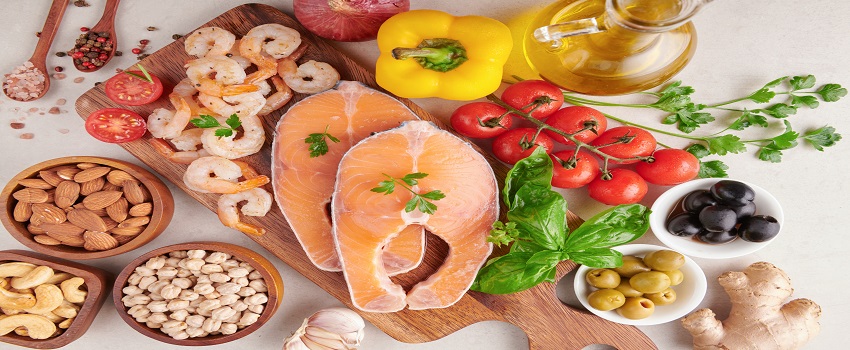
Budget-friendly Mediterranean diet plan ideas show that eating healthy doesn’t have to be expensive. And it doesn’t have to be complicated either. The Mediterranean diet proves both points.
This way of eating has been around for decades, but it keeps evolving. Families today use it to eat better, spend less, and simplify meals. You don’t need fancy ingredients. You don’t need imported foods. You just need a smart plan.
Here’s how to follow a Mediterranean diet on a budget without stress.
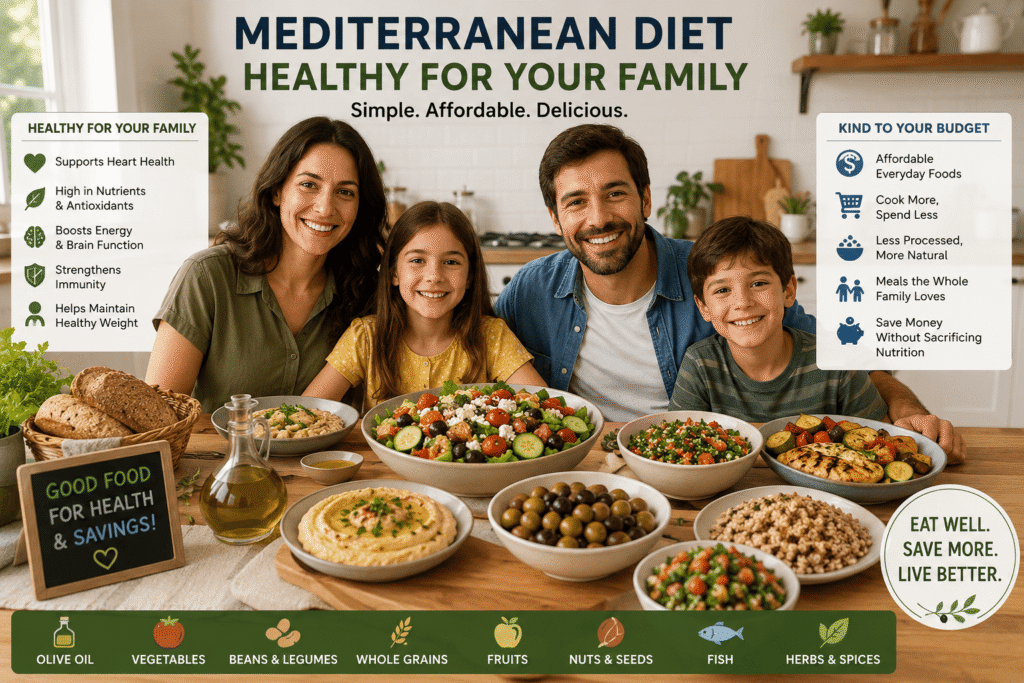
Healthy eating styles can fit into cheap healthy meals for families without overspending.
Why Families Are Switching to the Mediterranean Diet
More families are moving toward Mediterranean-style eating because it combines healthy meals with practical grocery spending. Instead of relying on expensive packaged foods, the Mediterranean diet focuses on simple ingredients that can be used in multiple meals throughout the week.
Families also like this approach because meals are flexible. A pot of lentil soup, rice and vegetables, or pasta with olive oil can feed several people without increasing food costs.
Over time, this style of eating can help households:
- Reduce processed food spending
- Simplify weekly meal planning
- Waste less food
- Cook more meals at home
This makes the Mediterranean diet one of the most realistic long-term eating styles for busy families.
Budget Mediterranean Diet Meal Prep Tips
Meal prep can make the Mediterranean diet easier and cheaper during busy weeks.
Simple meal prep ideas include:
- Cooking grains in large batches
- Chopping vegetables ahead of time
- Preparing lentils or beans for multiple meals
- Storing portioned snacks like fruit or nuts
- Freezing soups and stews for later
Meal prep reduces food waste and makes home cooking more convenient.
What Is a Budget-Friendly Mediterranean Diet Plan?
A budget-friendly Mediterranean diet plan follows the same principles as the traditional Mediterranean diet but focuses on affordable foods and simple meals. The goal is to eat more vegetables, whole grains, beans, and healthy fats while limiting expensive processed foods and large portions of meat.
Instead of complicated recipes, this approach uses everyday ingredients that are easy to find and easy to cook. Many meals rely on foods like lentils, rice, pasta, eggs, and seasonal vegetables.
This makes the Mediterranean diet one of the most practical ways for families to eat healthy while keeping grocery costs under control.
Core Foods in the Mediterranean Diet
Most meals are built around a few simple food groups:
- Vegetables and fruits
- Beans and lentils
- Whole grains
- Olive oil
- Nuts and seeds
- Yogurt and cheese
- Fish and eggs
- Small amounts of meat
These foods provide fiber, protein, and healthy fats while keeping meals filling and balanced.
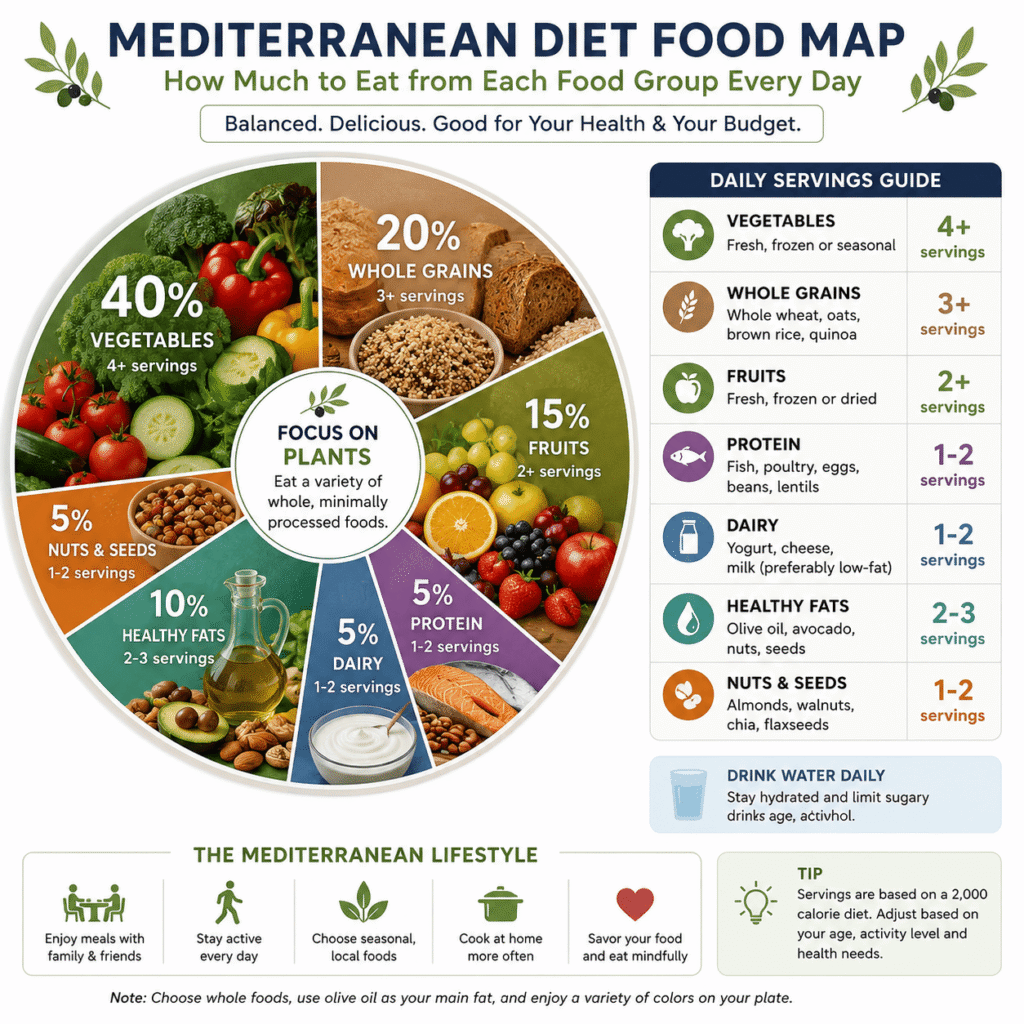
You can simplify preparation using healthy family meal prep ideas
Why the Mediterranean Diet Works for Budgets
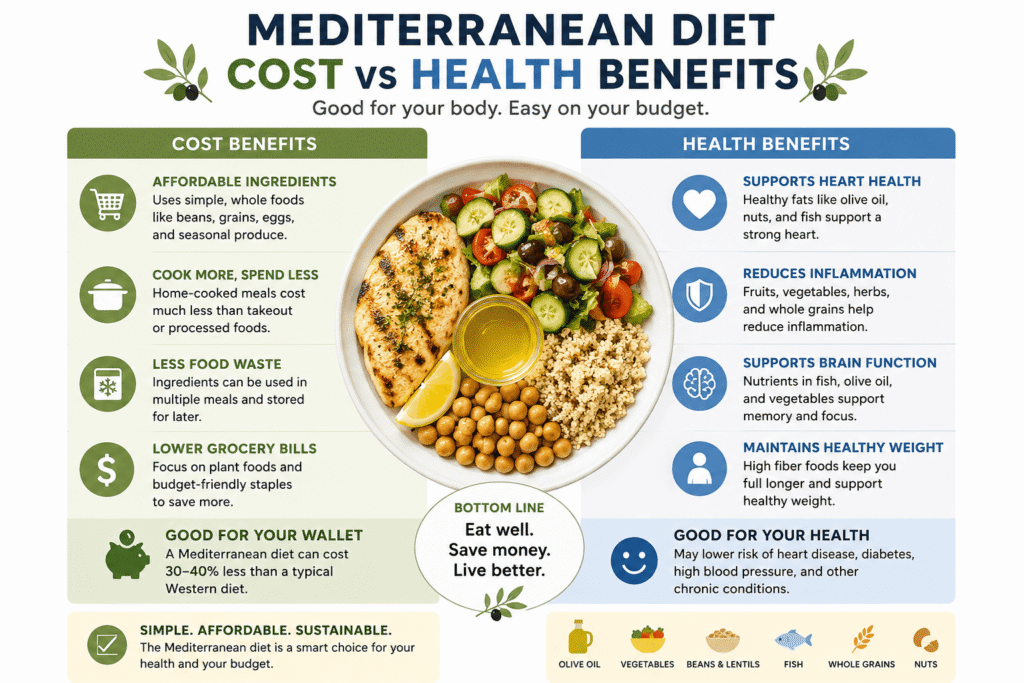
Many people assume healthy diets are expensive. In reality, the Mediterranean diet can cost less than many modern eating habits.
It works well for budgets because:
- Plant foods are cheaper than meat
- Meals rely on simple pantry staples
- Many recipes use the same ingredients
- Cooking at home reduces spending on packaged food
With a little planning, families can build a Mediterranean diet plan that supports both health and a reasonable grocery budget.
Cheapest Mediterranean Foods to Buy
One reason a budget-friendly Mediterranean diet plan works so well is that many of the core foods are naturally inexpensive. The focus is on simple ingredients that are filling, nutritious, and easy to cook in many different ways.
Choosing affordable staples helps families build healthy meals without increasing grocery costs.
Budget vegetables
Vegetables form the base of most Mediterranean meals. Many of the cheapest vegetables are also the most versatile.
Common low-cost options include:
- Cabbage
- Carrots
- Onions
- Potatoes
- Zucchini
- Frozen spinach
These vegetables can be used in soups, salads, pasta dishes, and grain bowls.
Cheap Mediterranean proteins
The Mediterranean diet does not rely heavily on meat. Instead, it uses affordable protein sources that also provide fiber and nutrients.
Examples include:
- Lentils
- Chickpeas
- Beans
- Eggs
- Canned tuna
- Sardines
These foods can be used in soups, stews, salads, and simple dinner recipes.
Affordable whole grains
Whole grains are another key part of Mediterranean meals. They provide energy, fiber, and help make meals more filling.
Affordable options include:
- Oats
- Brown rice
- Whole wheat pasta
- Barley
- Couscous
These grains work well with vegetables, beans, and olive oil to create balanced and satisfying meals.
Essential Mediterranean Pantry for Budget Cooking
A strong pantry makes a budget-friendly Mediterranean diet plan much easier to follow. When basic ingredients are always available, you can cook simple meals without making extra grocery trips.
Most Mediterranean recipes rely on a few staple foods that last a long time and work in many dishes.
Core pantry staples
These ingredients form the base of many Mediterranean meals:
- Olive oil
- Canned tomatoes
- Dried beans
- Lentils
- Whole grains
- Garlic and onions
- Vinegar
- Herbs and spices
With these foods in your kitchen, it becomes easier to prepare soups, pasta dishes, grain bowls, and vegetable meals.
Why a pantry system saves money
Keeping a small set of reliable staples helps reduce food costs in several ways.
- Meals can be made without buying extra ingredients
- Pantry foods last longer than fresh items
- Fewer grocery trips reduce impulse spending
- Ingredients can be reused across multiple meals
This simple pantry approach is one reason the Mediterranean diet can work well for families trying to keep grocery spending under control.
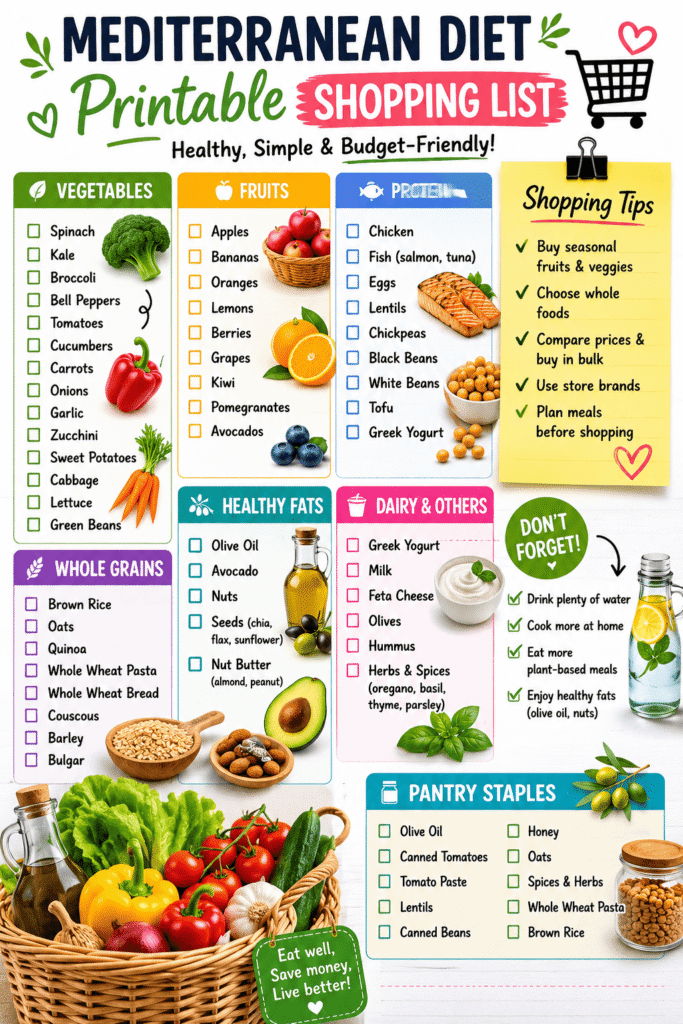
For shopping savings, apply frugal grocery shopping habits
Smart Grocery Shopping Tips for the Mediterranean Diet
A budget-friendly Mediterranean diet plan becomes much easier when grocery shopping is done with a strategy. Small habits at the store can make a big difference in how much you spend each week.
The goal is to focus on simple foods, avoid waste, and buy ingredients that work in multiple meals.
Plan meals before shopping
Start with a basic weekly meal plan. When you know what you will cook, it’s easier to buy only the foods you need. This prevents impulse purchases and reduces food waste.
Buy seasonal produce
Seasonal fruits and vegetables usually cost less and taste better. When produce is in season, stores often lower the price because supply is higher.
Store Brands vs Name Brands
Many store-brand products have similar ingredients and nutrition compared to name brands but cost much less.
Good store-brand Mediterranean staples include:
- Oats
- Rice
- Canned beans
- Pasta
- Frozen vegetables
- Olive oil
Switching to store brands is one of the fastest ways to lower grocery bills without changing your meals.
Use frozen vegetables
Frozen vegetables are a smart budget option. They last longer than fresh produce and still provide important nutrients. Frozen spinach, peas, and broccoli are easy additions to many Mediterranean meals.
Buy dry beans instead of canned
Dry beans are often cheaper and provide more servings than canned beans. They take longer to prepare, but cooking them in larger batches can save money over time.
Avoid specialty Mediterranean products
You don’t need expensive imported foods to follow a Mediterranean diet. Most meals can be made with simple ingredients found in any grocery store.
Mediterranean Diet Grocery List Under $75
A simple grocery list helps keep a budget-friendly Mediterranean diet plan affordable and organized. The goal is to choose foods that can be used in several meals during the week. This reduces waste and stretches the grocery budget.
Budget vegetables
These vegetables are inexpensive and work in many Mediterranean recipes:
- Cabbage
- Carrots
- Onions
- Potatoes
- Zucchini
- Frozen vegetables
Fruits
Fruit provides natural sweetness and nutrients while staying affordable.
- Bananas
- Apples
- Seasonal fruit
Protein sources
These foods provide protein while keeping costs low.
- Dried lentils
- Canned chickpeas
- Eggs
- Canned tuna or sardines
- Plain yogurt
Whole grains
Whole grains make meals more filling and balanced.
- Oats
- Brown rice
- Whole wheat pasta
- Whole grain bread
Healthy fats
Healthy fats are an important part of Mediterranean cooking.
- Olive oil
- Peanuts or almonds
With these ingredients, it’s possible to prepare several simple Mediterranean meals throughout the week without exceeding a modest grocery budget.
Simple 7-Day Budget Mediterranean Diet Plan
A weekly plan makes a budget-friendly Mediterranean diet plan easier to follow. It helps reduce food waste and keeps grocery spending predictable. Many meals use similar ingredients so nothing goes to waste.
Breakfast ideas
Breakfasts in the Mediterranean diet are usually simple and quick.
- Oatmeal with banana or apples
- Yogurt with oats and fruit
- Eggs with whole-grain toast
Lunch ideas
Lunch often includes leftovers or simple meals built around beans and vegetables.
- Lentil soup with bread
- Chickpea salad with olive oil and lemon
- Leftover dinner meals
Dinner ideas
Dinner is usually the largest meal and focuses on vegetables, grains, and plant proteins.
- Vegetable pasta with tomato sauce
- Rice with beans and sautéed vegetables
- Egg and vegetable skillet
- Roasted vegetables with grains
- Baked fish with salad once or twice a week
Snacks
Snacks are simple and based on whole foods.
- Fruit
- Yogurt
- Nuts
- Boiled eggs
This type of weekly meal plan keeps cooking simple while helping families stay consistent with a Mediterranean diet on a budget.
Cheap Mediterranean Meals Under $3 Per Serving
One of the biggest advantages of a budget-friendly Mediterranean diet plan is how inexpensive many meals can be. Most traditional Mediterranean dishes rely on beans, grains, vegetables, and olive oil, which keeps the cost per serving low.
These simple meals are filling, nutritious, and easy to prepare.
Lentil vegetable soup
Lentil soup is one of the cheapest and most satisfying Mediterranean meals. Lentils cook quickly and provide protein and fiber.
Basic ingredients include lentils, carrots, onions, garlic, tomatoes, and olive oil. A large pot can feed several people and still cost very little.
Chickpea cucumber salad
This simple salad works well for lunch or a light dinner.
Chickpeas are mixed with cucumber, lemon juice, olive oil, and herbs. The ingredients are inexpensive and require very little preparation.
Mediterranean rice and beans
Rice and beans create a balanced meal with protein, fiber, and energy.
Brown rice is cooked with beans, garlic, olive oil, and vegetables like onions or peppers. It’s simple, filling, and budget friendly.
Tomato garlic pasta
Whole wheat pasta with tomatoes, garlic, olive oil, and herbs is a classic Mediterranean meal. It requires only a few ingredients but delivers plenty of flavor.
Vegetable egg skillet
Eggs cooked with spinach, onions, and tomatoes make a quick dinner that is both affordable and high in protein.
Meals like these show that a Mediterranean diet plan can stay nutritious while keeping the cost per serving low.
Batch Cooking Saves Even More Money
Batch cooking is one of the best strategies for a budget-friendly Mediterranean diet plan. Cooking larger portions once or twice a week reduces both cooking time and grocery waste.
Meals that work well for batch cooking include:
- Lentil soup
- Rice and beans
- Vegetable pasta
- Chickpea stew
- Roasted vegetables
Extra portions can be refrigerated or frozen for quick lunches and dinners later in the week.
Mediterranean Diet Plan for Beginners on a Budget
Starting a Mediterranean diet plan can feel overwhelming at first. The easiest approach is to begin with simple meals and affordable ingredients. You don’t need complicated recipes or expensive foods to follow this way of eating.
Focus on a few basic habits and build from there.
Start with simple meals
Choose meals that use only a few ingredients and are easy to prepare.
Examples include:
- Oatmeal with fruit
- Lentil soup
- Vegetable pasta
- Rice with beans and vegetables
- Eggs with whole-grain toast
These meals are inexpensive and easy to repeat during the week.
Build meals around vegetables
Vegetables should make up a large part of each meal. Affordable options like cabbage, carrots, onions, potatoes, and frozen vegetables work well in many dishes.
Use beans and lentils for protein
Beans and lentils are key foods in the Mediterranean diet. They provide protein, fiber, and nutrients while costing much less than meat.
Common choices include:
- Chickpeas
- Lentils
- Black beans
- White beans
These can be added to soups, salads, pasta, or rice dishes.
Cook more meals at home
Cooking at home is one of the easiest ways to follow a Mediterranean diet on a budget. Homemade meals usually cost much less than restaurant food or packaged meals.
Keep recipes simple
Many traditional Mediterranean meals use only a few ingredients such as vegetables, olive oil, garlic, herbs, and grains. Keeping recipes simple helps save both time and money.
Mediterranean Diet for Families
A budget-friendly Mediterranean diet plan works well for families because the meals are simple, flexible, and easy to share. Instead of cooking different dishes for each person, families can prepare one meal and adjust portions if needed.
Most Mediterranean meals are built around vegetables, grains, beans, and healthy fats, which makes them both filling and affordable.
Benefits for families
Families often find this way of eating easier to maintain because the meals are balanced and practical.
Key benefits include:
- Balanced nutrition for adults and children
- Affordable grocery lists built around simple foods
- Meals that can be cooked in large portions
- Fewer processed foods and packaged snacks
These habits can help families build healthier eating patterns over time.
Making Mediterranean meals kid-friendly
Children can enjoy Mediterranean meals with small adjustments. The same basic ingredients can be used while keeping flavors mild and familiar.
Helpful ideas include:
- Serving vegetables with pasta or rice
- Adding eggs or beans for protein
- Keeping seasonings simple
- Offering fruit or yogurt for snacks
Because many Mediterranean dishes are simple and comforting, they often work well for family meals without needing separate recipes.
How to Reduce Food Costs Even More
Even with a budget-friendly Mediterranean diet plan, a few simple habits can help lower grocery spending even more. Small changes in how meals are planned, cooked, and stored can make a noticeable difference over time.
Cook larger meals
Preparing larger portions allows you to use leftovers for another meal. A pot of lentil soup, vegetable stew, or pasta can easily serve multiple meals.
Repeat simple meals
Repeating a few reliable meals during the week helps reduce food waste. When the same ingredients are used in several dishes, fewer items go unused.
Replace meat with plant protein
Beans, lentils, and chickpeas provide protein at a much lower cost than meat. Using plant proteins more often helps keep meals affordable while still being filling and nutritious.
Freeze extra portions
Freezing leftover meals is a simple way to avoid wasting food. Many Mediterranean dishes like soups, stews, and cooked grains freeze well and can be reheated later.
These small habits make it easier to maintain a Mediterranean diet plan while keeping grocery costs under control.
Mediterranean Diet Foods That Give the Best Value
Some foods provide strong nutrition while staying inexpensive.
Examples include:
- Lentils
- Oats
- Eggs
- Cabbage
- Carrots
- Beans
- Frozen spinach
- Potatoes
These foods help families stretch their grocery budgets while still building balanced meals.
Common Mistakes That Make the Mediterranean Diet Expensive
A budget-friendly Mediterranean diet plan can quickly become expensive if a few common mistakes are made. Many people assume they need specialty foods or complicated recipes, but that isn’t how traditional Mediterranean meals work.
Avoiding these mistakes helps keep the diet simple and affordable.
Buying specialty foods
Many stores sell expensive products labeled “Mediterranean.” These items are not necessary. Most traditional Mediterranean meals use basic ingredients like vegetables, beans, grains, and olive oil.
Using too much meat
The Mediterranean diet is mostly plant-based. Meat is usually eaten in small amounts. Relying heavily on meat can raise grocery costs quickly.
Not planning meals
Shopping without a plan often leads to buying more food than needed. This can increase spending and lead to wasted ingredients.
Wasting fresh produce
Fresh fruits and vegetables can spoil quickly if they are not used in time. Planning meals and using frozen vegetables when needed can help prevent food waste.
Keeping meals simple and focusing on everyday ingredients helps maintain a Mediterranean diet plan without increasing grocery expenses.
What is the cheapest Mediterranean diet food?
Beans, lentils, chickpeas, oats, rice, potatoes, cabbage, and carrots are some of the cheapest Mediterranean foods. They provide protein, fiber, and nutrients while keeping grocery costs low.
Can you follow the Mediterranean diet for under $75 a week?
Yes. A simple Mediterranean diet plan built around vegetables, grains, beans, eggs, and seasonal fruit can often fit within a weekly grocery budget of around $75 depending on location and family size.
What is a simple Mediterranean breakfast?
Common Mediterranean breakfasts include oatmeal with fruit, yogurt with nuts, whole-grain toast with olive oil, or eggs with vegetables. These meals are affordable and quick to prepare.
Is the Mediterranean diet cheaper than other diets?
In many cases it can be. Because the diet focuses heavily on plant foods and home-cooked meals, grocery costs may be lower than diets that rely on processed foods or large portions of meat.
What are simple Mediterranean dinners?
Simple Mediterranean dinners include vegetable pasta, lentil soup, rice with beans and vegetables, roasted vegetables with grains, or fish served with salad and olive oil.
What foods should you avoid on the Mediterranean diet?
A budget-friendly Mediterranean diet plan usually limits highly processed foods, sugary drinks, packaged snacks, fast food, and heavily fried meals. Processed meats like hot dogs, sausage, and deli meat are also reduced. The focus is instead placed on vegetables, whole grains, beans, healthy fats, and simple home-cooked meals.
Can you meal prep Mediterranean diet meals?
Yes. Meal prep works very well with a Mediterranean diet plan because many foods store easily for several days. Soups, lentils, rice, roasted vegetables, pasta, and beans can all be cooked in advance and used in multiple meals during the week. Meal prepping also helps reduce food waste and grocery spending.
Is rice allowed on the Mediterranean diet?
Yes. Rice is commonly included in Mediterranean meals, especially whole grain options like brown rice. Rice is often paired with vegetables, beans, olive oil, or fish to create balanced and affordable Mediterranean meals.
What snacks fit the Mediterranean diet?
Simple Mediterranean diet snacks include fruit, yogurt, nuts, boiled eggs, vegetables with hummus, olives, and whole-grain toast with olive oil. These snacks are filling, affordable, and based on whole foods instead of processed ingredients.
How to Start the Mediterranean Diet Without Changing Everything Overnight
One reason people quit diets is because they try to change too much at once. The Mediterranean diet works better when changes happen gradually.
Start with one or two habits:
- Replace sugary snacks with fruit
- Cook one plant-based dinner each week
- Use olive oil instead of processed sauces
- Add vegetables to more meals
Small changes are easier to maintain long term. Over time, these habits become part of a normal routine.
Conclusion
A budget-friendly Mediterranean diet plan shows that healthy eating doesn’t need to be expensive or complicated. By focusing on simple foods like vegetables, beans, whole grains, olive oil, and affordable proteins, families can prepare balanced meals while keeping grocery costs manageable.
The key is planning ahead, building a small pantry of reliable ingredients, and repeating simple meals during the week. These habits make cooking easier and reduce food waste.
Over time, this approach creates a routine that supports both health and a realistic food budget. With a few smart choices and consistent meal planning, the Mediterranean diet can become a practical and sustainable way for families to eat well every day.