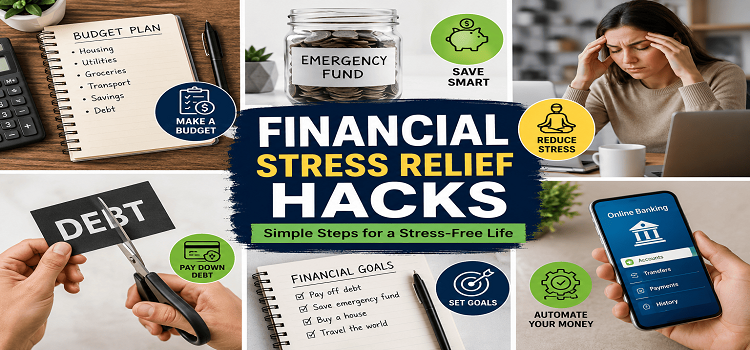
Financial stress relief hacks are not optional anymore. Costs keep rising, income feels stuck, and even small bills can cause pressure. If money is stressing you out daily, this will help.
The problem is simple. Most advice is too generic or unrealistic. It tells you to save more when you barely have enough.
This guide fixes that. You’ll learn financial stress relief hacks that work in real life. Fast actions for immediate relief and simple systems that reduce money stress long-term.
- Pause all non-essential spending for 7 days
- Delay non-urgent purchases
- Use cash for daily expenses to control spending
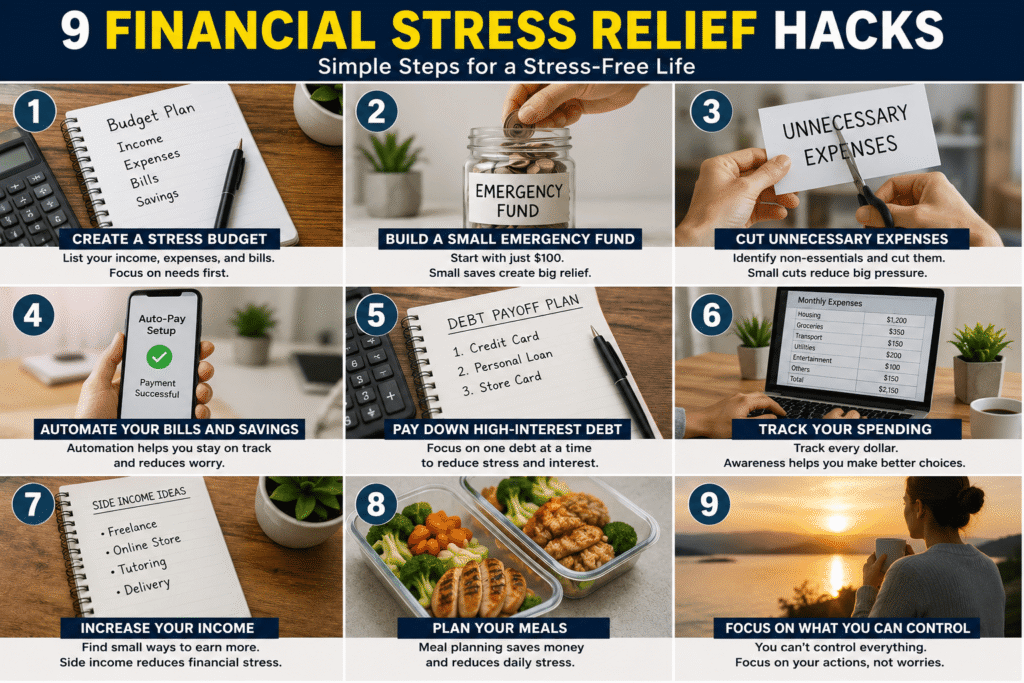
Financial Stress Relief at a Glance
| Financial Stress Problem | Quick Relief Hack |
|---|---|
| Overdue bills | Create a stress budget |
| Living paycheck to paycheck | Cut fixed expenses first |
| No emergency savings | Save your first $100 |
| High-interest debt | Focus on one balance at a time |
| Constant money anxiety | Start a weekly money check-in |
| Unexpected expenses | Build a small emergency buffer |
Why Financial Stress Feels Worse Than Ever
Money stress isn’t just about numbers. It’s about uncertainty.
Rent goes up. Groceries cost more. Utilities jump without warning. And most families don’t have much room to absorb the shock.
Financial stress shows up as:
- Constant worry about bills
- Trouble sleeping
- Tension at home
- Feeling stuck or overwhelmed
When money stress builds, decision-making gets worse. People avoid checking accounts. They delay bills. They ignore problems until they grow.
Relief starts with facing it directly. Calmly. One step at a time.
Start With a “Stress Budget,” Not a Perfect One
Forget complicated budgets. You don’t need spreadsheets or strict rules.
You need a stress budget. This focuses on survival first.
Do this:
- List only essential expenses
- Housing
- Food
- Utilities
- Transportation
- Minimum debt payments
Ignore everything else for now.
This gives clarity. And clarity reduces anxiety fast. Once you see the real numbers, fear drops. You stop guessing.
Even a rough list is better than avoidance.
Cut Financial Stress by Reducing Monthly Pressure
The fastest relief comes from lowering fixed expenses.
Look at:
- Streaming services
- Subscriptions
- Unused apps
- Gym memberships
- Insurance add-ons
Cancel anything that isn’t necessary right now.
Then call providers.
- Ask for lower internet rates
- Negotiate phone plans
- Request hardship programs for utilities
Many companies will reduce bills if you ask. Especially if you mention financial hardship.
Less monthly pressure equals less daily stress.
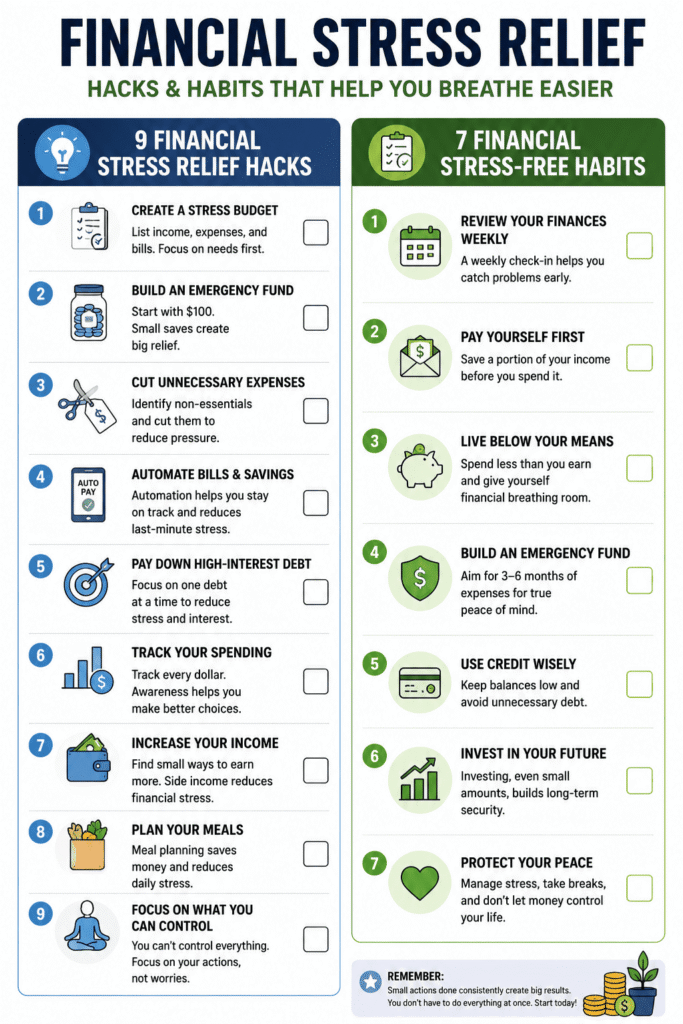
Financial Stress Symptoms Most People Ignore
Financial stress doesn’t always look obvious. It builds slowly and affects daily life.
Watch for:
- Checking your bank account multiple times a day
- Avoiding bills or messages
- Feeling anxious before spending money
- Arguing about money more often
- Trouble sleeping due to money worries
These signs matter. Recognizing them early helps you take control before things get worse.
Financial Stress Relief Hacks for Low Income Households
Financial stress hits harder when income is tight. Most advice ignores this reality.
Focus on:
- Protecting essentials first, not saving everything
- Reducing fixed costs instead of cutting small expenses
- Using community support or assistance programs
- Prioritizing cash flow over long-term investing
Relief at low income is about stability, not perfection.
Build a Small Emergency Fund (Yes, Even While Broke)
Emergency funds don’t start at thousands.
They start at $100.
That small buffer prevents panic when something breaks. It stops you from reaching for credit cards. It gives mental relief.
Ways to start:
- Save spare change
- Round up purchases
- Set aside tax refunds
- Save one small windfall
Don’t aim for perfection. Aim for progress.
Use Debt as a Stress Target, Not a Shame Point
Debt causes constant background stress. Especially high-interest debt.
The goal isn’t to clear everything at once. It’s to regain control.
Start here:
- List debts from smallest to largest
- Pay minimums on all
- Put extra money toward one debt
This builds momentum. And momentum reduces stress.
If debt feels unmanageable, look into:
- Hardship programs
- Payment plans
- Credit counseling
Ignoring debt increases anxiety. Facing it lowers it.
Automate What You Can to Reduce Mental Load
Financial stress isn’t just about money. It’s about mental exhaustion.
Automation helps.
Set up:
- Automatic bill payments
- Automatic savings transfers
- Payment reminders
This removes constant decision-making. You stop worrying about forgetting bills. You stop checking accounts daily.
Less thinking. Less stress.
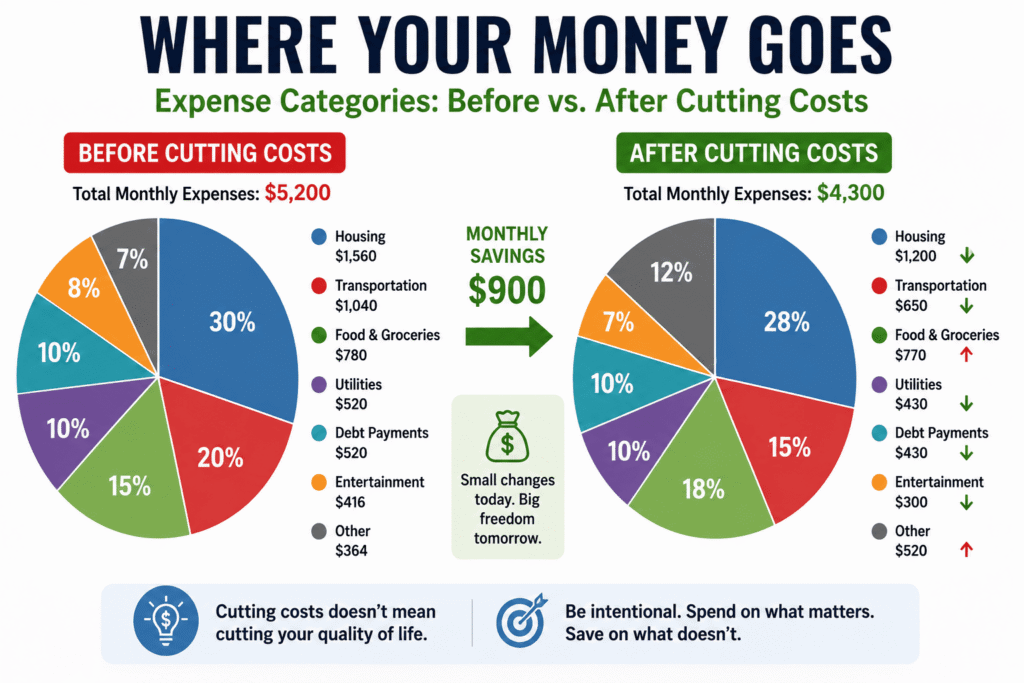
Use Simple Money Tools That Don’t Overwhelm You
You don’t need advanced apps. You need clarity.
Helpful tools:
- Basic budgeting apps
- Spending trackers
- Debt payoff calculators
Use one tool only. Too many tools create more stress.
Track spending once a week. Not daily. Daily tracking increases anxiety for many people.
Increase Cash Flow Without Burning Out
Sometimes cutting isn’t enough. You need more income.
Keep it realistic.
Options that reduce stress instead of adding it:
- Selling unused items
- Short-term freelancing
- Overtime if available
- Temporary side gigs
Avoid anything that drains energy or disrupts family life long-term.
Extra income should relieve pressure, not replace it.
Reduce Financial Anxiety by Changing How You Think About Money
This matters more than people admit.
Money stress grows when you:
- Avoid looking at numbers
- Compare yourself to others
- Expect instant fixes
Instead:
- Check finances weekly, calmly
- Focus on progress, not perfection
- Stop measuring success by others
Financial relief isn’t about winning. It’s about stability.
Create a Simple Weekly Money Routine
Consistency lowers stress.
Once a week:
- Check balances
- Review upcoming bills
- Update your spending list
Keep it short. Ten minutes is enough.
This routine replaces fear with familiarity. Money stops feeling like a threat.
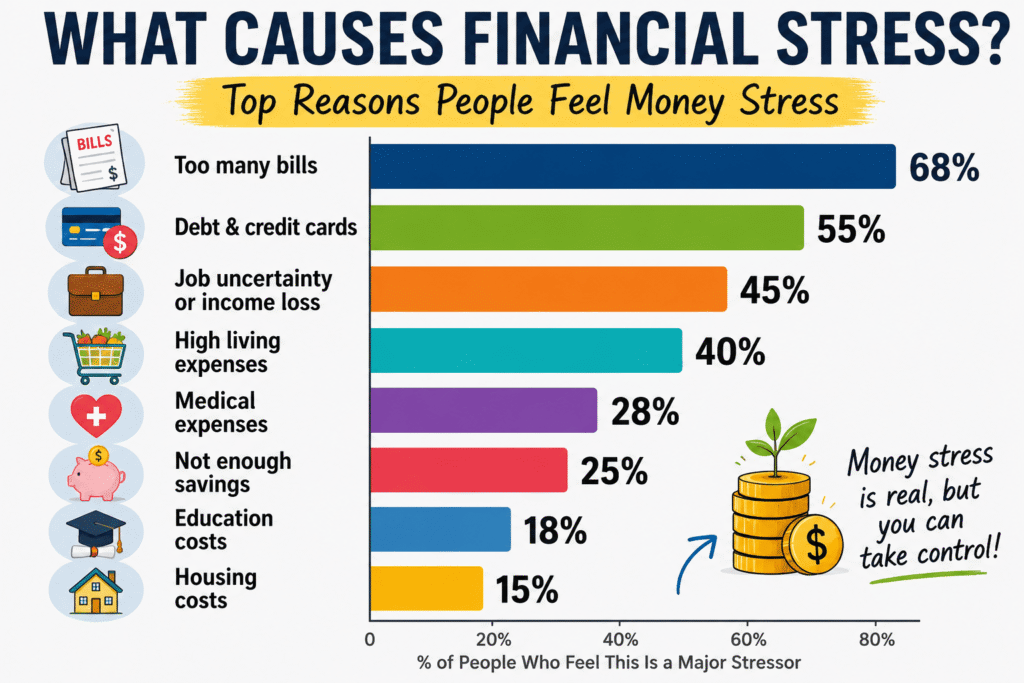
Why Financial Stress Happens
Financial stress usually doesn’t come from one problem. It happens when several money challenges pile up at the same time.
Common causes include:
- Rising living costs
- Credit card debt
- Job loss or reduced income
- Medical expenses
- Lack of emergency savings
- Unexpected bills
- Family financial responsibilities
Understanding the cause of your financial stress makes it easier to choose the right solution. A debt problem needs a different fix than an income problem.
Financial Stress Relief for Families
Families feel money stress harder. Kids notice tension. Partners feel pressure.
Do this:
- Talk openly about finances
- Set shared priorities
- Involve kids in simple savings goals
You don’t need to share everything. Just enough to remove fear.
A calm plan beats silent stress every time.
When to Get Outside Help
If money stress feels unmanageable, support matters.
Consider:
- Nonprofit credit counseling
- Financial coaching
- Employer assistance programs
Getting help isn’t failure. It’s strategy.
Pick one step today. That’s how control starts.
How to Prevent Financial Stress in the Future
Financial stress relief is important, but prevention is even better.
Use these habits to avoid future money pressure:
1. Build a Starter Emergency Fund
Aim for your first $100, then $500, then one month of expenses.
2. Review Your Finances Monthly
A monthly review helps you catch problems before they become emergencies.
3. Keep Fixed Expenses Low
The lower your required monthly expenses, the easier it is to handle financial surprises.
4. Avoid Lifestyle Inflation
When income increases, save part of the extra money instead of increasing spending.
5. Create Multiple Income Streams
Even a small side income can provide extra security during difficult times.
What is financial stress relief?
Financial stress relief is the process of reducing money-related anxiety by gaining control over income, expenses, debt, and savings through simple, practical steps.
How can I reduce financial stress fast?
You can reduce financial stress fast by listing essential expenses, cutting unnecessary costs, automating bills, and creating a basic emergency buffer.
What is the main cause of financial stress?
The main causes of financial stress are high living costs, debt, lack of savings, unstable income, and unexpected expenses.
Does budgeting reduce financial stress?
Yes. Budgeting reduces financial stress by removing uncertainty and helping people make clear decisions about their money.
How much money do you need to stop financial stress?
There is no fixed amount, but even $100–$500 in emergency savings can significantly reduce financial stress.
Can financial stress affect mental health?
Yes. Financial stress can cause anxiety, depression, sleep problems, poor focus, and relationship strain.
What are simple financial stress relief hacks?
Simple financial stress relief hacks include tracking spending weekly, canceling unused subscriptions, negotiating bills, and automating payments.
How do families deal with financial stress?
Families deal with financial stress by setting priorities, cutting fixed costs, building small savings, and communicating openly about money.
Is debt the biggest source of financial stress?
For many people, yes. High-interest debt creates constant pressure and limits financial stability.
How long does it take to feel relief from money stress?
Many people feel relief within days after creating clarity, cutting expenses, and having a basic plan.
Can low-income households reduce financial stress?
Yes. Financial stress relief depends more on systems and habits than income level.
What is the best long-term solution for financial stress?
The best long-term solution is consistent expense control, emergency savings, debt reduction, and a simple weekly money routine.
Should I get help for financial stress?
If stress feels overwhelming or debt is unmanageable, nonprofit credit counseling or financial coaching can help.
Can financial stress make you sick?
Yes. Financial stress can contribute to anxiety, sleep problems, headaches, fatigue, and other physical and mental health issues.
What is the first step to reducing financial stress?
The first step is understanding your current financial situation. List your income, expenses, debts, and upcoming bills.
Why does money stress feel overwhelming?
Money stress often feels overwhelming because it creates uncertainty. When people don’t know how they will pay future expenses, anxiety increases.
Add youHow do I stop stressing about money every day?r title here
Create a simple plan, automate what you can, track your finances weekly, and focus on small improvements instead of trying to solve everything at once.
Financial Stress Relief Hacks: A Simple Action Plan
If you’re overwhelmed, start here:
Today
- List all essential expenses
- Check account balances
- Identify one expense to cut
This Week
- Create a basic budget
- Automate one bill
- Save your first emergency fund contribution
This Month
- Reduce one debt balance
- Review recurring subscriptions
- Complete four weekly money check-ins
Small actions repeated consistently create lasting financial relief.
Final Thoughts
Financial stress won’t disappear in one day. But it can drop faster than you think when you take control of small things.
Start simple:
- Cut one expense
- Track your money once this week
- Save your first small buffer
These financial stress relief hacks work because they are realistic.