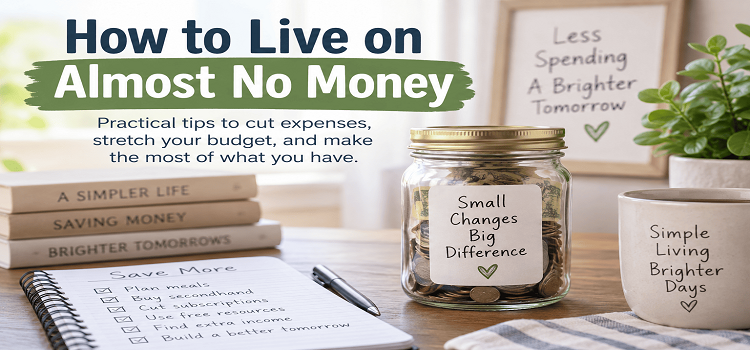
How to live on almost no money becomes an urgent question when income drops, bills rise, or your family is trying to survive on a very tight budget. The goal is not to make life miserable. It is to protect your essentials, cut spending hard, and make every dollar do more work. With the right plan, you can lower food costs, reduce household expenses, avoid unnecessary purchases, and find free or low-cost alternatives for everyday needs. In this guide, you’ll learn practical ways to live with very little money while still covering the basics and building more financial breathing room.
What Does It Mean to Live on Almost No Money?
Living on almost no money means covering your basic needs with very limited income while cutting or avoiding nonessential spending. It usually involves lowering housing, food, transportation, utility, and entertainment costs while using free resources, existing belongings, community support, and careful budgeting to make limited money last longer.
This does not mean going without food, medicine, safe housing, or other necessities. The goal is to separate true needs from wants and protect the expenses that keep your family safe and stable.
What You Should Prioritize First
When money is extremely tight, focus on essentials in this order:
- Safe housing – Keep rent, mortgage, or essential housing costs at the top of your budget.
- Basic food – Build meals around inexpensive staples instead of convenience foods.
- Utilities – Protect electricity, water, heating, and other necessary services.
- Health needs – Keep important medications, medical care, and health expenses in the budget.
- Transportation – Pay for only the transportation needed for work, school, groceries, and essential appointments.
- Minimum financial obligations – Handle critical bills while contacting providers early if you cannot make full payments.
Everything else should be questioned.
Before spending, ask yourself: Do we need this to stay fed, housed, healthy, safe, or able to earn income?
If the answer is no, the expense may be something you can delay, reduce, replace, or remove.
Start With a Bare-Bones Budget
A bare-bones budget is a spending plan that covers only the expenses your family truly needs to survive. When you are living on almost no money, this type of budget helps you see exactly where every dollar must go and quickly identifies bills, subscriptions, and purchases you can reduce or temporarily eliminate.
Steps to Build a Survival Budget
- Write down every source of income
Include paychecks, side income, benefits, child support, or any other reliable money coming into your household.
- List your essential expenses
Start with:
- Housing
- Groceries
- Electricity and water
- Basic transportation
- Medicine and healthcare
- Insurance
- Necessary phone or internet service
- Minimum required debt payments
- Temporarily remove nonessential spending
Look closely at streaming services, takeout, shopping, memberships, entertainment, upgraded phone plans, and other expenses you can live without.
- Give every dollar a job
If you have $1,500 coming in, plan where the entire $1,500 will go before you spend it. This makes it harder for small purchases to quietly drain your budget.
- Review the budget every week
When money is extremely tight, a monthly check-in may not be enough. Spend 10 minutes each week checking your bank balance, upcoming bills, grocery needs, and remaining cash.
Use the “Survival First” Rule
When you cannot afford everything, protect necessities before lifestyle expenses.
Ask:
Does this expense protect our housing, food, health, safety, or ability to earn money?
If not, look for a way to pause it, replace it with a free option, negotiate the cost, or remove it completely.
A survival budget may feel strict at first, but it gives you something more important: control over the little money you have.
Cut Food Costs Without Going Hungry
Food is one of the easiest household expenses to reduce when money is tight, but the goal is to spend less without sacrificing basic nutrition. Focus on cheap staple foods, simple meals, planned grocery trips, and using everything you buy. Small changes can lower your grocery bill quickly.
Best Ways to Spend Less on Food
- Plan meals around what you already have
Check your pantry, freezer, and refrigerator before shopping. Build meals around food you already paid for.
- Buy low-cost staple foods
Good budget staples include:
- Rice
- Beans
- Oats
- Potatoes
- Pasta
- Eggs
- Lentils
- Frozen vegetables
- Bananas
- Peanut butter
- Canned tomatoes
- Store-brand bread
- Cook simple meals at home
Meals like rice and beans, soups, pasta, baked potatoes, egg dishes, and casseroles are often much cheaper than takeout or prepared food.
- Use cheaper protein sources
Meat can take a large part of the grocery budget. Replace some meals with beans, lentils, eggs, canned tuna, or peanut butter.
- Shop with a strict grocery list
Decide what you are buying before you enter the store. Avoid shopping hungry, because it makes impulse spending more likely.
- Choose store brands first
Store-brand basics are often cheaper than name brands and can work just as well for everyday meals.
- Use leftovers on purpose
Plan one or two leftover nights each week. You can also turn extra chicken into soup, rice into fried rice, or vegetables into a casserole.
Try a Cheap Meal Rotation
You do not need a new meal every night.
Choose 7 to 10 inexpensive meals your family likes and repeat them throughout the month. A simple meal rotation makes shopping easier, reduces food waste, and helps you predict your grocery spending.
[✔] Compare the price per ounce instead of only looking at the package price.
[✔] Freeze bread, leftovers, meat, and produce before they spoil.
[✔] Avoid convenience foods when a basic version costs much less.
[✔] Use food pantries or community food programs if your family cannot afford enough food. These resources exist to help families through difficult periods.
When you are trying to live on very little money, reducing food waste can be just as important as finding cheaper groceries.
Lower Housing and Utility Costs
Housing and utilities usually take the biggest share of a tight budget, so even small reductions can make a major difference. You may not be able to change these costs overnight, but you can lower bills by cutting energy use, negotiating services, sharing expenses, or choosing cheaper housing when possible.
Ways to Reduce Housing Expenses
- Consider downsizing
If your rent or mortgage is taking too much of your income, a smaller home or cheaper area may free up hundreds of dollars each month.
- Share housing costs
A trusted roommate, family member, or shared living arrangement can reduce rent, utilities, and internet costs.
- Negotiate before moving
If you are renting, ask whether your landlord can offer a lower rate for a longer lease or early payment. It will not always work, but asking costs nothing.
- Avoid unnecessary home upgrades
Delay furniture, decor, remodeling, and other nonessential purchases until your finances improve.
How to Lower Utility Bills
- Use less electricity
Turn off lights, unplug unused devices, and avoid running appliances when they are not needed.
- Adjust heating and cooling
Heating and air conditioning can drive up energy bills. Small thermostat changes can reduce monthly costs without making your home uncomfortable.
- Wash clothes in cold water
Cold water works for most everyday laundry and reduces energy use.
- Run full loads
Wait until the dishwasher or washing machine is full before using it.
- Reduce water waste
Take shorter showers, fix dripping faucets, and avoid letting water run while brushing teeth or washing dishes.
- Review phone and internet plans
Ask your provider about cheaper plans, discounts, or lower-cost packages. Remove upgrades you do not use.
Ask for Help Before You Miss a Payment
If you cannot afford rent, electricity, heating, or water, contact the provider or landlord as early as possible. Some companies offer payment plans, hardship programs, temporary extensions, or reduced rates for qualifying households.
[✔] Call before the bill becomes overdue.
[✔] Ask specifically about hardship or low-income programs.
[✔] Avoid payday loans or expensive borrowing just to cover a utility bill.
[✔] Check local nonprofit, government, or community assistance programs if your family is facing shutoff or eviction.
Cutting housing costs may require bigger changes than canceling subscriptions, but it can also create the largest long-term savings when you are trying to live on almost no money.
Spend Less on Transportation
Transportation can quietly consume a large part of a tight budget through fuel, insurance, repairs, parking, and car payments. If you are trying to live on almost no money, focus on keeping only the transportation you truly need and replacing expensive trips with cheaper options whenever possible.
Best Ways to Cut Transportation Costs
- Combine errands into one trip
Plan grocery shopping, pharmacy visits, and other errands together. Fewer trips mean less fuel and less wear on your vehicle.
- Walk when the distance is reasonable
Walking costs nothing and can replace short car trips for nearby errands.
- Use public transportation
If buses, trains, or other local transit are available, compare the monthly cost with driving. For some families, public transportation can be much cheaper than maintaining a second vehicle.
- Carpool when possible
Share rides to work, school, activities, or appointments with family, friends, neighbors, or coworkers.
- Avoid unnecessary driving
Before leaving home, ask whether the trip is essential or whether it can wait until another errand.
- Keep your current car longer
A reliable paid-off vehicle is often cheaper than replacing it just because it looks old. Focus on maintenance instead of upgrades.
- Shop around for car insurance
Compare rates periodically and ask about discounts for safe driving, low mileage, bundled policies, or higher deductibles if you can comfortably handle the extra risk.
If You Have Two Cars, Question Whether You Need Both
A second vehicle can mean another insurance bill, registration fee, repair budget, and fuel expense.
If your household can realistically manage with one vehicle, selling the second car may create immediate cash and reduce monthly expenses.
But do the math first. Make sure losing the vehicle will not make it harder to keep a job, get children to school, attend medical appointments, or handle essential responsibilities.
[✔] Keep tires properly inflated to improve fuel efficiency.
[✔] Follow basic maintenance so small problems do not become expensive repairs.
[✔] Compare gas prices when stations are already along your normal route.
[✔] Avoid taking on a new car payment while your budget is under serious pressure.
When money is extremely limited, transportation should help your family reach work, food, school, and essential services without taking more of your income than necessary.
Use Free or Almost-Free Alternatives for Everyday Needs
Using free or almost-free alternatives is one of the fastest ways to stretch a very small budget. Instead of buying something automatically, look for ways to borrow, reuse, repair, swap, or get it free. This works especially well for clothes, entertainment, household items, books, and children’s needs.
Best Free Alternatives to Try
- Use the library
Libraries can provide much more than books. Many also offer:
- Free internet access
- Movies and audiobooks
- Children’s activities
- Classes and workshops
- Computer access
- Digital magazines
- Community events
- Join local free groups
Neighborhood groups, Buy Nothing communities, and local online groups often have people giving away usable items.
You may find:
- Kids’ clothes
- Furniture
- Kitchen items
- Toys
- Books
- Small appliances
- School supplies
- Borrow before buying
If you only need something once or twice, ask family, friends, or neighbors before spending money.
This works well for tools, party supplies, luggage, specialty kitchen equipment, and baby gear.
- Repair what you already own
A small repair may save you from replacing an expensive item.
Learn basic repairs for clothing, furniture, appliances, bicycles, and household items when it is safe to do so.
- Swap instead of shop
Organize clothing, toy, book, or household-item swaps with other families. Everyone clears out things they no longer need while getting useful items for free.
- Choose free entertainment
Family fun does not need to cost much.
Try:
- Parks
- Hiking
- Free community events
- Library programs
- Family game nights
- Picnics
- Bike rides
- Movie nights at home
- Free museums or admission days
Follow a “Use What We Have First” Rule
Before buying anything, check whether you already own something that can do the same job.
Ask:
Can we use, borrow, repair, swap, or get this free before we buy it?
That one question can prevent dozens of unnecessary purchases each month.
[✔] Keep a list of items your family needs instead of buying them immediately.
[✔] Wait a few days before nonessential purchases.
[✔] Check secondhand options before buying new.
[✔] Do not take free items just because they are free. Only bring home things your family will actually use.
When money is almost gone, learning to meet everyday needs without opening your wallet can make a bigger difference than chasing small discounts.
Cut Recurring Bills and Subscriptions
Recurring bills can drain a tight budget because small monthly charges are easy to ignore. When you are trying to live on almost no money, review every automatic payment and keep only the services your family truly needs. Canceling or reducing several small expenses can quickly free up useful cash.
Expenses to Review First
- Streaming services
You probably do not need several paid entertainment subscriptions at the same time.
Keep one, rotate between services, or cancel them completely until your finances improve.
- Phone plans
Check whether you are paying for more data, lines, or features than you actually use.
A cheaper prepaid or basic plan may cover everything you need.
- Internet packages
Call your provider and ask about:
- Lower-cost plans
- Current discounts
- Promotional rates
- Low-income programs
- Removing unnecessary extras
- Unused memberships
Cancel memberships you rarely use, including:
- Gyms
- Subscription boxes
- Premium apps
- Online memberships
- Gaming subscriptions
- Paid newsletters
- Insurance costs
Do not cancel essential insurance just to save money. Instead, compare providers and ask about discounts, bundles, or coverage changes that could safely lower your premium.
- Bank fees
Monthly account fees, overdraft charges, and ATM fees can hurt when every dollar matters.
Look for a checking account with no monthly maintenance fee and avoid services that regularly charge you for basic banking.
Check Your Bank Statement for Hidden Spending
Go through the last two or three months of transactions.
Look for charges you forgot about or services that automatically renewed.
You may find several small payments that seem harmless alone but add up over a full year.
For example, five subscriptions costing $10 each equal $50 a month or $600 a year.
Use a “One In, One Out” Rule
If you decide to add a paid subscription, cancel another one first.
This prevents recurring expenses from slowly growing again.
[✔] Turn off automatic renewals for nonessential services.
[✔] Review subscriptions every three months.
[✔] Ask companies for cheaper plans before canceling.
[✔] Check bills for add-ons you never requested or no longer use.
[✔] Avoid signing up for free trials unless you know exactly when they become paid.
Reducing recurring expenses is powerful because you save the money every month without having to make the same decision again.
Buy Less and Use Secondhand First
Buying less is one of the most effective ways to live on almost no money because every purchase you avoid keeps cash available for essentials. When you truly need something, secondhand options can often cost far less than buying new. The goal is to slow down spending and make every purchase intentional.
Best Ways to Spend Less on Things
- Wait before buying nonessential items
Use a 48-hour waiting rule for small purchases and a longer waiting period for expensive ones.
Many wants disappear once the impulse passes.
- Shop secondhand first
Check thrift stores, local marketplaces, garage sales, consignment shops, and community groups before buying new.
Secondhand can work well for:
- Kids’ clothes
- Furniture
- Kitchenware
- Books
- Toys
- Tools
- Sports equipment
- Home decor
- Use what you already own
Before buying something, look around your home.
You may already have another item that can do the same job.
- Avoid shopping as entertainment
Browsing stores and shopping apps can make unnecessary spending feel normal.
If money is tight, replace shopping trips with free activities instead.
- Buy only when there is a clear need
Ask yourself:
Will this solve a real problem, or do I just want it right now?
If the answer is unclear, wait.
- Choose durable items when replacement is unavoidable
The cheapest product is not always the least expensive over time.
If you must buy something important, compare quality, repairability, and how long it is likely to last.
Try a No-Buy Month
A no-buy month means temporarily stopping all nonessential purchases.
You still pay for necessities such as food, housing, utilities, healthcare, and transportation. But you pause clothes, decor, takeout, entertainment purchases, gadgets, and impulse shopping.
[✔] Write down your no-buy rules before you begin.
[✔] Keep a list of things you wanted to buy but skipped.
[✔] Use what is already in your pantry, closet, and home.
[✔] Put the money you do not spend toward an urgent bill or small emergency cushion.
Living with very little money becomes easier when buying something is no longer your first solution to every problem.
Find Ways to Bring In Extra Money
Cutting expenses helps, but there is a limit to how much you can save. If your income does not cover basic needs, increasing cash flow becomes just as important. Even a small amount of extra income can help pay for groceries, utilities, transportation, or build a small emergency buffer.
Practical Ways to Make Extra Money
- Sell things you no longer use
Look around your home for items you can sell, such as:
- Clothes
- Electronics
- Furniture
- Baby gear
- Tools
- Kitchen items
- Toys
- Sports equipment
Use the money for urgent expenses instead of replacing the items with new purchases.
- Offer simple local services
You do not always need a formal business to earn extra money.
Consider:
- Babysitting
- Pet sitting
- House cleaning
- Lawn work
- Basic handyman help
- Tutoring
- Running errands
- Helping someone move
- Take on extra hours at work
If overtime or extra shifts are available, this may be one of the fastest ways to increase income without starting something new.
- Use skills you already have
Think about what people already ask you for help with.
You may be able to earn money from writing, design, bookkeeping, cooking, repairs, organizing, teaching, or other practical skills.
- Look for flexible side work
Part-time or temporary work can help during a difficult season.
But calculate the real profit after fuel, childcare, platform fees, equipment, and other costs.
- Turn unused space into savings or income
Depending on your situation and local rules, you may be able to rent out storage space, a parking spot, or a spare room.
Only choose options that are safe and practical for your household.
Focus on Income That Pays Quickly
When money is extremely tight, prioritize opportunities that can produce useful cash without large startup costs.
Avoid schemes that require you to buy expensive courses, inventory, equipment, or memberships before you can earn.
[✔] Start with skills and items you already have.
[✔] Check fees and taxes before deciding how profitable an opportunity really is.
[✔] Avoid offers promising easy or guaranteed income.
[✔] Put extra income toward essentials, overdue bills, or a small emergency fund first.
Living on almost no money becomes much easier when you combine strict spending control with even a modest increase in household income.
Use Assistance Programs When You Need Them
Assistance programs can help families cover basic needs when income is too low to handle everything alone. Food support, utility help, healthcare assistance, housing programs, and local charities can reduce immediate pressure. Using available help can give your family time to stabilize finances instead of relying on expensive debt.
Types of Help to Look For
- Food assistance
Depending on where you live, you may qualify for government food benefits, school meal programs, local food banks, or community pantries.
Use these resources when your grocery budget cannot cover enough food.
- Utility assistance
Some programs help with:
- Electricity
- Heating
- Water
- Energy bills
- Past-due utility balances
Contact your utility company directly and ask about hardship programs, reduced rates, or payment plans.
- Housing support
If rent is becoming impossible to pay, look for local rental assistance, housing programs, nonprofit organizations, or emergency shelters before the situation becomes critical.
- Healthcare assistance
Check whether your family qualifies for public health coverage, reduced-cost clinics, prescription discounts, or community health programs.
Do not skip essential medical care simply because money is tight.
- School and child-related programs
Families may qualify for:
- Free or reduced-price school meals
- School supply programs
- Childcare assistance
- After-school programs
- Clothing support
- Transportation assistance
- Local nonprofit and community help
Churches, community centers, charities, and local organizations may provide food, clothing, household items, transportation help, or emergency financial assistance.
Ask for Help Early
Do not wait until you have no food, receive a shutoff notice, or face eviction.
Contact organizations as soon as you know you may struggle to pay.
Many programs have eligibility rules, paperwork, limited funding, or waiting periods, so starting early gives you more options.
[✔] Keep basic documents organized, including income records, identification, bills, and housing information.
[✔] Apply only through official or trusted organizations.
[✔] Be careful with anyone charging money to “guarantee” government assistance.
[✔] Recheck eligibility if your income or household situation changes.
Temporary help can protect your family’s basic needs while you work on reducing expenses, increasing income, and rebuilding financial stability.
How to Start Living on Almost No Money
To start living on almost no money, first protect your essential needs, then cut everything that is not necessary. Build a bare-bones budget, reduce your biggest expenses, use free resources, and look for ways to increase income. The goal is to create stability before trying to improve your finances long term.
Steps to Get Started
- Figure out exactly how much money you have
Add up all income coming into your household.
Then check:
- Bank balances
- Cash on hand
- Upcoming income
- Bills due
- Debt payments
- Essential expenses
You need a clear starting point before making decisions.
- Protect the five basic needs first
Prioritize:
- Housing
- Food
- Utilities
- Healthcare
- Essential transportation
These should come before entertainment, shopping, subscriptions, and other nonessential expenses.
- Create a bare-bones budget
Write down only the expenses you truly need.
If your essential bills are still higher than your income, you need to cut deeper, ask for assistance, increase income, or do a combination of all three.
- Stop unnecessary spending immediately
Pause nonessential purchases for at least 30 days.
This may include:
- Takeout
- New clothes
- Paid entertainment
- Home decor
- Convenience purchases
- Subscriptions
- Impulse shopping
- Lower your three biggest expenses
For most families, these are housing, food, and transportation.
Saving $10 on a subscription helps, but reducing a major expense can change your entire budget.
- Use what you already have
Eat pantry food, wear the clothes you own, use household supplies completely, and repair items before replacing them.
Try to make buying something new your last option.
- Find every free resource available
Check libraries, food banks, community groups, free local events, assistance programs, clothing swaps, and Buy Nothing groups.
The less you need to buy, the further your income can stretch.
- Look for extra income
Once spending is under control, focus on bringing in more money.
Even an extra $50 or $100 can help cover groceries, fuel, or a utility bill when your budget is extremely tight.
- Build a small emergency cushion
Do not wait until you can save thousands.
Start with $100, then aim for $250, $500, and eventually one month of essential expenses.
A small emergency fund can stop minor problems from turning into new debt.
- Review your situation every week
Track what worked, what did not, and what expenses are coming next.
Living on almost no money requires regular adjustments, especially when income or bills change.
Focus on Progress, Not Perfection
You do not need to cut every expense overnight.
Start with the changes that save the most money and protect your family first.
[✔] Make one major money-saving change this week.
[✔] Remove one recurring expense you do not need.
[✔] Find one free replacement for something you normally buy.
[✔] Look for one way to increase household income.
[✔] Review your budget every seven days.
The goal is not to live on almost no money forever. It is to create enough breathing room to get through a difficult period and gradually build a more stable financial situation.
Money-Saving Tips When You Have Almost No Money
When money is extremely tight, the best savings usually come from changing everyday habits rather than chasing tiny discounts. Focus on avoiding waste, planning purchases, lowering recurring costs, and protecting essentials. These small decisions add up and help you keep more cash available for food, housing, utilities, and emergencies.
Simple Ways to Stretch Every Dollar
[✔] Use cash for problem categories. If groceries or personal spending regularly go over budget, set a hard cash limit.
[✔] Plan purchases before leaving home. A list helps reduce impulse spending.
[✔] Cook from your pantry first. Use existing food before buying more.
[✔] Compare unit prices. The largest package is not always the cheapest option.
[✔] Avoid convenience fees. Delivery charges, rush shipping, ATM fees, and service fees can quietly drain a small budget.
[✔] Delay nonessential purchases. Use a 48-hour waiting rule before buying something you do not truly need.
[✔] Pay attention to small leaks. A few $5 or $10 purchases each week can become hundreds of dollars over a year.
[✔] Use free entertainment. Parks, libraries, community events, walks, and home activities can replace paid outings.
[✔] Buy used when it makes sense. Clothes, furniture, toys, books, and household items can often be found much cheaper secondhand.
[✔] Repair before replacing. A simple repair can save you from buying a new item.
[✔] Avoid lifestyle upgrades. If your income increases slightly, keep expenses low until your finances are more stable.
[✔] Check every bill. Look for errors, unnecessary add-ons, or plans you no longer need.
[✔] Use windfalls carefully. Tax refunds, bonuses, gifts, or extra income should go toward urgent bills, debt, or emergency savings before lifestyle spending.
Focus on the Biggest Savings First
Do not spend hours trying to save a few cents while ignoring large expenses.
Start with:
- Housing
- Transportation
- Food
- Insurance
- Utilities
- Debt costs
Cutting $100 from one major expense is usually more useful than saving $1 across dozens of small purchases.
The best money-saving strategy is the one you can repeat every month without making your family’s basic needs harder to meet.
Why Living on Less Can Improve Financial Stability
Living on less can improve financial stability because it reduces the amount of income your household needs each month. Lower expenses create more room for emergencies, debt payments, and savings. It also helps families become more intentional with money and less dependent on constant spending to maintain everyday life.
Benefits of Living With Lower Expenses
- You create more breathing room
When your monthly expenses are lower, a small income drop or unexpected bill is easier to handle.
- You depend less on debt
Families often turn to credit cards when expenses are higher than income.
Reducing spending can lower the need to borrow for everyday costs.
- You can build emergency savings faster
Even small savings become easier when fewer dollars are tied up in recurring expenses.
Start small and increase your emergency fund gradually.
- You become more aware of where money goes
Living on a tight budget forces you to look closely at spending habits.
That awareness can help you spot waste and make better decisions long after your finances improve.
- You learn to separate needs from wants
This is one of the most useful money skills a family can develop.
Needs protect your basic well-being. Wants improve comfort or convenience but can usually wait.
- You become less affected by lifestyle inflation
When income rises, expenses often rise with it.
Keeping some frugal habits even after your financial situation improves can help you save more instead of immediately spending more.
- You gain more control over future choices
Lower fixed expenses can make it easier to change jobs, handle emergencies, pay down debt, or save for larger goals.
Frugality Works Best When It Has a Purpose
Living on almost no money should not become a permanent goal if your family is struggling to meet basic needs.
Use extreme frugality as a tool to:
- Get through a low-income period
- Stop relying on debt
- Catch up on important bills
- Build emergency savings
- Recover after a financial setback
- Prepare for uncertain income
The strongest financial plan combines lower expenses with higher income over time. Cutting costs can create immediate relief, but increasing your earning power is usually what creates lasting financial security.
How can I live on almost no money?
Start with a bare-bones budget and protect housing, food, utilities, healthcare, and essential transportation first. Cut nonessential spending, use free community resources, cook inexpensive meals at home, buy secondhand, and look for extra income. The goal is to lower expenses while keeping your family’s basic needs covered.
What should I stop buying when money is tight?
Start by cutting takeout, subscriptions, impulse purchases, new clothes, entertainment, convenience foods, and unnecessary household upgrades. Keep spending focused on essentials. Before every purchase, ask whether it protects your family’s food, housing, health, safety, or ability to earn income. If not, consider delaying it.
What is the cheapest way to live?
The cheapest lifestyle usually combines low housing costs, simple home-cooked meals, minimal transportation expenses, secondhand purchases, and free entertainment. Sharing housing, avoiding car payments, reducing recurring bills, and using public or community resources can lower expenses further. Your safest option will depend on your family’s needs and location.
How do you survive when your income is not enough?
When income does not cover basic expenses, reduce costs immediately and prioritize necessities. Contact creditors and service providers before missing payments, apply for assistance programs, use food banks if needed, and look for temporary or additional income. If the shortfall continues, larger changes to housing, transportation, or income may be necessary.
Can a family live on one income?
Yes, some families can live on one income, but it depends on earnings, housing costs, family size, debt, childcare, and location. A one-income household usually needs tighter spending, careful meal planning, fewer recurring expenses, and an emergency fund. Run the numbers before making a permanent switch to one income.
How can I eat cheaply when I have very little money?
Build meals around inexpensive foods such as rice, beans, oats, potatoes, eggs, pasta, lentils, frozen vegetables, and store-brand basics. Plan meals before shopping, use leftovers, avoid food waste, and cook at home. If your budget cannot provide enough food, use local food assistance programs.
How do I stop feeling deprived while living on less?
Focus on what your budget still allows instead of only what you are cutting. Use free activities, cook favorite meals at home, borrow instead of buying, and leave room for an occasional low-cost treat when possible. Frugal living is easier to maintain when it still includes simple things your family enjoys.
How long should you live on a bare-bones budget?
Use a bare-bones budget for as long as your finances require it, but review your situation regularly. It works well during job loss, debt payoff, emergencies, or temporary income drops. Once your finances stabilize, slowly add reasonable spending back while keeping the habits that helped you save the most.
Final Thoughts on How to Live on Almost No Money
Learning how to live on almost no money is about protecting your essentials, cutting waste, and making intentional choices with every dollar. Start with the changes that can save your family the most money, then work toward increasing income and building a small emergency cushion so extreme budgeting does not have to be permanent.
You do not need to change everything at once.
Choose one expense to cut this week, put that money toward an essential bill or emergency savings, and build from there.
What is the biggest expense your family is trying to reduce right now? Share it in the comments.