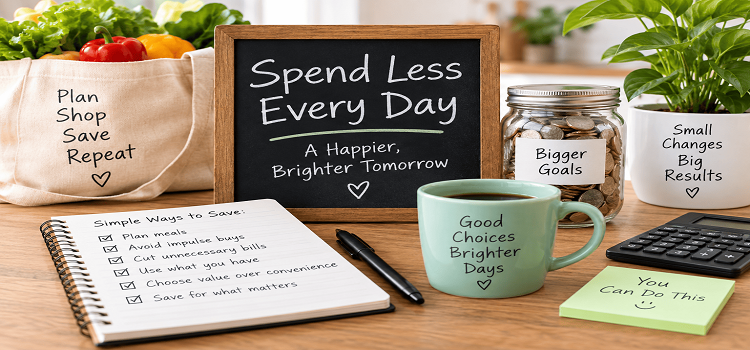
How to spend less money every day starts with small choices that reduce waste without making family life harder. You do not need a strict budget, extreme sacrifices, or hours of planning. Simple habits like checking what you already have, avoiding impulse buys, planning meals, and cutting hidden daily costs can make a noticeable difference over time.
For families, these small savings can free up money for groceries, bills, debt payments, emergencies, and future goals. In this guide, you will learn practical ways to spend less each day, control unnecessary spending, and build habits that help your money go further.
What Does It Mean to Spend Less Money Every Day?
Spending less money every day means making deliberate choices that lower your regular expenses without removing everything you enjoy. It focuses on reducing unnecessary purchases, avoiding waste, comparing costs, and getting more value from the money you already spend. Small daily changes can lead to meaningful monthly and yearly savings.
What Spending Less Really Looks Like
Spending less is not the same as never spending money. The goal is to stop paying for things that add little value to your family.
- Pause before buying something you did not plan for. Give yourself time to decide whether you really need it.
- Use what you already own first. Check your pantry, freezer, closets, and household supplies before shopping.
- Plan purchases instead of reacting to wants. A shopping list can prevent extra trips and impulse spending.
- Compare the total cost, not just the sale price. A cheap product that needs replacing quickly may cost more over time.
- Cut repeated small expenses. Snacks, delivery fees, subscriptions, convenience purchases, and unused services can quietly drain a family budget.
- Spend according to your priorities. Keep money available for the expenses and goals that matter most to your household.
The idea is simple: spend less on things that do not matter so you have more money for the things that do.
Simple Ways to Spend Less Money Every Day
The easiest way to spend less money every day is to control the small purchases that happen automatically. Food, convenience fees, impulse buys, subscriptions, and extra shopping trips can add up quickly. Changing a few daily habits can reduce spending without forcing your family to make major lifestyle changes.
Best Everyday Money-Saving Ideas
- Use a 24-hour waiting rule for nonessential purchases.
When you want something that is not urgent, wait at least one day before buying it. Many impulse purchases lose their appeal once the excitement passes. - Make a shopping list before leaving home.
Decide what you need before entering the store. A simple list helps prevent extra purchases and keeps your spending focused. - Carry water and snacks from home.
Drinks and convenience snacks can cost much more when bought individually. Packing them before leaving home can reduce daily spending. - Check your bank account before spending.
A quick balance check makes you more aware of what you can comfortably afford and helps stop mindless purchases. - Avoid shopping when bored.
Browsing stores or shopping apps for entertainment often leads to purchases you never planned to make. - Use cash for problem spending categories.
If you regularly overspend on takeout, entertainment, or personal purchases, set aside a fixed amount of cash for that category. - Turn off shopping notifications.
Sale alerts, app notifications, and promotional emails encourage spending. Removing them reduces temptation. - Combine errands into one trip.
Fewer trips can mean less fuel use and fewer opportunities to make unplanned purchases. - Bring lunch from home.
Preparing lunch ahead of time can cost far less than buying food every workday. - Cancel purchases before checkout if you are unsure.
Leaving something in your online cart gives you time to decide whether you actually need it. - Choose free entertainment first.
Parks, libraries, community events, family game nights, and free local activities can replace expensive outings. - Set a daily spending limit.
Decide how much you can spend on flexible expenses each day. A simple limit can make spending decisions easier. - Use leftovers before cooking something new.
Eating food already prepared reduces grocery waste and makes each grocery dollar go further. - Ask one question before every purchase.
“Would I still buy this if it were not on sale?” If the answer is no, the discount may be creating the purchase instead of saving you money.
Small savings may seem unimportant at first. But cutting just $10 a day in unnecessary spending can keep about $300 a month or $3,650 a year in your budget.
How to Spend Less on Food and Groceries Every Day
You can spend less on food by planning meals, shopping with a list, using what you already have, and reducing convenience purchases. Grocery savings often come from preventing waste rather than buying the cheapest food. A few simple habits can lower your weekly food bill without making family meals complicated.
Best Ways to Lower Food Spending
- Plan meals before grocery shopping.
Choose simple meals for the week based on what your family will actually eat. - Shop your pantry and freezer first.
Check what you already have before adding more food to your cart. - Build meals around affordable staples.
Rice, pasta, beans, eggs, potatoes, oats, frozen vegetables, and seasonal produce can stretch a food budget. - Buy store brands when the quality is similar.
Generic products are often cheaper than name brands and can work just as well for everyday basics. - Compare unit prices.
A larger package is not automatically cheaper. Check the price per ounce, pound, or item before choosing. - Use leftovers for another meal.
Turn leftover chicken into sandwiches, extra vegetables into soup, or cooked rice into a quick lunch. - Limit takeout and food delivery.
Delivery charges, service fees, tips, and higher menu prices can make one meal surprisingly expensive. - Keep easy meals at home.
Frozen homemade meals, pasta, eggs, sandwiches, or soup can stop you from ordering food when you are tired. - Avoid grocery shopping while hungry.
Hunger makes snacks and impulse purchases much harder to resist. - Choose one main grocery trip each week.
Extra store visits often lead to extra spending.
Quick Food-Saving Habits
[✔] Pack snacks before leaving home.
[✔] Freeze food before it goes bad.
[✔] Use older groceries first.
[✔] Drink more water instead of buying individual drinks.
[✔] Make coffee at home more often.
[✔] Keep a running grocery list so you do not buy duplicates.
For many families, food is one of the easiest flexible expenses to reduce. Even lowering grocery and takeout costs by $25 a week can keep about $1,300 a year in the family budget.
How to Spend Less on Household Bills
You can spend less on household bills by reducing unnecessary usage, reviewing recurring charges, and making small changes to electricity, water, internet, and subscription costs. These expenses may seem fixed, but many can be lowered. Cutting even a few monthly bills can create steady savings without changing your family’s daily routine.
Best Ways to Reduce Monthly Household Expenses
- Lower your electricity use.
Turn off lights, fans, televisions, and electronics when nobody is using them. Small reductions throughout the day can lower your utility bill over time. - Adjust your thermostat.
Avoid extreme heating or cooling settings. A small temperature adjustment can reduce energy use without making your home uncomfortable. - Wash clothes in cold water when possible.
Heating water uses energy. Cold-water washing works well for many everyday loads and can help lower utility costs. - Run full loads of laundry and dishes.
Waiting until machines are full reduces the number of cycles your household needs each week. - Reduce unnecessary water use.
Take shorter showers, fix dripping faucets, and turn off the tap while brushing your teeth. - Review your internet and phone plans.
Check whether you are paying for more data, speed, or features than your family actually uses. - Cancel unused subscriptions.
Streaming services, apps, memberships, storage plans, and subscription boxes can quietly become permanent monthly expenses. - Rotate entertainment subscriptions.
Instead of paying for several streaming services at once, keep one or two and switch when there is something specific your family wants to watch. - Unplug rarely used devices.
Some electronics continue using small amounts of power while plugged in. Smart power strips can also make this easier. - Review insurance regularly.
Compare coverage and prices before renewal. Just make sure a lower price does not leave your family without important protection.
Quick Household Money-Saving Habits
[✔] Turn lights off when leaving a room.
[✔] Use reusable items instead of disposable ones when it truly saves money.
[✔] Repair household items before automatically replacing them.
[✔] Buy cleaning products only when current supplies are running low.
[✔] Review automatic payments once a month.
[✔] Ask service providers whether cheaper plans or discounts are available.
Unlike a one-time discount, lowering a recurring bill can save money month after month. Cutting just $50 from regular monthly expenses adds up to $600 a year without requiring daily sacrifice.
How to Spend Less on Shopping and Impulse Purchases
You can spend less on shopping by planning purchases, delaying nonessential buys, comparing prices, and avoiding triggers that encourage impulse spending. The goal is not to stop buying things your family needs. It is to make sure each purchase has a purpose and fits your budget before money leaves your account.
Best Ways to Stop Unnecessary Spending
- Use the 24-hour rule.
Wait at least one day before buying nonessential items. For expensive purchases, wait several days. - Delete saved payment details.
Removing stored cards adds an extra step at checkout and gives you more time to reconsider the purchase. - Unsubscribe from promotional emails.
Constant sales messages can create wants that were not there before. - Avoid browsing shopping apps for entertainment.
The more products you see, the easier it becomes to justify buying something you did not plan for. - Set a monthly personal spending limit.
Give yourself a clear amount for clothing, hobbies, beauty products, and other wants. - Compare prices before buying.
Check a few stores or websites instead of assuming the first price is the best deal. - Buy used when it makes sense.
Kids’ clothes, furniture, books, toys, sports equipment, and household items can often be found secondhand for much less. - Ask whether you already own something similar.
Many unnecessary purchases happen because people forget what they already have. - Avoid buying something only because it is on sale.
A discount does not save money if you would not have bought the item otherwise. - Use a wish list instead of buying immediately.
Save items you like and review the list later. Many wants disappear with time. - Set a price limit before shopping.
Decide what you are willing to spend before looking at options. - Shop alone when possible for major purchases.
Extra opinions, tired children, and time pressure can sometimes lead to rushed decisions.
Questions to Ask Before Buying Something
[✔] Do I actually need this?
[✔] Do I already own something that can do the same job?
[✔] Can I borrow, repair, or buy it used?
[✔] Is this purchase in my budget?
[✔] Would I still want it at full price?
[✔] Will I use it enough to justify the cost?
Impulse spending becomes easier to control when every purchase has a short decision process. Even avoiding two $25 impulse purchases each week can save about $2,600 a year.
How to Spend Less on Transportation Every Day
You can spend less on transportation by driving fewer unnecessary miles, combining errands, maintaining your vehicle, and choosing cheaper travel options when practical. Fuel, repairs, parking, and convenience trips can add up quickly. Small changes in how your family gets around can lower transportation costs without making daily life difficult.
Best Ways to Cut Transportation Costs
- Combine errands into one trip.
Plan your route before leaving home. Fewer trips mean less fuel use and fewer chances to spend money along the way. - Avoid unnecessary short drives.
Walk or bike when it is safe and practical. This can reduce fuel use and everyday wear on your vehicle. - Keep your tires properly inflated.
Correct tire pressure can help your car run more efficiently and may reduce unnecessary fuel use. - Stay on top of basic maintenance.
Oil changes, fluid checks, tire rotations, and small repairs can help prevent more expensive problems later. - Compare gas prices before filling up.
If two stations are already on your route, choosing the cheaper one can save money over time. But avoid driving far just to save a few cents per gallon. - Remove unnecessary weight from your vehicle.
Carrying heavy items you do not need can make your car less efficient. - Drive more smoothly.
Rapid acceleration, hard braking, and speeding can use more fuel. Steady driving may help each tank last longer. - Carpool when it works for your family.
Sharing school, work, or activity trips with another family can reduce fuel and mileage costs. - Use public transportation when it is cheaper.
For some families, buses or trains can cost less than fuel, parking, and vehicle wear. - Plan family activities closer to home.
You do not have to drive across town every weekend. Parks, libraries, trails, and local events can provide low-cost entertainment nearby.
Simple Ways to Save on Gas
[✔] Fill up during regular errands instead of making a separate trip.
[✔] Keep unnecessary idling to a minimum.
[✔] Use the most economical vehicle in your household when possible.
[✔] Compare parking costs before visiting busy areas.
[✔] Track your monthly fuel spending so you notice increases quickly.
Transportation savings can be surprisingly large. Reducing fuel and driving costs by just $15 a week can keep about $780 a year in your family budget.
How to Start Spending Less Money Every Day
The best way to start spending less money is to identify where your money goes, choose a few easy expenses to reduce, and build simple habits you can repeat. Trying to cut everything at once usually fails. Start small, track your progress, and focus first on spending that gives your family the least value.
Steps to Spend Less Without Feeling Overwhelmed
- Track your spending for one week.
Write down every purchase, including groceries, coffee, subscriptions, takeout, gas, and small impulse buys. This shows where your money is actually going. - Find your biggest money leaks.
Look for expenses that happen often but are not essential. Common examples include food delivery, convenience snacks, unused subscriptions, and unplanned shopping. - Choose three expenses to reduce first.
Do not change everything at once. Pick the areas where you can save money with the least disruption. - Set a realistic weekly spending limit.
Give yourself a clear amount for flexible expenses such as eating out, entertainment, and personal purchases. - Create one simple rule for unnecessary spending.
For example, wait 24 hours before buying anything that is not essential. - Plan your week before it starts.
Check meals, errands, bills, and upcoming activities. Planning ahead reduces expensive last-minute decisions. - Move saved money somewhere useful.
Transfer the money you save toward debt, an emergency fund, or another family goal. This makes your progress visible. - Review your spending once a week.
Look at what worked, where you overspent, and what needs adjusting. - Make one new change at a time.
Once one habit feels normal, add another. Slow changes are often easier to maintain than extreme cuts.
A Simple Example
If your family currently spends an extra $20 a day on takeout, snacks, small purchases, and convenience costs, cutting only half of that could save around $300 a month.
You do not need to become perfect with money. You need a system that helps you make better choices more often.
Money-Saving Habits That Make Spending Less Easier
Money-saving habits make it easier to spend less because they reduce the number of decisions you need to make every day. When simple rules become part of your routine, you are less likely to overspend, forget bills, waste food, or make expensive last-minute choices.
Simple Habits That Help You Save More
- Check your spending every evening.
Take two minutes to review what you spent that day. Daily awareness can help you catch overspending before it becomes a bigger problem. - Plan no-spend days each week.
Choose one or two days when you buy nothing except true necessities. This helps break the habit of spending money every day. - Automate your savings.
Set up a small automatic transfer after payday. Even a modest amount can build savings without relying on willpower. - Keep a running list of things you want.
Instead of buying immediately, write the item down. Review the list later and remove anything you no longer want. - Prepare for expensive days in advance.
Pack food, refill water bottles, check fuel, and plan transportation before busy family days. - Use a weekly spending check-in.
Spend 10 minutes reviewing groceries, bills, subscriptions, and flexible spending. - Keep emergency money separate.
A small emergency fund can prevent an unexpected expense from turning into credit card debt. - Replace one expensive habit at a time.
Swap takeout for an easy home meal, paid entertainment for a free activity, or frequent shopping trips for one planned trip. - Set spending boundaries before social events.
Decide how much you can spend before going out, attending a birthday, or planning a family activity. - Measure progress monthly.
Compare your spending with the previous month. Focus on improvement instead of perfection.
Quick Ways to Spend Less Without Feeling Restricted
[✔] Carry a reusable water bottle.
[✔] Keep simple meals available for busy nights.
[✔] Borrow before buying rarely used items.
[✔] Repair before replacing when practical.
[✔] Avoid shopping as entertainment.
[✔] Remove stored cards from shopping apps.
[✔] Keep one or two no-spend days each week.
[✔] Review subscriptions every few months.
The goal is not to make every day feel restrictive. A few consistent habits can lower everyday spending while still leaving room for the things your family genuinely values.
Why Spending Less Money Every Day Matters
Spending less money every day can improve your financial stability by creating more room for savings, debt payments, emergencies, and long-term goals. Small daily savings may seem minor, but repeated over months and years they can reduce financial pressure and give families more control over their money.
Benefits of Spending Less Every Day
- You can build an emergency fund faster.
Money saved from everyday expenses can be redirected toward unexpected car repairs, medical bills, home repairs, or other emergencies. - You can reduce debt more quickly.
Cutting unnecessary spending gives you extra money that can go toward credit cards, personal loans, or other balances. - You rely less on credit.
When more money stays in your budget, you may be less likely to use credit cards for normal household expenses. - You create more breathing room in your budget.
Lower spending can make it easier to handle rising grocery prices, utility bills, school costs, and other family expenses. - You become more intentional with money.
Spending less teaches you to think about value instead of buying automatically. - You can save for important family goals.
Everyday savings can help fund a vacation, home repair, education costs, a new vehicle, or a future move. - You reduce financial stress.
A budget with extra room is easier to manage than one where every dollar is already committed.
How Small Daily Savings Add Up
Saving a small amount every day can create meaningful results over time.
- $5 a day = $1,825 a year
- $10 a day = $3,650 a year
- $15 a day = $5,475 a year
- $20 a day = $7,300 a year
You do not need to find one huge expense to cut. Several small changes made consistently can have a much bigger impact than they first appear.
How can I spend less money every day?
Start by tracking your spending, using a shopping list, planning meals, avoiding impulse purchases, and cutting small convenience costs. Focus on repeat expenses first because they add up quickly. Even reducing daily spending by a few dollars can create meaningful savings over a month or year.
What is the easiest way to stop spending money unnecessarily?
Use a 24-hour waiting rule for nonessential purchases. When you want something that was not planned, wait one full day before buying it. This creates distance between the impulse and the purchase. You may find that many things you wanted in the moment are no longer important later.
How can a family spend less without feeling deprived?
Cut expenses that provide little value instead of removing everything your family enjoys. Keep favorite activities in the budget, but reduce waste, unused subscriptions, frequent takeout, impulse shopping, and unnecessary fees. Spending less works better when it feels sustainable rather than like constant sacrifice.
How can I spend less on groceries?
Plan meals before shopping, check your pantry first, use a grocery list, compare unit prices, buy store brands, and use leftovers. Also reduce extra store trips because they often lead to impulse purchases. Preventing food waste can be just as important as finding lower prices.
How do I stop impulse buying?
Wait before buying, remove stored payment information, unsubscribe from sales emails, avoid browsing shopping apps, and set a spending limit. Ask whether you need the item, already own something similar, or would still buy it at full price. These small barriers make impulsive purchases less automatic.
What expenses should I cut first?
Start with expenses you will barely miss. Look at unused subscriptions, delivery fees, frequent snacks, convenience purchases, duplicate services, and unnecessary shopping. Then review larger recurring bills such as insurance, phone plans, and internet. Cutting recurring costs can create savings every month.
How much can I save by spending $10 less per day?
Spending $10 less per day can save about $300 in a 30-day month and approximately $3,650 over a full year. The savings do not need to come from one expense. Several small changes in food, shopping, transportation, and household costs can add up to the same result.
What is a good daily spending limit?
There is no single daily spending limit that works for every family. Start with your income, essential bills, savings goals, and normal monthly expenses. Then divide the money available for flexible spending into a weekly or daily amount that is realistic enough to follow consistently.
Final Thoughts on How to Spend Less Money Every Day
Learning how to spend less money every day is about making small, repeatable choices that keep more money in your budget. You do not need to cut everything at once. Focus on waste, impulse purchases, food costs, recurring bills, and simple habits that can produce steady savings over time.
Start with one change this week. Use a 24-hour rule, plan your meals, cancel one unused subscription, or set a weekly spending limit.
Then put the money you save toward something important, such as an emergency fund, debt payoff, or another family goal.
What is one everyday expense you plan to cut first? Share it in the comments.