How to spend less money every day starts with small decisions that reduce waste without making family life feel restrictive. You do not need to stop every treat or follow a complicated budget. Focus on repeated costs, such as unplanned shopping, takeout, unused subscriptions, and convenience purchases. When you plan ahead and give your money a purpose, you can keep more for bills, debt payments, emergencies, and family goals. These practical tips will help you control everyday spending and build habits that last.
What Does It Mean to Spend Less Money Every Day?
Spending less money every day means choosing where your money goes instead of buying automatically. It does not mean avoiding every enjoyable purchase or refusing to spend on necessities. The goal is to reduce waste, pause before buying nonessential items, and keep more of your income for the things that matter to your family.
17 Practical Ways to Spend Less Money Every Day
The easiest way to reduce daily spending is to change habits that repeatedly drain your budget. Small adjustments to shopping, food, transportation, and household expenses can create savings without requiring major lifestyle changes. Start with the tips that fit your routine and build from there.
Everyday Habits That Save Money
- Track your spending. Write down every purchase for seven days to identify unnecessary expenses.
- Use the 24-hour rule. Wait a day before buying nonessential items to avoid impulse purchases.
- Turn off shopping notifications. Unsubscribe from promotional emails and sale alerts that encourage unnecessary spending.
- Check your bank balance. Review your available money before making unplanned purchases.
- Set a weekly spending limit. Decide how much you can spend on flexible expenses before the week begins.
- Compare prices. Check unit prices and compare alternatives instead of choosing the first product you see.
- Buy secondhand when practical. Consider used clothing, books, furniture, and children’s items before buying new.
- Borrow rarely used items. Borrow tools, equipment, and special-occasion items instead of purchasing things you may use once.
Food and Household Savings
- Plan meals around food you already have. Check your pantry and freezer before writing your grocery list.
- Pack snacks and drinks. Bring food and water from home to reduce convenience-store purchases.
- Use leftovers. Turn leftover ingredients into another meal instead of letting food go to waste.
- Choose store brands. Compare ingredients, quality, and unit prices before paying more for a familiar name.
- Limit takeout. Keep quick meals at home for busy evenings when ordering food feels easier.
- Cancel unused subscriptions. Review streaming services, apps, memberships, and other recurring charges.
- Combine errands. Plan shopping and appointments together to reduce unnecessary trips and fuel costs.
- Choose free family activities. Visit libraries, parks, and community events instead of paying for every outing.
- Review household bills. Check phone plans, internet packages, insurance, and other recurring expenses for possible savings.
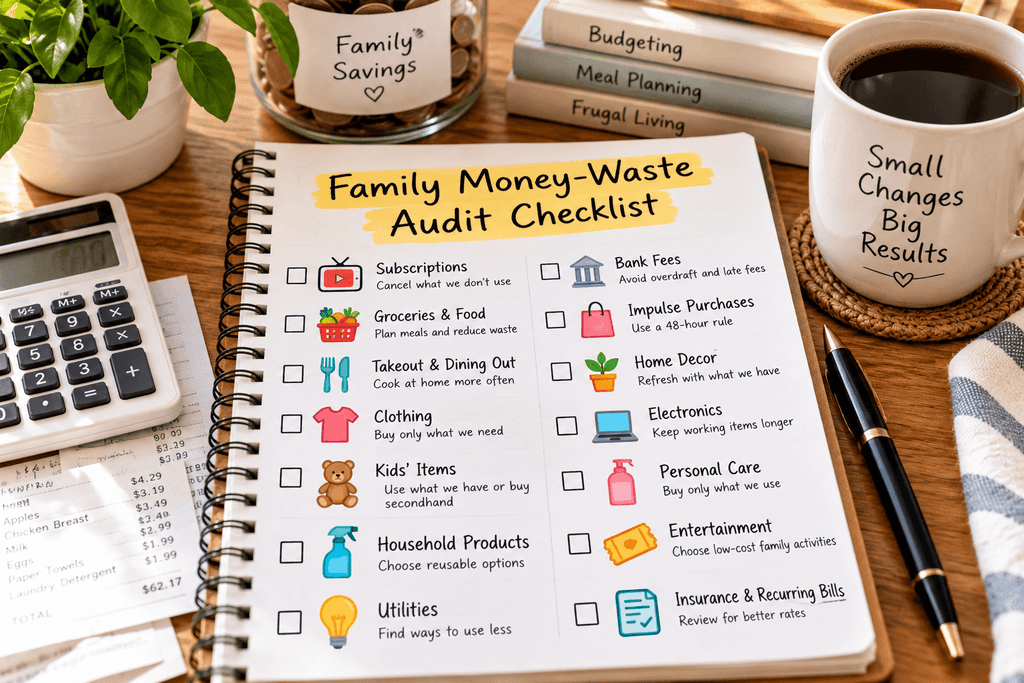
How to Start Spending Less Money Every Day
The best way to make saving money a lasting habit is to follow a simple plan rather than changing everything at once. Review your spending, identify the easiest expenses to reduce, and set realistic limits. A short weekly check-in helps you stay consistent and adjust your plan when family expenses change.
Five Steps to Get Started
- Review your recent spending. Check bank statements and receipts to see where your money goes.
- Choose three expenses to reduce. Start with unnecessary purchases, food delivery, or unused subscriptions.
- Set a weekly target. Choose an amount you can realistically save without neglecting essential bills.
- Move the savings toward a goal. Put the money you keep toward emergency savings, debt payments, or another family priority.
- Review your progress weekly. Keep the habits that work and adjust those that feel too restrictive.
Why Spending Less Every Day Matters
Spending less money every day can give your family more room for unexpected bills, debt payments, and future plans. Small savings become more useful when you direct them toward a clear goal instead of allowing them to disappear into other spending. Consistent changes can make your budget easier to manage over time.
For example:
- Saving $5 a day adds up to $1,825 a year.
- Saving $10 a day adds up to $3,650 a year.
These figures assume you maintain the savings every day. Your actual results will depend on your expenses and circumstances.
How can I spend less money every day on a tight budget?
Track purchases for seven days, plan meals, and reduce one recurring expense. Focus on changes that do not require upfront spending, and protect money needed for essential bills.
What should I stop buying to save money?
Start with items you regularly buy but rarely use. Common examples include impulse purchases, convenience snacks, unused subscriptions, and unnecessary takeout meals.
How much can I save by spending $10 less per day?
Spending $10 less per day can save about $300 in a 30-day month and $3,650 over a year, provided you maintain the reduction.
Final Thoughts
Learning how to spend less money every day is about building habits you can maintain, not making your budget miserable. Pick one change today, such as packing lunch, waiting before shopping, or reviewing subscriptions. Track the money you keep and put it toward a meaningful family goal. Start small and build from there.