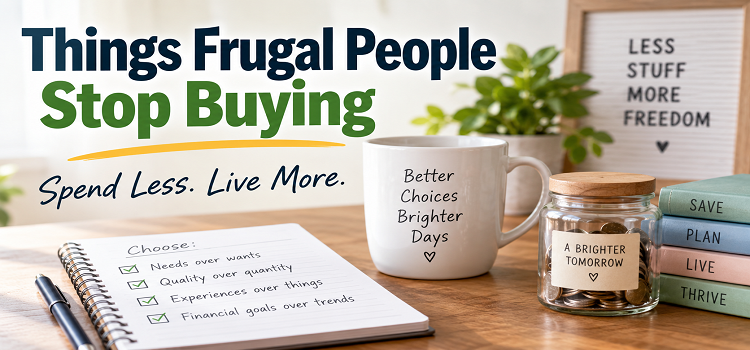
Things frugal people stop buying often look small at first, but cutting them can free up hundreds or even thousands of dollars over time. Frugal families do not avoid spending completely. They simply stop paying for things that add little value, create waste, or can be replaced with cheaper options. From convenience foods and unused subscriptions to brand-name basics and impulse purchases, small changes can make a real difference. In this guide, you’ll see what frugal people choose not to buy, what they use instead, and how your family can make the same changes without feeling deprived.
What Does It Mean When Frugal People Stop Buying Things?
Frugal people stop buying things that waste money, add little value, or can be replaced with cheaper alternatives. This does not mean cutting every enjoyable expense. It means spending with purpose, avoiding unnecessary purchases, and keeping more money available for groceries, bills, savings, debt payments, and important family goals.
What Frugal People Usually Cut First
- Impulse purchases that were never part of the budget.
- Convenience items that cost much more than homemade alternatives.
- Unused subscriptions and memberships.
- Brand-name basics when cheaper versions work just as well.
- Single-use products that need to be bought repeatedly.
- Trendy items that quickly lose their usefulness.
- Duplicate household items they already own.
- Products bought only because they are on sale.
The goal is not to buy the cheapest option every time. Frugal people focus on value, usefulness, and long-term cost before spending.
Everyday Things Frugal People Stop Buying
Frugal people often start by cutting everyday purchases that quietly drain the budget. These expenses may seem small, but repeated daily or weekly purchases can add up fast. Removing them creates quick savings without requiring major lifestyle changes, especially for families trying to lower monthly spending.
Common Everyday Purchases They Stop Buying
- Bottled water
Frugal families often use filtered tap water and reusable bottles instead. Buying bottled water regularly can cost far more over a year. - Daily coffee shop drinks
A $5 drink several times a week can become a large monthly expense. Making coffee at home gives families an easy way to save without giving it up completely. - Single-serving snacks
Individual snack packs usually cost more per ounce. Frugal shoppers buy larger packages and portion them into reusable containers. - Paper plates and disposable cups
Reusable dishes cost more upfront but can save money over time by reducing repeat purchases. - Pre-cut fruits and vegetables
Convenience produce often carries a higher price. Buying whole produce and preparing it at home usually costs less. - Takeout lunches
Packing leftovers or simple sandwiches can cut hundreds of dollars from a family’s yearly food spending. - Impulse checkout items
Candy, drinks, magazines, and small accessories near the register are easy to buy without thinking. Frugal shoppers usually skip them unless they were already planned.
[✔] Simple rule: If you buy something several times a week, calculate what it costs over a full year. Small habits often reveal the easiest places to save.
Food and Grocery Items Frugal People Stop Buying
Frugal people stop buying overpriced groceries that offer convenience but little extra value. They usually cut prepared foods, heavily packaged products, frequent takeout, and items that often go to waste. Instead, they plan meals, compare unit prices, cook more at home, and buy ingredients they know their family will actually use.
Grocery Purchases Frugal Families Often Skip
- Pre-made meals
Frozen dinners and ready-to-eat meals can be useful occasionally, but relying on them regularly gets expensive. Frugal families often cook simple meals from basic ingredients instead. - Pre-shredded cheese
Blocks of cheese are often cheaper per ounce. Shredding cheese at home takes only a few minutes and can reduce grocery costs. - Pre-seasoned meat
Marinated chicken, seasoned steaks, and prepared meat products often cost more. Buying plain meat and adding seasoning at home gives families more control over both price and flavor. - Name-brand pantry staples
Flour, sugar, rice, canned vegetables, pasta, and other basics often have cheaper store-brand alternatives with similar ingredients. - Individual drink bottles
Juice boxes, bottled tea, flavored water, and single-serving drinks can quickly increase the grocery bill. Larger containers or homemade drinks usually cost less per serving. - Food without a meal plan
Frugal people avoid filling the cart with random ingredients simply because they look useful. They buy food that fits specific meals, snacks, and breakfasts for the week. - Produce they regularly throw away
Buying healthy food does not save money if it ends up in the trash. Frugal families learn which fruits and vegetables they actually eat and purchase realistic amounts. - Expensive convenience snacks
Protein bars, snack packs, prepared fruit cups, and specialty snacks can carry high markups. Popcorn, fruit, yogurt, toast, and homemade snack mixes often cost much less. - Groceries just because they are on sale
A discount is not a saving if the item was unnecessary. Frugal shoppers compare the sale price with their normal budget and only stock up on products they regularly use.
[✔] Frugal grocery rule: Before putting something in the cart, ask, “Do we already have something at home that can do the same job?”
Household Products Frugal People Stop Buying
Frugal people stop buying household products that are disposable, overpriced, or easy to replace with reusable options. They look for items that last longer, serve more than one purpose, and reduce repeat spending. Over time, these simple changes can lower household costs without making daily life harder.
Household Items Frugal Families Often Stop Buying
- Disposable cleaning wipes
Reusable cloths and washable rags can handle most everyday cleaning jobs for much less. - Paper towels for every mess
Frugal families often keep paper towels for certain jobs but use washable cloths for routine spills and cleaning. - Single-purpose cleaners
A cabinet full of specialty cleaners can get expensive. One or two basic cleaners may handle countertops, sinks, bathrooms, and other common surfaces. - Air fresheners
Plug-ins, sprays, and scented products require constant replacement. Opening windows, cleaning odor sources, and using simple alternatives can cost less. - Disposable food storage bags
Reusable containers, jars, and washable storage bags can reduce how often families need to replace plastic bags. - Expensive laundry products
Premium detergents, scent boosters, dryer sheets, and specialty additives can increase laundry costs. Frugal households usually focus on the products they actually need. - Decorative storage containers
Buying bins before decluttering can create another expense. Frugal people often reduce what they own first and reuse boxes or containers already at home. - Single-use kitchen gadgets
A gadget that performs only one small task may not earn its space or cost. Frugal kitchens usually rely on versatile tools that handle several jobs. - Seasonal home decor every year
Frugal families often reuse decorations instead of buying new ones for every holiday or season. - Replacement items before the old ones are worn out
Towels, dishes, furniture, and small appliances do not need replacing simply because a newer version looks better.
[✔] Simple habit: Before buying a household product, ask whether you already own something that can do the same job.
Clothing and Personal Items Frugal People Stop Buying
Frugal people stop buying clothing and personal items simply because styles change or something new catches their eye. They focus on what they actually wear and use, replace items only when needed, and avoid paying extra for labels. This keeps closets simpler and prevents money from disappearing into rarely used purchases.
Clothing and Personal Purchases They Often Avoid
- Fast-fashion impulse buys
Cheap clothing can still waste money if it is worn only once or twice. Frugal shoppers usually wait before buying and choose pieces they can wear often. - Designer labels for basic items
A brand name does not always mean better quality. Frugal people compare materials, construction, comfort, and price before paying more. - Clothes for an imaginary lifestyle
Workout outfits, formal clothes, or trendy pieces are poor purchases if they do not fit real daily life. Frugal shoppers buy for how they actually live. - Shoes they rarely wear
Instead of owning many pairs, they often keep a smaller collection that covers work, casual wear, exercise, and special occasions. - New kids’ clothes at full price
Children can outgrow clothing quickly. Hand-me-downs, clearance sales, thrift stores, and clothing swaps can cut this expense significantly. - Duplicate beauty products
Buying another lotion, lipstick, shampoo, or skincare product before finishing what is already open creates clutter and wasted money. - Trendy accessories
Bags, jewelry, sunglasses, and seasonal accessories can become impulse purchases. Frugal people usually buy fewer pieces they can use repeatedly. - Clothes that require expensive maintenance
Dry-clean-only or delicate items can cost more after purchase. Easy-care clothing may offer better long-term value. - Replacement clothes that can be repaired
A loose button, small tear, or damaged zipper does not always mean an item needs replacing. Simple repairs can extend its life.
[✔] Frugal wardrobe rule: Before buying something new, ask yourself whether you can create at least three outfits with items you already own.
Subscriptions and Entertainment Frugal People Stop Paying For
Frugal people stop paying for subscriptions, memberships, and entertainment they rarely use. These recurring charges can quietly drain a family budget because they renew automatically. Instead, frugal families review monthly expenses, cancel unused services, rotate entertainment subscriptions, and choose free or lower-cost options whenever possible.
Recurring Expenses Frugal Families Often Cut
- Multiple streaming services
Paying for several platforms at once can become expensive. Frugal families often keep one or two services and rotate them when there is something specific they want to watch. - Unused gym memberships
A membership is wasted money if nobody uses it. Walking, home workouts, community centers, or pay-as-you-go options may cost less. - Premium app subscriptions
Many apps charge monthly fees for features families barely use. Frugal people check whether the free version already does what they need. - Subscription boxes
Beauty, snack, clothing, toy, and lifestyle boxes can create unnecessary monthly spending. Frugal families usually prefer buying only the items they actually want. - Cable packages with unused channels
Large TV packages often include channels nobody watches. Cutting the package or switching to a smaller service can lower monthly bills. - Paid music services for every family member
Separate plans can add up. A family plan, free version, or one shared service may offer better value. - Magazine and newspaper subscriptions they do not read
Automatic renewals make these easy to forget. Frugal households cancel subscriptions that are regularly ignored. - Paid entertainment that could be free
Libraries, parks, community events, free museum days, local festivals, and family game nights can replace some expensive outings. - Memberships kept “just in case”
Warehouse clubs, professional groups, clubs, and loyalty programs should earn back their cost. If they do not, frugal people let them go.
[✔] Monthly money check: Review your bank and credit card statements for recurring charges. Cancel anything your family has not used in the last 30 to 60 days.
Things Frugal People Stop Buying for Their Kids
Frugal parents stop buying kids’ items that are quickly outgrown, rarely used, or purchased mainly because of trends. They focus on durability, secondhand options, sharing, and items their children genuinely need. This can reduce family spending while still giving kids what they need for school, play, and daily life.
Kids’ Purchases Frugal Families Often Skip
- Too many toys
More toys do not always mean more enjoyment. Frugal families often buy fewer toys and rotate what their children already own. - Brand-new clothes for every season
Kids grow fast. Hand-me-downs, thrift stores, clearance racks, and clothing swaps can cost much less. - Expensive character merchandise
Backpacks, lunch boxes, bedding, and clothing with popular characters often cost more. Basic versions usually do the same job. - Trendy toys that lose interest quickly
A toy can be popular one month and forgotten the next. Frugal parents often wait before buying to see if the interest lasts. - Single-use party decorations
Reusable banners, tableware, simple homemade decorations, and items already at home can keep birthday costs under control. - Overpriced school supplies
Designer notebooks, branded pencils, and trendy accessories can push back-to-school spending higher. Frugal families stick to the school list and compare prices. - Expensive kids’ snacks on the go
Packing snacks and drinks from home can reduce convenience-store and vending-machine purchases. - New books every time
Libraries, book swaps, used bookstores, and digital borrowing can give children plenty to read without constant spending. - Activities the child no longer enjoys
Classes, clubs, and sports can be valuable, but continuing unused memberships wastes money. Frugal parents regularly check whether the activity is still worth the cost. - Upgrades just because friends have them
New phones, gaming devices, shoes, and accessories can create pressure. Frugal families usually base purchases on need and budget instead of comparison.
[✔] Family rule: Before buying something for a child, ask how often it will be used and how long it is likely to last.
Expensive Things Frugal People Stop Buying New
Frugal people often stop buying certain expensive items brand new when used or refurbished versions offer much better value. Cars, furniture, electronics, tools, and children’s gear can lose value quickly. Buying secondhand can reduce upfront costs, lower depreciation, and help families stretch their money further.
Big Purchases Frugal People Often Buy Used Instead
- Cars
New vehicles can lose value quickly. A reliable used car may cost much less while still meeting a family’s needs. - Furniture
Tables, dressers, bookshelves, and other solid furniture can often be found used for a fraction of the original price. - Phones
Frugal people do not always upgrade when a new model appears. Refurbished or older models can handle everyday calls, photos, banking, and apps for less. - Laptops and tablets
Certified refurbished electronics can offer strong value, especially when the latest features are not necessary. - Tools
Many tools are used only occasionally. Buying used, borrowing, or renting can make more sense than purchasing new equipment. - Exercise equipment
Treadmills, weights, bikes, and workout machines often appear on secondhand marketplaces after being barely used. - Books
Used bookstores, libraries, swaps, and digital borrowing make paying full price for every book unnecessary. - Kids’ outdoor equipment
Bikes, scooters, sports equipment, and play items can be expensive and quickly outgrown. Quality used options can save families a large amount. - Home decor
Mirrors, lamps, artwork, frames, and decorative pieces are easy to find secondhand without paying retail prices. - Occasional-use equipment
Camping gear, party supplies, specialty kitchen appliances, and home improvement equipment may be better borrowed, rented, or purchased used.
[✔] Important: Some products should be checked carefully before buying used. Safety equipment, damaged electronics, recalled products, and certain child-safety items may be better purchased new when their history cannot be verified.
Things Frugal People Stop Buying at Full Price
Frugal people avoid paying full price for purchases that regularly go on sale or can easily be delayed. They plan ahead, compare prices, use seasonal discounts, and wait for better deals. This approach is especially useful for clothing, household goods, gifts, travel, and other flexible expenses that do not need to be purchased immediately.
Purchases Frugal People Usually Wait to Buy
- Seasonal clothing
Winter coats, summer clothes, and holiday outfits often become cheaper near the end of the season. Buying ahead for the following year can save money. - Holiday decorations
Decorations, wrapping paper, cards, and seasonal supplies are often heavily discounted after the holiday ends. - Furniture
Frugal shoppers rarely rush major furniture purchases. They compare stores, watch for clearance prices, and consider used options before paying full retail price. - Electronics
Phones, televisions, laptops, and other electronics frequently receive discounts when newer models arrive. Frugal people often choose last year’s model instead. - Gifts
Waiting until the week before a birthday or holiday can lead to overspending. Frugal families often keep a small gift list and buy suitable items when prices drop. - Kids’ clothing and shoes
Clearance racks, outlet sales, and secondhand options can reduce the cost of items children may quickly outgrow. - School supplies
Pens, notebooks, backpacks, and other supplies often become cheaper after the main back-to-school shopping rush. - Home improvement supplies
Paint, garden products, tools, and outdoor items often follow seasonal pricing patterns. Waiting for sales can reduce project costs. - Travel bookings without comparing prices
Frugal travelers compare dates, lodging options, transportation costs, and total trip expenses instead of booking the first convenient option. - Nonessential purchases without a waiting period
Frugal people often wait 24 hours for small purchases and several days for larger ones. Many wants disappear once the initial urge passes.
[✔] Simple rule: If you do not need something today, give yourself time to compare prices before buying it.
Services and Fees Frugal People Stop Paying For
Frugal people stop paying fees and convenience charges when a simple alternative is available. Delivery costs, late fees, ATM charges, rushed shipping, and unnecessary service add-ons can quietly increase monthly spending. Avoiding these expenses helps families keep more of their income without cutting things they actually value.
Fees and Services Frugal Families Often Avoid
- Food delivery fees
Restaurant delivery can add service fees, delivery charges, tips, and higher menu prices. Picking up an order or cooking at home can cost much less. - ATM fees
Using an out-of-network ATM can mean paying fees from both the ATM owner and the bank. Frugal people plan cash withdrawals or use fee-free machines. - Late payment fees
Missing bill due dates wastes money and can create more financial stress. Automatic payments or calendar reminders can help prevent these charges. - Expedited shipping
Paying extra for faster delivery is often unnecessary when purchases are planned ahead. - Extended warranties on every purchase
Some warranties cost a large percentage of the item’s price. Frugal shoppers check the manufacturer warranty, product reliability, and replacement cost before paying extra. - Bank account fees
Monthly maintenance fees, overdraft charges, and other banking costs can often be avoided by choosing a lower-fee account and monitoring balances. - Ticket convenience fees when alternatives exist
Entertainment and event tickets may carry added service charges. Frugal buyers compare official buying options before checking out. - Rush charges caused by poor planning
Last-minute gifts, emergency shipping, urgent repairs, and forgotten school needs can become more expensive. Planning ahead reduces these avoidable costs. - Services they can reasonably do themselves
Simple cleaning, basic yard work, minor home tasks, and easy meal prep may not require paid help every time. - Automatic upgrades and add-ons
Premium delivery, insurance extras, priority service, and optional upgrades can increase the final bill. Frugal people review each add-on instead of accepting it automatically.
[✔] Money-saving habit: Look at the final checkout total, not just the advertised price. Fees can turn a reasonable purchase into an expensive one.
How to Start Cutting Things You No Longer Need to Buy
The easiest way to stop buying unnecessary things is to review your spending, find repeat purchases, and cut one category at a time. Frugal living works better when changes feel realistic. Families usually save more by removing several small expenses consistently than by making one extreme cut they cannot maintain.
Steps to Start Spending Less
- Review the last 30 days of spending
Look through bank and credit card statements. Highlight purchases that were unnecessary, repeated, or forgotten soon after buying. - Find your top three money leaks
Focus first on categories such as takeout, subscriptions, snacks, delivery fees, clothing, or impulse shopping. - Choose one thing to stop buying this week
Do not try to cut everything at once. Start with one purchase that feels easy to replace. - Decide what you will do instead
Replace bottled water with a reusable bottle, takeout with planned leftovers, or new books with library borrowing. - Use a waiting rule
Wait at least 24 hours before buying nonessential items. For larger purchases, wait several days and compare prices first. - Remove buying triggers
Unsubscribe from promotional emails, delete saved shopping apps, and avoid browsing stores when you do not need anything. - Track the money you save
Move the amount you would have spent into savings, debt repayment, or another family goal. This makes the benefit easier to see. - Review your progress each month
Some cuts will work better than others. Keep the changes that save money without making family life unnecessarily difficult.
[✔] Start small: Cutting five $20 purchases each month saves $100. Over one year, that becomes $1,200 without requiring a major lifestyle change.
Money-Saving Habits Frugal People Use Instead
Frugal people do not just stop buying things. They replace expensive habits with simple systems that lower costs over time. Planning purchases, reusing what they own, comparing prices, and avoiding impulse spending make it easier to save money without feeling restricted or constantly thinking about every dollar.
Simple Habits That Make Frugal Living Easier
[✔] Shop with a list. Go into stores knowing exactly what you need.
[✔] Check what you already own first. Many unnecessary purchases happen because people forget what is already in the pantry, closet, or garage.
[✔] Compare unit prices. A larger package is not always the better deal.
[✔] Use what you have before replacing it. Finish toiletries, cleaning supplies, food, and household products before buying more.
[✔] Buy based on cost per use. A $60 item used 100 times may offer better value than a $20 item used twice.
[✔] Avoid shopping for entertainment. Browsing stores or shopping apps without a purpose makes impulse spending more likely.
[✔] Keep a small repair kit. Basic sewing supplies, glue, tools, and replacement parts can extend the life of many household items.
[✔] Borrow rarely used items. Tools, party supplies, books, and specialty equipment do not always need to be owned.
[✔] Plan purchases around real needs. Sales should help you spend less on something you already need, not convince you to buy more.
[✔] Give every saved dollar a job. Put the money toward an emergency fund, debt payoff, groceries, travel, or another family goal.
The biggest difference is consistency. Saving $5 or $10 once will not change much, but avoiding unnecessary purchases every week can make a noticeable difference over a full year.
Why Frugal People Stop Buying Unnecessary Things
Frugal people stop buying unnecessary things because it gives them more control over their money and reduces financial pressure. Cutting wasteful spending can make room for savings, debt payments, emergencies, and family goals. It also helps people become more intentional about what they own and what they truly value.
Benefits of Buying Less
- More money stays in the budget
Every expense you remove gives you more room for essentials, savings, or future plans. - Less financial stress
Fewer unnecessary purchases can make monthly bills easier to manage, especially when money is tight. - More emergency savings
Small savings can add up. Redirecting even $50 or $100 a month can help build a stronger emergency fund. - Faster debt payoff
Money that once went toward impulse purchases, subscriptions, or convenience spending can be used to reduce debt. - Less clutter at home
Buying fewer items means fewer things to organize, clean, store, and eventually throw away. - Better buying decisions
Frugal people learn to pause before spending. Over time, this makes it easier to separate real needs from temporary wants. - Lower household waste
Using products longer and buying fewer disposable items can reduce the amount of waste a family creates. - More freedom for important goals
Saving money on things that do not matter can make it easier to fund vacations, education, home repairs, or other family priorities. - Less pressure to keep up with others
Frugal living shifts the focus away from trends and comparison. The goal becomes spending based on your own needs and values.
[✔] Key takeaway: Frugality is not about saying no to everything. It is about saying no to low-value spending so you can say yes to the things that matter more.
What do frugal people stop buying first?
Frugal people often stop buying impulse purchases, unused subscriptions, convenience foods, bottled drinks, trendy clothing, and disposable household products first. These categories are easy to cut because they usually have cheaper alternatives and do not require major lifestyle changes.
What should I stop buying to save money fast?
Start with recurring expenses and frequent small purchases. Cancel unused subscriptions, reduce takeout, stop buying convenience snacks, avoid impulse shopping, and cut unnecessary fees. These changes can produce faster savings than focusing only on occasional large purchases.
Do frugal people avoid buying new things?
Not always. Frugal people buy new when quality, safety, or long-term value makes sense. But they often choose used, refurbished, borrowed, or repaired items when those options meet the same need for less money.
What household items are a waste of money?
Items can become a waste of money when they are rarely used, constantly replaced, or bought mainly for convenience. Examples include excessive cleaning products, disposable items, duplicate kitchen gadgets, unused storage containers, and decorative purchases that quickly lose their appeal.
How do I stop buying things I do not need?
Use a shopping list, set a waiting period, remove shopping apps, unsubscribe from promotional emails, and check what you already own before buying. Tracking unnecessary purchases for a month can also reveal patterns and make spending triggers easier to control.
Is it better to buy cheap or buy less?
Buying less is often the better strategy. The cheapest option can cost more if it breaks quickly or needs frequent replacement. Frugal shoppers focus on value, durability, cost per use, and how often an item will actually be used.
Can frugal living really save a lot of money?
Yes. Small cuts can add up when they happen every week or every month. Saving $25 a week equals $1,300 a year. Combining several small changes can create meaningful room for savings, debt repayment, and family goals.
What should frugal people still spend money on?
Frugal people still spend on essentials, safety, health, reliable transportation, quality items used often, and experiences that matter to the family. The goal is not to avoid spending. It is to spend intentionally and cut what provides little value.
Final Thoughts: Start With One Thing You Can Stop Buying Today
The smartest things frugal people stop buying are usually the purchases that cost money without adding much value. Cutting even a few of these expenses can lower monthly spending, reduce waste, and make more room for savings, debt payoff, groceries, and other family priorities.
You do not need to change everything at once. Pick one thing from this list that your family can stop buying this week.
Track what you save for the next 30 days and put that money toward a goal that matters.
Small cuts become powerful when you repeat them.
What is one thing you have stopped buying to save money? Share it in the comments.