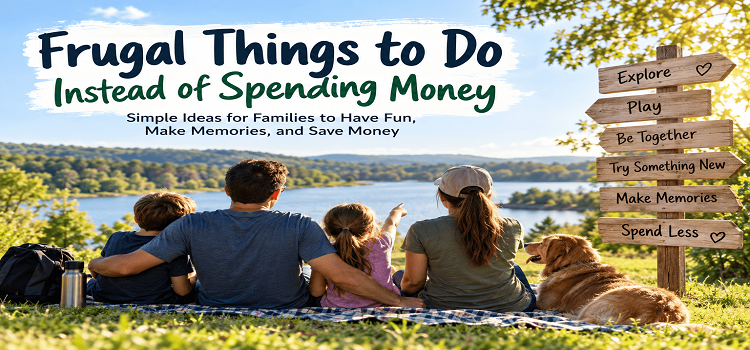
Frugal things to do instead of spending money can help families enjoy their time without adding more pressure to the budget. When boredom hits, it is easy to spend on takeout, shopping, entertainment, or small treats that quickly add up. But there are plenty of free and low-cost alternatives that can still feel fun, useful, and rewarding. In this guide, you’ll find practical ideas for home, weekends, kids, self-care, and family time, plus simple ways to build better habits so spending less starts to feel natural.
What Are Frugal Things to Do Instead of Spending Money?
Frugal things to do instead of spending money are free or low-cost activities that replace common spending habits like shopping, eating out, paid entertainment, or impulse purchases. The goal is not to avoid all spending. It is to choose simple alternatives that still help your family relax, have fun, and make good use of time.
Common Examples
- Go for a family walk instead of visiting a paid attraction.
- Cook a favorite meal at home instead of ordering takeout.
- Borrow books or movies from the library instead of buying them.
- Have a game night instead of paying for entertainment.
- Declutter a room instead of shopping for new home items.
- Pack snacks and visit a local park instead of eating out.
- Use what you already own for crafts, hobbies, or DIY projects.
- Call a friend or relative instead of spending money out of boredom.
These simple swaps can reduce unnecessary spending without making family life feel restrictive.
Best Frugal Things to Do at Home Instead of Spending Money
The best frugal things to do at home are activities that use what you already have and replace common spending triggers like shopping, takeout, or paid entertainment. They work well for families because they are easy to start, cost little or nothing, and can turn an ordinary day into something useful or enjoyable.
Best Ideas to Try at Home
- Have a family movie night using a streaming service you already pay for.
- Cook or bake something from ingredients already in the pantry.
- Declutter one drawer, closet, or room.
- Start a no-spend home project using leftover supplies.
- Play board games or card games you already own.
- Create a DIY spa night with items already at home.
- Rearrange a room instead of buying new decor.
- Read a book you already own or borrow one digitally from the library.
- Start a puzzle and work on it together.
- Make homemade snacks instead of buying treats.
- Organize family photos and create a digital album.
- Try a free workout video at home.
- Make a list of meals you can cook from what is already in the kitchen.
- Repair something instead of replacing it.
- Have a family clean-up challenge and reward yourselves with a free activity afterward.
These ideas help reduce boredom spending while making better use of the things your family already owns.
Free Outdoor Activities to Do Instead of Spending Money
Free outdoor activities are a simple way to have fun without spending money. Families can enjoy fresh air, stay active, and spend time together without paying for tickets, food, or entertainment. Parks, walking trails, backyards, and local public spaces can provide plenty of no-cost options for both kids and adults.
Best Free Outdoor Activities for Families
- Go for a family walk around your neighborhood.
- Visit a local park or playground.
- Take a bike ride on a nearby trail.
- Pack food from home and have a picnic.
- Go on a nature scavenger hunt with the kids.
- Watch the sunset together.
- Play catch, soccer, basketball, or another outdoor game.
- Explore a free hiking trail.
- Visit a public garden or nature area with free admission.
- Have a backyard campout.
- Fly a kite if you already own one.
- Go birdwatching and see how many species you can spot.
- Collect leaves, rocks, or pinecones for a simple nature craft.
- Take family photos at a local park.
- Visit a nearby lake, river, or beach that does not charge admission.
- Take a long walk while listening to a free podcast.
- Let the kids create an outdoor obstacle course.
- Have a sidewalk chalk competition.
- Go stargazing on a clear night.
- Explore a part of your town you have never walked through before.
A good rule is to bring water, snacks, and anything else you may need from home. That makes it easier to enjoy free outdoor activities without turning the outing into an unplanned spending trip.
Frugal Things to Do by Family Age
Frugal activities work best when they match your family’s age and energy level. Younger kids often enjoy simple hands-on play, older kids may want more independence, and adults may prefer relaxing or productive activities. Choosing age-appropriate ideas makes free family time easier to enjoy and more likely to become a regular habit.
Best Ideas for Families With Toddlers and Preschoolers
- Visit a playground.
- Have a backyard bubble session.
- Go on a short nature walk.
- Read picture books together.
- Build a blanket fort.
- Make simple crafts from paper, boxes, or recycled materials.
- Have a dance party at home.
- Play with sidewalk chalk.
- Sort toys by color or type.
- Have a picnic in the backyard or living room.
Best Ideas for Families With School-Age Kids
- Go on a family bike ride.
- Visit the library.
- Have a board game tournament.
- Try a nature scavenger hunt.
- Bake cookies or homemade snacks together.
- Start a family garden with seeds or plants you already have.
- Play soccer, basketball, or catch at a local park.
- Make a homemade obstacle course.
- Work on a puzzle together.
- Have a family movie night.
Best Ideas for Families With Teens
- Go hiking or take a long walk together.
- Cook a new meal using ingredients already at home.
- Have a card game or trivia night.
- Let teens plan a no-spend family day.
- Start a fitness challenge together.
- Visit free local events.
- Take photos around town.
- Learn a free skill through online tutorials.
- Declutter and sell unwanted items.
- Have a homemade pizza or snack night.
Best Ideas for Adults and Couples
- Take an evening walk together.
- Cook a date-night meal at home.
- Watch a movie you already have access to.
- Try a free workout.
- Work on a DIY home project.
- Organize finances and set new savings goals.
- Read together or listen to a podcast.
- Have coffee at home and sit outside.
- Start a shared hobby using supplies you already own.
- Plan a future trip without booking anything yet.
Best Ideas for Multigenerational Families
- Cook a family recipe together.
- Look through old photos and share stories.
- Play simple card or board games.
- Take a gentle family walk.
- Watch a favorite classic movie.
- Work on a puzzle.
- Visit a park with seating and easy walking paths.
- Create a family history book.
- Have a potluck-style meal using food already at home.
- Teach younger family members a skill or tradition.
Matching activities to age helps everyone stay involved. It also makes it easier to find free things to do as a family without falling back on shopping, dining out, or paid entertainment.
Frugal Things to Do When You Feel Like Shopping
Frugal things to do when you feel like shopping help interrupt impulse spending before money leaves your account. The goal is to replace the urge to browse or buy with a free activity that gives you a similar sense of progress, reward, or distraction. This works especially well when shopping has become a boredom habit.
Best Alternatives to Shopping
- Shop your own closet and create new outfits.
- Declutter one category, such as shoes, toys, or kitchen items.
- Make a wish list and wait 48 hours before buying anything.
- Organize a drawer or shelf.
- Sell unused items instead of buying new ones.
- Rearrange furniture to make a room feel different.
- Create a list of things you already own and forgot about.
- Browse free books, movies, or activities through your local library.
- Take a walk until the urge to shop passes.
- Start a simple DIY project using supplies already at home.
- Unsubscribe from retail emails and shopping alerts.
- Remove saved payment details from shopping apps.
- Compare the item price to one of your savings goals.
- Move the amount you were about to spend into savings.
- Make tea or coffee at home and do something relaxing instead.
Simple Tips to Stop Impulse Spending
[✔] Avoid browsing stores or shopping apps when you are bored.
[✔] Keep a running wish list instead of buying items immediately.
[✔] Use a 24- or 48-hour waiting rule for nonessential purchases.
[✔] Ask yourself whether you need the item or just want a quick mood boost.
[✔] Track how much you save each time you choose a free alternative.
Replacing shopping with a specific activity makes it easier to break the habit. Over time, these small choices can reduce impulse purchases and free up more money for goals that actually matter to your family.
How to Start Doing More Without Spending Money
To start doing more without spending money, identify when your family usually spends out of boredom, convenience, or habit. Then prepare a short list of free alternatives before those moments happen. A simple plan makes it easier to choose a no-cost activity instead of automatically shopping, ordering food, or paying for entertainment.
Steps to Build the Habit
- Find your biggest spending triggers.
Look at when unnecessary spending usually happens. Common triggers include boredom, weekends, stress, shopping trips, and wanting to get out of the house. - Create a family free-activity list.
Write down 10 to 20 activities everyone enjoys. Include indoor ideas, outdoor activities, quick options, and things that work on rainy days. - Use what you already have first.
Check your pantry, games, books, craft supplies, sports equipment, streaming subscriptions, and backyard before paying for something new. - Plan one no-spend activity each week.
Put it on the family calendar. A planned park trip or game night is easier to follow through on than deciding what to do at the last minute. - Pack food and drinks before leaving home.
Free outings can become expensive when everyone gets hungry. Bring water, snacks, or lunch from home whenever possible. - Use the 48-hour rule before nonessential purchases.
Put the item on a list and wait 48 hours. During that time, ask whether you already own something that solves the same problem. - Replace the purchase with an activity.
When you feel tempted to spend, walk, read, organize something, cook, exercise, visit a park, or choose another free activity from your list. - Keep track of what you did not spend.
If you skip a $40 restaurant meal or a $25 shopping purchase, record it. Seeing the savings makes the habit feel more rewarding. - Move some of the savings toward a goal.
Put the money toward an emergency fund, debt payoff, vacation fund, or another family priority. - Repeat the activities that your family actually enjoys.
You do not need a new free activity every weekend. Build a small rotation of reliable options that make spending less easy.
Make Your Own “Instead of Spending” List
Keep a simple replacement list somewhere visible:
- Instead of eating out → cook a favorite meal together.
- Instead of going shopping → visit the library or park.
- Instead of buying entertainment → have a movie or game night.
- Instead of buying new decor → rearrange what you already own.
- Instead of paying for a family outing → hike, picnic, bike, or explore somewhere free.
- Instead of impulse buying → add it to your list and wait 48 hours.
The goal is not to make every day a no-spend day. It is to stop spending from being the automatic answer whenever your family wants something to do.
Money-Saving Tips That Make Free Activities Easier
Money-saving tips work best when they remove the small costs that often turn a free activity into an expensive day. Planning food, transportation, and entertainment ahead of time helps families enjoy more no-spend activities without feeling deprived. The goal is to make the cheaper choice easier before temptation appears.
Simple Ways to Spend Less While Having Fun
[✔] Bring food from home. Pack snacks, drinks, or lunch before going to a park, trail, beach, or free event.
[✔] Check free community events first. Libraries, parks, schools, museums, and community centers often offer free family activities.
[✔] Use memberships you already pay for. If you already have a streaming service, gym access, museum pass, or local membership, use it before paying for something new.
[✔] Choose activities close to home. A free outing can still cost a lot if it requires a long drive, parking fees, or tolls.
[✔] Keep a no-spend bag ready. Add water bottles, sunscreen, reusable snacks, wipes, a blanket, and simple games so you can leave without buying extras.
[✔] Use the library for more than books. Many libraries offer movies, digital media, classes, kids’ programs, and sometimes free passes to local attractions.
[✔] Rotate toys, games, and activities. Put some away for a few weeks and bring them back later. Old items can feel new again without spending anything.
[✔] Plan around free days. Some museums, zoos, gardens, and local attractions offer free admission on certain days.
[✔] Set a weekend spending limit. Decide your maximum amount before the weekend starts so small purchases do not pile up.
[✔] Track the money you avoid spending. If your family skips a $60 outing and chooses a free one instead, record that $60 as money saved.
Small changes like these can turn frugal living into a normal family routine instead of a temporary challenge.
Why Frugal Activities Are Good for Families
Frugal activities do more than save money. They can help families spend more time together, reduce impulse spending, use what they already own, and build habits that support long-term financial stability. Free and low-cost activities also make it easier to enjoy family life without depending on shopping, restaurants, or paid entertainment.
Benefits of Choosing Free and Low-Cost Activities
- They reduce unnecessary spending.
Replacing paid entertainment with free activities can cut weekend and impulse spending without affecting the family budget for essentials. - They make saving more consistent.
Small spending decisions add up. Skipping even one $50 outing each week could leave about $200 more in the monthly budget. - They help kids learn healthy money habits.
Children can see that fun does not always require buying something. That lesson can shape how they think about money as they grow. - They reduce boredom spending.
Having a list of free things to do gives families an alternative when shopping or eating out feels like the easiest option. - They encourage creativity.
Families often become more resourceful when they use what they already have instead of buying new supplies or entertainment. - They can strengthen family routines.
Weekly walks, game nights, library visits, or home movie nights can become simple traditions everyone looks forward to. - They support bigger financial goals.
Money not spent on unnecessary purchases can go toward an emergency fund, debt payoff, travel savings, or other priorities.
How Much Can Frugal Activities Save?
The amount depends on your current habits. For example, replacing a $60 family outing twice a month and one $40 takeout night each week could save around $280 per month. That is about $3,360 per year if the habit stays consistent.
You do not have to stop spending on fun completely. The biggest benefit comes from choosing free alternatives more often and saving paid activities for the times they truly feel worth the cost.
What can I do for fun without spending money?
You can go for a walk, visit a park, borrow books from the library, have a movie night at home, play board games, cook together, exercise, explore a free local event, or work on a hobby using supplies you already own. The best options are simple activities your family already enjoys.
What can families do on a no-spend weekend?
Families can visit parks, hike, ride bikes, have a picnic, play games, watch movies at home, bake together, visit the library, do crafts, organize a backyard campout, or attend free community events. Planning the weekend in advance makes it easier to avoid last-minute spending.
What should I do instead of shopping when I am bored?
Instead of shopping, try walking, decluttering, organizing, reading, exercising, cooking, calling a friend, working on a hobby, or rearranging a room. You can also make a wish list and use the 48-hour rule before buying anything nonessential. The goal is to replace the shopping habit with another activity.
How can I have fun with my kids without spending money?
Use free activities that match your children’s ages. Younger kids may enjoy playgrounds, crafts, blanket forts, or scavenger hunts. Older kids may prefer bike rides, sports, cooking, movie nights, or free local events. Family fun does not need to involve paid attractions or expensive outings.
How do I stop spending money out of boredom?
Start by identifying when boredom spending usually happens. Then make a list of free alternatives and keep it easy to access. Remove shopping apps, avoid browsing stores, use the 48-hour rule for nonessential purchases, and plan free activities before weekends or evenings when impulse spending is most likely.
What are some productive things to do instead of spending money?
Productive options include decluttering, meal planning, repairing items, organizing finances, exercising, cleaning, selling unused belongings, learning a free skill, planning future goals, or working on a DIY project. These activities can improve your home or finances while also keeping you away from unnecessary spending.
How can I enjoy life while spending less money?
Focus on experiences instead of purchases. Spend time outdoors, cook meals you enjoy, build simple family traditions, use free local resources, and save paid activities for things that truly matter to you. Spending less does not mean removing fun. It means being more selective about what deserves your money.
Final Thoughts on Frugal Things to Do Instead of Spending Money
Frugal things to do instead of spending money can make family life more enjoyable without putting extra pressure on the budget. Free activities, simple routines, and better spending habits can help you cut impulse purchases while still making time for fun.
Start with one change this week. Pick a free activity, use the 48-hour rule before a nonessential purchase, or plan a no-spend family day. Small choices add up, and the more often you practice them, the easier frugal living becomes.